Award-Winning AP Calculus BC Tutors
serving Cincinnati, OH
AP Calculus BC
Tutors in Cincinnati
Private 1-on-1 tutoring, weekly live classes for academic support, test prep & enrichment, practice tests and diagnostics, and more to elevate grades and test scores.
Based on 3.4M Learner Ratings
UniversitiesSchools & Universities
DeliveredHours Delivered
ProficiencyGrowth in Proficiency
Who needs tutoring?
No obligation. Takes ~1 minute.
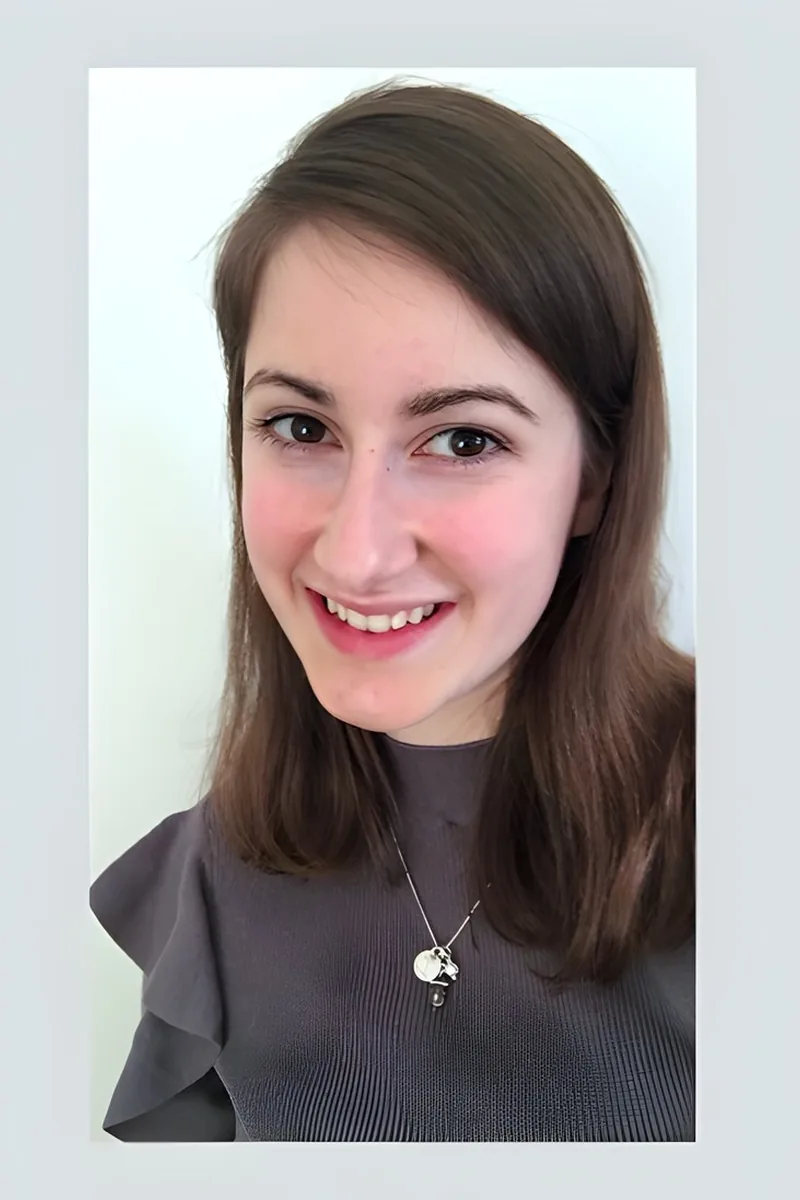
Convergence tests, Taylor series, and parametric equations all demand a level of mathematical fluency that builds on everything from AB and beyond. Lillian breaks these BC-specific topics into logical sequences, connecting each new technique back to the core calculus reasoning students already have so the jumps feel manageable rather than overwhelming.
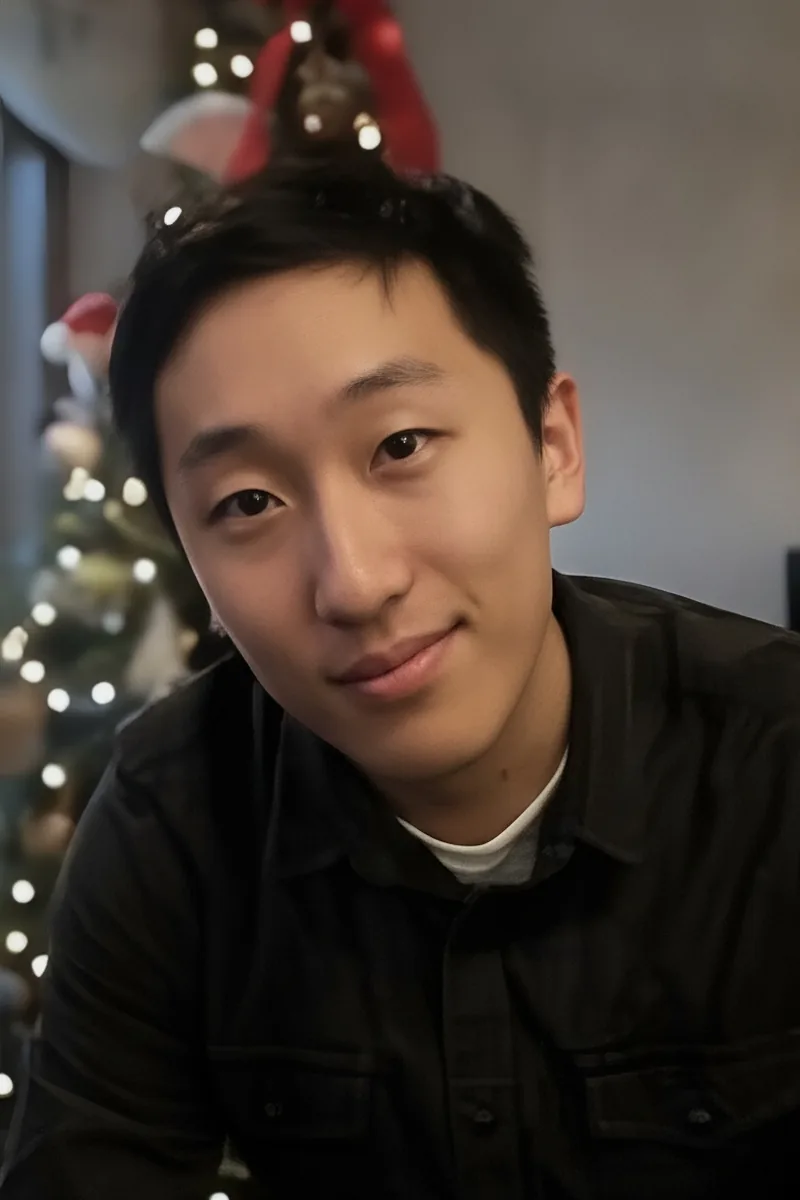
Series convergence tests, parametric equations, and polar curves make BC the course where strong calculus students suddenly feel lost. Kevin tackles these topics by connecting them back to the AB foundations students already know, building each new idea as a logical extension rather than a disconnected formula. His engineering coursework at Case Western means he's still using BC-level calculus regularly.
BC Calculus layers series convergence, parametric equations, and polar coordinates on top of an already demanding AB curriculum, so students need a tutor who can connect those threads clearly. Ricardo's chemistry coursework at Ohio State means he regularly applies Taylor series and differential equations in real problem-solving contexts, giving him a practical fluency that translates directly to AP exam preparation.
Series convergence tests, parametric equations, and polar curves are where BC diverges from AB — and where most students start feeling lost. Ella breaks these topics into manageable pieces, connecting new BC concepts back to the AB foundations students already understand. Her economics background also means she's comfortable with the applied integration and differential equation problems that frequently appear on the exam.
Maxwell's dual degree in mathematics and physics means he didn't just pass through BC Calculus — he kept using its tools in upper-level coursework like differential equations, multivariable calculus, and quantum mechanics, where sloppy series reasoning or weak integration technique falls apart fast. That ongoing fluency makes him especially sharp at teaching the logic behind convergence tests and polar area setups, not just the steps. Holds a 5.0 rating.
BC Calculus layers on convergence tests, parametric equations, and polar curves at a pace that loses a lot of students mid-semester. Jie tackles these topics by tying them back to the AB foundations students already know, so series and integration techniques feel like natural extensions rather than entirely new material. His computer engineering coursework at Michigan keeps him working with these concepts regularly.
Series convergence tests, parametric equations, polar curves — AP Calculus BC piles on topics fast, and falling behind on even one unit can snowball. Brian's approach is straightforward: work through problems until the patterns click, whether that's integration by parts or Taylor series approximations. His strong math foundation from studying computer science at Case Western Reserve keeps sessions grounded in real understanding rather than formula sheets.
Chemical engineering Ph.D. work means Alexander spent years where series approximations and integration techniques weren't exam problems — they were how he modeled reaction kinetics and heat transfer systems daily. That depth shows up when he teaches BC-specific topics like convergence tests or improper integrals, because he can trace exactly where a student's reasoning breaks down rather than just re-demonstrating the procedure. Rated 4.9 by students.
Physical chemistry PhD work at Ohio State means Emily lives in the calculus that most BC students only see on exams — series approximations for modeling molecular behavior, integration techniques in thermodynamic derivations, differential equations describing reaction kinetics. She teaches topics like Taylor polynomial construction and convergence tests by grounding them in the physical intuition her chemistry training built, which makes abstract procedures feel like they're actually describing something. Rated 5.0 by students.
A Ph.D. in Applied Mathematics means Dr has spent years working with the exact machinery underneath BC Calculus — not just computing Taylor series or evaluating convergence tests, but understanding the theoretical scaffolding that makes them rigorous. That depth lets him pinpoint whether a student struggling with, say, the Lagrange error bound actually has a gap in polynomial approximation reasoning or just needs a clearer framework for bounding remainders. Rated 4.9 by students.
Most tutors on this page come from engineering or applied math — Nora's path is different, but her 4.8 rating across a wide spread of math subjects (through BC Calculus) shows she knows how to make dense material land. She's especially deliberate about the AB-to-BC transition, breaking down how new ideas like series convergence and parametric derivatives grow out of limits and integration students have already internalized. Her engineering lab work keeps her comfortable with the applied side, so she can ground abstract convergence tests in concrete reasoning.
BC Calculus throws students into territory where AB concepts aren't enough anymore — Taylor series, parametric equations, and convergence tests each demand a different kind of reasoning. Samuel's math minor at Ohio State means he's studied these ideas well past the AP level, so he can explain not just how to set up a polar area integral but why the formula works. His 4.6 rating speaks to how well that deeper approach clicks with students.
Mechanical engineering put Steven through the full calculus sequence with real stakes — designing load-bearing structures and modeling dynamic systems means integration techniques, series approximations, and differential equations had to actually work, not just produce correct exam answers. He's particularly effective at breaking down the transition from AB to BC, where topics like convergence tests and Taylor polynomials can feel sudden if the underlying logic isn't made explicit. Rated 4.9 by students.
Most BC students don't struggle because the material is impossibly hard — they struggle because a shaky concept from weeks ago quietly compounds until Taylor series or convergence tests feel overwhelming. Viola spots those buried gaps early, tracing a student's confusion on something like the ratio test back to the specific limit or sequence reasoning that didn't fully click. Her computer science studies at NYU Tandon keep her immersed in the kind of algorithmic, step-by-step thinking that makes BC's layered problems manageable.
BC Calculus piles on convergence tests, parametric equations, and polar coordinates on top of an already demanding AB curriculum. As an actuarial science major who uses series and integration techniques in probability modeling, John connects these topics to their practical applications. He walks through each convergence test with clear decision frameworks so students aren't guessing which one to apply.
Jacob's MA in Mathematics means he's worked through the proofs and theory that sit beneath every BC topic — so when a student hits a wall on, say, the Lagrange error bound or a tricky ratio test, he can trace the confusion back to the underlying reasoning rather than just re-demonstrating the procedure. He's especially sharp at the transition points where AB intuition needs to stretch into new territory, like moving from basic integration to handling improper integrals or building Taylor series from scratch. His 1540 SAT speaks to the same precision he brings to walking through convergence logic step by step.
The jump from AB to BC is where most students lose their footing — suddenly convergence tests, Taylor polynomials, and parametric derivatives all land at once with no breathing room. Christopher's background in physics and physical chemistry means he learned these tools by necessity, using series expansions to model real systems and integration techniques to solve problems that don't have neat closed-form answers. That applied instinct lets him teach BC topics as connected ideas rather than a checklist of procedures to survive.
Tackling series convergence tests, parametric equations, and polar curves requires more than memorizing formulas — it demands knowing when and why each technique applies. Talia approaches BC-specific topics by building intuition around each concept before drilling the mechanics, so students can handle the free-response questions that reward deep understanding over rote calculation.
Physics majors don't just take BC Calculus — they breathe it, using series expansions to model wave behavior, integration techniques to solve equations of motion, and parametric equations to describe trajectories. Kiran is finishing a physics and computer science double major at Stony Brook, which means topics like Taylor polynomials and convergence aren't abstract to him; they're tools he reaches for in his own coursework daily. His 34 ACT and 4.7 rating speak to an ability to make that applied intuition accessible to students still building their BC toolkit.
Biochemistry lab work at Columbia demands comfort with the calculus that models reaction kinetics and molecular behavior — Andrew has spent years using integration techniques and series approximations in that context, which gives his BC teaching a practical edge when students ask "why does this matter?" He's especially effective at breaking down the transition from AB to BC, tracing topics like Taylor polynomial construction and convergence criteria back to the derivative and integral logic students already trust. Rated 4.9 by students.
BC Calculus covers a massive range — from parametric equations and polar curves to Taylor series and convergence tests — and Dennis's physics research at Princeton demanded fluency in all of it. He connects topics like integration techniques and differential equations to the physical problems they were invented to solve, which makes the logic behind each method click.
As a multivariable calculus teaching assistant at Harvard's Math Department, Kristi spent semesters watching exactly where students' BC foundations cracked under pressure — shaky series intuition, mechanical convergence testing, parametric reasoning that never quite solidified. Her astrophysics training means she learned these tools by necessity, using Taylor expansions to model orbital mechanics and integration techniques to analyze planetary data, so she teaches the logic driving each method rather than just the steps. Rated 5.0 by students.
Convergence tests, parametric equations, and Taylor series expansions are where BC separates from AB — and where many students start to feel lost. Rithi breaks these topics into intuitive steps, connecting new concepts back to the foundational calculus reasoning students already have. Her 1550 SAT and deep STEM background reflect the kind of mathematical fluency that makes those connections clear.
Scoring a 36 on the ACT while majoring in chemistry at MIT means Nicholas lives in the overlap where rigorous math meets scientific application — and BC Calculus sits right at that intersection. He's especially good at breaking down series convergence and integration techniques by grounding them in the kind of approximation problems he encounters in physical chemistry coursework, so the logic behind a ratio test or a Taylor expansion feels earned rather than arbitrary. Rated 5.0 by students.
Molecular biology might seem distant from BC Calculus, but Agustin's 1560 SAT and deep comfort with competition math mean he's built the kind of rigorous problem-solving instincts that make topics like convergence tests and parametric derivatives tractable rather than terrifying. He breaks down the logic behind each technique — why the ratio test actually tells you something, how polar area integrals connect back to Riemann sums — so the BC extension from AB feels like a natural next step. Rated 4.5 by students.
Most people who breeze through math can't explain it — Daniel learned BC Calculus by grinding through the logic of every convergence test, every parametric derivative, every series expansion until it genuinely made sense, and that's exactly how he teaches it. As an applied mathematics undergrad, he's currently using these tools in upper-level coursework, so he knows which BC concepts tend to feel arbitrary and how to make the reasoning behind them stick.
Sanjana doesn't just know AP Calculus BC — she teaches it, serving as a Course Assistant for Harvard's introductory calculus sequence. That means she's seen exactly where students stumble on Taylor series, parametric equations, and convergence tests, and she knows how to untangle those concepts in real time. Rated 5.0 by students.
BC Calculus layers convergence tests, parametric equations, and polar curves on top of an already demanding AB foundation, and keeping all of it organized is half the battle. Tessa's approach is to unpack each new topic by tying it back to core ideas students already understand — showing, for instance, how Taylor series are really just an extension of local linearity. She's a math major at Yale with a 4.9 client rating.
Scoring a 36 on the ACT while studying economics at Vanderbilt means Kerr lives comfortably in the quantitative reasoning that BC Calculus demands — and his computer science focus sharpens the algorithmic thinking behind recursive sequences and series convergence. He teaches BC's trickiest leaps, like moving from basic integration to constructing Taylor polynomials, by grounding each new idea in the conceptual logic rather than just the procedural steps. Rated 4.9 by students.
Testimonials
Because the right AP Calculus BC tutor makes all the difference.
Average Session Rating – Based on 3.4M Learner Ratings
Practice AP Calculus BC
Free practice tests, flashcards, and AI tutoring for AP Calculus BC
Other Cincinnati Tutors
Related Math Tutors in Cincinnati
Frequently Asked Questions
AP Calculus BC covers all of AP Calculus AB content plus additional topics including parametric equations, polar coordinates, and infinite series. The course focuses on limits, derivatives, integrals, differential equations, and applications of calculus. For students in Cincinnati, understanding this expanded scope early helps with pacing throughout the year, especially since the BC exam tests deeper conceptual understanding and problem-solving speed.
Score improvement depends on your starting point and consistency with practice. Students who work with a tutor typically see gains of 1-2 score points on the 1-5 scale, particularly when they focus on weak areas like series convergence, parametric differentiation, or free-response problem setup. The key is identifying gaps early and practicing with released AP exams under timed conditions—tutors help you work smarter, not just harder.
Students in Cincinnati and beyond often struggle with infinite series (convergence tests, Taylor series), parametric and polar calculus, and connecting multiple concepts in free-response questions. Pacing is another challenge—BC requires mastery of AB content plus additional topics, leaving less time for deep practice. A tutor can help you build confidence in these areas by breaking complex concepts into manageable steps and showing you how to recognize problem patterns on the exam.
The exam has two sections: multiple choice (45 minutes, no calculator; 45 minutes, calculator allowed) and free response (30 minutes, calculator; 60 minutes, no calculator). Success requires practicing time management—aim to spend 1-2 minutes per multiple-choice question and allocate 13-15 minutes per free-response problem. Tutors help you develop a personalized pacing strategy, identify which problems to tackle first, and practice showing your work clearly to maximize partial credit on free-response questions.
Ideally, tutoring support begins early in the school year so you can build a strong foundation in calculus concepts and avoid cramming before the May exam. If you're struggling mid-year, starting tutoring in January or February still gives you time to target weak areas and complete multiple practice tests. For students in Cincinnati's 44 school districts, starting early also helps you keep pace with your school's curriculum while developing independent problem-solving skills.
Practice tests are essential—they reveal which topics need more work, help you build test-day stamina, and reduce anxiety by familiarizing you with the exam format and timing. Experts recommend taking at least 3-4 full practice tests under timed conditions in the weeks leading up to the exam. Tutors can review your practice test results with you, identify patterns in your mistakes, and help you refine your approach to similar problems.
Look for tutors with strong calculus knowledge, experience teaching AP Calculus BC, and familiarity with the College Board's exam format and scoring rubrics. It's helpful if they've scored well on the AP exam themselves or have years of experience preparing students. Varsity Tutors connects you with expert tutors who understand the specific challenges of AP Calculus BC and can tailor instruction to your learning style and goals.
Your first session typically includes an assessment of your current understanding—covering both AB and BC topics—to identify your strengths and gaps. The tutor will ask about your goals (improving overall score, mastering specific topics, building confidence), your learning style, and any test anxiety concerns. From there, you'll develop a personalized study plan with a realistic timeline, practice strategies, and regular check-ins to track progress toward the May exam.
Let’s find your perfect tutor
Answer a few quick questions. We’ll recommend the right plan and match you with a top 5% tutor.