Award-Winning Statistics Tutors
serving Gilbert, AZ
Statistics
Tutors in Gilbert
Private 1-on-1 tutoring, weekly live classes for academic support, test prep & enrichment, practice tests and diagnostics, and more to elevate grades and test scores.
Based on 3.4M Learner Ratings
UniversitiesSchools & Universities
DeliveredHours Delivered
ProficiencyGrowth in Proficiency
Who needs tutoring?
No obligation. Takes ~1 minute.

Psychology research runs on statistics, and Robert has spent years immersed in hypothesis testing, regression analysis, ANOVA, and effect sizes for peer-reviewed publications. He teaches statistical concepts through real research questions — why you'd choose a t-test over a chi-square, or what a p-value actually tells you — so the logic behind each method clicks, not just the formula.
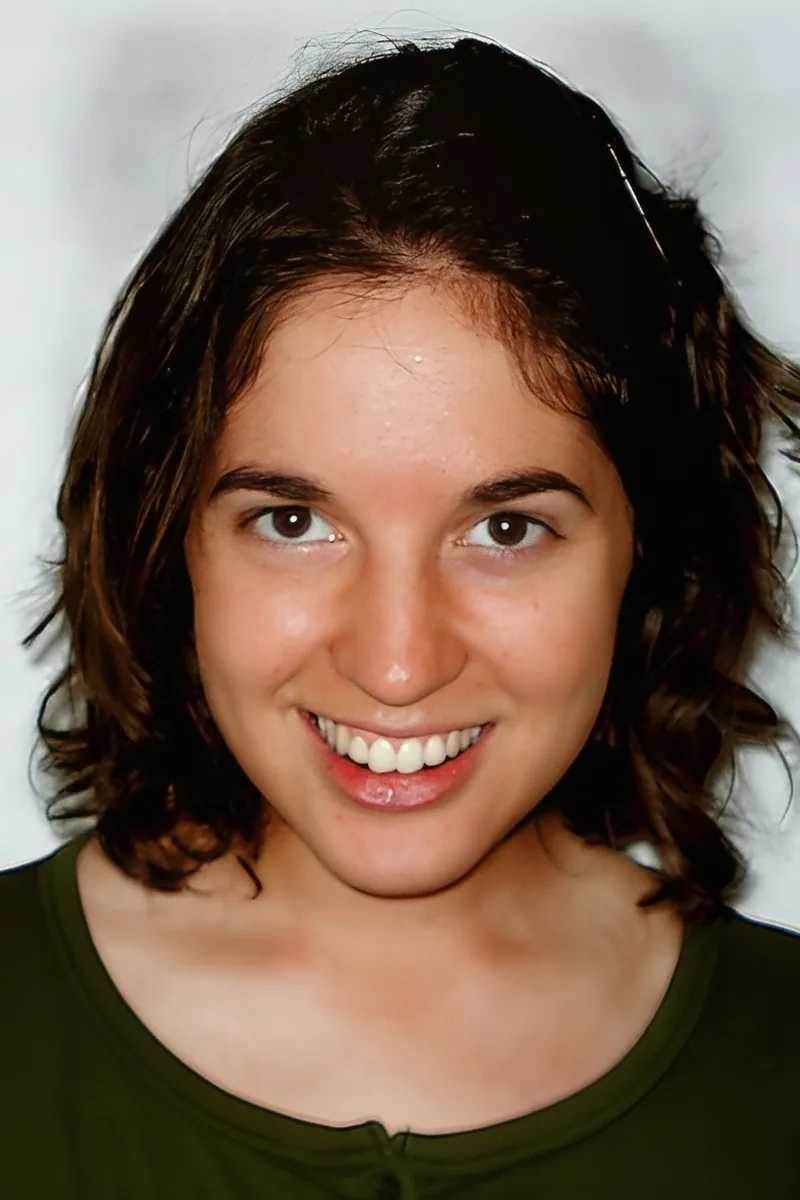
As a graduate researcher in anthropology, Amanda designs studies, runs statistical tests, and interprets p-values as part of her actual work — so she teaches statistics as a decision-making process, not just formula application. She's especially sharp on probability distributions, hypothesis testing, and knowing which test to use when. Her 4.9 rating speaks to how clearly she breaks down these concepts.
A psychology background turns out to be surprisingly useful for teaching statistics — Jacob studied research design and data analysis extensively during his undergraduate work, so he understands probability distributions, hypothesis testing, and regression in the context of real experiments. He walks through problems by asking what the data actually means before jumping into formulas, which makes the math feel purposeful rather than abstract.
Two master's degrees in accountancy gave Steven a daily working relationship with data — probability distributions, hypothesis testing, and regression analysis are part of how he thinks, not just topics in a textbook. He unpacks statistical concepts by tying them to concrete scenarios, so students grasp not only how to run a calculation but what the result actually means.
As the peer tutor for a college statistics course at Trinity University, Lindsey spent semesters walking classmates through probability distributions, hypothesis testing, and regression analysis. Her neuroscience background means she's comfortable with the kind of data interpretation and statistical reasoning that many students find intimidating. She translates dense formulas into intuitive language — the approach that earned her a 5.0 rating.
Before teaching, Chris worked as a scientist and analyst at NASA, where statistical methods — probability distributions, hypothesis testing, regression analysis — were essential for interpreting observational data from space missions. He brings that real-world data literacy into his statistics instruction, connecting textbook formulas to the kind of reasoning they were actually designed for.
Hypothesis testing clicks faster when you understand what the math is actually doing — why you're computing a test statistic, what the p-value measures, and how sample size shapes your conclusions. Madeleine's applied math degree means she can unpack the probability theory behind each procedure while keeping the focus on practical interpretation. She holds a 5.0 rating from students.
Probability distributions, hypothesis testing, and confidence intervals each require a different kind of thinking than most math courses demand — more interpretation, less pure computation. Adrian tackles statistics by walking through what each number actually tells you about a dataset before touching any formulas. His engineering training, where statistical analysis informs real design decisions, keeps lessons grounded in practical meaning.
Understanding the difference between a sample mean and a population parameter — or knowing when to reach for a t-test versus a z-test — requires more than memorizing formulas. Geoffrey approaches statistics through real data interpretation, walking students through probability distributions, hypothesis testing, and confidence intervals with an engineer's emphasis on what the numbers actually mean.
Probability distributions, hypothesis testing, and confidence intervals all hinge on understanding what the numbers actually represent — not just which formula to use. Jared's quantitative reasoning background and analytical mindset let him unpack the logic behind each statistical method so students can interpret results, not just compute them.
Between his MBA coursework in quantitative analysis and his International Relations training in interpreting data-driven research, Spencer has applied statistics in contexts most tutors haven't. He unpacks concepts like probability distributions, hypothesis testing, and regression by tying them to real decisions — market forecasts, polling data, policy analysis — so the formulas carry actual meaning. That practical lens makes the subject stick for students who struggle with purely theoretical instruction.
A biochemistry degree from Arizona State meant Charles spent years designing experiments, analyzing distributions, and running hypothesis tests on real data — statistics wasn't just a course, it was a daily tool. He teaches concepts like confidence intervals, p-values, and regression by grounding them in what the numbers actually mean for decision-making. Students walk away understanding not just how to compute a standard deviation but why it matters.
Hello! I'm Varun Krishnamurthi, a college student studying Aerospace Engineering, and I'm currently available to help students in grades K-12 with any academic troubles they may have. I'm a National Merit Scholar with a 35 ACT score, and I have years of experience tutoring in math. I can cover a variety of subjects ranging from elementary math, to pre-Algebra, all the way up to Calculus. I also specialize in test prep, especially relating to the ACT and SAT. Furthermore, I have multiple 5 star reviews from previous students, so you can guarantee that you'll be in good hands!
Studying psychology at the graduate level at NYU means Chris runs statistical analyses constantly — t-tests, ANOVA, confidence intervals, and regression modeling aren't abstract textbook topics for him. He explains statistics through real research scenarios, which makes distributions and p-values far more concrete than a formula sheet ever could. That practical grounding is a big reason students rate him 5.0.
Cameron spent years running statistical analyses on genetic datasets during his PhD research, so concepts like probability distributions, hypothesis testing, and regression aren't theoretical for him — they're daily tools. He teaches statistics by connecting each method to the kind of question it actually answers, which makes the reasoning behind formulas far easier to retain.
Special education training reshapes how Maurice teaches a subject like statistics — instead of rushing to formulas, he builds each idea (say, what a p-value actually claims, or why a sample size changes your confidence interval) through carefully sequenced steps tailored to how a particular student processes information. That deliberate pacing turns topics like hypothesis testing and probability from overwhelming to manageable, especially for students who've struggled with math in traditional classroom settings.
There's a big difference between plugging numbers into a formula for standard deviation and actually understanding what a sampling distribution tells you. Adam earned his Master's in Statistics, so he unpacks concepts like confidence intervals, regression assumptions, and p-values with the depth of someone who uses them daily in his own research.
Interpreting p-values, choosing the right hypothesis test, and understanding what a confidence interval actually means — these are the concepts where Statistics shifts from number-crunching to critical thinking. Teresa's psychology background at Notre Dame required heavy coursework in statistical methods, so she teaches these ideas with the fluency of someone who's applied them to real research data. She holds a 4.9 rating across her students.
Probability distributions, hypothesis testing, and regression analysis each require a different kind of thinking than most math courses demand. Daniel approaches statistics through real-world data interpretation, leaning on the analytical rigor of his engineering background to make concepts like p-values and confidence intervals concrete rather than formulaic.
Running experiments in a UC Berkeley biochemistry lab taught Yuxuan that statistics isn't just a math class — it's how you decide whether your data actually means something. She brings that perspective to topics like probability distributions, regression analysis, and hypothesis testing, grounding each concept in real scenarios so the formulas carry meaning.
Angie's psychology degree required heavy coursework in statistics — designing experiments, interpreting p-values, running regressions — so she teaches the subject from the perspective of someone who actually uses it. She's especially good at demystifying probability distributions and hypothesis testing for students who feel more comfortable with words than numbers.
I'm not teaching biology to undergraduate majors at ASU, I research topics in aquatic ecology. Understanding the connectedness and patterns of environmental processes in aquatic ecosystems drives my passion to become an ecologist!
I'm always trying out new techniques that match the unique strengths of each individual student. I look forward to helping you reach your goals, whether it's writing an essay, practicing Spanish or learning calculus!
I am a graduate of the Creighton University School of Medicine where I received my M.D. I received my Bachelor's of Science in Biomedical Sciences with a minor in Philosophy at Marquette University in 2018. During my time at Marquette, I tutored General Biology and General Chemistry, and I was a teaching assistant for Organic Chemistry lab. Not only did I enjoy teaching students my age, but I also pursued teaching opportunities for younger students in high school and middle school. I was a gross anatomy instructor for high school students taking tours through the cadaver labs and I was one of the founders of the Marquette Brain Brigade, where a group of undergraduate students came up with demos/lessons in neuroscience to teach middle school students. Moreover, I sought out private tutoring opportunities at a company called Huntington Learning Center both during undergrad and during medical school where I tutored a wide variety of subjects, including ACT/SAT, for virtually all age groups. I am very comfortable teaching various subjects and ages, and I am a laid back and flexible person. The subjects I am most comfortable teaching would be the sciences anywhere from the basic level to graduate school level. I am so grateful for the educators that allowed me to pursue my dream of becoming a doctor, and I would love to pass it on and help younger students achieve their goals.
I am a recent graduate of the University of Arizona, with a BS in Biology and minors in Mathematics and Biochemistry. I am currently working on computer coding and enjoy tutoring students, specializing in test preparation for the ACT, SAT, and GRE.
Probability distributions, hypothesis testing, and regression analysis are central to both engineering and business — and Caroline has graduate-level training in both. Her mechanical engineering M.S. from WashU built her statistical modeling skills, while her current MBA at MIT Sloan sharpens how she interprets data for real-world decisions. She teaches the reasoning behind each method so formulas stop feeling like black boxes.
A biology degree from UIUC means Todd spent years designing experiments, interpreting data sets, and running statistical tests — skills he now brings directly to tutoring statistics. He unpacks concepts like probability distributions, hypothesis testing, and standard deviation by grounding them in real data scenarios rather than abstract formulas.
Probability distributions, hypothesis testing, and regression can feel like a foreign language the first time through. Nina breaks these concepts down by connecting them to real datasets and research questions drawn from her biostatistics training at Columbia and NYU. Rated 5.0 by students, she's especially effective at making the jump from formulas to interpretation feel intuitive.
As an economics major at Yale, Conor uses statistical methods constantly — regression analysis, probability distributions, hypothesis testing — so he teaches statistics as a practical toolkit rather than an abstract set of formulas. He's especially sharp at walking through the logic behind concepts like p-values and confidence intervals, which tend to confuse students who try to memorize procedures without understanding what the numbers actually mean.
Understanding when to use a t-test versus a z-test, or why a sampling distribution behaves the way it does, requires more than formula sheets — it takes genuine statistical intuition. Brian built that intuition through his economics coursework at Caltech, where statistical analysis was a daily tool, and he walks students through each concept with concrete data examples.
Probability distributions, hypothesis testing, and confidence intervals all require a kind of careful reasoning about uncertainty that Allen sharpened through his economics coursework at Yale. He teaches statistics as a way of making arguments with data — interpreting p-values, choosing the right test, and understanding what a result actually means in context. His 5.0 rating speaks to how clearly he communicates these ideas.
As experienced and passionated educator with a Bachelor's degree in Computer Science from Rice University, I am passionate about empowering students to achieve their academic goals. With over 3 years of tutoring experience in subjects such as AP Computer Science A, Machine Learning, and SAT Math, I adapt to different learning styles and create a supportive learning environment. My teaching philosophy centers on personalized instruction, where I connect with each student to understand their unique learning styles and challenges. I take pride in guiding students through the complexities of computer science and college application essays, equipping them with the skills they need for future success. Outside of tutoring, I enjoy exploring new technologies and engaging in coding projects to improve my teaching approach.
Industrial engineering at Georgia Tech is essentially applied statistics — probability distributions, hypothesis testing, and regression analysis were daily tools throughout Ilesh's coursework. He teaches statistics by grounding abstract formulas in real data scenarios, so concepts like standard deviation and confidence intervals actually make intuitive sense.
Most students can plug numbers into a standard deviation formula — the harder part is interpreting what the result actually means in context. Joshitha approaches statistics by connecting every calculation to real-world reasoning: why a confidence interval narrows, what a p-value does and doesn't tell you. Her engineering background at Johns Hopkins means she uses statistical thinking constantly and can show students where these ideas live outside the textbook.
Understanding statistics means learning to think critically about variability, probability, and what data can actually tell you. Tashina applies statistical methods daily in her PhD research in brain sciences — hypothesis testing, confidence intervals, regression — and she unpacks each concept by connecting it to the kind of real analysis questions that make the material stick.
Probability distributions, hypothesis testing, and regression analysis all require a kind of structured thinking that Florence sharpened through her computer science degree at Duke. She teaches statistics by grounding each concept in real data scenarios — building intuition for what a p-value actually means before diving into formulas. Her 5.0 client rating speaks to how well that approach lands.
Interpreting a p-value or choosing between a z-test and a t-test trips up even strong math students because statistics demands a different kind of reasoning than algebra or calculus. Natasha's biostatistics background and MIT engineering training mean she can explain hypothesis testing, confidence intervals, and regression analysis through real experimental contexts. She's rated 4.9 by students.
Testimonials
Because the right Statistics tutor makes all the difference.
Average Session Rating – Based on 3.4M Learner Ratings
Practice Statistics
Free practice tests, flashcards, and AI tutoring for Statistics
Other Gilbert Tutors
Related Math Tutors in Gilbert
Frequently Asked Questions
Varsity Tutors matches Gilbert students with expert Statistics tutors for 1-on-1 instruction. We pair each student with a tutor based on their specific needs, learning style, and goals.
Whether you need homework help, exam prep, or want to get ahead, our Statistics tutors are ready to help.
Common challenges include gaps from earlier material, difficulty with specific concepts, and trouble applying learning to new problems. These issues can snowball quickly in Statistics.
A tutor identifies where you're stuck, fills in gaps, and provides targeted practice. The 1-on-1 format means you get help exactly where you need it.
Tutors work with your student's actual coursework—homework assignments, class notes, and upcoming tests. This keeps tutoring directly relevant to what's happening in the classroom.
When you share information about your student's school and curriculum, we can match you with a tutor who has relevant experience.
All tutors complete background checks, credential verification, and teaching evaluation. Many of our Statistics tutors hold advanced degrees or have years of teaching experience.
You can review tutor profiles to find someone with the right background for your student's level and needs.
Many students see improved grades within a few weeks, along with better understanding of Statistics concepts and more confidence tackling challenging material.
Tutors track progress and adjust their approach to ensure continued improvement.
Most students benefit from 1-2 sessions per week. More frequent sessions help if your student is significantly behind or has an important exam coming up.
Your tutor can recommend a schedule based on your student's specific situation and goals.
Tutoring is purchased in packages of hours, with rates varying by tutor experience. Varsity Tutors offers several options to fit different budgets and needs.
You can discuss pricing during your consultation to find what works best.
Your tutor will assess where your student is, discuss goals, and start working on priority areas. Most students bring current homework or upcoming test material to focus on.
By the end, you'll have a clear sense of how the tutor can help and a plan for moving forward.
Let’s find your perfect tutor
Answer a few quick questions. We’ll recommend the right plan and match you with a top 5% tutor.