Award-Winning High School Chemistry Tutors
serving Gilbert, AZ
High School Chemistry
Tutors in Gilbert
Private 1-on-1 tutoring, weekly live classes for academic support, test prep & enrichment, practice tests and diagnostics, and more to elevate grades and test scores.
Based on 3.4M Learner Ratings
UniversitiesSchools & Universities
DeliveredHours Delivered
ProficiencyGrowth in Proficiency
Who needs tutoring?
No obligation. Takes ~1 minute.
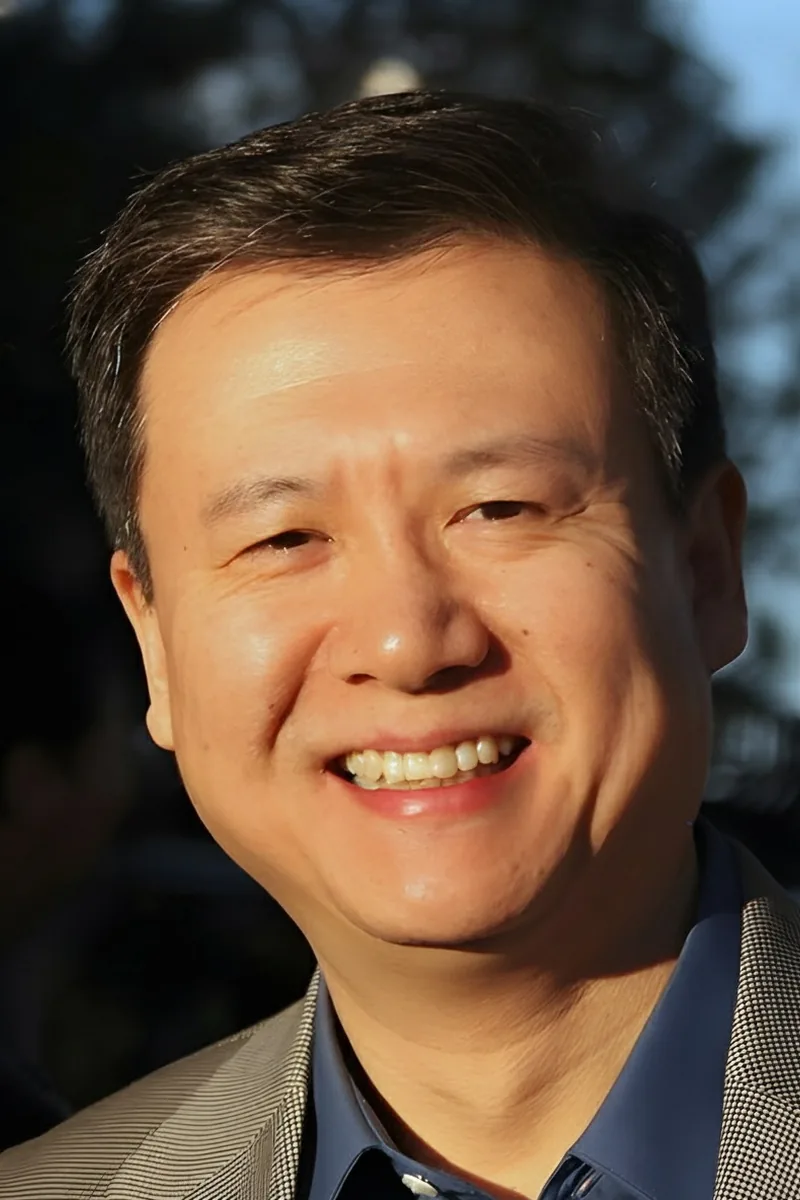
Tim's physics and engineering background gives him a quantitative lens on chemistry that's particularly useful for topics like stoichiometry, gas laws, and thermochemistry — areas where students often struggle with unit conversions and proportional reasoning. He approaches chemical concepts through the math and physical principles underlying them, which can click for students who think more like scientists than memorizers.

Dental school entrance exams and a microbiology degree both demand fluency in chemistry — Daniel has worked through concepts like stoichiometry, gas laws, and solution chemistry not just in coursework but in preparation for the DAT, where those topics are tested under real pressure. He teaches the reasoning behind balancing equations and predicting products by connecting them back to the atomic-level behavior that makes each reaction make sense, rather than handing students a list of rules to memorize.
Rachelle's philosophy degree might seem unrelated to chemistry, but the logical reasoning she honed at ASU — graduating Summa Cum Laude — translates directly to working through dimensional analysis, stoichiometry setups, and the if-then logic of predicting reaction products. She teaches students to treat chemistry problems like arguments: identify what you know, figure out what's missing, and build a chain of reasoning to get there.
I have over two years of tutoring and teaching experience at Case Western Reserve University. I served as a Supplemental Instructor for ENGR 145 (Chemistry of Materials), where I created worksheets, led review sessions, and helped students develop strong conceptual foundations. I later worked as a Teaching Assistant for ENGR 210 (Circuits and Instrumentation), grading assignments and assisting students with hands-on circuit building and lab work. As a Biomedical Engineering major on the pre-med track, I specialize in tutoring pre-health and engineering courses, including General and Physical Chemistry, Math, Biology, Physics, and Anatomy and Physiology. I also provide MCAT preparation in the B/B, C/P, and P/S sections. My teaching approach focuses on clear explanations, active problem-solving, and adapting to each student's learning style. I strive to make challenging material approachable while helping students build confidence and independent learning skills.
Chemistry wasn't Andrew's college major, but the logical problem-solving he honed through a Northwestern economics degree and Tulane law school maps directly onto balancing equations, stoichiometry, and dimensional analysis. He approaches chemistry problems the way he'd approach a legal argument: identify what you know, figure out what's missing, and work step by step toward the answer.
Stoichiometry and gas laws tend to click faster when a tutor can tie them back to how molecules actually behave in living systems — and Amanda's dual background in biology and anthropology means she's been applying chemistry concepts across disciplines for years, not just memorizing them in isolation. She digs into the quantitative reasoning behind mole conversions and reaction balancing, building the kind of step-by-step logic that carries students through tougher units like equilibrium and thermochemistry. Rated 4.9 by students.
Mole conversions, gas laws, and acid-base equilibria each have their own logic, and River teaches them as connected ideas rather than isolated formulas to memorize. Coming from a conservation biology program at ASU, he spent semesters applying chemistry concepts in lab settings — titrations, spectrophotometry, buffer calculations — which gives him a practical feel for how the math and the chemistry fit together. He's rated 4.8 by students.
Organic chemistry was Sebastian's toughest course in his pre-med program at Arizona State — and the one that taught him the most about how to actually learn chemistry, from the ground up. That experience shapes how he teaches high school topics like bonding, nomenclature, and reaction classification: he walks through the underlying logic so students build real understanding before layering on calculations. He also tutors general chemistry at the university level, so the high school material stays sharp.
Chemistry clicks once a student sees the logic behind it — why certain elements bond, how moles connect mass to particle count, what's actually happening during a reaction. Spencer treats each concept as a puzzle to solve rather than a formula to memorize, drawing on his own coursework in science and math to show how stoichiometry and periodic trends follow predictable rules.
Hritik graduated summa cum laude from Arizona State's Honors College with a Biochemistry degree, which means he's deeply fluent in the chemistry concepts high schoolers encounter — stoichiometry, equilibrium, acid-base reactions, and electron configurations. He breaks down problems step by step so the logic behind each calculation becomes clear, not just the formula.
Mole conversions, electron configurations, acid-base reactions — high school chemistry is full of concepts that seem disconnected until someone maps out how they fit together. Paul draws on his geological sciences training, where chemistry was essential for understanding everything from mineral identification to groundwater analysis, to give students a coherent picture of how matter behaves.
Genetics research at the PhD level means Cameron has spent years thinking about chemistry from the molecular side — how bond energies drive protein folding, why electronegativity shapes the behavior of biological molecules, and what makes certain reactions thermodynamically favorable. That perspective gives a concrete anchor to high school topics like bonding, periodic trends, and reaction energetics, turning abstract rules into something students can trace back to how molecules actually behave.
Working as a civil engineer means Alina uses chemistry principles — stoichiometry, material properties, reaction behavior — in practical contexts like concrete mix design and water treatment, which gives her a grounded way to explain why these concepts exist beyond the textbook. She walks students through the quantitative reasoning behind problems step by step, especially in areas like dimensional analysis and mole calculations where the setup matters more than the formula. Rated 5.0 by students.
Balancing redox reactions, predicting molecular geometry, and navigating acid-base equilibria all demand a kind of chemical intuition that only comes from repeated practice with feedback. Charles built that intuition through his biochemistry degree and now applies his education training to diagnose exactly where a student's reasoning goes off track.
Hanna treats high school chemistry as the foundation for everything that comes later in science, so she digs into the reasoning behind stoichiometry, electron configurations, and equilibrium rather than letting students coast on memorized formulas. Her premed background and AP Chemistry teaching experience mean she can connect what students learn now to the college-level work ahead.
Maurice's Special Education master's degree trained him to recognize exactly where a student's understanding breaks down — a skill that matters in chemistry, where a shaky grasp of something like electron arrangement can silently derail everything from bonding to reaction predictions. He rebuilds those gaps by adjusting his explanations in real time, turning abstract ideas like nomenclature rules or mole relationships into structured, step-by-step reasoning a student can actually hold onto.
Aerospace engineering at Georgia Tech requires serious chemistry chops — Naveen tackled stoichiometry, thermochemistry, and molecular bonding before ever touching a wind tunnel. He breaks down tricky concepts like limiting reagents and equilibrium by connecting them to real engineering problems, which makes the logic behind the math click faster.
Hi, I recently earned my Ph.D. in Organic Chemistry from Purdue University and have entered the private sector. In my program, I found that teaching and instructing students was very enjoyable and I wish to continue that by being a tutor. I have been a successful tutor for over a decade and know how to instruct to a variety of different skill sets and learning abilities.
Balancing equations and stoichiometry are one thing — understanding why reactions happen is another. Pooja's biology coursework at the University of Houston means she regularly uses chemistry concepts like acid-base equilibria and molecular bonding in a life-sciences context, giving her a practical angle on the material that goes beyond rote calculation.
Most high school chemistry struggles come down to one thing: students try to memorize procedures for mole conversions or electron configurations without understanding why the math works. Daniel tackles this by teaching the underlying logic — dimensional analysis, periodic trends, bonding theory — so that problem-solving becomes repeatable instead of random.
Stoichiometry trips up more high school chemistry students than almost any other topic, usually because the mole concept never fully clicked. Yuxuan ran informal review sessions for general chemistry at UC Berkeley and learned to diagnose exactly where a student's understanding breaks down — whether it's dimensional analysis, limiting reagents, or balancing redox reactions — and rebuild from there.
The mole concept trips up more high school chemistry students than almost anything else, usually because the math feels disconnected from the science. As a math major at Rice who also tutors across the chemistry curriculum, Aaron bridges that gap — he explains dimensional analysis and stoichiometric ratios in a way that makes the numbers meaningful, not just mechanical.
The jump to high school chemistry trips up a lot of students right around mole conversions and gas laws, when the subject shifts from descriptive to quantitative. Musa spent a year at ASU's tutoring center pinpointing these exact sticking points and developing clear, step-by-step explanations for each one. His biological sciences background also lets him show students why chemistry matters beyond the classroom — in biochemistry, medicine, and environmental science.
Balancing equations, stoichiometry, electron configurations — high school chemistry throws a lot of new vocabulary and math at students simultaneously. Ekta's engineering background means she can connect abstract concepts like mole ratios and periodic trends to concrete, logical problem-solving steps that actually make sense.
Balancing equations, stoichiometry, and the periodic trends that explain reactivity — Paul tackles these core chemistry concepts by tying them back to real-world examples that make the logic click. His biology degree means he understands how chemistry operates inside living systems, which gives students a richer picture of why these reactions matter. Rated 5.0 by students.
As a dedicated tutor with a strong foundation in Chemical & Biomolecular Engineering from Johns Hopkins University, I have a passion for teaching complex subjects like Chemistry, Biochemistry, and Physics. Although my formal tutoring experience is limited, I have actively helped peers understand challenging material throughout my academic journey. My approach centers on identifying students' specific areas of confusion and building from there, fostering a supportive environment where they can thrive. I believe that teaching is most effective when students engage with the material actively, and I strive to make learning enjoyable and approachable. Outside of academics, I enjoy playing basketball, soccer, chess, and participating in engineering projects, which further enhances my problem-solving skills. I am eager to inspire students and help them achieve their academic goals.
Working daily with CRISPR-Cas9 and other biochemical tools in a Yale research lab, Matthew sees chemistry in action — the thermodynamics of enzyme reactions, the pH sensitivity of buffer systems, the molecular interactions that make or break an experiment. That hands-on context sharpens how he teaches high school topics like equilibrium, gas laws, and nomenclature, because he can point to exactly where each concept shows up beyond the textbook.
Starting chemistry for the first time can feel like learning a new language — moles, electron configurations, Lewis structures — and Eric excels at translating that language into something intuitive. He holds a master's in chemistry and approaches introductory topics with patience and specificity, making sure students understand the 'why' behind each concept before moving to the next one.
Balancing equations and stoichiometry trip up most high school chemistry students because the logic feels invisible at first. Garrett teaches the mole concept by tying it to tangible quantities — grams on a scale, liters of gas — so the math stops feeling arbitrary. His background in biology and physical chemistry also lets him show students where these reactions actually matter in living systems.
General chemistry was the first subject Alec taught as a TA at Cornell, running problem-solving sessions where students worked through stoichiometry, equilibrium, and acid-base reactions in real time. That hands-on teaching background means he knows exactly where high schoolers get tripped up — whether it's balancing redox equations or making sense of periodic trends. Rated 4.8 by students.
Balancing chemical equations, predicting products, and navigating the mole concept are the exact places where high school chemistry students tend to stall out. Ethan's science-heavy courseload at WashU keeps him sharp on these fundamentals, and he walks through each problem type with enough patience to make sure the reasoning — not just the answer — actually lands.
Most high school Chemistry struggles come down to one thing: the periodic table is supposed to be a cheat sheet, but nobody taught students how to read it. Sharan connects trends like electronegativity and atomic radius to actual behavior in reactions, so predicting whether a bond is ionic or covalent stops being a guessing game. She's earned a 5.0 rating tutoring science subjects alongside her premed studies at Cornell.
Stoichiometry, electron configurations, and equilibrium reactions tend to feel like disconnected rules until someone shows how they fit together. Waleed's engineering coursework required strong chemistry fundamentals — particularly in thermodynamics and molecular interactions — and he uses that background to teach the logic underneath the formulas rather than just the formulas themselves.
Balancing redox equations, predicting products, and navigating stoichiometry all become more manageable when a student understands the 'why' behind each reaction type. Maggie's molecular and cellular biology degree gave her deep fluency in chemical principles, and she applies that knowledge to demystify everything from periodic trends to equilibrium calculations. She holds a 5.0 rating from students.
A physics major might seem like an unusual pick for chemistry, but Nima's deep comfort with atomic structure, thermodynamics, and quantitative problem-solving maps directly onto the trickiest parts of high school chem — stoichiometry, equilibrium calculations, and electron configurations. He approaches chemical concepts through the lens of why atoms and molecules behave the way they do, not just how to balance the equation.
When electron configurations and periodic trends start piling up alongside acid-base equilibria and redox reactions, high school chemistry can feel like two different courses crammed into one. Caroline tackles both sides — the conceptual and the computational — using her engineering mindset to show students how dimensional analysis and logical problem setup make even the trickiest stoichiometry problems approachable.
When mole conversions and electron configurations start piling up in high school chemistry, the subject can feel like pure memorization. Andrew reframes it: he walks through the logic of the periodic table so students can predict reactivity, bonding behavior, and molecular geometry from first principles instead of flashcards. Rated 4.8 by students.
Running an immunology lab at Columbia means Matthew uses chemistry daily — from buffer calculations to understanding reaction kinetics in biological systems. For high school students tackling stoichiometry, equilibrium, or electron configurations, he explains the logic behind each concept rather than handing out shortcuts that fall apart on harder problems. Rated 5.0 by students, he makes the quantitative side of chemistry far less intimidating.
Testimonials
Because the right High School Chemistry tutor makes all the difference.
Average Session Rating – Based on 3.4M Learner Ratings
Other Gilbert Tutors
Related Science Tutors in Gilbert
Frequently Asked Questions
Varsity Tutors matches Gilbert students with expert High School Chemistry tutors for 1-on-1 instruction. We pair each student with a tutor based on their specific needs, learning style, and goals.
Whether you need homework help, exam prep, or want to get ahead, our High School Chemistry tutors are ready to help.
Common challenges include gaps from earlier material, difficulty with specific concepts, and trouble applying learning to new problems. These issues can snowball quickly in High School Chemistry.
A tutor identifies where you're stuck, fills in gaps, and provides targeted practice. The 1-on-1 format means you get help exactly where you need it.
Tutors work with your student's actual coursework—homework assignments, class notes, and upcoming tests. This keeps tutoring directly relevant to what's happening in the classroom.
When you share information about your student's school and curriculum, we can match you with a tutor who has relevant experience.
All tutors complete background checks, credential verification, and teaching evaluation. Many of our High School Chemistry tutors hold advanced degrees or have years of teaching experience.
You can review tutor profiles to find someone with the right background for your student's level and needs.
Many students see improved grades within a few weeks, along with better understanding of High School Chemistry concepts and more confidence tackling challenging material.
Tutors track progress and adjust their approach to ensure continued improvement.
Most students benefit from 1-2 sessions per week. More frequent sessions help if your student is significantly behind or has an important exam coming up.
Your tutor can recommend a schedule based on your student's specific situation and goals.
Tutoring is purchased in packages of hours, with rates varying by tutor experience. Varsity Tutors offers several options to fit different budgets and needs.
You can discuss pricing during your consultation to find what works best.
Your tutor will assess where your student is, discuss goals, and start working on priority areas. Most students bring current homework or upcoming test material to focus on.
By the end, you'll have a clear sense of how the tutor can help and a plan for moving forward.
Let’s find your perfect tutor
Answer a few quick questions. We’ll recommend the right plan and match you with a top 5% tutor.