Award-Winning AP Calculus AB Tutors
serving Gilbert, AZ
AP Calculus AB
Tutors in Gilbert
Private 1-on-1 tutoring, weekly live classes for academic support, test prep & enrichment, practice tests and diagnostics, and more to elevate grades and test scores.
Based on 3.4M Learner Ratings
UniversitiesSchools & Universities
DeliveredHours Delivered
ProficiencyGrowth in Proficiency
Who needs tutoring?
No obligation. Takes ~1 minute.

When I was in high school, I remember seeing the joy of my math teachers when they would teach in class. This inspired me to become a high school math teacher. The first step was becoming a peer tutor to my classmates. This lead to tutoring math to college students. Then tutoring students while working as a TA. Then I worked as a data scientist which not only did I understand more how to apply math in the workspace, but also learned how to explain math concepts to coworkers without a strong math background. This helped me to shape my tutoring philosophy to relate to the person being tutored and this opened the door to me teaching high school calculus 1 & calculus 2! I am currently teaching precalculus at a community college.
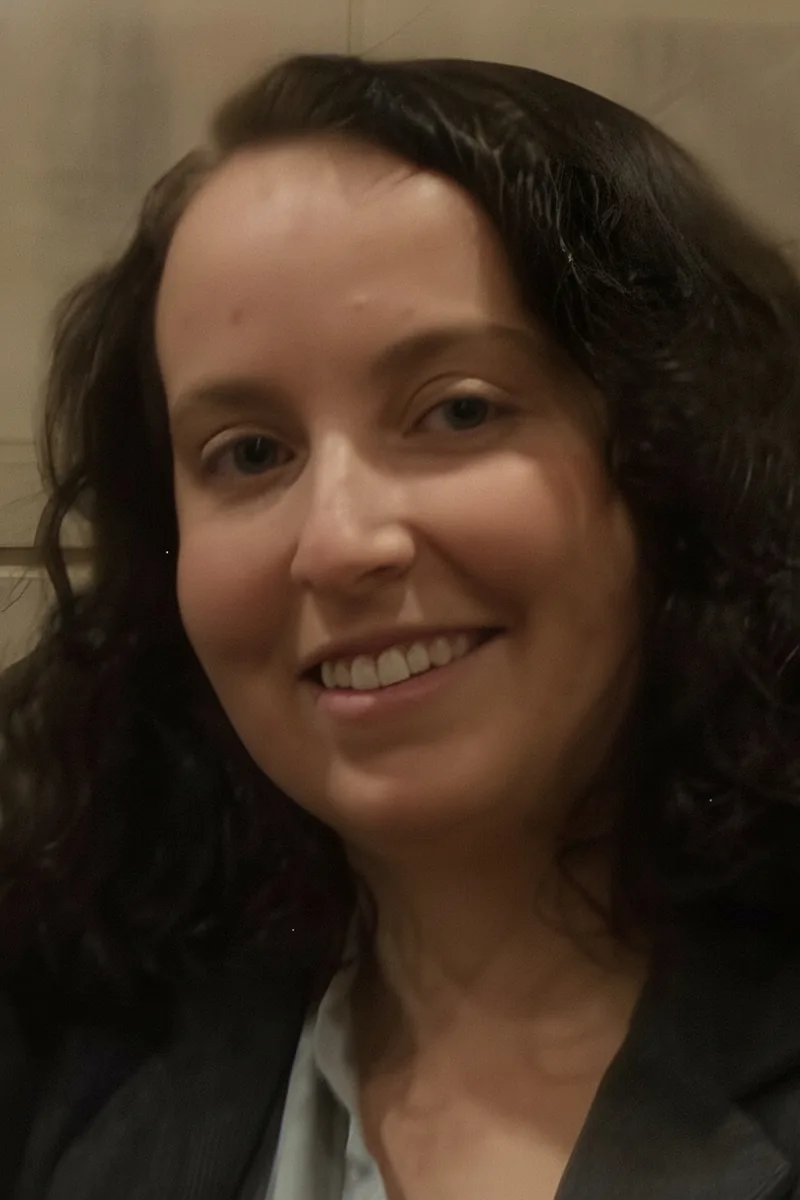
Kristi calls calculus her favorite subject to teach, and her AP Calculus AB sessions zero in on building real intuition for limits, derivatives, and the meaning behind the Fundamental Theorem — not just memorizing formulas for the exam. Her dual astrophysics degree from Harvard means she can show students how these tools actually describe the physical world, from rates of change to accumulation problems.
The leap from memorizing derivative rules to applying them — related rates, optimization, interpreting accumulation functions — is where most AB students stall. Jake teaches each application type as its own problem-solving framework, giving students a reliable way to set up problems before they ever touch the calculus. His 4.9 rating speaks to how well that structured approach clicks.
Hello! I'm Alexis Kelley! In Louisiana, I have begun volunteering with Baton Rouge Youth Coalition where I help senior students complete the college application process from finding fit to writing essays. Having just recently gone through this process and successfully navigating elite admissions like Columbia, Cornell, and Duke I feel equipped (and excited!) to share my advice. Whether this looks like help putting your story into words on the common application essay or determining the best colleges to apply to, I would love to be a part of this process. All through high school I was a math tutor ranging in topics from basic elementary math to AP Calculus! I really enjoy teaching math (especially algebra and calculus!!). I would also be more than happy to help with any standardized testing prep. I want to help students reach their maximum potential and achieve the target scores they're looking for! I am super eager to meet you and get started!
Holding dual degrees in physics and mathematics, Sam attacks AB topics like limits, continuity, and the Fundamental Theorem from both the rigorous proof side and the applied side — knowing why a theorem is true and seeing it govern real physical behavior. That combination is especially useful when students hit the conceptual free-response questions where procedural fluency alone isn't enough to set up the problem correctly. Rated 5.0 by students, with a 1510 SAT reinforcing the quantitative precision behind his explanations.
Having completed coursework through Calculus 3, differential equations, and linear algebra, Christopher brings depth that lets him explain AP Calculus AB concepts — limits, derivatives, integrals — in the context of where they lead, not just what's on the exam. He breaks down tricky applications like related rates and accumulation functions by connecting them to intuitive, real-world reasoning.
The jump from Pre-Calc to AP Calculus AB trips up students who memorized formulas but never built a mental picture of what a derivative represents. Lindsay tackles this by connecting rate-of-change problems to real scenarios from her biology background — population growth, reaction rates, fluid dynamics — so that concepts like the chain rule and Riemann sums feel concrete rather than abstract. Her math minor at the University of Arizona kept her deep in calculus coursework well beyond the AP level.
The leap from memorizing derivative rules to actually reasoning through related rates or accumulation problems is where most AP Calculus AB students stall. Yurok breaks these problems into physical stories — shrinking shadows, filling tanks — drawing on his physics background to make abstract calculus feel concrete and solvable.
I have been a tutor for over five years. I enjoy helping others to learn the subjects that I believe I am proficient enough to teach. I offer tutoring in calculus, physics, and computer science. While I aim to help my students understand a concept, the motivation to improve and learn must come from them. I will do my best to inspire such a mentality.
Mechanical engineering coursework at Arizona State doesn't let you fake your way through calculus — Nitesh has worked derivatives and integrals into stress analyses, kinematics problems, and thermodynamic models where a wrong setup means a wrong answer, full stop. That engineering rigor pays off most when teaching AB students how to handle the exam's optimization and accumulation problems, where building the right mathematical model from a word problem is the entire challenge. Rated 4.9 by students.
Aerospace engineering at Georgia Tech is essentially calculus with wings — Naveen's coursework applies derivatives to model flight dynamics and integrals to compute lift and thrust, so the AB curriculum's core concepts map onto problems he solves routinely. He's particularly effective at teaching the limit definition and continuity concepts that trip students up early, since getting those right determines whether the rest of the course feels intuitive or like a guessing game. His 35 ACT and 1570 SAT back up the quantitative precision behind his explanations.
Limits, derivatives, and integrals each represent a genuinely new way of thinking about functions, and rushing past the conceptual shift is where most AP Calc AB students get stuck. Aaron's pure math training at Rice means he can explain why the chain rule works or what a Riemann sum actually measures, then connect that understanding to the kinds of free-response problems the AP exam throws at students. He holds a 4.9 client rating.
The jump from "find the derivative" to "explain what the derivative means in context" is where most AP Calculus AB students lose points on free-response questions. Yuxuan breaks down limits, the chain rule, and accumulation functions by tying each concept back to its graphical and physical interpretation, drawing on the applied math she uses daily in her UC Berkeley science coursework.
Jack earned a 5.0 rating teaching AP Calculus AB by breaking the course into two core skills: understanding what derivatives and integrals actually mean, and learning the mechanical rules for computing them. His engineering background at ASU keeps him using this math daily, so he can pull in concrete examples — rates of change in structures, optimization of real quantities — that make abstract ideas tangible.
I hold a B.S. in Mathematics from Arizona State University and bring over a decade of professional experience to university-level mathematics instruction. As a CRLA Certified educator tutoring since 2013, my methodology focuses on building a rigorous conceptual understanding of the mathematical architecture rather than relying on rote memorization. I specialize in dismantling complex gatekeeper courses, including Calculus, Differential Equations, Discrete Mathematics, Finite Mathematics, and Statistics. When students hit a wall in these advanced subjects, it is rarely a lack of effort. It is almost always a breakdown in foundational logic. My remote sessions utilize a premium digital whiteboard workflow to meticulously map out exact logical pathways and repair these foundational gaps. This first-principles approach rebuilds analytical independence and guarantees absolute precision for engineering, business, and advanced science applications.
The jump from "find the derivative" to "explain what the derivative means on this graph" is where most AP Calculus AB students lose points on free-response questions. Justin bridges that gap by teaching limits, Riemann sums, and the Fundamental Theorem as connected ideas rather than isolated procedures — an approach shaped by his dual background in physics and mathematics at Washington University in St. Louis.
Scoring a 1570 SAT and 35 ACT takes the kind of disciplined problem-solving that translates directly into teaching limits, derivatives, and integration techniques at the AB level. Amber zeroes in on the moment students go from mechanically applying the power rule to actually understanding why the Fundamental Theorem ties differentiation and integration together — a shift that unlocks the entire second half of the course. Rated 5.0 by students.
The jump from pre-calculus to AP Calculus AB is where many students first encounter limits, derivatives, and the chain rule as interconnected ideas rather than isolated procedures. Corrina breaks down each concept using visual and physical intuition drawn from her engineering background, making abstractions like related rates feel concrete and solvable.
Being a TA for two math classes at Stanford sharpened Helen's ability to spot exactly where students lose the thread — whether it's the conceptual jump from average to instantaneous rate of change or the mechanics of setting up a definite integral from a word problem. Her 1580 SAT and 34 ACT reflect the kind of precise, fast reasoning that the AB exam's time-pressured free-response section demands. Rated 5.0 by students.
The jump from memorizing derivative rules to applying them on AP free-response questions is where most Calc AB students lose points. Adam breaks down each problem type — related rates, accumulation functions, slope fields — by teaching the reasoning behind setups so students can handle unfamiliar prompts on exam day.
Limits, derivatives, and integrals each build on the last, so a shaky grasp of one topic can quietly undermine everything that follows. Brooke tackles AP Calculus AB by connecting each concept back to its graphical and physical meaning — something her engineering training at Duke reinforces every day. She scored a 1550 on the SAT and carries that same precision into calculus.
IB Diploma graduates know what it's like to hit calculus from multiple directions at once — Dalton's experience completing that program means he learned early how to manage the conceptual load of limits, derivatives, and integrals alongside heavy coursework in other subjects. He's especially good at teaching students how to pace themselves through the AB curriculum and build the kind of problem-setup instincts that free-response graders reward. His 35 ACT and 4.9 rating back up an approach built on disciplined preparation rather than shortcuts.
Mechanical and aerospace engineering at Princeton means Matthew builds on calculus daily — computing trajectories, analyzing forces, optimizing structural loads — so the AB curriculum's core techniques are second nature to him. He teaches each new concept by working through a few problems step by step, then hands students progressively harder variations, asking targeted questions that expose gaps before they become exam-day surprises. His 34 ACT underscores the quantitative precision behind that approach.
Brett spent his senior year at Syracuse tutoring student athletes through AP-level calculus, breaking down limits, derivatives, and integration techniques for students who needed concepts explained more than once and in more than one way. His engineering background at Penn means he can show exactly how the chain rule or a Riemann sum connects to real problems in science and design.
Cornell's engineering curriculum throws calculus at you from day one — Ravnoor uses derivatives and integrals across his computer science coursework to analyze algorithm efficiency and model computational processes, which keeps the AB material sharp and immediately relevant. He's especially strong at teaching limits and continuity, breaking down the epsilon-delta logic that most students find intimidating into concrete, step-by-step reasoning. Rated 5.0 by students.
Three engineering degrees mean Andrea has spent years where calculus isn't a course but a daily language — computing derivatives to analyze mechanical stress, integrating to find volumes and energy transfers across systems. That fluency shows up most when she teaches limits and continuity, building the conceptual scaffolding that keeps students from hitting a wall once the AB curriculum reaches the Fundamental Theorem. Her 32 ACT and 4.8 rating back up an approach grounded in genuine mechanical intuition.
Having tutored college students through calculus at Harvard while majoring in chemistry, James knows exactly where AB students hit friction — limits that seem pointless, the conceptual jump to integration, and free-response problems that demand more than mechanical differentiation. His approach leans on building the reasoning behind each technique, so when the exam asks students to justify a answer using the Mean Value Theorem or interpret a definite integral in context, the logic is already there. A 1570 SAT and 4.9 rating back up the precision he brings to every session.
Testimonials
Because the right AP Calculus AB tutor makes all the difference.
Average Session Rating – Based on 3.4M Learner Ratings
Practice AP Calculus AB
Free practice tests, flashcards, and AI tutoring for AP Calculus AB
Other Gilbert Tutors
Related Math Tutors in Gilbert
Frequently Asked Questions
Varsity Tutors matches Gilbert students with expert AP Calculus AB tutors for 1-on-1 instruction. We pair each student with a tutor based on their specific needs, learning style, and goals.
Whether you need homework help, exam prep, or want to get ahead, our AP Calculus AB tutors are ready to help.
Common challenges include gaps from earlier material, difficulty with specific concepts, and trouble applying learning to new problems. These issues can snowball quickly in AP Calculus AB.
A tutor identifies where you're stuck, fills in gaps, and provides targeted practice. The 1-on-1 format means you get help exactly where you need it.
Tutors work with your student's actual coursework—homework assignments, class notes, and upcoming tests. This keeps tutoring directly relevant to what's happening in the classroom.
When you share information about your student's school and curriculum, we can match you with a tutor who has relevant experience.
All tutors complete background checks, credential verification, and teaching evaluation. Many of our AP Calculus AB tutors hold advanced degrees or have years of teaching experience.
You can review tutor profiles to find someone with the right background for your student's level and needs.
Many students see improved grades within a few weeks, along with better understanding of AP Calculus AB concepts and more confidence tackling challenging material.
Tutors track progress and adjust their approach to ensure continued improvement.
Most students benefit from 1-2 sessions per week. More frequent sessions help if your student is significantly behind or has an important exam coming up.
Your tutor can recommend a schedule based on your student's specific situation and goals.
Tutoring is purchased in packages of hours, with rates varying by tutor experience. Varsity Tutors offers several options to fit different budgets and needs.
You can discuss pricing during your consultation to find what works best.
Your tutor will assess where your student is, discuss goals, and start working on priority areas. Most students bring current homework or upcoming test material to focus on.
By the end, you'll have a clear sense of how the tutor can help and a plan for moving forward.
Let’s find your perfect tutor
Answer a few quick questions. We’ll recommend the right plan and match you with a top 5% tutor.