Award-Winning Math Tutors
serving Albany, NY
Math
Tutors in Albany
Private 1-on-1 tutoring, weekly live classes for academic support, test prep & enrichment, practice tests and diagnostics, and more to elevate grades and test scores.
Based on 3.4M Learner Ratings
UniversitiesSchools & Universities
DeliveredHours Delivered
ProficiencyGrowth in Proficiency
Who needs tutoring?
No obligation. Takes ~1 minute.
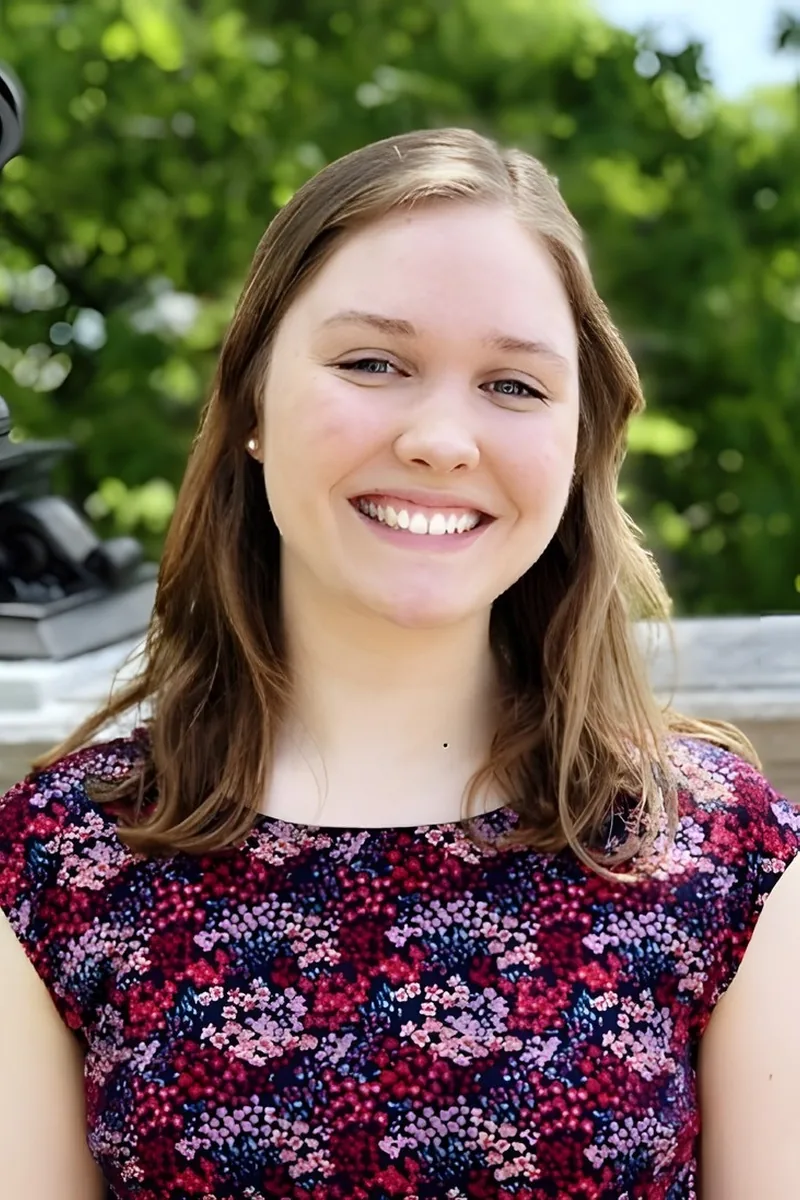
Clare's biopsychology degree required a steady diet of statistics, data analysis, and quantitative reasoning — skills that now inform how she breaks down everything from pre-algebra concepts to calculus problems. She's particularly good at connecting math to the kind of real-world data interpretation she did in research settings, which gives students a concrete reason to care about what they're solving. Rated 5.0 by students, with a 34 ACT to back up her cross-subject range.
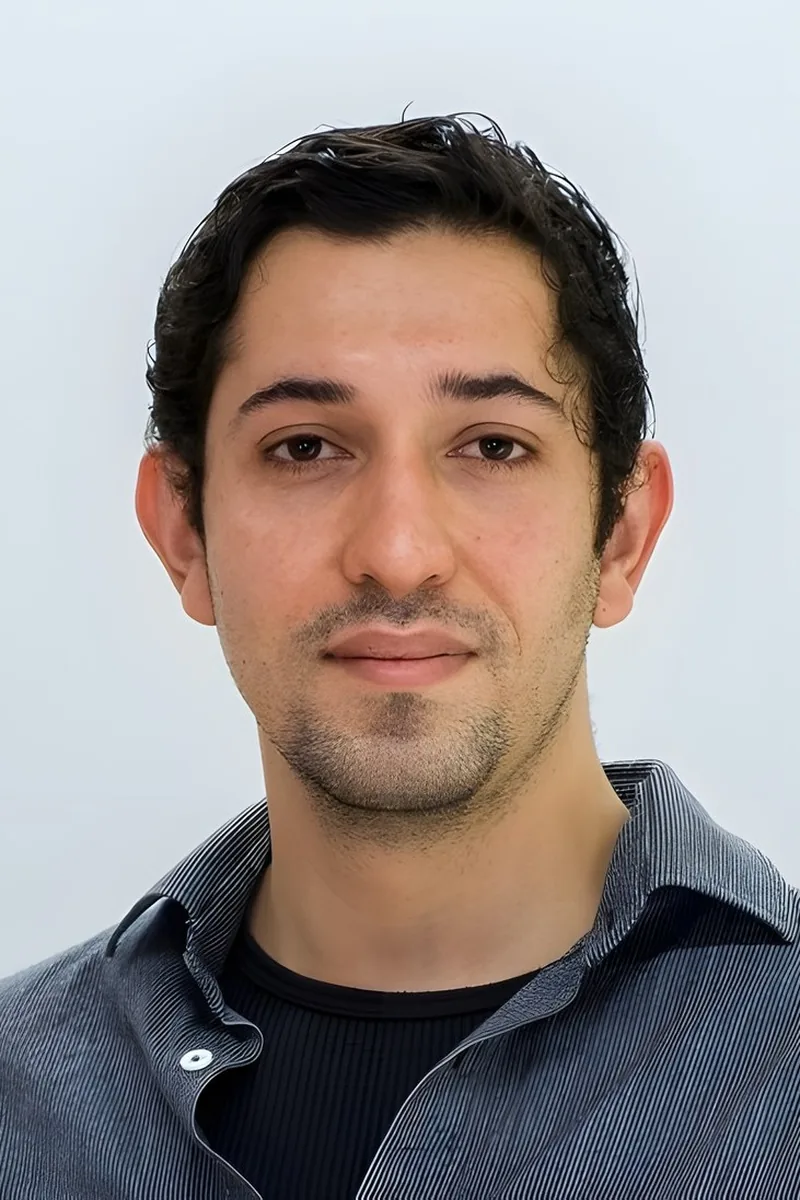
While Esteban's primary expertise lives in the social sciences and languages, he brings the same structured, dialogue-driven approach to math topics like fractions, ratios, and basic algebraic thinking. He breaks problems into smaller reasoning steps and encourages students to explain their logic out loud — a technique drawn from his anthropology training that turns passive number-crunching into active understanding.
From fraction operations in pre-algebra through derivatives in calculus, Andrew covers an unusually wide range of math and knows where students tend to get tripped up at each level. His dual focus on finance and mathematics at Boston College means he's constantly applying quantitative reasoning — and he brings that practical instinct to every problem set.
Jennifer's background in social sciences means she's spent plenty of time with data interpretation, basic statistics, and the quantitative reasoning that underpins research — skills that translate directly into teaching math at the elementary and middle school levels. She breaks down concepts like place value, multi-digit operations, and early equation-solving into clear, manageable steps, rated 4.9 by her students.
David approaches math by connecting procedures to the reasoning behind them, whether that's unpacking why cross-multiplication works in proportions or breaking down the logic of order of operations. His teaching background means he's skilled at identifying exactly where a concept stopped making sense and rebuilding from that point.
Years of teaching remedial reading gave Arielle a sharp eye for where understanding quietly breaks down — a skill that applies directly to math, where a shaky grasp of fractions or order of operations can silently sabotage everything from algebra to word problems. Her English background also means she's especially effective at untangling the language of math questions, teaching students to figure out what a problem is really asking before they start solving. Rated 4.8 by students.
Someone who solves math problems for fun brings a different energy to tutoring than someone who merely teaches procedures. Taylor genuinely enjoys the puzzle-solving side of math and uses that enthusiasm to walk students through concepts like proportional reasoning, equation solving, and number sense in ways that make the logic click.
Mimi approaches math through an inquiry-based lens shaped by her Harvard Ed.M., asking students to reason through problems rather than memorize procedures. Whether the topic is fractions, proportional reasoning, or early algebra concepts, she designs each session around the specific gaps a student brings in. Her creative, learner-centered style is especially effective for students who've decided they're 'not math people.'
From arithmetic through calculus and into graduate-level statistics, Nina has taught math at nearly every level as both a Columbia TA and a private tutor. She's especially effective at pinpointing the exact conceptual gap — whether it's fraction operations, proportional reasoning, or function notation — that's creating downstream confusion, then rebuilding understanding from that specific point.
Plenty of students decide early that they're "not math people" — Reid specializes in dismantling that belief. His approach connects abstract procedures to concrete reasoning, whether that means visualizing fractions on a number line or tracing why order of operations works the way it does, so that confidence builds alongside competence.
Years of teaching middle school math at a Boston charter school gave Liz a toolbox of ways to break down fractions, ratios, proportions, and early algebraic thinking so they actually click. She's especially skilled at identifying where a student's understanding breaks down and rebuilding from that exact point — a strength sharpened by her special education training. Rated 4.7 by students and families.
Solange approaches math as a subject that rewards structured thinking over speed, breaking problems into logical steps students can follow and eventually internalize. Her 34 ACT composite reflects sharp quantitative reasoning, and she applies that same methodical approach to arithmetic, pre-algebra, and foundational concepts that younger or struggling students need to build confidence.
Few tutors can teach pre-algebra and multivariable calculus with equal clarity, but Justin's math background runs from a double bachelor's in physics and mathematics through a PhD in Computational Mathematics at the University of Chicago. He pinpoints exactly where a concept breaks down for a student — whether that's fraction operations, quadratic factoring, or function transformations — and rebuilds understanding from that specific gap.
From basic operations through pre-algebra and into calculus, Daniel covers a wide math range and adjusts his explanations to wherever a student currently stands. He emphasizes translating word problems into equations — a skill that trips up students at every level — because once that click happens, the mechanics become far less intimidating.
Some students need to see a concept drawn out visually; others need to work backward from the answer to understand the steps. Sabira's applied mathematics degree at Johns Hopkins trained her to approach problems from multiple angles, whether that means arithmetic fundamentals, fraction operations, or early algebraic thinking. She adapts her explanations on the fly until the reasoning genuinely clicks.
From algebra through calculus, James has spent years teaching college and high school students to see math as a connected set of ideas rather than isolated procedures. His chemistry background means he constantly ties abstract concepts — like derivatives or systems of equations — back to tangible problems where the math actually does something. That context tends to make tricky topics click faster.
From fraction operations in middle school to derivatives in calculus, Sherry covers a wide math range and zeroes in on the conceptual gaps that cause recurring mistakes. Her psychology training at UChicago also means she's attuned to math anxiety — she knows how to rebuild a student's confidence around word problems or multi-step equations without glossing over the rigor.
A triple Bachelor of Science holder, Sung has spent years working through math at every level — from proportional reasoning and equation-solving in middle school to the limit definitions and derivative rules of calculus. He breaks problems into smaller logical steps so students can see the reasoning behind each move, not just follow a memorized procedure.
Meghan's 1520 SAT score reflects strong quantitative reasoning, and she applies that same structured, step-by-step thinking when walking students through math concepts like fractions, ratios, and word problems. Her journalism background means she's especially good at translating abstract math language into plain English that clicks.
A chemistry degree from Yale means Zosia has lived inside calculus, algebra, and applied math problems far beyond the textbook — calculating reaction rates, modeling physical systems, and working with logarithmic relationships daily. She connects abstract math concepts to tangible applications so that topics like functions, proportional reasoning, and equation-solving feel purposeful rather than arbitrary. Students who need both procedural fluency and conceptual understanding get both.
Pursuing a certificate in Statistics and Machine Learning alongside her philosophy degree at Princeton, Julie brings both computational rigor and clear logical thinking to math at every level. She breaks down problems — whether it's fraction operations or function analysis — into reasoning steps students can follow and replicate on their own. Rated 4.9 by students.
From pre-algebra fundamentals through calculus and linear algebra, Jai's engineering background means he's used every branch of math students typically encounter — and used it under pressure. He's especially sharp at showing why a technique works, not just demonstrating the steps, so that students can adapt when a problem looks slightly different from the textbook example. Rated on both his 1590 SAT and 35 ACT, his quantitative instincts run deep.
Maya's ACT score of 34 included the math section, and her tutoring range spans algebra through calculus — but her real edge is that she came to math through writing and the humanities, which means she knows exactly how to translate abstract procedures into plain language for students who don't think of themselves as "math people." She's spent over seven years working across age groups, so she's quick to spot whether a student's struggle is conceptual or just notational confusion. Rated 5.0 by clients.
From basic arithmetic through trigonometry and calculus, Matthew covers the full math pipeline and considers it his specialty. His teaching method is deliberate: he demonstrates a concept step by step, then puts students in the driver's seat with progressively harder problems, asking targeted questions along the way to make sure understanding — not just memorization — is happening.
Sash's 1560 SAT required serious math performance under pressure, and her Comparative Literature training — constantly analyzing structures, patterns, and logical progressions across texts — gives her an unexpected but effective lens for tackling math problems that demand careful, sequential reasoning. She's especially useful for students who freeze up on word-heavy questions, since parsing dense language and extracting what actually matters is literally what her degree trained her to do.
Jennifer's tutoring background spans algebra through calculus, but her real strength in math is translating word-heavy problems into clear steps — a natural extension of her language arts training. She's especially effective with students who understand concepts in class but freeze when facing unfamiliar problem formats on their own.
A Cornell biology graduate, Josef regularly applies quantitative reasoning to scientific problems — from calculating reaction rates to modeling population dynamics — which keeps his math sharp and grounded in real applications. He breaks down concepts like proportional reasoning, unit conversions, and algebraic manipulation by tying them to tangible scenarios students can visualize. Rated 5.0 by students.
Vivian's 36 ACT composite and 1530 SAT required mastery across every math domain tested — from algebraic manipulation and coordinate geometry to probability and data interpretation. She teaches the underlying logic of each problem type so students can adapt when a question looks unfamiliar, not just when it matches a formula they've memorized. Rated 4.9 by students.
Garrett's triple-major undergraduate path — including biology — meant he couldn't avoid math even if he wanted to: calculus, statistical analysis, and quantitative reasoning threaded through every science course he took. That constant application gives him a practical fluency with concepts like derivatives, data interpretation, and algebraic manipulation that he can translate into clear, step-by-step explanations. His 1530 SAT confirms the fundamentals are rock-solid.
A year as a course assistant in Harvard's math department gave Richard front-row experience watching where students get stuck — whether it's fraction operations in middle school or limit definitions in calculus. He earned a 1600 SAT and 36 ACT, and his approach to math emphasizes understanding the reasoning behind each step so that new problem types don't feel like starting from scratch.
From fraction operations in elementary school to limits in calculus, Julia has tutored math at nearly every level, and her Stanford economics background keeps her grounded in how mathematical thinking applies outside the classroom. She uses a Socratic approach — asking targeted questions that push students to identify patterns themselves rather than waiting for the formula to be handed to them.
Covering everything from basic arithmetic through calculus, Judah's math tutoring zeroes in on whatever concept is causing the bottleneck — whether that's fraction operations in middle school or function transformations in pre-calc. His 1580 SAT score reflects deep comfort with quantitative reasoning, and his approach emphasizes understanding why a method works so students can adapt it to unfamiliar problems.
Vansh covers math from elementary arithmetic through calculus, but what sets his approach apart is how he links each new concept to something a student already knows. Fractions become a gateway to ratios; ratios open the door to proportional reasoning and eventually algebra. That thread of continuity keeps students from feeling like every chapter is starting from scratch.
Big-picture thinking is Matthew's signature: before drilling a procedure, he shows students why a technique works and where it connects to concepts they already know. His Stanford bioinformatics training required fluency across algebra, calculus, and statistics, so he can meet a math problem from multiple angles. That holistic approach, rated 4.9 by students, is especially useful for visual and conceptual learners.
Evan's 1510 SAT required strong performance on the math section, and his film background gives him an unexpected edge: screenwriting is fundamentally about structure, sequencing, and logical cause-and-effect — the same thinking that underpins solving equations and working through multi-step problems. He's especially good at reframing a confusing math question as a narrative with a clear setup, conflict, and resolution, which tends to unlock understanding for students who don't think of themselves as "math people."
Christopher approaches math by connecting abstract procedures to the reasoning behind them — whether that's explaining why cross-multiplication works in proportions or walking through the logic of order of operations. His Yale training in the history of science gave him a deep appreciation for how mathematical ideas build on each other, which shapes the way he breaks down problems for students at every level.
Whether a student is wrestling with fraction operations or building toward competition-level problem solving, Ian brings the perspective of someone who uses math daily as a physics major at Yale. He's especially sharp at identifying the specific step where understanding breaks down — a misread negative sign, a shaky grasp of order of operations — and rebuilding from there.
Michelle's humanities training — journalism, Africana Studies, an American Studies MA from Columbia — means she's spent years extracting quantitative arguments from dense texts, interpreting data in social science research, and building logical cases from evidence, all skills that map directly onto tackling word problems and multi-step reasoning. She scored a 1380 on the SAT and holds a 5.0 client rating, and her strength in math lies in helping a student slow down and identify what a problem is actually asking before jumping to computation.
Whether it's fraction operations tripping up a middle schooler or logarithmic equations stumping a high schooler, Allen zeroes in on the specific conceptual gap causing the confusion rather than re-teaching an entire chapter. His 1570 SAT — with its heavy quantitative component — reflects genuine mathematical fluency, and he draws on experience across algebra, geometry, trigonometry, statistics, and calculus to meet whatever level a student needs.
MaryAnn covers foundational math concepts — fractions, proportions, order of operations, and early algebraic thinking — with an emphasis on translating word problems into equations. Her mentoring experience means she's skilled at identifying exactly where a student's understanding breaks down and rebuilding confidence from that point forward.
Testimonials
Because the right Math tutor makes all the difference.
Average Session Rating – Based on 3.4M Learner Ratings
Practice Math
Free practice tests, flashcards, and AI tutoring for Math
Other Albany Tutors
Related Math Tutors in Albany
Frequently Asked Questions
Many students in Albany struggle with the transition from memorizing procedures to understanding the underlying concepts—especially when tackling word problems, multi-step equations, and graphing. Others hit a wall with proofs in geometry or feel anxious about math overall. Personalized tutoring helps students move beyond "just getting the answer" to seeing the patterns and connections that make math click.
During an initial session, a tutor will assess your student's current understanding, identify specific gaps or misconceptions, and learn about their learning style and goals. This might involve reviewing recent homework, discussing which topics feel confusing, and working through a problem together to see how your student approaches math. This foundation helps the tutor create a personalized plan tailored to your student's needs.
Many students rush through steps or skip explanations, which leads to lost points and missed learning opportunities. Tutors teach students to organize their work clearly, explain their reasoning at each step, and check their answers using different methods. This builds both better problem-solving habits and the communication skills teachers look for on tests and assignments.
Yes. With 13 school districts across Albany, curricula and textbooks vary—from traditional approaches to standards-based programs. Tutors work with students using their actual coursework and can adapt explanations to match how concepts are taught in their specific classroom. This alignment ensures tutoring reinforces what students are learning in school rather than introducing conflicting methods.
Absolutely. Math anxiety often stems from past struggles or feeling rushed in class—the average student-teacher ratio in Albany is 14.7:1, which means students don't always get one-on-one attention when they need it. Personalized tutoring creates a low-pressure space where students can ask questions, make mistakes safely, and build confidence through small wins. Over time, this shifts their relationship with math from "I can't do this" to "I can figure this out."
Word problems require students to translate real-world situations into mathematical language—a skill that's separate from computation. Tutors teach strategies like identifying key information, drawing diagrams, breaking problems into steps, and checking if answers make sense. With practice and guidance, students learn to see word problems as puzzles to solve rather than confusing obstacles.
Proofs intimidate many students because they require both logical thinking and clear communication. Tutors break down the process—starting with understanding what you're trying to prove, identifying what you already know, and building a logical chain of statements. By working through examples and practicing the structure, students develop confidence in constructing their own proofs and understanding why they work.
Conceptual understanding comes from seeing how different topics relate—like how graphing connects to equations, or how area formulas build on each other. Tutors help students explore these relationships through multiple representations (equations, graphs, tables, real-world examples) so they build a connected web of understanding rather than isolated facts. This deeper comprehension makes new topics easier to learn and helps math feel less like random rules.
Let’s find your perfect tutor
Answer a few quick questions. We’ll recommend the right plan and match you with a top 5% tutor.