Award-Winning Math Tutors
serving Brooklyn, NY
Math
Tutors in Brooklyn
Private 1-on-1 tutoring, weekly live classes for academic support, test prep & enrichment, practice tests and diagnostics, and more to elevate grades and test scores.
Based on 3.4M Learner Ratings
UniversitiesSchools & Universities
DeliveredHours Delivered
ProficiencyGrowth in Proficiency
Who needs tutoring?
No obligation. Takes ~1 minute.
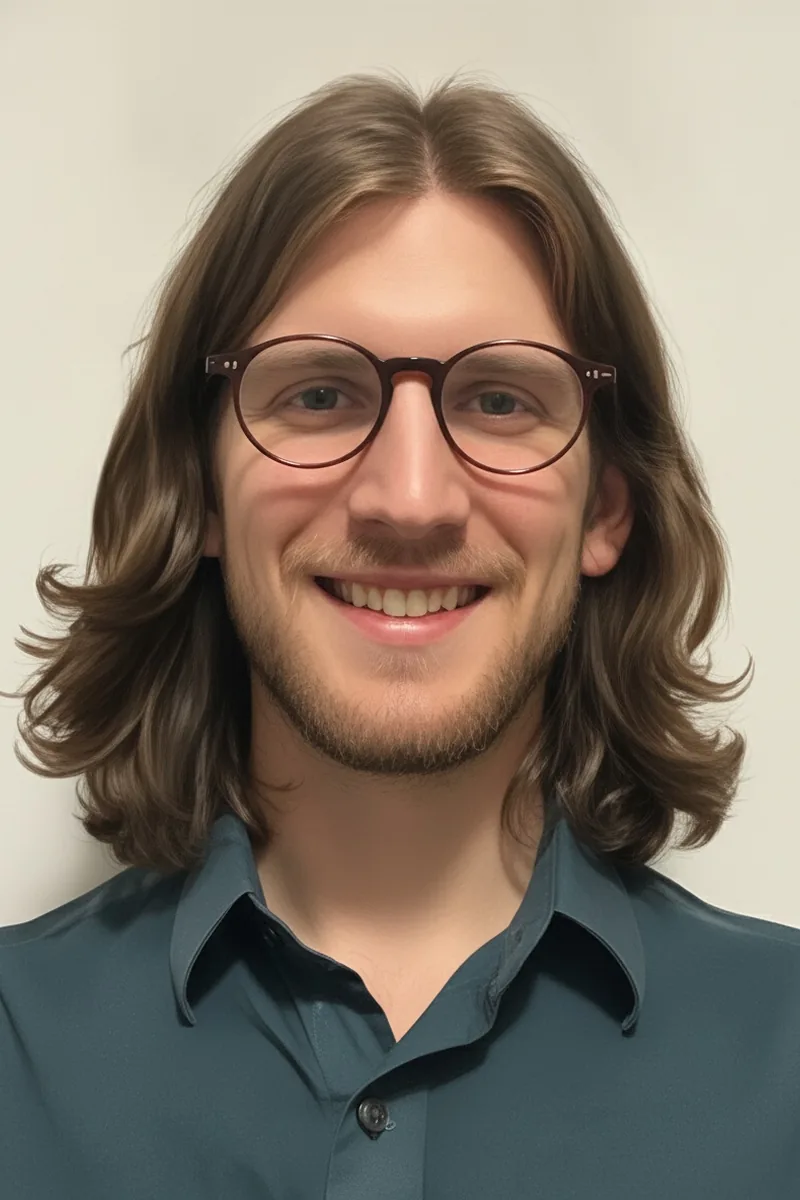
Plenty of students decide early that they're "not math people" — Reid specializes in dismantling that belief. His approach connects abstract procedures to concrete reasoning, whether that means visualizing fractions on a number line or tracing why order of operations works the way it does, so that confidence builds alongside competence.
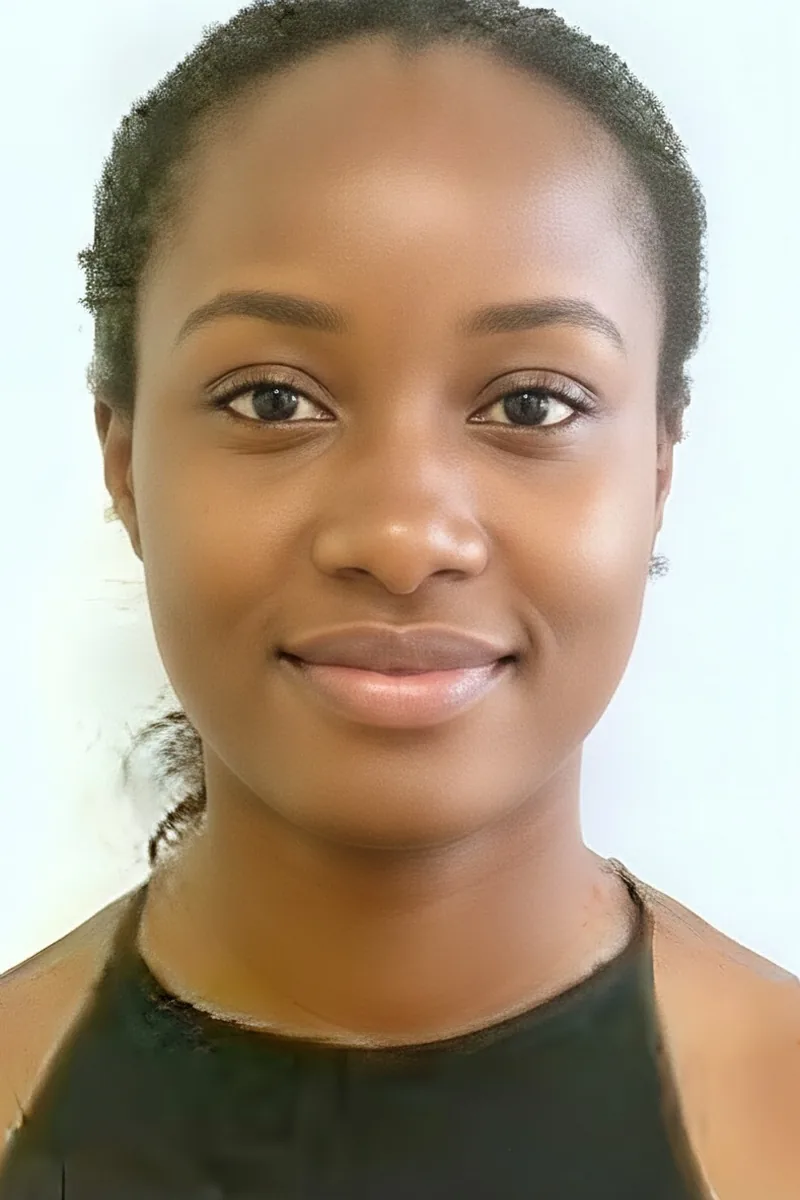
Solange approaches math as a subject that rewards structured thinking over speed, breaking problems into logical steps students can follow and eventually internalize. Her 34 ACT composite reflects sharp quantitative reasoning, and she applies that same methodical approach to arithmetic, pre-algebra, and foundational concepts that younger or struggling students need to build confidence.
Some students need to see a concept drawn out visually; others need to work backward from the answer to understand the steps. Sabira's applied mathematics degree at Johns Hopkins trained her to approach problems from multiple angles, whether that means arithmetic fundamentals, fraction operations, or early algebraic thinking. She adapts her explanations on the fly until the reasoning genuinely clicks.
From basic operations through pre-algebra and into calculus, Daniel covers a wide math range and adjusts his explanations to wherever a student currently stands. He emphasizes translating word problems into equations — a skill that trips up students at every level — because once that click happens, the mechanics become far less intimidating.
Maya's ACT score of 34 included the math section, and her tutoring range spans algebra through calculus — but her real edge is that she came to math through writing and the humanities, which means she knows exactly how to translate abstract procedures into plain language for students who don't think of themselves as "math people." She's spent over seven years working across age groups, so she's quick to spot whether a student's struggle is conceptual or just notational confusion. Rated 5.0 by clients.
Pursuing a certificate in Statistics and Machine Learning alongside her philosophy degree at Princeton, Julie brings both computational rigor and clear logical thinking to math at every level. She breaks down problems — whether it's fraction operations or function analysis — into reasoning steps students can follow and replicate on their own. Rated 4.9 by students.
Noah's 1540 SAT — earned through systematic mastery of the math section's particular logic — means he's deeply familiar with the algebra, geometry, and data analysis concepts that form the backbone of middle and high school math. He breaks problems into recognizable patterns so students learn to identify what a question is really asking before reaching for a formula.
Philosophy trained Moon to follow an argument wherever it leads — spotting hidden assumptions, testing each logical step — which is exactly what solving a multi-step algebra or calculus problem demands. That 1560 SAT wasn't built on memorized formulas but on the kind of structured reasoning his philosophy background sharpened, and he applies that same clarity when unpacking why a solution method works. Rated 5.0 by students.
Michelle's humanities training — journalism, Africana Studies, an American Studies MA from Columbia — means she's spent years extracting quantitative arguments from dense texts, interpreting data in social science research, and building logical cases from evidence, all skills that map directly onto tackling word problems and multi-step reasoning. She scored a 1380 on the SAT and holds a 5.0 client rating, and her strength in math lies in helping a student slow down and identify what a problem is actually asking before jumping to computation.
A history and political science major who scored a 34 ACT, Rachel approaches math by slowing down at the exact moment most students want to rush — the translation from word problem to equation. She's particularly effective with elementary and middle school math, where gaps in number sense or fraction fluency can quietly snowball into bigger struggles later. Her teaching instinct is to figure out where understanding breaks down, then rebuild from that point.
Whether a student is wrestling with fraction operations or building toward competition-level problem solving, Ian brings the perspective of someone who uses math daily as a physics major at Yale. He's especially sharp at identifying the specific step where understanding breaks down — a misread negative sign, a shaky grasp of order of operations — and rebuilding from there.
Whether it's fraction operations tripping up a middle schooler or logarithmic equations stumping a high schooler, Allen zeroes in on the specific conceptual gap causing the confusion rather than re-teaching an entire chapter. His 1570 SAT — with its heavy quantitative component — reflects genuine mathematical fluency, and he draws on experience across algebra, geometry, trigonometry, statistics, and calculus to meet whatever level a student needs.
David's economics and MBA training kept him deep in quantitative work — regression models, optimization problems, and applied calculus — so he's comfortable across a range of math levels from pre-algebra through calculus. He tends to anchor abstract procedures in concrete problems, showing students why a technique exists before drilling the mechanics of how to execute it.
Lucas approaches math by making sure students understand the reasoning behind each step rather than just following a memorized procedure. Whether it's setting up proportions, working through order of operations, or translating a word problem into an equation, he walks through the logic so the method actually sticks.
From fraction operations in middle school through functions and graphing in algebra to limits in calculus, Dana covers a wide swath of math — and she tutors all of it because she genuinely understands how earlier concepts build into later ones. When a calculus student struggles with derivatives, she can pinpoint whether the real gap is in algebra or trig and address it directly. That diagnostic instinct, paired with a perfect 36 ACT, keeps sessions efficient and targeted.
Sarah's subject range spans Latin and literature to calculus, which means she approaches math the way a strong generalist does — by making sure the reasoning behind each step is clear, not just the procedure. She's particularly effective with students who feel more confident in humanities and need someone who can translate mathematical concepts into plain language, whether they're working through proportional reasoning, linear equations, or basic functions.
From arithmetic fundamentals through trigonometry, Tameem covers a wide range of math with an emphasis on building number sense rather than rote calculation. His 1510 SAT — earned in part through disciplined quantitative prep — speaks to the kind of structured problem-solving approach he brings to every session.
While English is Ben's primary lane, his 1540 SAT score reflects sharp quantitative reasoning alongside his verbal strengths. He's well-suited for foundational and intermediate math concepts — fractions, linear equations, word problems — where clear explanations and patience matter as much as number-crunching.
A University of Chicago graduate who went on to earn a master's at UBC, Duncan brings the same quantitative rigor he uses in geographic data analysis to topics like fractions, ratios, and proportional reasoning. He's especially skilled at finding the specific conceptual gap holding a student back and closing it — rated 5.0 by students for exactly that kind of precision.
Miranda scored a 1560 on the SAT, which required strong command of algebra, data analysis, and problem-solving under timed conditions. She tackles math by connecting procedures to the reasoning behind them, so students understand when and why to apply a particular method rather than guessing which formula fits.
From basic fraction operations to multivariable calculus, Violet's math degree from Brown covers the full spectrum — but what makes her effective is her ability to decompose a confusing problem into smaller, logical steps a student can follow. She's particularly sharp at identifying the specific prerequisite skill a student is missing (say, distributing negatives or manipulating exponents) that's silently causing errors in harder material. Rated 4.5 by students.
From pre-algebra through calculus, Laura's approach zeroes in on the reasoning behind each step so that formulas feel logical rather than arbitrary. Her biology coursework at WashU keeps her constantly applying math — unit conversions, rate problems, graphing functions — which means she can show students where these skills actually get used.
Harry covers math from arithmetic fundamentals through pre-algebra and into algebra and calculus, tailoring his explanations to each student's sticking points rather than running through a one-size-fits-all curriculum. He uses associative memory techniques to anchor formulas and procedures to concepts students already understand — turning abstract operations like factoring or working with fractions into something that feels logical rather than arbitrary.
Neuroscience coursework is math-heavy — Anna spent years working through calculus, statistics, and quantitative modeling before graduating with her degree. That training means she can break down everything from fraction operations to function analysis with the kind of intuition that comes from actually using math daily. Rated 5.0 by students.
Holding degrees in both mathematics and computer science from MIT, Manolya sees math problems the way a programmer sees code — every step has a reason, and skipping one means the whole thing breaks. She's particularly strong at teaching students to trace the logic of a solution rather than memorize procedures, whether that's simplifying expressions in pre-algebra or tackling derivatives in calculus. Rated 5.0 by students, with a 1550 SAT to back up the quantitative depth.
Tim teaches math across multiple levels — from foundational algebra and geometry through calculus — and his approach leans heavily on making sure students understand the reasoning behind each step. An SAT score of 1470 speaks to his own quantitative chops, and his teaching certification means he knows how to break a concept like function behavior or geometric proof into manageable, logical pieces.
While math isn't Willow's primary discipline, her philosophy training at UCLA built the kind of precise logical thinking that translates directly to solving equations and working through word problems. She scored a 1440 on the SAT, demonstrating strong quantitative skills alongside her humanities strengths. Her approach treats each problem as a logical argument — identifying what's given, what's needed, and the clearest path between them.
Samantha's math tutoring spans everything from basic arithmetic through calculus, but her real strength is identifying exactly where a student's understanding breaks down. A shaky grasp of fractions derails algebra; weak algebra derails precalculus — she traces errors back to their root and rebuilds from there. Her 1490 SAT score speaks to the kind of quantitative fluency she brings to each session.
Alexander spent a full year as a tutoring fellow dedicated to math standardized test preparation, and he scored 1470 on the SAT, reflecting strong quantitative skills. He tackles math by connecting procedures to underlying logic — showing, for instance, why cross-multiplication works rather than just demonstrating the steps. His experience ranges from elementary arithmetic enrichment through the New York Public Library program to high-school-level algebra and beyond.
When a math problem looks unfamiliar, most students freeze — Abismael teaches them to identify which underlying concept is being tested and work backward from there. His chemical engineering background means he's taught everything from fraction operations in pre-algebra through multivariable calculus, so he can connect earlier skills to whatever a student is tackling now.
While language instruction is Corey's primary specialty, his cognitive science coursework at the University of Michigan included significant quantitative training in statistics and data analysis. He tutors math with an emphasis on translating word problems into equations and building number sense — skills that often trip up students who can follow procedures but freeze when a problem looks unfamiliar.
Breaking math problems into smaller logical steps is how Jeanette keeps students from feeling overwhelmed by new concepts — whether that's working through fractions and ratios or tackling early algebra. Her psychology background at Penn gives her sharp insight into how people actually learn and where confusion tends to hide, so she can adjust explanations on the fly rather than repeating the same approach twice.
A Duke-trained engineer who became a DOE math teacher, Robert has taught everything from fraction operations to derivatives — and knows exactly where students tend to lose the thread between arithmetic and abstract reasoning. He's particularly sharp at bridging the gap when math shifts from computation to problem-solving, making concepts like proportional reasoning and variable manipulation click.
From basic operations through pre-algebra concepts like fractions, ratios, and order of operations, Katarah walks students through each problem type step by step until the logic feels intuitive. She's particularly good at translating word problems into equations — a skill that comes naturally to someone trained to parse language for a living.
From arithmetic foundations through pre-calculus, Rebecca tackles math by diagnosing exactly where a student's understanding breaks down and rebuilding from that point. Her science training at Cornell means she's comfortable translating between abstract equations and real-world scenarios, which is especially useful for students who need to see why a concept matters before the procedure clicks.
Holding both a bachelor's in mathematics and a master's in education from Harvard, Esteban bridges the gap between understanding math deeply and explaining it clearly. He currently teaches gifted students, which means he's comfortable accelerating ahead or slowing down to untangle a tricky concept like proportional reasoning or integer operations. Rated 5.0 by students.
From basic fraction operations up through introductory calculus, Mona teaches math by connecting each new concept to something a student already understands — showing, for instance, how ratios in a recipe scale the same way algebraic proportions do. Her pharmaceutical sciences training required heavy quantitative coursework, so she's comfortable across the full K-through-college math spectrum. She holds a 5.0 client rating.
Songwriting trains you to think in patterns — repetition, variation, structure — and Sofia applies that same instinct to math, where recognizing the shape of a problem often matters more than memorizing a formula. Her 1590 SAT confirms she can handle the quantitative side with precision, and her work at Yale's Writing Center means she's practiced at diagnosing exactly where someone's reasoning goes off track. Rated 5.0 by students.
Megan tutors math from pre-algebra through calculus and scored a 1590 on the SAT, so she's comfortable across a wide range of concepts — fractions and ratios, linear equations, basic probability. She's especially good at translating word problems into mathematical language, a skill that trips up students who otherwise understand the underlying operations.
While Ava's primary training is in education and the humanities, her Harvard graduate work in cognitive development gave her deep insight into how students get stuck on math concepts — and how to get unstuck. She's particularly effective at translating word problems into mathematical language and building the kind of logical reasoning that carries across algebra and beyond.
Testimonials
Because the right Math tutor makes all the difference.
Average Session Rating – Based on 3.4M Learner Ratings
Practice Math
Free practice tests, flashcards, and AI tutoring for Math
Other Brooklyn Tutors
Related Math Tutors in Brooklyn
Frequently Asked Questions
Brooklyn schools use various math programs—from traditional textbooks to Eureka Math and other standards-based approaches. Tutors work with students across all these curricula, understanding the specific methods and pacing your school uses. This means personalized instruction that aligns with what you're learning in class, rather than a one-size-fits-all approach.
Procedural understanding means knowing *how* to solve a problem, while conceptual understanding means knowing *why* the steps work. Tutors help students build both by exploring the patterns and connections behind formulas and methods. This deeper understanding makes it easier to tackle unfamiliar problems and prevents the frustration of forgetting steps.
Word problems require students to translate real-world situations into mathematical language—a skill that's separate from computation itself. Tutors break down this process by teaching problem-solving strategies like identifying what you know, what you need to find, and which operations apply. With guided practice, students develop confidence in tackling problems they've never seen before.
Yes. Math anxiety often stems from past struggles or feeling rushed in class. Personalized instruction creates a low-pressure environment where students can ask questions, make mistakes, and learn at their own pace. As students experience success and understand concepts more deeply, confidence builds naturally.
Showing work is essential—it helps teachers understand your thinking, catches errors, and builds stronger problem-solving habits. Tutors teach students to organize their work clearly and explain their reasoning, which improves both accuracy and communication skills. This skill is especially important as math becomes more complex with multi-step equations and proofs.
The first session is about understanding where you are—your strengths, specific challenges, and learning style. A tutor might review recent classwork, identify gaps in foundational skills, and discuss your goals. From there, they create a personalized plan that targets your needs while building on what you already know.
Graphing and proofs require both visual and logical thinking. Tutors break these skills into manageable steps, showing how to interpret coordinates, transform functions, or construct logical arguments. With practice and clear explanations, students see these topics as problem-solving tools rather than abstract obstacles.
Rather than treating each topic in isolation, tutors highlight how concepts relate—like how multiplication connects to area, or how linear equations appear in different forms. Recognizing these patterns helps students retain information longer and apply knowledge flexibly across different problems and units.
Let’s find your perfect tutor
Answer a few quick questions. We’ll recommend the right plan and match you with a top 5% tutor.