Award-Winning SAT Math Tutors
serving Albany, NY
SAT Math
Tutors in Albany
Private 1-on-1 tutoring, weekly live classes for academic support, test prep & enrichment, practice tests and diagnostics, and more to elevate grades and test scores.
Based on 3.4M Learner Ratings
UniversitiesSchools & Universities
DeliveredHours Delivered
ProficiencyGrowth in Proficiency
Who will be getting tutoring?
No obligation. Takes ~1 minute.

I'm from upstate New York and I love to be outside, play guitar, and work out. I have 3 siblings, so I'm used to helping people strengthen their skills and learn new ones. I love most math classes, and I'm attending Boston College in the Carroll School of Management Honors Program. I intend on majoring in finance and mathematics. I look forward to working with you!
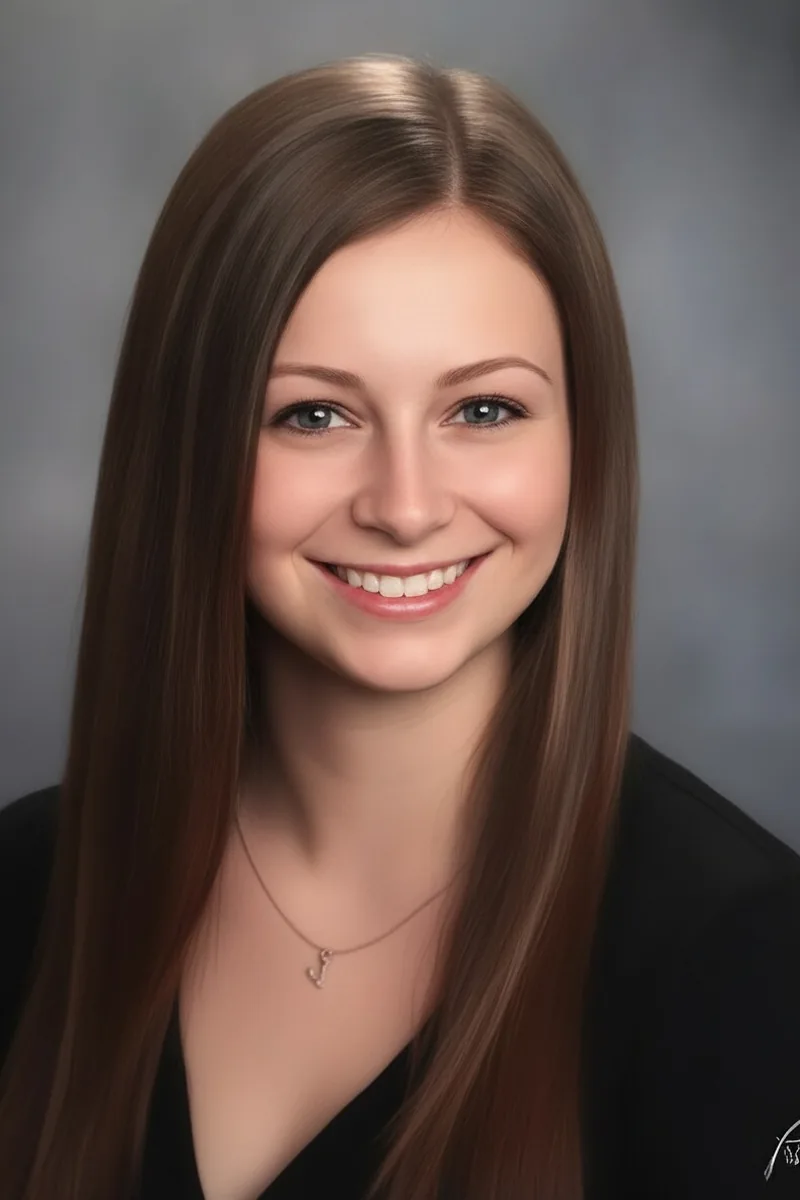
Scoring 1550 on the SAT herself, Nina knows the specific traps the math section sets — misleading answer choices on quadratic problems, tricky unit conversions, and data-interpretation questions designed to punish rushing. She teaches students a systematic approach to each question type so that pacing and accuracy improve together. Her statistics training also gives her an edge on the data-analysis questions that many tutors treat as an afterthought.
I am an interdisciplinary educator with an Ed.M. from the Harvard Graduate School of Education and a B.A. from Dartmouth College. My background is primarily in integrated arts learning and museum education and I specialize in visual arts, history and art history, and object-based learning. In all subjects, I take a creative, inquiry-based and learner-centered approach, designing opportunities for each unique individual to meet their learning goals.
Finance and statistics coursework at NYU means Dennis spends his days building models around the same quantitative reasoning the SAT Math section tests — probability, linear relationships, and interpreting data from tables and graphs. His 1550 SAT score came partly from treating the no-calculator questions as logic puzzles rather than computation drills, an approach he now teaches by walking students through how to eliminate answer choices using number properties before ever picking up a pencil.
Miranda earned a 1560 SAT composite, which means she tackled the Math section's trickiest territory — passport-to-advanced-math problems involving quadratics, systems, and nonlinear modeling. She teaches students to recognize what each question is actually asking beneath its wording, a skill that turns intimidating multi-step problems into familiar patterns.
Psychology and linguistics both demand rigorous data interpretation — Sherry's UChicago coursework in experimental design and statistical analysis maps directly onto the SAT Math section's tables, scatterplots, and percentage questions. Her perfect 1600 SAT means she's mastered every corner of the test, but she zeroes in on the geometry and advanced math problems where students most often misread what's being asked, using her linguist's instinct to untangle the SAT's deliberately tricky phrasing. Rated 5.0 by students.
Violet's 1550 SAT and her math degree from Brown mean she can diagnose exactly where a student's algebra or data analysis gaps are costing them points on SAT Math. She teaches the handful of non-obvious techniques — backsolving, strategic plugging-in, unit analysis on word problems — that turn 650-range scores into 750+ scores. Her style leans heavily on shortcuts that make the no-calculator section feel less like a time crunch.
Scoring a 1570 on the SAT, Joey knows the Math section inside and out — from the no-calculator questions that test algebraic fluency to the data-analysis problems that reward careful reading. He teaches students to recognize question patterns and avoid common traps, turning timed practice into a strategic exercise rather than a frantic race.
Years of music performance training — sight-reading, pattern recognition, working under pressure — gave Vivian an unusual edge on timed math tests, and her 1530 SAT backs that up. She's especially sharp on the algebra-to-geometry crossover questions where students need to visualize what an equation actually represents, a skill she builds by teaching students to sketch before they solve. Rated 4.9 by students.
I'm not tutoring, I love walking through New York for design inspiration and taking carpentry, metalworking, and illustration classes.
I am in the process of selecting a masters program in education that will begin this summer. I have 2 years experience doing 1 on 1 tutoring and it is very effective compared to classroom teaching because there is only one student to focus on. I look forward to working with you and helping you or your child get better. Always remember, even the best of us need help and support from others to be successful.
I'm a hardworking, compassionate, and patient individual who has been tutoring since high school and helping my little sister with her homework long before. I'll work with every new student individually to recognize his or her strengths and weaknesses to make sure that material is actually being learned, not just memorized.
Richard scored a 1600 on the SAT and spent a year as a calculus course assistant at Harvard, so the math on this test — from quadratic modeling to data analysis and passport-to-advanced-math questions — sits well within his comfort zone. He breaks down each problem type by identifying what concept the College Board is actually testing beneath the word-problem packaging. That pattern recognition is what turns a 700 into a 780 or higher.
A PhD in computational mathematics means Justin doesn't just know SAT Math content — he understands the underlying structure connecting algebra, functions, and geometric reasoning well enough to show students the fastest route through each problem type. His 1560 SAT score came from the same systematic thinking he now teaches: identifying what a question actually requires before committing to a calculation, which is especially effective on the no-calculator section's trickier polynomial and quadratic setups. Rated 5.0 by students.
Scoring a 1570 SAT himself, James knows exactly where the SAT Math section sets its traps — the passport-to-advanced-math questions that bury quadratic relationships in word problems, or the data-analysis questions that test statistical reasoning more than arithmetic. He breaks each problem type into a recognition step and an execution step so students stop second-guessing themselves under time pressure. His calculus and chemistry background means no student's question goes beyond his reach.
I'm a graduate of Columbia University with a B.A. in History. I'm passionate about history and English, but I'm a competent math tutor as well. I have received outstanding scores on my SAT and AP tests, and am confident in my ability to pass on these skills to the next generation.
After earning a 1590 on the SAT, Daniel built a clear playbook for the math section that separates "concept" problems from "strategy" problems — because a student who knows the algebra can still lose points to time pressure or misread graphs. He walks through data-interpretation and word-problem translation techniques that turn careless errors into reliable points.
Scoring well on SAT Math requires recognizing which tool fits each problem before time pressure kicks in — is this a substitution question disguised as a word problem, or a ratio question hiding inside a geometry setup? Rachel earned a 1600 and knows the test's architecture inside and out. She teaches students to categorize problems on sight so they spend their energy solving, not figuring out where to start.
Katherine scored a 1500 on the SAT and knows the Math section inside out, from the no-calculator portion's emphasis on algebraic manipulation to the calculator section's data-analysis and modeling questions. She digs into the specific concept gaps that cost students points — whether that's systems of equations, quadratic behavior, or tricky word problems involving ratios and percentages. Her approach is to build fluency with the question formats so nothing on test day feels unfamiliar.
Most SAT Math mistakes aren't about not knowing the content — they're about misreading what a problem is actually asking or choosing the slowest path to the answer. Jamie scored a 1550 and teaches students to decode each question type, whether it's a system of equations buried in a word problem or a statistics question testing median versus mean. His approach is built around timed practice and pattern recognition so students stop leaving easy points on the table.
Premed coursework at Cornell means Sharan regularly tackles quantitative problems under exam pressure — and she channels that same discipline into SAT Math prep, particularly the data-analysis and algebraic modeling questions where sloppy setup costs more points than weak math skills. Her 1540 SAT confirms she knows how the test actually works, and she teaches students to build a systematic checklist for each problem type so nothing gets skipped when the clock is running. Rated 5.0 by students.
Scoring a 1570 SAT composite, Kevin knows the math section inside out and teaches students to spot the fastest path through each problem rather than defaulting to brute-force algebra. His approach is methodical: identify the concept being tested, eliminate traps in the answer choices, and manage time across the no-calculator and calculator sections.
I'm thrilled every time one of my students begins to understand a grammar concept or reads alone, and that enthusiasm for both small victories and language and literature that is yet to be studied is contagious.
I am excited to be home and help fellow straphangers on their educational paths! My largest wealth of tutoring experience is in foreign languages--particularly French--but I also feel very comfortable editing essays of any kind and working through standardized test concepts. My availability is extremely flexible, and anywhere in New York City works for me. I look forward to working with you.
Heart-of-algebra and problem-solving questions make up the bulk of SAT Math, and Rachel approaches each category with specific, repeatable techniques — like translating word problems into equations before touching the calculator. Her own 1580 composite score came from exactly this kind of disciplined, strategic prep. She's rated 5.0 by the students she's worked with.
I am a very patient tutor who tries to understand exactly where the student is struggling and how they can improve. Outside of the classroom, you can often find me baking or drawing!
Scoring 1510 on the SAT, Sabira knows the math section inside out — from the no-calculator questions testing algebraic fluency to the data-analysis problems that reward careful graph reading. She breaks down each question type by identifying what concept the College Board is actually testing, which cuts through the trap answers that cost students easy points.
I'm a recent graduate from the University of Pennsylvania who studied Linguistics and Deaf Studies. I eventually hope to work towards breaking down barriers between the Deaf and hearing worlds and encouraging greater focus on reforming Deaf education practices.
I am a graduate of the College of William and Mary 2014 with a B.A. in Linguistics and History. Currently I am a M.A./Ph.D student in Linguistics at the University of Illinois at Urbana-Champaign. My current research deals with how language is used and how understanding can change in differing contexts, for example how people define what counts as a lie, and how our brains process emojis. At the University of Illinois, I've taught several linguistics courses, including the popular Linguistics 100 introductory course. I spent a semester abroad in Sevilla, Spain during my undergraduate studies and that remains one of the best experiences of my life.
I am now a playwriting MFA at NYU, one of the best programs in the country (the story of how I transitioned from physics to theater is pretty funny and I???m happy to share it). While my intensive study of advanced Math and Physics helps me tutor those subjects, I find my theater skills are just as valuable to effective teaching. As a playwright, I have learned to explain ideas efficiently, inspire excitement, and connect with an audience. Using these techniques, I hope to make my students not only better at individual subjects, but also help them fall in love with the beauty of new ideas.
Robert treats the SAT Math section as a pattern-recognition game — after scoring 1550, he mapped out which question types (quadratic setups, coordinate geometry, systems of equations) appear most predictably and built a decision tree for attacking each one under time pressure. He's especially useful for students who already know the underlying math but keep losing points to misreads and second-guessing on test day. Rated 4.8 by students.
I'm currently an MA student in French at Middlebury College, after graduating with my BA from Barnard College at Columbia University in 2014. Overseas, I spent a year at the Sorbonne-Paris. I'm a passionate, patient tutor of both English and French with four years of experience. In both languages, I focus on grammar skills, essay writing, and standardized test preparation, especially the SAT and SAT II. I most often tutor high school and college students, but have found that young children are also some of my favorite to teach! I have additional experience with ESL students and those with learning disabilities, including dyslexia, ADHD and cognitive impairments. Language arts are a true passion of mine, both academically and professionally. As a bilingual writer for the State Department and two publishing companies, I've learned effective writing skills I love to share with students. I believe that each individual learns differently, so I tailor my teaching strategies to every student's needs. Seeing students overcome challenges and meet their goals is always the highlight of my day. When I'm not tutoring, I'm an avid film photographer and an enthusiastic yoga amateur.
Aaron scored a 1570 SAT and brings particular strength to the Math section's trickiest territory: the no-calculator questions that test conceptual fluency with quadratics, systems, and rational expressions. He teaches students to identify what each problem is really asking — a skill that turns confusing multi-step questions into straightforward algebra.
Computer science at Cornell means Eric spends most of his time turning abstract problems into precise, step-by-step logic — exactly the skill that separates a good SAT Math score from a perfect one, which he earned with his 1600. He's especially sharp on the no-calculator section's polynomial and function questions, where clean algebraic manipulation beats trial-and-error every time. Rated 5.0 by students.
The SAT Math section tests familiar algebra and geometry concepts in unfamiliar packaging, which is why content knowledge alone isn't enough. Jonathan scored a 1570 composite and approaches SAT prep strategically, showing students how to recognize problem types quickly — whether it's a disguised quadratic, a systems question, or a percent-change trap — and choose the fastest path to the answer.
Playwriting trains you to structure complex narratives under tight constraints — and River applies that same disciplined logic to SAT Math, where translating a wordy problem into a clean equation is half the battle. With a 1560 SAT under his belt, he knows the test's pacing demands inside out and teaches students to prioritize the high-frequency algebra and data questions that move scores fastest.
Heart-of-algebra and problem-solving questions make up the bulk of SAT Math, but it's the data-analysis problems — scatterplots, margins of error, survey design — that catch students off guard. Allen's economics background at Yale means he's unusually fluent in statistical reasoning, and he uses that to demystify the questions most test-prep books gloss over. He holds a 5.0 client rating.
Most SAT Math mistakes aren't about not knowing the content — they're about misreading what a question asks or choosing a slow solution path under time pressure. Julie, who earned a 1570 composite, drills students on recognizing problem types instantly so they can deploy the right technique for quadratics, systems, or data interpretation without second-guessing.
I am a current undergraduate and rising senior at NYU's Gallatin School of Individualized Study. I chose the Gallatin program because it allows me to study the intersection of all of the subjects I love- particularly biology, chemistry, anthropology, and public health.
Testimonials
Because the right SAT Math tutor makes all the difference.
Average Session Rating – Based on 3.4M Learner Ratings
Practice SAT Math
Free practice tests, flashcards, and AI tutoring for SAT Math
Other Albany Tutors
Related Test Prep Tutors in Albany
Frequently Asked Questions
Score improvement depends on your starting point and commitment level, but students typically see meaningful gains within 8-12 weeks of consistent practice. Many students improve by 50-100+ points by working with a tutor who helps identify weak areas—whether that's algebra fundamentals, geometry concepts, or test-taking strategy—and creates a focused study plan around those gaps.
Your first session is about understanding where you stand. A tutor will likely review your practice test results, discuss which question types give you the most trouble, and assess whether your challenges are conceptual (not understanding the math) or strategic (running out of time, misreading questions). This diagnostic helps create a personalized plan tailored to your specific needs rather than generic test prep.
Pacing is one of the most common challenges students face, and it's very fixable with targeted practice. A tutor can teach you how to quickly identify easier vs. harder questions, which ones to tackle first, and when to skip and return to a problem—strategies that save crucial minutes. Working through practice sections with a timer, then analyzing where you lost time, helps you develop a rhythm that works for your speed and accuracy.
The best way is to take a full practice test under timed conditions, then review every question you missed or guessed on—not just to see the answer, but to understand why you got it wrong. A tutor can help you spot patterns (e.g., "I consistently miss quadratic equation problems" or "I rush through word problems") and prioritize which topics to study based on how often they appear on the test and how much they're dragging down your score.
Absolutely. Much of test anxiety comes from feeling unprepared or encountering unfamiliar question formats, both of which tutoring directly addresses. By practicing with real SAT questions, learning strategic approaches, and building a track record of solving problems correctly, you develop genuine confidence—not just reassurance, but the real kind that comes from knowing you can handle what the test throws at you.
Most students benefit from taking 3-5 full practice tests spaced throughout their study period, with the final one 1-2 weeks before test day. Each practice test serves a purpose: early ones help identify weak areas, middle ones let you practice strategies, and later ones build stamina and confidence. A tutor can help you use practice tests strategically—reviewing them to spot patterns rather than just taking them repeatedly.
Look for someone who has strong math knowledge and, ideally, specific experience teaching SAT content. They should understand the test's unique question formats and time constraints, not just general math tutoring. It's also important that they can explain concepts clearly and adapt their teaching style to how you learn—whether you need foundational math review or just strategy refinement.
A typical effective schedule involves 3-4 tutoring sessions per week for 8-12 weeks, combined with independent practice between sessions. Early weeks focus on diagnosing weak areas and building foundational skills; middle weeks emphasize practice and strategy; final weeks involve full practice tests and confidence building. A tutor can help you create a realistic schedule that fits your school and activities while giving you enough time to internalize new strategies.
Let’s find your perfect tutor
Answer a few quick questions. We’ll recommend the right plan and match you with a top 5% tutor.