Award-Winning Math Tutors
serving Bronx, NY
Award-Winning
Math
Tutors in Bronx
Private 1-on-1 tutoring, weekly live classes for academic support, test prep & enrichment, practice tests and diagnostics, and more to elevate grades and test scores.
Based on 3.4M Learner Ratings
UniversitiesSchools & Universities
DeliveredHours Delivered
ProficiencyGrowth in Proficiency
Who needs tutoring?
No obligation. Takes ~1 minute.

Medical school at Albert Einstein means Michael never stopped doing math — dosage calculations, biostatistics, and quantitative reasoning are baked into his daily coursework. His 34 ACT composite reflects that quantitative fluency, and he brings it to topics like proportional reasoning, algebraic manipulation, and applied problem-solving by walking students through the logic behind each operation rather than just drilling procedures.
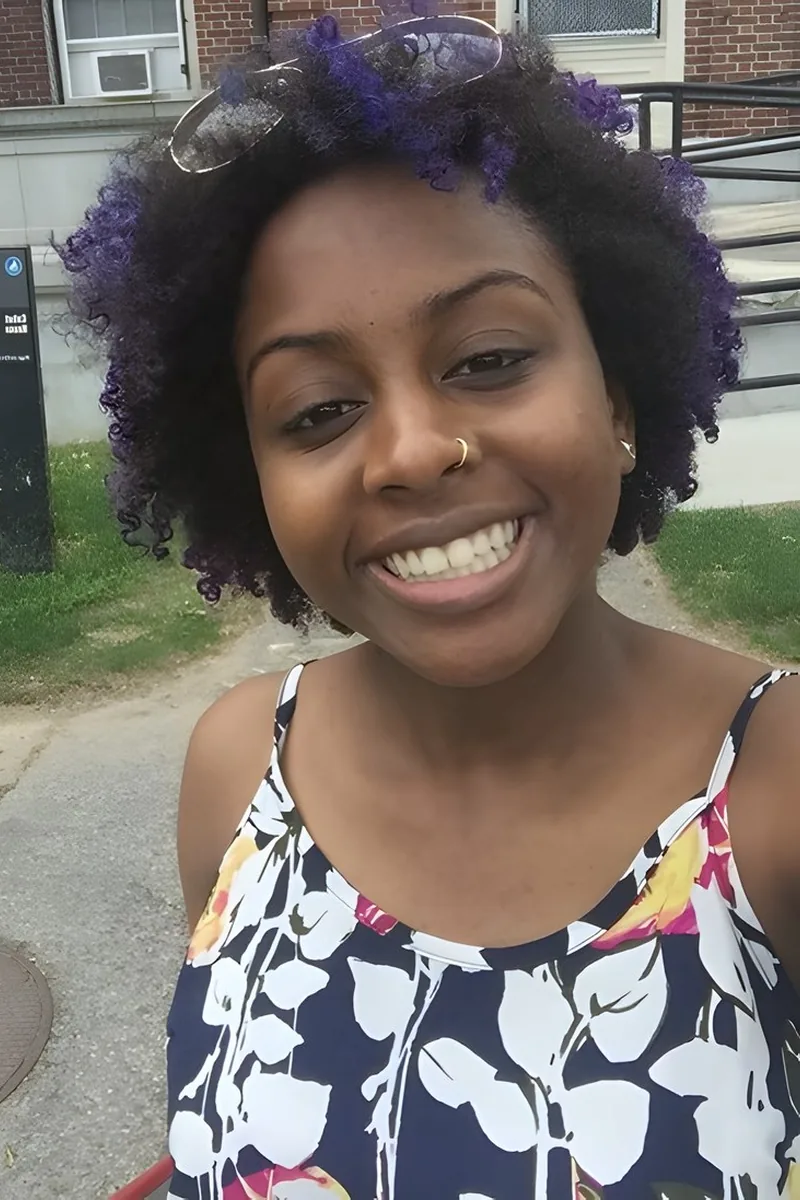
Elementary math clicks when students understand the reasoning behind a method, not just the steps. Gabriela breaks down concepts like place value, fractions, and multi-step word problems using visual models and real-world examples that make abstract ideas tangible. Her 5.0 rating speaks to her ability to keep younger learners engaged and confident.
A computer science degree from Penn State required Nicholas to think mathematically every day — from the linear algebra behind graphics to the discrete math underpinning algorithms. He brings that applied perspective to topics like equation solving, graphing, and proportional reasoning, connecting abstract math to problems students can actually visualize.
While political science and international affairs are Abigail's primary areas, her background includes coursework in calculus and algebra, and she applies a structured, step-by-step approach to math concepts. She's particularly effective at walking through word problems and translating real-world scenarios into equations — a skill sharpened by years of working with data in policy settings.
From simplifying fractions to working through polynomial expressions, Devon approaches math by making sure students understand the logic behind each operation before moving on. His teaching spans elementary arithmetic through calculus, which means he can spot exactly where a gap in earlier concepts is causing trouble with newer material and address it directly.
While English is Ivan's primary classroom subject, his dual certification in general and special education required coursework in math instruction for grades 5–9, and he regularly supports students with math homework and foundational skills. He's particularly effective at breaking down word problems, where reading comprehension and mathematical reasoning overlap.
Before pivoting to literature, Dan built a strong math background that spans arithmetic fundamentals through calculus and discrete math. That range means he can pinpoint exactly where a concept stopped making sense — whether it's fraction operations, order of operations, or early algebraic thinking — and rebuild understanding from that spot forward. Rated 5.0 by students.
Through her mentoring work with Cornell's College and Career Readiness Initiative, Victoria has spent years breaking down arithmetic, fractions, ratios, and basic algebraic thinking for high school students who need to strengthen their math fundamentals. Her biology coursework at Cornell required fluency in quantitative reasoning — from interpreting data sets to working through unit conversions — so she teaches math as a practical tool, not an abstract exercise.
A neuroscience degree from Washington University in St. Louis means Taylor spent years working through calculus, statistics, and data analysis — math with real stakes attached to it. She breaks down concepts like fractions, ratios, and algebraic thinking by connecting them to concrete problems students can visualize, rated 5.0 by her students.
Whether it's fraction operations tripping up a middle schooler or quadratic modeling confusing a high schooler, Chimdi pinpoints the exact conceptual gap and addresses it directly. His electrical engineering training at Carnegie Mellon means math is his daily language — he explains ideas in multiple ways until the reasoning, not just the procedure, makes sense.
From basic arithmetic through calculus, Samantha has taught math across a wide range of levels — including a full year embedded in a third-grade math classroom with City Year New York. That experience gave her a sharp eye for the specific spots where students lose confidence, whether it's fractions, word problems, or translating a real-world scenario into an equation.
From elementary arithmetic through calculus and competition math, Laura covers an unusually wide range of math levels — which means she understands how early concepts like number sense and fractions scaffold into algebra, trig, and beyond. She's especially good at pinpointing the exact gap that's causing a student to struggle with new material. Her 1530 SAT score confirms the quantitative fluency she brings to every session.
Testimonials
Because the right Math tutor makes all the difference.
Average Session Rating – Based on 3.4M Learner Ratings
Practice Math
Free practice tests, flashcards, and AI tutoring for Math
Other Bronx Tutors
Related Math Tutors in Bronx
Frequently Asked Questions
Varsity Tutors connects you with expert math tutors who assess your current understanding and create a customized learning plan based on your specific needs—whether you're working on foundational skills, preparing for standardized tests, or tackling advanced concepts. Each session focuses on your learning style and pace, helping you move beyond just memorizing procedures to truly understanding the math behind the problems.
Many students can follow steps mechanically but struggle when problems look different or require applying concepts in new ways. Personalized tutoring helps you see the patterns and connections—why the steps work, not just what they are. This deeper understanding makes it easier to solve word problems, tackle multi-step equations, and approach unfamiliar problem types with confidence.
Students often struggle with word problems (translating language into equations), multi-step equations (keeping track of operations), graphing and coordinate geometry, and proof-writing in geometry. Many also experience math anxiety from previous negative experiences. Personalized tutoring addresses these specific pain points by breaking concepts into manageable pieces, showing multiple problem-solving strategies, and building confidence through targeted practice.
Yes. Tutors work with students using different textbooks and approaches—whether your school uses traditional algorithms, Singapore Math, Common Core, or other methods. They understand how different curricula teach the same concepts and can bridge gaps if your student has switched schools or programs, ensuring they're aligned with what's being taught in class.
Showing work helps tutors identify exactly where misunderstandings happen—whether it's a computational error, a conceptual gap, or a careless mistake. It also helps you catch your own errors and builds the communication skills needed for higher-level math like proofs and multi-step problem solving. Personalized tutoring emphasizes clear reasoning, not just correct answers.
Math anxiety often comes from feeling lost or embarrassed about asking questions in a classroom setting. One-on-one tutoring creates a judgment-free space where you can ask anything, work at your own pace, and celebrate small wins. As you build understanding and see your progress, confidence naturally grows—and that confidence carries over into the classroom.
The first session is an assessment and goal-setting conversation. Your tutor will review recent classwork, identify specific areas where you're struggling, understand your learning style, and discuss what success looks like for you—whether that's improving a grade, mastering a concept, or building confidence. This foundation helps create a focused, personalized plan for future sessions.
Many students notice better understanding and improved confidence within 3-4 sessions, especially when tutoring targets specific gaps. Grade improvements and test score gains typically follow as understanding deepens. Consistency matters—regular sessions (weekly or twice weekly) combined with practice between sessions accelerate progress more than sporadic sessions.
Let’s find your perfect tutor
Answer a few quick questions. We’ll recommend the right plan and match you with a top 5% tutor.