Award-Winning Math Tutors
serving Staten Island, NY
Award-Winning
Math
Tutors in Staten Island
Private 1-on-1 tutoring, weekly live classes for academic support, test prep & enrichment, practice tests and diagnostics, and more to elevate grades and test scores.
Based on 3.4M Learner Ratings
UniversitiesSchools & Universities
DeliveredHours Delivered
ProficiencyGrowth in Proficiency
Who needs tutoring?
No obligation. Takes ~1 minute.
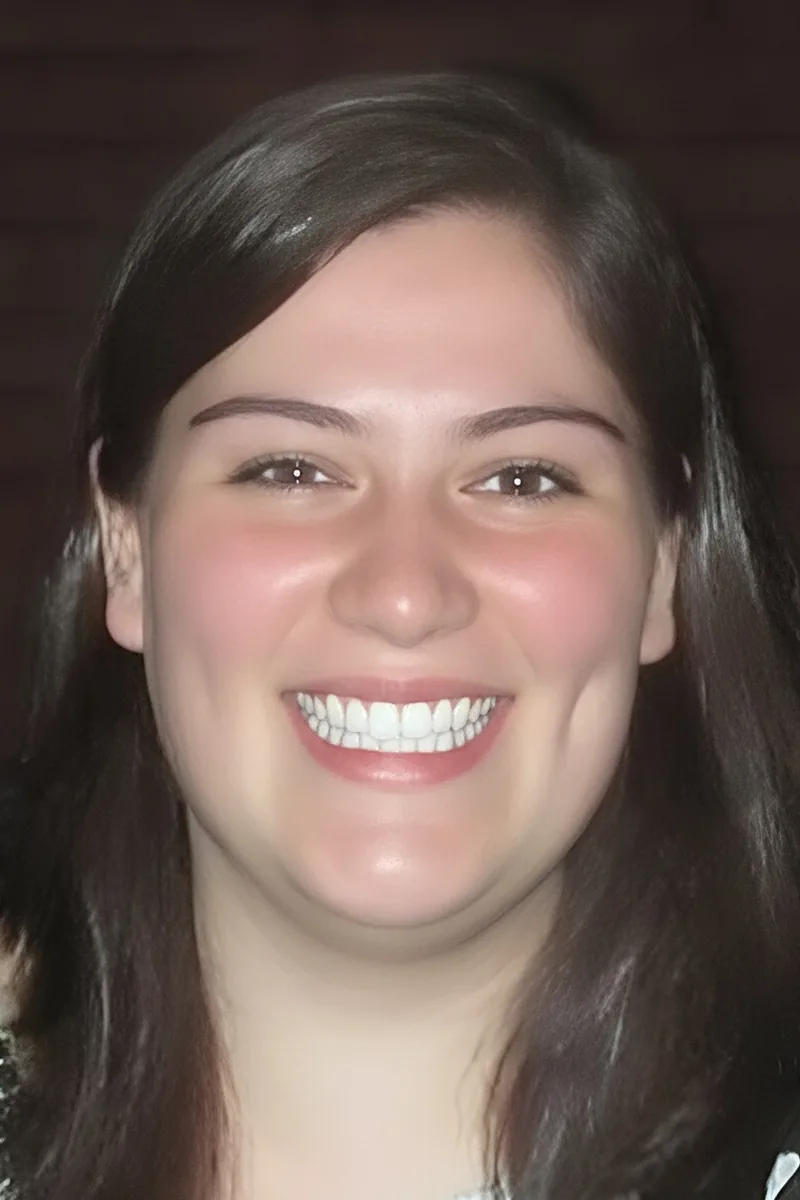
A Cooper Union civil engineering graduate, Catherine has spent years doing math that actually builds things — calculating load distributions, modeling fluid dynamics, optimizing structural designs. That real-world fluency means she can explain everything from fraction operations to polynomial functions in terms that make intuitive sense, not just procedural sense. She holds a 5.0 client rating.
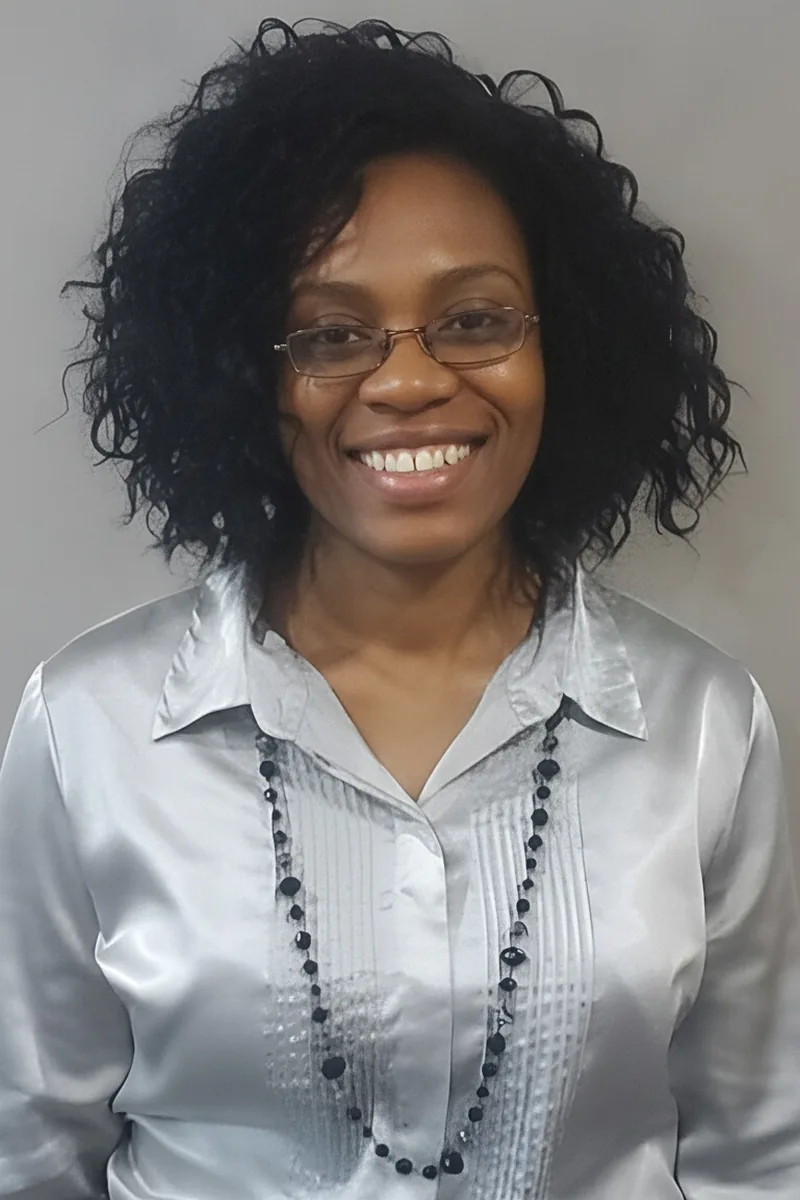
Law school sharpens one specific skill that pays off in math: reading a dense, multi-step problem and figuring out exactly what's being asked before jumping to a solution. Monique's economics degree from UB built her quantitative foundation, and her legal training added the logical rigor to break down problems where the setup matters as much as the arithmetic. She holds a 5.0 rating from students.
Having built over 100 math practice worksheets from scratch, Robert knows exactly where students tend to break down — whether it's setting up word problems, working with fractions, or making the leap from arithmetic to algebraic thinking. His 1530 SAT score backs up the depth of his own math fluency, and he uses that knowledge to pinpoint gaps quickly rather than reteaching material a student already understands.
I am excited to tutor because I know what it feels like to get stuck and I'm happy to help people who encounter challenges in their studies. Though frustrating, there's something really valuable about these moments when you're not quite getting it. It means that by proceeding slowly and practicing a new concept or strategy you'll learn a new skill that will stick with you even more because it took some work to master. My focus in teaching is in French and, more broadly, language arts. I studied French Literature at New York University because of my passion for literature, creativity, and expression. Learning a new language opens up more than just a new literary world but also lets you tap into another set of human experiences, expression, emotion, history. I think the greatest reward in teaching French and language arts is helping a student connect with a text and gain access to someone else's experience, what someone else thought important enough to write down, and then how this connection can help reframe the reader's thinking - deepening, challenging, or shifting the ways our own thought. Apart from the study and appreciation of literature, learning a language at a linguistic level is invaluable. It promotes human connection, openness of thought, and pushes one's own capacity and diversity of self-expression.
From arithmetic fundamentals through algebra and into calculus, Matthew's physics training means he sees math as a toolkit that should make sense, not a set of procedures to follow blindly. He unpacks the reasoning behind each step — why you cross-multiply, what a negative exponent actually represents — so students carry understanding forward instead of re-learning every chapter from scratch.
Covering everything from fractions and ratios to early algebraic thinking, general math tutoring requires someone who can diagnose exactly where a concept stopped making sense. Laveda traces mistakes back to their root — if a student struggles with proportions, she checks whether the gap is in multiplication fluency, fraction sense, or the reasoning step itself.
Christopher treats math as a language — once a student can read the structure of a problem, whether it involves fractions, ratios, or order of operations, the solving part clicks into place. His business coursework at Macaulay Honors College keeps him working with quantitative reasoning daily, and he brings that practical fluency to every session.
Tatiana covers math from elementary arithmetic through calculus and trigonometry, which means she understands how gaps from earlier years create confusion later. She's particularly skilled at identifying exactly where a concept broke down — whether it's fraction operations, order of operations, or variable manipulation — and rebuilding from that point forward.
Fayad teaches math across multiple levels — from foundational algebra through calculus — which means he can pinpoint exactly where a gap in understanding started and address it directly. Whether a student is struggling with fraction operations, proportional reasoning, or interpreting word problems, he connects each concept to the next so the logic builds rather than feeling random. His 1500 SAT score speaks to the kind of precision he brings to quantitative work.
From fraction operations in middle school to derivatives in college, Liza's teaching spans the full math pipeline — and her biomedical engineering degree means she's used every piece of it in practice. She's especially effective at showing students how a concept they're learning now connects to what's coming next, which builds motivation alongside skill.
From arithmetic fundamentals through pre-calculus and calculus, Olga covers a wide span of math — but her real strength is diagnosing exactly where a concept stopped making sense and rebuilding from that point. Her 1560 SAT score speaks to her own quantitative fluency, and she's especially skilled at translating word problems into equations students can actually set up and solve.
Teaching his own chemistry course at Stony Brook keeps Daniel sharp on the math that underpins science — unit conversions, algebraic manipulation, logarithmic relationships, and basic calculus concepts. He approaches math problems by grounding abstract steps in concrete reasoning, so students understand why they're cross-multiplying or factoring rather than just following a memorized procedure.
Testimonials
Because the right Math tutor makes all the difference.
Average Session Rating – Based on 3.4M Learner Ratings
Practice Math
Free practice tests, flashcards, and AI tutoring for Math
Other Staten Island Tutors
Related Math Tutors in Staten Island
Frequently Asked Questions
Students across Staten Island's 9 school districts often struggle with the transition from memorizing procedures to understanding the concepts behind them. Word problems, multi-step equations, and graphing are frequent pain points, as are geometry proofs where students need to explain their reasoning. Many students also experience math anxiety, which can make it harder to tackle unfamiliar problem types—personalized tutoring helps build confidence by breaking concepts into manageable pieces and showing how different topics connect.
One of the biggest shifts in modern math instruction is the emphasis on explaining reasoning, not just getting the right answer. Tutors work with students to develop problem-solving strategies, ask guiding questions that help them articulate their thinking, and model how to organize work clearly on paper. This approach not only improves grades but also helps students catch their own mistakes and feel more confident explaining math to others.
Yes. Varsity Tutors connects you with tutors who are familiar with the various approaches and textbooks used across Staten Island's school districts. Whether your student's school uses a traditional, integrated, or inquiry-based curriculum, tutors can align their instruction to match what's being taught in class while also filling gaps and deepening understanding. This consistency helps students feel less confused when moving between classroom and tutoring sessions.
Word problems are challenging because they require students to translate real-world scenarios into mathematical equations—a skill that takes practice and confidence. Tutors help by teaching problem-solving strategies like identifying key information, drawing diagrams, and breaking multi-step problems into smaller pieces. With personalized instruction, students learn to approach word problems systematically rather than feeling overwhelmed, which builds both skill and confidence.
One-on-one instruction allows tutors to work at your student's pace, pausing to highlight connections between topics—like how linear equations relate to graphing, or how properties of operations apply across different problem types. When students see these patterns, math becomes less like isolated rules to memorize and more like a connected system. This deeper understanding makes it easier to tackle new concepts and builds the kind of flexible thinking that leads to real progress.
In the first session, a tutor will assess your student's current understanding, identify specific areas of struggle, and learn about their learning style and goals. They'll work through a few problems together to see how your student approaches math and where misconceptions might be hiding. This foundation helps the tutor create a personalized plan that targets the right skills and builds momentum from day one.
Math anxiety often stems from past negative experiences or feeling lost in a fast-paced classroom. Personalized tutoring creates a low-pressure environment where students can ask questions freely, make mistakes, and learn at their own pace—which is essential for rebuilding confidence. As students experience small wins and begin to understand concepts they previously found confusing, anxiety naturally decreases and they develop a more positive relationship with math.
Varsity Tutors connects you with tutors who have expertise in the specific areas your student needs help with—whether that's algebra, geometry, calculus, or test prep. You can discuss your student's learning style, goals, and schedule to ensure a good match. The personalized matching process means you're working with someone who understands both your student's challenges and the best ways to help them succeed.
Let’s find your perfect tutor
Answer a few quick questions. We’ll recommend the right plan and match you with a top 5% tutor.