Award-Winning Honors Biology
Tutors
Who needs tutoring?
FEATURED BY


TUTORS FROM
- YaleUniversity
- PrincetonUniversity
- StanfordUniversity
- CornellUniversity
Award-Winning Honors Biology Tutors

Certified Tutor
5+ years
Pallavi
The jump to honors biology means grappling with molecular-level detail: enzyme kinetics, DNA replication fidelity, signal transduction cascades. Pallavi's Master's in Biology and her research-oriented training at Penn give her fluency with this material that goes well beyond the textbook, and she co...
University of Pennsylvania
Master's in Biology
University of Pennsylvania
Bachelor of Arts in Biology (Neurobiology concentration)
Certified Tutor
4+ years
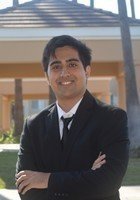
Abrahim
Medical school at the Medical College of Wisconsin means Abrahim didn't just pass through biology — he had to master it at a level where cellular mechanisms, genetics, and physiology all interconnect in clinical contexts. That depth shows when he's breaking down topics like photosynthesis regulation...
University of California Los Angeles
Bachelor of Science, Biology, General
Medical College of Wisconsin
Doctor of Medicine, Premedicine
Certified Tutor
8+ years
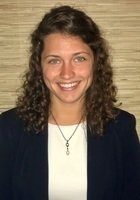
Morgan
Fourth-year medical school means Morgan has cycled through physiology, genetics, and cellular biology at a depth that makes honors-level topics like membrane transport, metabolic regulation, and gene expression feel like familiar territory. Her Georgetown M.S. in Physiology anchors that knowledge in...
Georgetown University
Master of Science, Physiology
Certified Tutor
3+ years
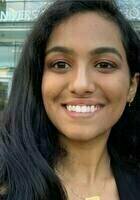
Raaga
Biomedical engineering at Carnegie Mellon means Raaga spent years working at the intersection of biology and quantitative problem-solving — dissecting cellular mechanisms, metabolic pathways, and physiological systems with an engineer's precision. That training pays off in honors bio, where understa...
Carnegie Mellon University
Bachelor of Science, Biomedical Engineering
Certified Tutor
5+ years
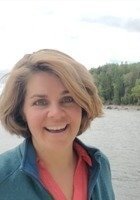
Karista
From biochemistry through a Ph.D. in Environmental Science, Karista has traced biological concepts across scales — from molecular interactions in a cell to how those same processes play out in ecosystems and populations. That range is particularly useful in honors bio, where a unit on cellular respi...
University of North Texas
Master of Science, Environmental Science
Oklahoma State University-Main Campus
Bachelor of Science, Biochemistry
University of Windsor
Doctor of Philosophy, Environmental Science
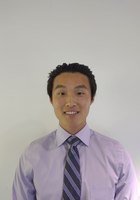
Certified Tutor
4+ years
Matthias
I am a current senior biology-health student at Grove City College, hoping to become a Physician Assistant. I love helping people learn more about subjects that I find interesting and am passionate about like math, biology, and chemistry. I have taken math courses through Calculus III, chemistry cou...
Grove City College
Bachelor of Science, Biological and Physical Sciences
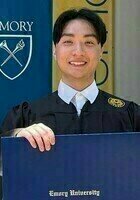
Certified Tutor
3+ years
Thomas
I am committed to empowering my students and supporting their academic and personal growth. I believe the foundation to successful tutoring to be a mutually trusting and accommodating relationship; thus, I am a firm believer of individualized lesson plans that play to the unique strengths and weakne...
Emory University
Bachelor of Science, Biology, General
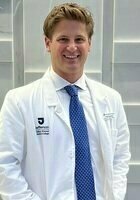
Certified Tutor
6+ years
Thomas
Medical school at Thomas Jefferson demanded that Thomas internalize cell biology, genetics, and physiology at a level where each system connects to the next — exactly the integrative thinking honors bio courses expect when they test beyond recall. His cellular and molecular biology degree from Michi...
University of Michigan-Ann Arbor
Bachelor of Science, Cellular and Molecular Biology
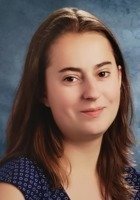
Certified Tutor
6+ years
Emily
Emily's psychology degree gives her an unusual edge in honors bio — she understands how students actually learn and retain dense material like signal transduction, mitosis regulation, or ecological modeling, and she structures her teaching around that. Her M.S. in Education means she doesn't just kn...
Johns Hopkins University
Master of Science, Education
Millersville University of Pennsylvania
Bachelor in Arts, Psychology
Certified Tutor
2+ years
Jarrod
I am a graduate of Princeton University and Louisiana State University (LSU). I received an undergraduate degree in Ecology and Evolutionary Biology from Princeton and a Ph.D. in Biology from LSU. As part of my doctoral work, I completed all coursework for a Ph.D. minor in Experimental Statistics. ...
Princeton University
PhD
Top 20 Science Subjects


Meet Our Expert Tutors
Connect with highly-rated educators ready to help you succeed.
Qays
Applied Mathematics Tutor • +93 Subjects
Hobbies: reading, music, hiking, art, books, writing
Mariam
Statistics Tutor • +74 Subjects
Hobbies: art, reading, cooking, writing, books, music, painting
Snipta
Statistics Graduate Level Tutor • +143 Subjects
I'm a graduate from the University of Texas at Dallas with double Bachelors Degrees in Computer Science and Cognitive Science. I have explored the intersection of technology, medicine, and public policy throughout my academic career. I'm an industry-trained computer scientist with experience at Microsoft and the National Institute of Health.
Kenna
AP Calculus AB Tutor • +90 Subjects
I'm Kenna, a Chemical Engineer within the Semiconductor Processing industry. I also have professional experience in the Energy industry. My B.S. in Chemical Engineering is from Georgia Tech -- Go Jackets! I've lived all over the world. Right now, I am a proud Texan!
Ritu
Pre-Algebra Tutor • +131 Subjects
Hobbies: books, swimming, photography, writing, reading, cooking, traveling, music, painting, hiking, yoga, art, travel
Ashley
Calculus Tutor • +47 Subjects
I'm focused on getting more research (and life) experience. Hobbies: reading, music, writing, art, books
Brittany
Calculus Tutor • +62 Subjects
Hobbies: books, running, hiking, yoga, sports, reading, cooking, music, writing, art
Brooke
Pre-Algebra Tutor • +13 Subjects
I have eight years of experience teaching and tutoring Science, Math, and English to students ranging from middle school to college. I graduated with my PhD in Molecular Biology/Microbiology in 2020 from Wayne State University. During my graduate studies I taught undergraduate Introductory Biology Labs. I also served as a lead lecturer for Microbiology for one semester. Prior to graduate school, I received my BSc in Biology from University of Michigan, Dearborn in 2014. During my undergraduate studies, I tutored peers primarily in Biology and English courses. I also taught swim lessons to children of all ages for 5 years. I have worked with several ESL students, especially in English, Reading, and Writing. I also worked extensively with a peer who was visually impaired, which allowed me to come up with creative teaching strategies, such as building a cardboard model of a cell instead of looking at a cell through a microscope. Additionally, I have a 4-year old son with autism, have a deep understanding of his learning struggles, and have learned a wide variety of strategies to help him learn at his full potential. Thank you for taking the time to read about by background; I am excited to begin working with you!
Andrew
Pre-Calculus Tutor • +47 Subjects
I am a bioengineering student at UofL and I have a biochemistry degree from WKU.
Fabiah
Pre-Algebra Tutor • +15 Subjects
I am a graduate from the University of Waterloo with a major in Biology. I am pursing a second degree in Nursing from the University of Toronto. I have tutored and acted as a Teaching Assistant for students of all ages including university level. While I tutor a broad range of subjects, I am most passionate about teaching Biology, English, Psychology, and Math. I have helped students from preparing them for standardized tests to writing essays and it has been a joy seeing their grades significantly improve along with the stress they faced during those times. I am a calm, and friendly individual and I understand that everyone learns at their own pace and I will do my best to adapt my teaching style to your needs. :)
Top 20 Subjects
Frequently Asked Questions
Honors Biology students often struggle with three interconnected areas: understanding cellular and molecular processes that can't be directly observed (like photosynthesis, cellular respiration, and DNA replication), applying memorized facts to novel problem-solving scenarios on exams, and interpreting experimental data to draw meaningful conclusions. Many students can memorize the Krebs cycle or mitochondrial structure but freeze when asked to explain why a mutation affects protein synthesis or predict how an organism adapts to environmental changes. The jump from memorization to conceptual reasoning is where most students need targeted support.
Tutors help students move beyond just "following the procedure" to actually understanding the scientific reasoning behind experiments. This includes learning how to form testable hypotheses, identify variables (independent, dependent, and control), interpret data graphs and statistical significance, and troubleshoot when results don't match predictions. For example, a tutor might work with you on a genetics lab by not just explaining Punnett squares, but helping you design an experiment to test inheritance patterns, then analyze what your actual results reveal about dominance and probability—skills that directly transfer to AP Biology and beyond.
Effective Honors Biology tutors use multiple strategies to make invisible processes concrete: drawing and annotating diagrams of cell structures and processes, using physical models or animations to show how proteins fold or how DNA unwinds during replication, and connecting abstract concepts to real-world examples (like explaining enzyme kinetics through cooking or immune response through infection scenarios). Rather than passively watching a video, tutors guide you to actively sketch and explain these processes, which deepens understanding far more than memorization. This hands-on visualization approach is especially powerful for topics like photosynthesis, meiosis, and homeostatic regulation.
Memorizing facts (like "mitochondria is the powerhouse of the cell") doesn't prepare you for questions like "Why would a cell with damaged mitochondria struggle to move?" or "How would high altitude affect cellular respiration?" Scientific reasoning means understanding *why* biological processes work the way they do and being able to apply that logic to unfamiliar situations. Tutors help you build this reasoning by asking guiding questions, having you predict outcomes before revealing answers, and connecting isolated facts into coherent systems—like seeing how cellular respiration, photosynthesis, and energy transfer form an integrated cycle rather than separate topics.
Rather than having you memorize equations, tutors help you understand what they represent: the inputs and outputs of energy transformation. A tutor might start by asking what happens to glucose molecules during respiration, then build the equation piece by piece so you see *why* glucose plus oxygen produces carbon dioxide, water, and ATP. This approach makes it easier to remember the equation, predict variations (like anaerobic respiration), and answer application questions about how organisms use energy. Many students also benefit from learning to balance these equations step-by-step, understanding the conservation of atoms and energy flow rather than just plugging in numbers.
Genetics combines multiple layers of complexity: understanding probability, tracking alleles through multiple generations, interpreting pedigree charts, and applying Mendelian principles to real-world scenarios with incomplete dominance, codominance, or linked genes. Students often memorize Punnett square rules but struggle when a problem introduces a twist—like a sex-linked trait or a three-point cross. Tutors break this down by starting with simple monohybrid crosses, building visual literacy with pedigrees and chromosome diagrams, and gradually introducing complexity so each new concept builds on solid understanding. Practice with increasingly challenging problems, combined with clear explanation of *why* certain alleles group together or skip generations, transforms genetics from confusing to manageable.
Effective exam preparation goes beyond re-reading notes. Tutors help you practice retrieval (answering questions from memory without looking at notes), predict what types of questions will appear based on lab work and class emphasis, and identify your specific weak spots—whether that's interpreting graphs, applying concepts to new organisms, or understanding evolutionary mechanisms. Many students benefit from working through past exams or practice problems under timed conditions, then analyzing mistakes to see if they stem from careless errors, conceptual gaps, or test-taking strategy. Tutors also help you develop a study timeline that uses spaced repetition rather than cramming, which significantly improves retention of complex biological concepts.
Beyond knowing biology content, effective Honors Biology tutors excel at asking questions that guide your thinking rather than just explaining answers, translating abstract processes into visual or physical models, and identifying whether a student's struggle is conceptual misunderstanding versus careless mistakes. They should be comfortable working with lab reports and experimental design, able to explain *why* certain study strategies work better for biology (like active recall and concept mapping), and skilled at connecting isolated topics into integrated systems so you see how photosynthesis relates to cellular respiration or how genetics connects to evolution. The best tutors also stay current with how Honors Biology emphasizes scientific practice and reasoning, not just content knowledge.
Connect with Honors Biology Tutors
Get matched with expert tutors in your subject