Award-Winning History Tutors
serving Irving, TX
History
Tutors in Irving
Private 1-on-1 tutoring, weekly live classes for academic support, test prep & enrichment, practice tests and diagnostics, and more to elevate grades and test scores.
Based on 3.4M Learner Ratings
UniversitiesSchools & Universities
DeliveredHours Delivered
ProficiencyGrowth in Proficiency
Who needs tutoring?
No obligation. Takes ~1 minute.

Engineering coursework is all about understanding how systems work — and Anshu brings that same instinct to history, treating events like the Industrial Revolution or westward expansion as systems driven by resource competition, technological change, and political pressure. That analytical habit is especially useful when students need to move past memorizing dates and instead explain the mechanisms behind why things happened on essays and DBQs. Rated 5.0 by students.
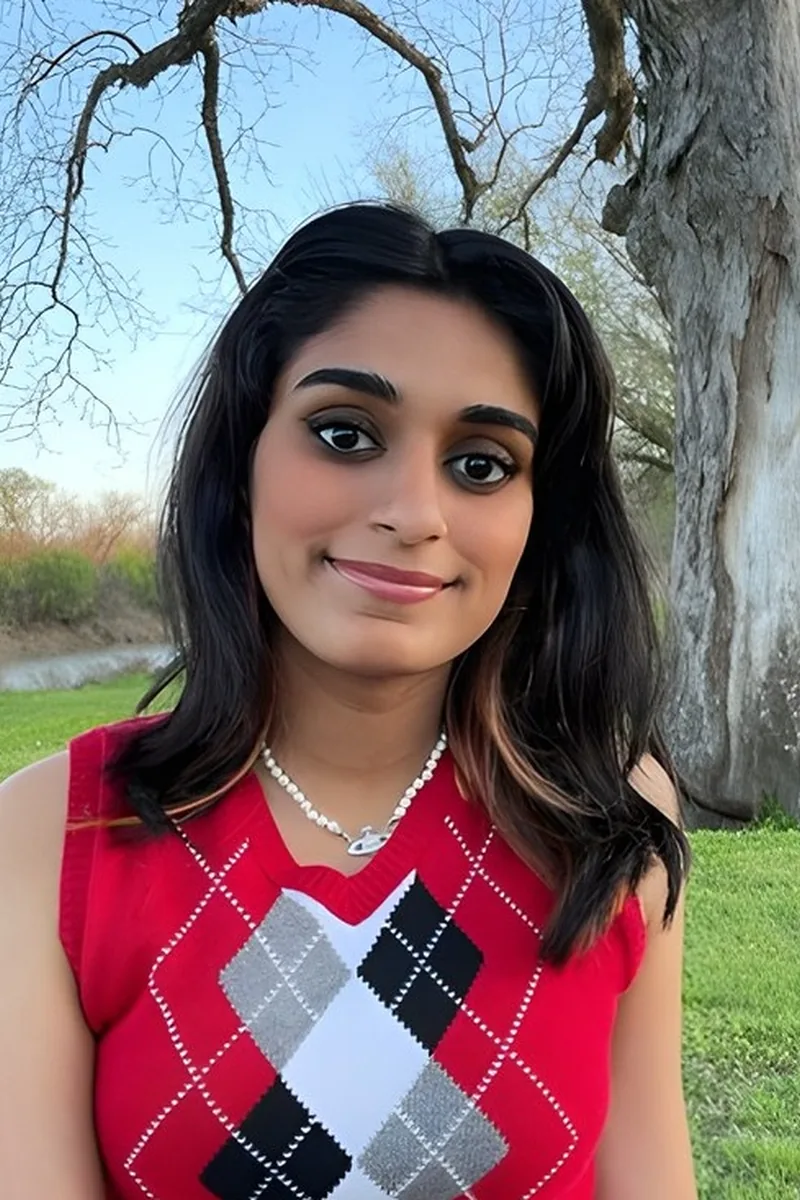
Jaishri approaches history as a discipline built on evidence and argumentation, not memorization of dates. Her training in psychology adds a useful dimension — she's especially good at unpacking why historical figures and populations made the decisions they did, which makes cause-and-effect questions and DBQ-style writing click for students.
Computer science teaches you to think in logical sequences — if this condition, then this outcome — and that's essentially what history essay prompts are asking when they want students to explain why events unfolded the way they did. Amanda applies that conditional reasoning to help students map out cause-and-effect chains in everything from political revolutions to economic shifts, turning vague narrative summaries into tightly structured arguments.
While history isn't Alison's primary discipline, her liberal arts coursework at the University of Dallas emphasizes reading primary sources critically and constructing evidence-based arguments — skills that transfer directly to analyzing historical events and writing document-based essays. She brings the same structured, analytical thinking from her math and business studies to organizing timelines and causal relationships.
Studying English literature at the University of Dallas means Mary spends most of her time doing exactly what history demands — close reading of texts from specific periods, tracing how cultural and political contexts shaped what writers produced. She applies that same interpretive discipline to historical material, teaching students to pull arguments out of documents and situate events within the larger forces driving them.
Civil engineering is essentially applied history — every bridge, highway, and levee Corbin has worked on exists because of decisions made decades or centuries ago about where cities grew, how resources were allocated, and which communities got infrastructure investment. That professional lens gives him a concrete way to teach students how political and economic forces drive historical change, especially in topics like industrialization, urbanization, and post-war development. Rated 4.8 by students.
Medical school at Baylor means Michelle spends her days parsing case studies — weighing evidence, identifying what led to what, and building an argument for a diagnosis. That same diagnostic thinking applies directly to history essays and DBQs, where she teaches students to trace causal chains through primary sources rather than summarize events in order. Her biochemistry background at Rice also built the kind of close-reading stamina that dense historical texts demand.
Serving on admissions committees at both Rice and Baylor College of Medicine trained Sugi to evaluate how people construct narratives from evidence — the same skill that separates strong history students from ones who just recite facts. Her cognitive science background adds a layer most history tutors lack: she teaches students to recognize how memory, perception, and bias shaped the way historical actors interpreted their own moments. Rated 5.0 by students.
Memorizing dates and names only gets a student so far; the real challenge in history is constructing cause-and-effect arguments from messy, contradictory evidence. Maggie's economics training sharpened her ability to analyze systems and incentives, which translates directly into teaching students how to explain historical change rather than just describe it.
While history isn't Bidyut's primary discipline, his analytical training in engineering translates well to evaluating cause-and-effect chains and constructing evidence-based arguments from primary sources. He treats historical questions the way he treats technical problems: define the variables, weigh the evidence, and build a clear narrative from the data.
Studying game theory and health policy at Stanford gave Jake a framework for understanding history as a series of strategic decisions made under constraints — not just a list of names and battles. He teaches students to analyze cause and effect, evaluate competing perspectives, and write arguments grounded in evidence rather than generalizations.
Mackenzie approaches history as a discipline built on argument and evidence, not just dates and names. Her economics background at Northwestern trained her to analyze cause-and-effect chains — the same skill that makes sense of everything from colonial trade networks to Cold War policy decisions. Rated 4.8 by students, she's particularly strong at teaching how to write thesis-driven historical essays.
Pre-med coursework at Cornell meant Jonathan spent years reading dense scientific literature and distilling it into clear arguments — a habit that translates directly to analyzing primary sources and writing thesis-driven history essays. His human biology and human development training also gives him a useful lens for topics like public health movements, demographic shifts, and the social forces behind major historical turning points. Rated 4.9 by students.
Elena treats history as an exercise in evidence-based reasoning, not a list of names and dates to memorize. Her training at Washington University and SMU — spanning ancient archaeology through modern political history — means she can move fluidly between eras while teaching students to ask the questions real historians ask: who created this source, why, and what does it leave out?
Studying economics gave Paul a lens most history tutors don't have — he can explain why the Panic of 1893 reshaped American politics or how postwar monetary policy fueled the Cold War, connecting cause and effect across decades. He teaches students to read historical events as arguments with stakes, evidence, and competing interpretations rather than as a list of dates to memorize.
Treating history as an argument rather than a list of dates changes how students engage with the material. Vy teaches students to evaluate primary sources, identify bias, and build document-based essays that demonstrate genuine historical reasoning. Her experience tutoring in under-resourced schools gave her a knack for making dense material accessible without dumbing it down.
Patricia's environmental science background actually pairs well with history — understanding how societies interact with landscapes, resources, and ecological change is central to topics like colonialism, industrialization, and westward expansion. She teaches students to trace those connections in their writing, turning broad historical events into tightly argued essays grounded in specific evidence.
As a Mathematical Economic Analysis and Computer Science major at Rice, Rishi is trained to model systems where multiple variables interact — which is exactly what's happening when students need to explain how economic conditions, political tensions, and social movements converged to produce a historical turning point. He teaches essay and DBQ writing as structured problem-solving: identify the driving forces, rank them by significance, and build an argument that connects causes to outcomes. His 35 ACT reflects the kind of analytical reading that history coursework rewards.
Jessy approaches history as a discipline built on reading and argumentation rather than memorization of dates. She teaches students to evaluate primary sources, identify cause-and-effect relationships, and write document-based responses that demonstrate genuine historical thinking. Her broad background in both sciences and humanities at Rice gives her a knack for making connections across time periods.
A biophysics major at Rice, Aadith isn't the obvious pick for history — but his science training translates surprisingly well when it comes to structuring an argument and weighing evidence critically. He teaches students to break down essay prompts and build responses that tie specific events to larger themes, rather than listing everything they remember. His 1590 SAT score speaks to the kind of close reading and reasoning that history coursework demands.
As a premed psychology student at Rice, Aditi constantly encounters the historical roots of modern science — how eugenics shaped public policy, how wartime funding redirected medical research, how cultural attitudes toward mental illness evolved across centuries. She brings that science-and-society perspective into history tutoring, teaching students to build cause-and-effect arguments that connect social conditions to political outcomes on essays and DBQs. Rated 4.8 by students.
Carter approaches history as a discipline built on argument and evidence, not memorization of dates — a perspective sharpened by studying economics and philosophy at Brown, where primary-source analysis was central to coursework. He teaches students to evaluate competing interpretations, contextualize events within broader economic and political systems, and write thesis-driven essays that hold up under scrutiny.
Pre-med coursework at Rice means Tegan spends most of her time in the sciences, but that training sharpened a skill history courses quietly demand: reading large volumes of dense material and distilling it into a coherent argument under pressure. She brings that same disciplined approach to teaching students how to tackle DBQs and essay prompts, walking them through how to select evidence and build a thesis rather than retell a story. Rated 4.9 by students.
An English major at Carleton College, Meagen reads historical texts the way she reads literature — closely, looking for how authors construct arguments and what assumptions sit beneath the surface. That close-reading instinct is exactly what document-based questions and history essays reward, since the real task is interpreting sources and building a thesis, not recalling dates. Rated 5.0 by students.
Chloe's Master's in Global Policy Studies at UT Austin's LBJ School required deep engagement with political history, international institutions, and the economic forces behind major world events. That policy lens means she teaches history as interconnected cause-and-effect chains rather than isolated dates and names. Students learn to read primary sources critically and build document-based arguments that hold up under scrutiny.
Applied mathematics at Rice trains you to model complex systems by isolating the variables that actually matter — a habit Alexander carries into history, where he teaches students to cut through surface-level narratives and build causal arguments about why events unfolded the way they did. His mathematical economics coursework, heavy on political economy and institutional analysis, gives him concrete frameworks for topics like industrialization, trade conflicts, and policy-driven social change that go well beyond memorizing dates.
Cognitive science at Rice trained Adam to ask how people think, perceive, and make decisions — questions that turn out to be the interesting ones in history, too, especially when analyzing why movements gained traction or why leaders miscalculated. He brings that framework to document analysis and essay writing, pushing students to ground their arguments in how ideas actually spread through populations rather than just narrating a sequence of events.
College essays taught William something applicable to history: how to build a compelling argument from specific, well-chosen evidence under tight constraints. As a CS and math student at Rice, he brings a programmer's instinct for logical structure to historical writing — outlining causal chains and organizing document-based responses the way he'd architect clean code. He's best suited for students who need help turning what they know into clearly structured essays and exam answers.
Sajel studies social policy analysis at Rice, which means she spends most of her coursework examining how historical forces — migration, public health crises, political movements — shape the policies we live under today. That background makes her especially effective at teaching students to analyze cause and effect, evaluate primary sources, and write document-based essays. She treats history as an argument to be constructed, not a list of dates to memorize.
Medical school trained Sanjay to synthesize massive amounts of information quickly and identify what actually matters — a skill that maps directly onto history, where students drown in dates and events but struggle to extract the causal arguments essays demand. His biochemistry background at Rice also means he's comfortable moving between scientific, political, and economic contexts, which is especially useful for topics like the history of public health, industrialization, or wartime policy decisions. He teaches students to build arguments around *why* things happened rather than reciting what happened.
Studying history well means learning to read like a detective — evaluating who wrote a source, why, and what they left out. Iselee's literature and linguistics background gives her strong tools for teaching students how to analyze primary documents and build evidence-based arguments. While history isn't her core discipline, her analytical training transfers directly to the reading-heavy, writing-heavy work the subject demands.
Computational math training at Rice built Vinson's instinct for spotting patterns in complex systems — an approach he brings to history by teaching students to identify recurring structural forces (economic pressure, ideological shifts, power vacuums) behind seemingly unrelated events. That analytical habit is especially useful for document-based questions, where pulling a coherent argument from multiple sources rewards systematic thinking over surface-level recall. Rated 4.8 by students.
Liz approaches history as an exercise in understanding why people made the choices they did — which draws directly on her psychology training. Instead of memorizing dates and treaties in isolation, she teaches students to analyze cause-and-effect chains and evaluate primary sources for bias, skills that pay off on document-based questions and analytical essays alike.
Years of teaching SAT prep at Kaplan trained Sakibul to break down reading passages by identifying an author's argument and the evidence supporting it — a skill that maps directly onto analyzing historical documents and crafting thesis-driven essays. His chemistry and math background means he instinctively looks for cause-and-effect chains rather than treating events as isolated facts to memorize, which is exactly what DBQs and essay prompts reward.
Zhengdong's doctoral training in physics might seem unrelated to history, but it gave him a rigorous approach to evaluating evidence and constructing arguments — skills that transfer directly to analyzing primary sources and writing document-based essays. He teaches students to treat historical claims the way a scientist treats hypotheses: test them against the evidence before drawing conclusions.
I am an Atlanta native. I hold an undergraduate degree in Business from Tennessee State University and graduated degree in Education from Cambridge College. I am a Georgia and Texas certified teacher. I have always enjoyed working with kids. I have taught kindergarten, first, second and fourth grade. I am a hard-worker, team player and passionate about my students succeeding in whatever they set their minds too. I currently hold endorsements in K-5 Mathematics, Teacher Support Specialist, and ESOL (English for Speakers of Other Languages). I am able to provide instruction that meets the needs of all students. I have the ability to differentiate instruction so that I cater to all learning styles and levels.
Engineering coursework at Brown drills one thing relentlessly: tracing how systems fail by working backward from outcomes to root conditions. Layla brings that same reverse-engineering instinct to history, teaching students to start with a historical outcome — a revolution, a treaty, a demographic shift — and map the interlocking pressures that made it inevitable. Rated 5.0 by students.
Craig approaches history the way a scholar reads a difficult text: by asking what the evidence actually says and who's telling the story. His doctoral training in English sharpened his ability to break down primary sources, evaluate competing interpretations, and build arguments — exactly the skills that separate a strong history student from one who just memorizes timelines. Rated 5.0 by students.
Editing for multiple newspapers trained Molly to do exactly what history assignments demand: cut through a pile of sources, find the throughline, and build a persuasive argument around it. Her communications background means she approaches historical writing as rhetoric — teaching students to analyze how documents were crafted to persuade, not just what they describe. That editorial instinct is especially useful for document-based questions where distinguishing argument from information is the whole game.
I am most passionate about biology and chemistry. I am a firm proponent of education, believing it to be absolutely necessary for an improved quality of life, and I try to impart this appreciation to all of my students.
Testimonials
Because the right History tutor makes all the difference.
Average Session Rating – Based on 3.4M Learner Ratings
Nearby History Tutors
Other Irving Tutors
Related Social Studies Tutors in Irving
Frequently Asked Questions
Varsity Tutors matches Irving students with expert History tutors for 1-on-1 instruction. We pair each student with a tutor based on their specific needs, learning style, and goals.
Whether you need homework help, exam prep, or want to get ahead, our History tutors are ready to help.
Common challenges include gaps from earlier material, difficulty with specific concepts, and trouble applying learning to new problems. These issues can snowball quickly in History.
A tutor identifies where you're stuck, fills in gaps, and provides targeted practice. The 1-on-1 format means you get help exactly where you need it.
Tutors work with your student's actual coursework—homework assignments, class notes, and upcoming tests. This keeps tutoring directly relevant to what's happening in the classroom.
When you share information about your student's school and curriculum, we can match you with a tutor who has relevant experience.
All tutors complete background checks, credential verification, and teaching evaluation. Many of our History tutors hold advanced degrees or have years of teaching experience.
You can review tutor profiles to find someone with the right background for your student's level and needs.
Many students see improved grades within a few weeks, along with better understanding of History concepts and more confidence tackling challenging material.
Tutors track progress and adjust their approach to ensure continued improvement.
Most students benefit from 1-2 sessions per week. More frequent sessions help if your student is significantly behind or has an important exam coming up.
Your tutor can recommend a schedule based on your student's specific situation and goals.
Tutoring is purchased in packages of hours, with rates varying by tutor experience. Varsity Tutors offers several options to fit different budgets and needs.
You can discuss pricing during your consultation to find what works best.
Your tutor will assess where your student is, discuss goals, and start working on priority areas. Most students bring current homework or upcoming test material to focus on.
By the end, you'll have a clear sense of how the tutor can help and a plan for moving forward.
Let’s find your perfect tutor
Answer a few quick questions. We’ll recommend the right plan and match you with a top 5% tutor.