Award-Winning History Tutors
serving Plano, TX
History
Tutors in Plano
Private 1-on-1 tutoring, weekly live classes for academic support, test prep & enrichment, practice tests and diagnostics, and more to elevate grades and test scores.
Based on 3.4M Learner Ratings
UniversitiesSchools & Universities
DeliveredHours Delivered
ProficiencyGrowth in Proficiency
Who needs tutoring?
No obligation. Takes ~1 minute.
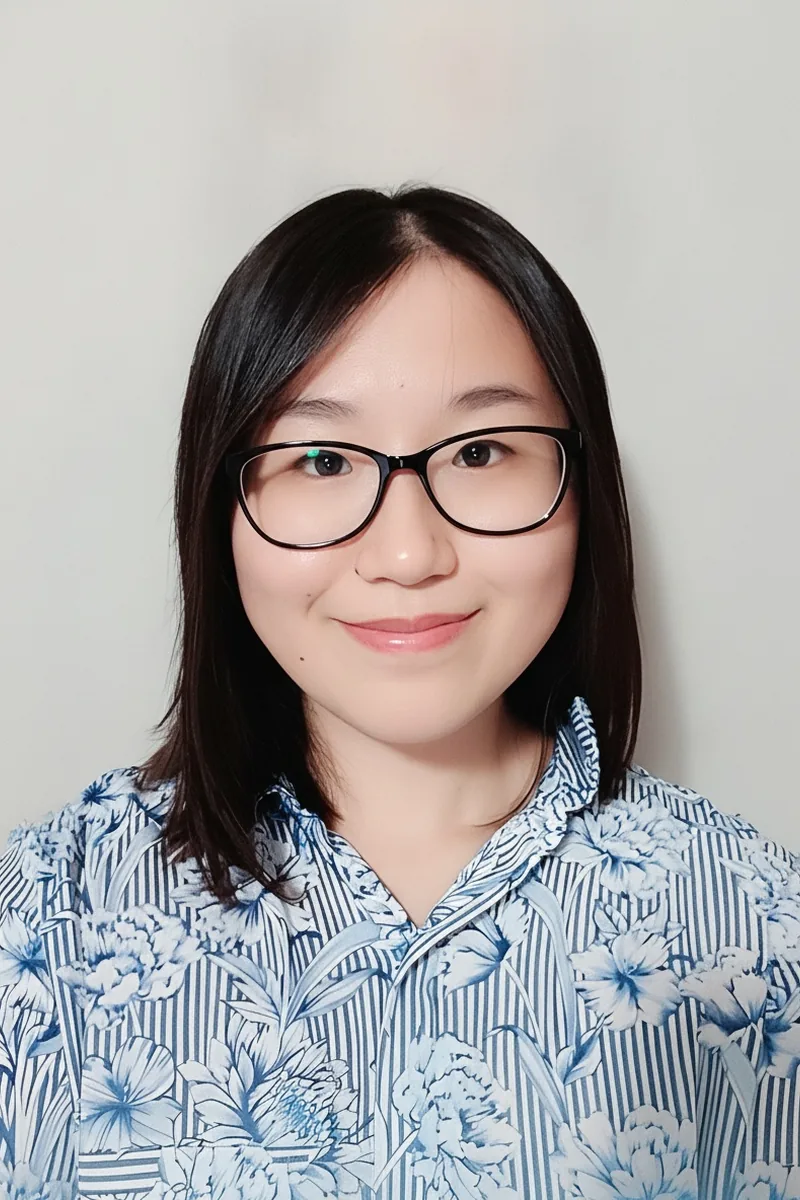
Patricia's environmental science background actually pairs well with history — understanding how societies interact with landscapes, resources, and ecological change is central to topics like colonialism, industrialization, and westward expansion. She teaches students to trace those connections in their writing, turning broad historical events into tightly argued essays grounded in specific evidence.
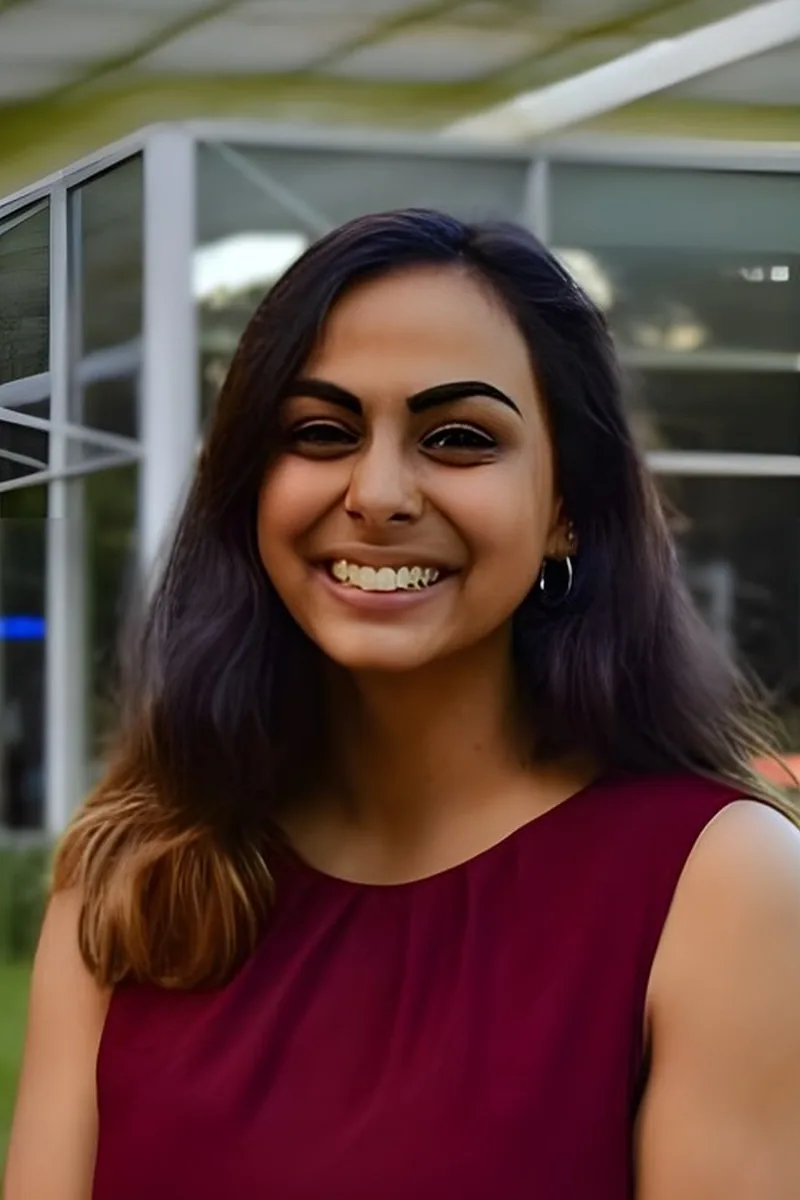
I am most passionate about biology and chemistry. I am a firm proponent of education, believing it to be absolutely necessary for an improved quality of life, and I try to impart this appreciation to all of my students.
A PhD in materials engineering means Nivedina spends her days tracing how physical conditions — temperature, pressure, resource availability — determined which civilizations could build what, and when. That scientific lens on cause and effect carries over naturally to history, where she teaches students to look past surface-level narratives and dig into the material and economic forces driving events like industrialization or colonial expansion.
Memorizing dates and names only gets a student so far — the real skill in history is constructing cause-and-effect chains that explain why events unfolded the way they did. Kenan teaches students to read primary sources like arguments, identifying bias and purpose, which makes both essay writing and exam prep far more manageable.
Most students struggle with history not because they can't remember dates, but because they don't know how to build a causal argument from primary sources. Kinjal's IB background — which required analyzing historical events through multiple global perspectives — gave her a framework she now applies to everything from DBQ essays to thematic analysis of political revolutions. She teaches students to read like historians, not like textbooks.
Strong history performance depends less on memorizing dates than on constructing arguments from evidence — a skill Natalie sharpens daily as an English major at Rice, where every essay requires a defensible thesis backed by specific sources. She teaches students to read primary documents the way she reads literature: looking for perspective, bias, and what the author chose not to say.
Engineering coursework is essentially applied history — every circuit design and signal processing technique Alisa studies at UT Dallas exists because of decades of invention, failure, and iteration. She brings that awareness of how ideas evolve over time to teaching students how to trace cause-and-effect chains in historical essays, particularly when prompts ask them to explain technological, economic, or political change. Rated 5.0 by students.
Reading history as a story — with causes, consequences, and competing perspectives — makes it far more memorable than memorizing dates. Siyu's arts background at NYU sharpened her ability to analyze sources and construct arguments, skills she now brings to teaching students how to think critically about historical events and write clear, evidence-backed responses.
The Texas Academy of Math and Science compressed four years of high school into two intense years of university coursework, which meant Kavitya had to absorb history material quickly and write sharp, argument-driven essays under real time pressure. That experience — learning to distill large volumes of reading into clear thesis statements and supporting evidence — is exactly what she brings to history tutoring now. Holds a 5.0 rating.
I am currently a senior at Emory University studying chemistry and applied math with a focus on inorganic chemistry. I will be available to tutor algebra, trigonometry, algebra 2, biology, chemistry, calculus, geometry, pre- calculus, and ACT prep. I started tutoring in high school and continued tutoring at Emory where I tutored general chemistry, introductory biology, and calculus for two years. Apart from academic tutoring, I am also involved in Project SHINE which teaches English to recent Atlanta immigrants. I believe that education (no matter what kind) is crucial in life, but I also strive to emphasize why something is important. In my experience, most students struggle with something because they don't understand exactly why it is important or simply do not care. I am heavily involved in academic research at Emory so I am able to help a student understand exactly why a specific subject area is important and how it is continuously applied both in the lab and in the real world to improve our lives. It's always easier to see the physical and practical applications of a subject than try to visualize its importance on paper. In my spare time I enjoy chemistry, ancient Roman history, jam bands, running, cycling, and scuba diving.
Reading and writing are at the center of Sunny's life outside the classroom — books, essays, music — and that literary instinct shapes how she approaches history, treating every primary source as a text worth close reading rather than just background material. Her biochemistry training at Rice adds an unexpected edge: she's practiced at building arguments from evidence under pressure, which is exactly what DBQ and free-response prompts demand. Rated 5.0 by students.
Bioinformatics is essentially detective work — sifting through massive datasets to find the signal in the noise — and Hamza brings that same investigative instinct to history, where students need to sort through competing accounts and extract the claims that actually hold up under scrutiny. His science training sharpens how he teaches document analysis and essay construction, pushing students to treat a thesis like a hypothesis: state it clearly, support it with specific evidence, and address what doesn't fit.
Reading a history textbook and actually understanding cause-and-effect relationships across events are two very different tasks. Anna teaches students to approach history as a series of connected arguments — why did this policy lead to that conflict, and what evidence supports that interpretation? Her strong writing background also means she can sharpen the document-based and analytical essays that make up a big part of most history grades.
Engineering coursework is essentially applied history — every bridge design, thermodynamic principle, and manufacturing process Mackenzie studies at UT Dallas exists because of specific industrial, military, or scientific turning points. She uses that lens to make cause-and-effect reasoning in history feel concrete, especially when students need to connect technological change to political and economic shifts in essays and DBQs. Rated 5.0 by students.
Engineering coursework at UT Austin drills one thing relentlessly: diagnosing how complex systems work by tracing inputs to outputs. Akhil brings that same cause-and-effect instinct to history, walking students through how to connect economic pressures, political decisions, and social conditions into coherent essay arguments rather than just recounting what happened. His broad teaching range across STEM, writing, and test prep means he's comfortable shifting between analytical and narrative modes on the fly.
Years of writing code at Texas A&M trained Nicholas to think in terms of systems — inputs, processes, outputs — and that logic maps surprisingly well onto historical analysis, where students need to trace how political decisions, economic pressures, and social tensions feed into each other. He's particularly useful for students who freeze up when asked to write argumentative essays, since his CS-trained instinct is to treat a thesis like a function: define your claim, identify your supporting evidence, and build toward a conclusion. Rated 5.0 by students.
Understanding history means learning to read sources critically and construct arguments about cause, consequence, and change over time. Gabriela approaches historical thinking through the lens of human behavior and motivation — her psychology training makes her especially effective at teaching students to analyze why people and societies acted the way they did.
Medical school at Baylor means Michelle spends her days parsing case studies — weighing evidence, identifying what led to what, and building an argument for a diagnosis. That same diagnostic thinking applies directly to history essays and DBQs, where she teaches students to trace causal chains through primary sources rather than summarize events in order. Her biochemistry background at Rice also built the kind of close-reading stamina that dense historical texts demand.
Serving on admissions committees at both Rice and Baylor College of Medicine trained Sugi to evaluate how people construct narratives from evidence — the same skill that separates strong history students from ones who just recite facts. Her cognitive science background adds a layer most history tutors lack: she teaches students to recognize how memory, perception, and bias shaped the way historical actors interpreted their own moments. Rated 5.0 by students.
Memorizing dates and names only gets a student so far; the real challenge in history is constructing cause-and-effect arguments from messy, contradictory evidence. Maggie's economics training sharpened her ability to analyze systems and incentives, which translates directly into teaching students how to explain historical change rather than just describe it.
While history isn't Bidyut's primary discipline, his analytical training in engineering translates well to evaluating cause-and-effect chains and constructing evidence-based arguments from primary sources. He treats historical questions the way he treats technical problems: define the variables, weigh the evidence, and build a clear narrative from the data.
Pre-med coursework at Cornell meant Jonathan spent years reading dense scientific literature and distilling it into clear arguments — a habit that translates directly to analyzing primary sources and writing thesis-driven history essays. His human biology and human development training also gives him a useful lens for topics like public health movements, demographic shifts, and the social forces behind major historical turning points. Rated 4.9 by students.
Mackenzie approaches history as a discipline built on argument and evidence, not just dates and names. Her economics background at Northwestern trained her to analyze cause-and-effect chains — the same skill that makes sense of everything from colonial trade networks to Cold War policy decisions. Rated 4.8 by students, she's particularly strong at teaching how to write thesis-driven historical essays.
Studying game theory and health policy at Stanford gave Jake a framework for understanding history as a series of strategic decisions made under constraints — not just a list of names and battles. He teaches students to analyze cause and effect, evaluate competing perspectives, and write arguments grounded in evidence rather than generalizations.
Elena treats history as an exercise in evidence-based reasoning, not a list of names and dates to memorize. Her training at Washington University and SMU — spanning ancient archaeology through modern political history — means she can move fluidly between eras while teaching students to ask the questions real historians ask: who created this source, why, and what does it leave out?
Carter approaches history as a discipline built on argument and evidence, not memorization of dates — a perspective sharpened by studying economics and philosophy at Brown, where primary-source analysis was central to coursework. He teaches students to evaluate competing interpretations, contextualize events within broader economic and political systems, and write thesis-driven essays that hold up under scrutiny.
As a Mathematical Economic Analysis and Computer Science major at Rice, Rishi is trained to model systems where multiple variables interact — which is exactly what's happening when students need to explain how economic conditions, political tensions, and social movements converged to produce a historical turning point. He teaches essay and DBQ writing as structured problem-solving: identify the driving forces, rank them by significance, and build an argument that connects causes to outcomes. His 35 ACT reflects the kind of analytical reading that history coursework rewards.
Pre-med coursework at Rice means Tegan spends most of her time in the sciences, but that training sharpened a skill history courses quietly demand: reading large volumes of dense material and distilling it into a coherent argument under pressure. She brings that same disciplined approach to teaching students how to tackle DBQs and essay prompts, walking them through how to select evidence and build a thesis rather than retell a story. Rated 4.9 by students.
Cognitive science at Rice trained Adam to ask how people think, perceive, and make decisions — questions that turn out to be the interesting ones in history, too, especially when analyzing why movements gained traction or why leaders miscalculated. He brings that framework to document analysis and essay writing, pushing students to ground their arguments in how ideas actually spread through populations rather than just narrating a sequence of events.
Studying economics gave Paul a lens most history tutors don't have — he can explain why the Panic of 1893 reshaped American politics or how postwar monetary policy fueled the Cold War, connecting cause and effect across decades. He teaches students to read historical events as arguments with stakes, evidence, and competing interpretations rather than as a list of dates to memorize.
As a premed psychology student at Rice, Aditi constantly encounters the historical roots of modern science — how eugenics shaped public policy, how wartime funding redirected medical research, how cultural attitudes toward mental illness evolved across centuries. She brings that science-and-society perspective into history tutoring, teaching students to build cause-and-effect arguments that connect social conditions to political outcomes on essays and DBQs. Rated 4.8 by students.
Treating history as an argument rather than a list of dates changes how students engage with the material. Vy teaches students to evaluate primary sources, identify bias, and build document-based essays that demonstrate genuine historical reasoning. Her experience tutoring in under-resourced schools gave her a knack for making dense material accessible without dumbing it down.
Applied mathematics at Rice trains you to model complex systems by isolating the variables that actually matter — a habit Alexander carries into history, where he teaches students to cut through surface-level narratives and build causal arguments about why events unfolded the way they did. His mathematical economics coursework, heavy on political economy and institutional analysis, gives him concrete frameworks for topics like industrialization, trade conflicts, and policy-driven social change that go well beyond memorizing dates.
An English major at Carleton College, Meagen reads historical texts the way she reads literature — closely, looking for how authors construct arguments and what assumptions sit beneath the surface. That close-reading instinct is exactly what document-based questions and history essays reward, since the real task is interpreting sources and building a thesis, not recalling dates. Rated 5.0 by students.
Jessy approaches history as a discipline built on reading and argumentation rather than memorization of dates. She teaches students to evaluate primary sources, identify cause-and-effect relationships, and write document-based responses that demonstrate genuine historical thinking. Her broad background in both sciences and humanities at Rice gives her a knack for making connections across time periods.
College essays taught William something applicable to history: how to build a compelling argument from specific, well-chosen evidence under tight constraints. As a CS and math student at Rice, he brings a programmer's instinct for logical structure to historical writing — outlining causal chains and organizing document-based responses the way he'd architect clean code. He's best suited for students who need help turning what they know into clearly structured essays and exam answers.
Sajel studies social policy analysis at Rice, which means she spends most of her coursework examining how historical forces — migration, public health crises, political movements — shape the policies we live under today. That background makes her especially effective at teaching students to analyze cause and effect, evaluate primary sources, and write document-based essays. She treats history as an argument to be constructed, not a list of dates to memorize.
A biophysics major at Rice, Aadith isn't the obvious pick for history — but his science training translates surprisingly well when it comes to structuring an argument and weighing evidence critically. He teaches students to break down essay prompts and build responses that tie specific events to larger themes, rather than listing everything they remember. His 1590 SAT score speaks to the kind of close reading and reasoning that history coursework demands.
Chloe's Master's in Global Policy Studies at UT Austin's LBJ School required deep engagement with political history, international institutions, and the economic forces behind major world events. That policy lens means she teaches history as interconnected cause-and-effect chains rather than isolated dates and names. Students learn to read primary sources critically and build document-based arguments that hold up under scrutiny.
Zhengdong's doctoral training in physics might seem unrelated to history, but it gave him a rigorous approach to evaluating evidence and constructing arguments — skills that transfer directly to analyzing primary sources and writing document-based essays. He teaches students to treat historical claims the way a scientist treats hypotheses: test them against the evidence before drawing conclusions.
Testimonials
Because the right History tutor makes all the difference.
Average Session Rating – Based on 3.4M Learner Ratings
Nearby History Tutors
Other Plano Tutors
Related Social Studies Tutors in Plano
Frequently Asked Questions
Varsity Tutors matches Plano students with expert History tutors for 1-on-1 instruction. We pair each student with a tutor based on their specific needs, learning style, and goals.
Whether you need homework help, exam prep, or want to get ahead, our History tutors are ready to help.
Common challenges include gaps from earlier material, difficulty with specific concepts, and trouble applying learning to new problems. These issues can snowball quickly in History.
A tutor identifies where you're stuck, fills in gaps, and provides targeted practice. The 1-on-1 format means you get help exactly where you need it.
Tutors work with your student's actual coursework—homework assignments, class notes, and upcoming tests. This keeps tutoring directly relevant to what's happening in the classroom.
When you share information about your student's school and curriculum, we can match you with a tutor who has relevant experience.
All tutors complete background checks, credential verification, and teaching evaluation. Many of our History tutors hold advanced degrees or have years of teaching experience.
You can review tutor profiles to find someone with the right background for your student's level and needs.
Many students see improved grades within a few weeks, along with better understanding of History concepts and more confidence tackling challenging material.
Tutors track progress and adjust their approach to ensure continued improvement.
Most students benefit from 1-2 sessions per week. More frequent sessions help if your student is significantly behind or has an important exam coming up.
Your tutor can recommend a schedule based on your student's specific situation and goals.
Tutoring is purchased in packages of hours, with rates varying by tutor experience. Varsity Tutors offers several options to fit different budgets and needs.
You can discuss pricing during your consultation to find what works best.
Your tutor will assess where your student is, discuss goals, and start working on priority areas. Most students bring current homework or upcoming test material to focus on.
By the end, you'll have a clear sense of how the tutor can help and a plan for moving forward.
Let’s find your perfect tutor
Answer a few quick questions. We’ll recommend the right plan and match you with a top 5% tutor.