Award-Winning History Tutors
serving Cleveland, OH
History
Tutors in Cleveland
Private 1-on-1 tutoring, weekly live classes for academic support, test prep & enrichment, practice tests and diagnostics, and more to elevate grades and test scores.
Based on 3.4M Learner Ratings
UniversitiesSchools & Universities
DeliveredHours Delivered
ProficiencyGrowth in Proficiency
Who needs tutoring?
No obligation. Takes ~1 minute.
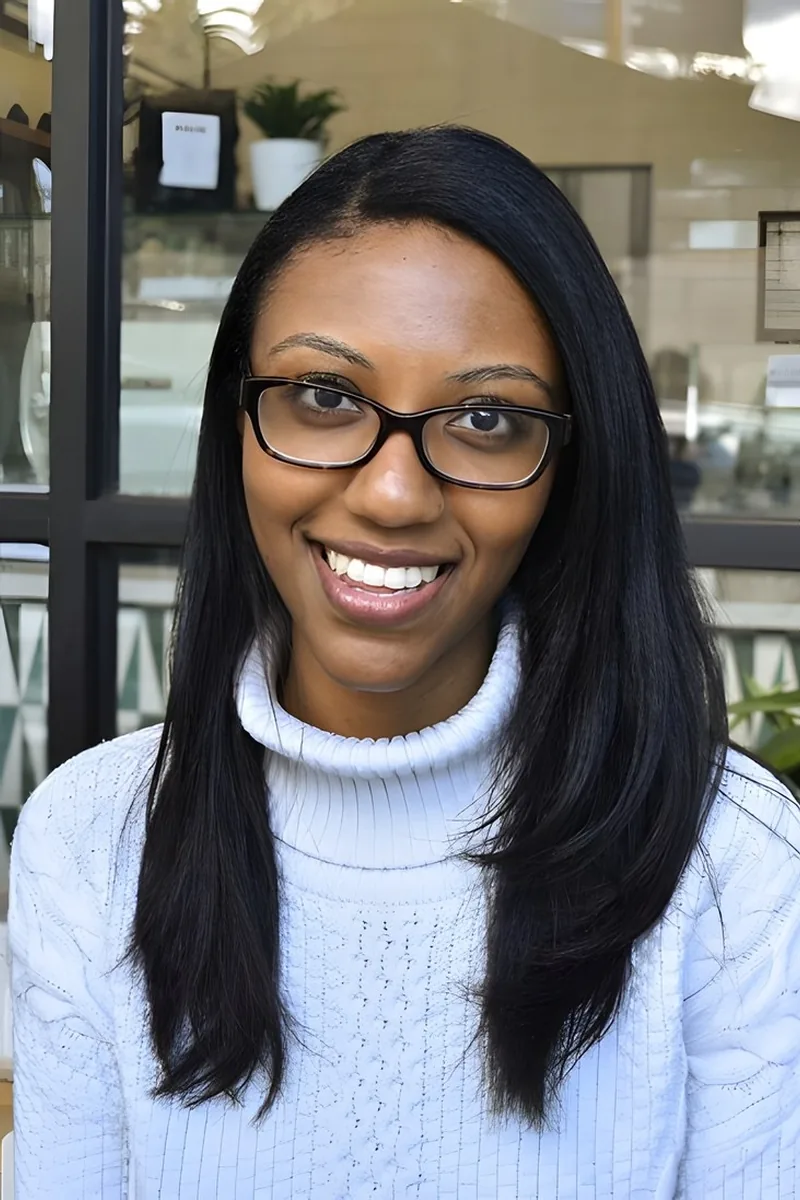
Arielle earned her history degree at Yale, where she learned to treat history not as a list of dates but as an ongoing argument built from evidence. She teaches students to analyze primary sources, identify cause-and-effect relationships, and construct their own historical interpretations. That analytical approach transfers directly to the document-based questions and essays students encounter in class.

Strong history students don't just memorize dates — they learn to read a primary source the way a detective reads a crime scene, asking who wrote it, why, and what's missing. Amy approaches historical material with the same close-reading instincts she uses as an English major at Penn, teaching students to construct arguments from evidence rather than retell a textbook narrative.
Vinay's MPA in Development Practice from Columbia involved deep engagement with political institutions, economic systems, and global policy — all of which ground his approach to teaching history as interconnected cause-and-effect rather than isolated dates. He's especially strong at coaching students to build document-based arguments and connect historical evidence to broader themes like power, migration, and economic change.
Emma's Education minor at Cornell has her regularly dissecting how historical context shapes policy and social institutions — skills that translate directly into the kind of sourcing and period analysis history courses demand. Her background in Human Development also gives her a unique angle on topics like immigration, civil rights, and family policy, where understanding human motivation makes the history richer. Rated 5.0 by students.
Emma's Classical Studies minor at Duke — focused on ancient Greece and Rome — gave her deep practice in the skills that matter most in history: evaluating primary sources, understanding how civilizations change over time, and constructing evidence-based arguments. She treats history as a discipline built on interpretation rather than memorization, teaching students to connect causes, consequences, and context when writing essays or preparing for exams.
Philosophy-Neuroscience-Psychology is an unusual major — it trains you to ask how people think, why they believe what they believe, and how ideas spread through populations. Julie brings that cognitive lens to history, unpacking how intellectual movements, religious shifts, and political ideologies gained traction in specific times and places. Rated 5.0 by students.
Before pivoting to teaching, Rosalyn spent years in pre-med biochemistry courses where understanding historical context — the evolution of scientific ethics, landmark public health decisions, the politics behind research funding — was woven into every class. That background gives her a knack for showing students how to pull a compelling argument out of a textbook chapter or primary document. She's particularly good at coaching students who struggle to move from "I know the facts" to "I can explain what they mean."
I'm entering my senior year at Case Western Reserve University. I'm happy to provide tutoring services for those interested in improving their academic performance or exam preparation. The subjects which I am most proficient include SAT Math, Algebra 1 , Algebra 2, Middle School Math, Pre-Algebra, Pre-Calculus, and Trigonometry.
Brian's main strengths are in math, science, and computer science, so he approaches history the way he approaches debugging code — breaking a problem into smaller pieces and figuring out what caused what. That structured thinking translates well to organizing essay responses and connecting historical events into logical chains. Rated 5.0 by students.
History isn't Sunay's primary teaching area, but his background in analytical writing and research — honed through finance work and neuroscience coursework at Emory — translates well to evaluating sources, constructing document-based arguments, and identifying cause-and-effect relationships in historical events. He's strongest when the assignment involves writing a thesis-driven essay or organizing evidence into a coherent narrative.
Ruth approaches history less as a list of dates and more as a series of cause-and-effect chains that students can trace and argue about. Her strength is on the writing side — teaching students to pull evidence from primary and secondary sources and build it into a coherent historical argument. That analytical skill transfers directly to document-based questions and essay exams.
A PhD in applied mathematics might seem like an odd background for history, but Dr's training is built on modeling how complex systems evolve over time — which is essentially what historical analysis asks students to do with political, economic, and social forces. He brings that same habit of tracing cause-and-effect chains to teaching students how to construct thesis-driven arguments about why events unfolded the way they did. Rated 4.9 by students.
Engineering coursework — particularly the kind Alexander did across chemical, biological, and biomedical disciplines — trains you to read technical literature critically and synthesize information from multiple sources into a coherent argument. That process maps directly onto what history courses actually ask students to do: analyze documents, weigh competing accounts, and explain how interconnected factors produced specific outcomes. His PhD-level research skills are especially useful for students tackling document-based questions or research papers where evidence needs to be organized, not just summarized.
Karen approaches history as a storytelling exercise, connecting cause and effect across political, economic, and cultural developments rather than treating events as isolated facts to memorize. Her wide-ranging reading habits and cross-cultural perspective — she's lived and worked across different cultural contexts — add depth to discussions of everything from ancient civilizations to modern geopolitics.
Twenty years in the arts and music world means Amos has spent a career studying how cultural movements actually unfold — how Romantic nationalism shaped 19th-century Europe, how the Harlem Renaissance intersected with the Great Migration, how Cold War tensions played out through state-sponsored art programs. That lived fluency with cultural history gives him a concrete way to teach students how artistic, political, and social forces connect on essays and document-based questions. Rated 5.0 by students.
An English literature major who also studies psychology, Lauren reads historical texts the way she'd read a novel — tracking whose voice is telling the story, what's being left out, and how the narrative serves a particular agenda. That literary instinct is especially useful for document-based questions where students need to unpack tone, audience, and purpose rather than just summarize content. Rated 4.8 by students.
Teaching a dozen kids recorder in Papua New Guinea meant learning local context fast — who colonized the region, what cultural traditions survived, and why that history still shapes daily life. Timothy carries that same curiosity into history tutoring, pushing students to ask *why* behind events rather than skating across surface-level facts. His 5.0 rating and weekly tutoring in multiple subjects show he can adapt that approach to whatever era or topic a student is tackling.
Learning history well means learning to read critically, argue persuasively, and spot bias in sources — skills Beth sharpened throughout her history degree at Allegheny College. She teaches students how to move from passively reading a textbook to actively interrogating why events unfolded the way they did. Whether the topic is ancient civilizations or the Cold War, she anchors each session in the cause-and-effect reasoning that makes history click.
Brittany approaches history as a subject that rewards careful reading and argument-building — skills she sharpened through her Master's in Urban Education. She teaches students to analyze primary sources, identify cause-and-effect relationships, and construct written arguments backed by evidence rather than vague summaries. Her background in science also gives her a unique lens on topics like the Industrial Revolution and the history of public health.
I am a seasoned educator with over 14 years of teaching experience. I currently am a middle school principal but have taught grades 3-college. I am no stranger to Common Core and can help students master material with tried and true strategies!
Serving as a teaching assistant for a college-level biology course meant Anna spent a lot of time doing what history demands — breaking down complex material for students who need to see the *why* behind the facts, not just the facts themselves. Her psychology minor adds another layer, giving her a framework for exploring how individual and group decision-making drove events from political revolutions to social reform movements. She's especially effective at coaching students through essay structure and source analysis, where clear reasoning matters more than memorized dates.
Anish's double major in economics and physics at Case Western Reserve means he's constantly tracing how broad forces — market pressures, technological shifts, resource scarcity — drive human decisions, which is exactly the kind of thinking history courses test. He teaches students to build structured arguments from evidence, connecting specific events to the larger economic and political systems behind them.
Most students default to memorizing dates and names, but Christopher's approach to history leans on the same cause-and-effect reasoning he uses across his physics and chemistry teaching — tracing how one decision, resource conflict, or ideological shift triggered the next. That scientific habit of asking *why* something happened, not just *what* happened, gives students a framework for tackling essay prompts and document analysis with real analytical depth.
An effective educator must be able to recognize each individual student's learning style and to adapt the lesson to accommodate that style. Also, each student has a different rate of learning. Thus, the lessons must be directed not only towards ensuring the student masters the material but also keeps the student engaged in and enthusiatic about the education process. Finally, the effective tutor must remember that the end goal of the learning process is not only to master a defined set of knowledge and skills, but also to learn "how to learn;" in this way the student will be better equipped to thrive in an ever changing environment.
Elena's Religious Studies degree from McGill and Biblical Studies master's from Edinburgh mean she spent years doing exactly what history demands — interpreting ancient texts, reconstructing cultural contexts, and arguing about what sources actually reveal versus what later generations assumed. She brings that training to topics like world civilizations, religious conflicts, and cross-cultural exchange, where understanding belief systems and institutions is half the battle. Named Scotland's International Young Thinker of the Year in 2014, she has a knack for making even dense historical material feel lively and accessible.
A master's in social sciences and a bachelor's in French means Lauren spent years doing exactly what history courses demand — reading primary sources in their cultural context and building arguments about how societies change over time. She's particularly sharp on topics where French and European history overlap with broader social forces, like revolution, colonialism, and cultural exchange. Rated 5.0 by students.
Epidemiology is essentially detective work through history — tracing how wars, famines, trade routes, and political decisions created the conditions for pandemics and public health crises. Emily's MPH work at Yale in epidemiology and global health means she teaches history through those causal chains, showing students how to connect social, economic, and political forces into the kind of argument that earns top marks on essays and DBQs. Rated 5.0 by students.
Engineering coursework at Johns Hopkins means Christine spends most of her time solving technical problems — but biomedical engineering specifically requires understanding how scientific discoveries, public health crises, and government regulation have shaped medicine over centuries. That historical awareness translates directly to teaching students how to build cause-and-effect arguments in history essays, especially around topics like industrialization, public health reform, or the politics of scientific progress. Rated 5.0 by students.
Rahul's genuine curiosity about history — it's one of his go-to hobbies alongside sourdough baking and gardening — means he tutors the subject with real enthusiasm rather than treating it as an afterthought. His engineering training at Cornell sharpened his ability to break complex systems into causes and consequences, a skill he applies directly to helping students outline thesis-driven essays and organize historical evidence into persuasive arguments.
A biology undergrad and biomedical sciences graduate student, Sarah knows how to read through layers of complex material and extract the core argument — a skill that maps directly onto analyzing historical documents and constructing thesis-driven essays. She teaches students to treat primary sources the way a scientist treats data: ask what the evidence actually supports, not what you assumed going in. Rated 5.0 by students.
Yusef's political science degree and his Cambridge MPhil in Development Studies gave him deep practice in the skill that matters most in history courses: constructing causal arguments from primary and secondary sources. He teaches students to move past memorizing dates and instead analyze how political, economic, and social forces interact to shape events.
Neuroscience trains you to think about why people do what they do — how fear, reward, and social pressure shape decision-making — and Benjamin brings that same lens to historical analysis, particularly when students need to unpack the motivations behind political movements or wartime decisions. Living abroad in Romania has also sharpened his awareness of how Eastern European history gets flattened in American textbooks, giving him concrete context for Cold War and post-Soviet topics. His Russian language fluency means he can actually read primary sources that most tutors only encounter in translation.
Christian treats history as an exercise in argument and evidence, not memorization of dates. His interest in intellectual property law means he's especially sharp on how economic forces, legal frameworks, and technological change intersect — and he teaches students to read primary sources with that same analytical lens when constructing DBQ and essay responses.
Studying political science alongside mathematics at Vanderbilt, Priya reads history not as a list of dates but as a series of cause-and-effect chains shaped by economics, ideology, and power. She teaches students to analyze primary sources, identify historiographical arguments, and write document-based essays that do more than summarize. That analytical framework turns a memorization-heavy subject into something closer to detective work.
Nathan treats history as an exercise in constructing arguments from evidence, not memorizing dates. His analytical training at Vanderbilt translates directly into teaching students how to evaluate primary sources, identify cause-and-effect chains, and write document-based essays that demonstrate genuine historical thinking.
A good history student learns to read sources the way a journalist reads a tip — skeptically, looking for context and motive. Peter's journalism background and education training come together in lessons that teach students to analyze primary documents, trace cause and effect across eras, and build arguments supported by evidence.
Dillon teaches history the way he learned to approach engineering problems — by asking what caused what, who benefited, and what evidence supports the claim. As a high school teacher pursuing an education administration degree, he's steeped in how historical context shapes modern institutions, particularly urban school systems and policy decisions. Students walk away knowing how to build a historical argument, not just recall dates.
Studying environmental toxicology means understanding how policy, industry, and science collide across decades — which gives Amy a concrete lens for teaching history. She connects events to cause-and-effect chains and walks students through how to build document-based arguments rather than just memorize dates.
Public policy analysis at Vanderbilt requires Cynthia to constantly dig into the historical roots of modern institutions — how legislative decisions, social movements, and demographic shifts created the systems we study today. That training makes her especially effective at teaching students to trace cause-and-effect across time periods and turn historical evidence into structured, persuasive essays. Rated 5.0 by students.
A background in political science, public policy, and law means Jera reads history the way historians do — as a series of causes, consequences, and competing interpretations rather than a list of dates. She teaches students to build evidence-based arguments about historical events, a skill that pays off whether the assignment is a DBQ, a research paper, or a class discussion. Her emphasis is always on the "why" behind the "what."
Testimonials
Because the right History tutor makes all the difference.
Average Session Rating – Based on 3.4M Learner Ratings
Other Cleveland Tutors
Related Social Studies Tutors in Cleveland
Frequently Asked Questions
History requires more than memorization—it demands critical thinking, source analysis, and the ability to connect events across time periods. In a classroom with an average student-teacher ratio of 18.8:1, it's difficult for teachers to give individual feedback on essays or help students develop their own historical arguments. Personalized 1-on-1 instruction allows tutors to focus on your specific challenges, whether that's understanding cause-and-effect relationships, analyzing primary sources, or building stronger essay writing skills.
Many students struggle with distinguishing between correlation and causation in historical events, organizing large amounts of information into coherent narratives, and writing analytical essays that go beyond summary. Others find it difficult to engage with primary sources critically or to understand how different perspectives shaped historical outcomes. A tutor can break down these complex skills into manageable steps and provide targeted practice in the areas where you need the most support.
Varsity Tutors connects you with tutors who understand Ohio's learning standards and the specific curriculum used across Cleveland's 55 school districts. Whether you're working on Ohio History, U.S. History, World History, or AP/IB courses, tutors can align their instruction with your school's pacing and expectations. During your first session, your tutor will review your course materials and assessments to ensure personalized instruction directly supports your classroom success.
Your first session is focused on understanding your goals, current challenges, and learning style. Your tutor will likely review recent assignments, quizzes, or essays to identify specific areas for improvement—whether that's thesis development, document analysis, or chronological reasoning. You'll also discuss your upcoming assignments and exams so the tutor can create a personalized plan that addresses both immediate needs and long-term skill building.
Yes—history essay writing is one of the most valuable skills tutors help develop. Whether you're writing DBQ (Document-Based Question) essays, analytical essays, or research papers, a tutor can help you craft strong thesis statements, organize evidence effectively, and develop arguments that show historical thinking rather than just summarizing facts. Tutors provide detailed feedback on your drafts and work with you to revise and strengthen your writing over time.
Personalized instruction allows tutors to focus on the specific content and question types that challenge you most. For AP U.S. History, AP World History, or other standardized exams, tutors can teach effective strategies for multiple-choice questions, source-based analysis, and free-response essays. Rather than generic test prep, your tutor creates a study plan targeting your weak areas while reinforcing your strengths, which typically leads to more significant score improvements.
Varsity Tutors connects students with tutors across all grade levels and history courses, including Ohio History, U.S. History, World History, European History, AP U.S. History, AP World History, IB History, and college-level history courses. Whether you're in middle school building foundational historical thinking skills or in high school tackling advanced analytical work, there's a tutor who can provide personalized support aligned with your course and level.
Students typically see measurable improvements in essay grades, test scores, and their ability to think critically about historical sources and arguments. Beyond grades, many students develop greater confidence in class discussions, stronger research skills, and a deeper understanding of how to construct historical narratives. The timeline for improvement varies based on your starting point and frequency of sessions, but most students notice meaningful progress within 4-6 weeks of consistent tutoring.
Let’s find your perfect tutor
Answer a few quick questions. We’ll recommend the right plan and match you with a top 5% tutor.