Award-Winning AP Calculus AB Tutors
serving Cleveland, OH
AP Calculus AB
Tutors in Cleveland
Private 1-on-1 tutoring, weekly live classes for academic support, test prep & enrichment, practice tests and diagnostics, and more to elevate grades and test scores.
Based on 3.4M Learner Ratings
UniversitiesSchools & Universities
DeliveredHours Delivered
ProficiencyGrowth in Proficiency
Who needs tutoring?
No obligation. Takes ~1 minute.

Brian treats AP Calculus AB as a subject you learn by doing, not by reviewing slides. Each session leans heavily on working through limit problems, derivative applications, and Riemann sums until the mechanics become second nature. His 5.0 rating speaks to how well that problem-first philosophy translates to exam readiness.
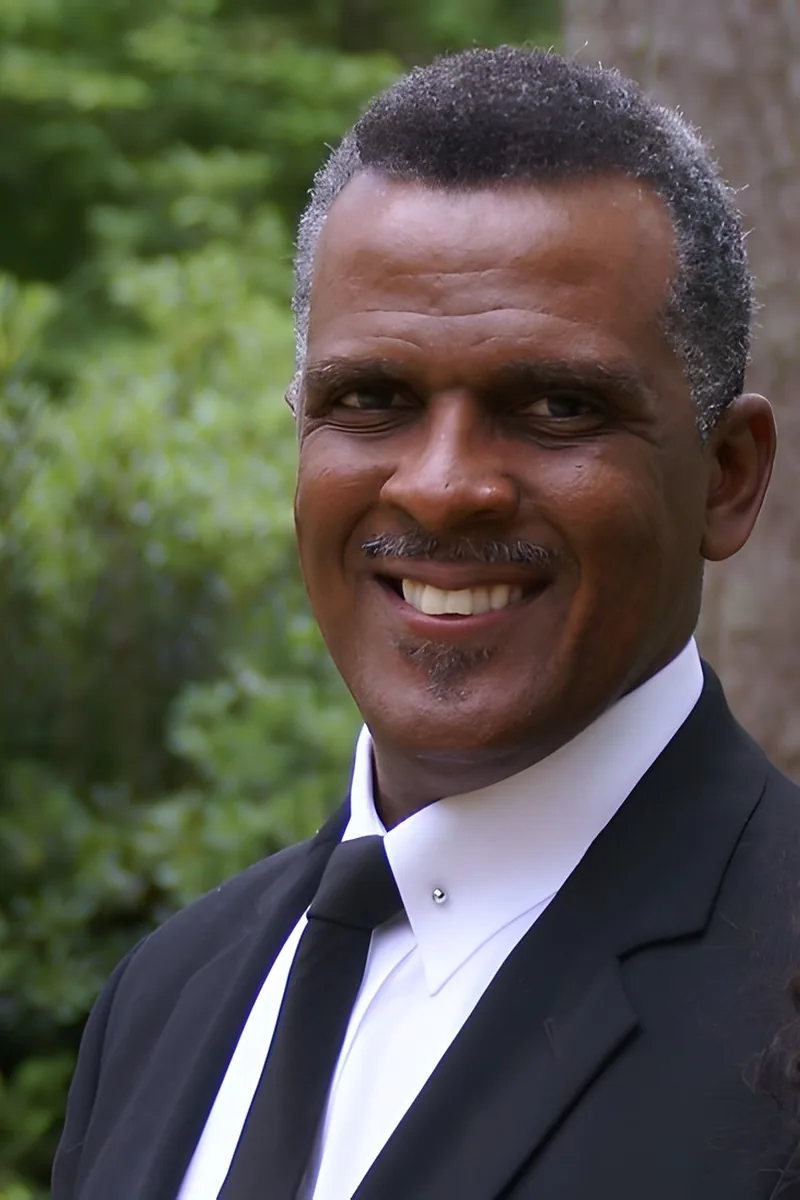
The jump from memorizing derivative rules to actually applying them — related rates, optimization, the Mean Value Theorem — is where most AB students stall. Dr's doctorate in Applied Mathematics gives him a deep well of real-world contexts to make those applications concrete. He walks through each problem type until students can set up and solve without second-guessing their approach.
The jump from algebra-based thinking to true calculus reasoning trips up a lot of students, especially around limits and the formal definition of the derivative. Alexander approaches AB by building intuition for rates of change and accumulation first, then layering in the rigor — a sequence that mirrors how he learned to apply calculus across two engineering degrees.
Limits, derivatives, and integrals each build on the last in AP Calculus AB, and Sunay walks students through that progression so the FRQs feel like natural extensions of what they already know. His neuroscience background means he's comfortable with applied rate-of-change problems — the kind that trip students up when the context shifts from pure math to real-world modeling.
The jump from memorizing derivative rules to actually applying them — related rates, optimization, interpreting the meaning of a definite integral — is where most AP Calculus AB students struggle. Christopher bridges that gap by walking through problems that build intuition for what derivatives and integrals actually measure. His background spans calculus through quantum mechanics, so he can show students where these ideas lead.
Studying neuroscience at Vanderbilt meant Benjamin couldn't escape calculus — modeling membrane potentials, analyzing signal decay curves, computing rates of neurotransmitter diffusion — so the AB curriculum's core concepts aren't textbook abstractions for him but tools he's actually used. His 34 ACT reflects the quantitative precision he brings to teaching limits and the chain rule, two topics where small conceptual gaps snowball into free-response mistakes. He's especially good at slowing down the problem-setup phase so students learn to read what a question is really asking before jumping into computation.
The jump from memorizing derivative rules to actually applying them — related rates, optimization, area between curves — is where most AB students struggle. Kevin's approach unpacks each problem type by teaching students to translate word problems into mathematical setups before touching any calculus. As a mechanical engineering major who scored a 36 on the ACT, he makes the conceptual leaps in AB feel manageable.
The jump from memorizing derivative rules to actually applying them — related rates, optimization, the Fundamental Theorem — is where most AB students struggle. Jie approaches each application problem by teaching students to translate word problems into mathematical setups before touching any formulas. His engineering training at Michigan means calculus is second nature, and he knows exactly where the common conceptual gaps hide.
The jump from memorizing derivative rules to actually applying them — related rates, optimization, accumulation functions — is where most AP Calculus AB students stall. Maxwell teaches the reasoning behind each technique so that FRQ problems stop feeling like guesswork and start feeling like a logical sequence of steps. His 5.0 client rating speaks to how well that approach lands.
Lillian approaches AB Calculus by anchoring every new concept — limits, derivatives, integrals — in the graphical and numerical reasoning the AP exam actually tests. Her science-heavy pharmacy background means she naturally ties abstract rules like the chain rule or related rates to real applications in biology and chemistry. She holds a 4.9 rating across her students.
Limits, derivatives, and integrals each build on the last, and one shaky concept early on can snowball by the time the AP exam arrives. Ricardo tackles AB Calculus by tying each new rule — chain rule, u-substitution, related rates — back to its graphical and physical meaning, an approach rooted in how he uses calculus daily as a chemistry major at Ohio State.
Ella currently tutors high school students in math and brings an economist's eye to AB Calculus — she's especially strong at teaching related rates and optimization problems where students need to translate word problems into derivatives. Her approach to limits and the Fundamental Theorem emphasizes understanding the 'why' behind each rule, which pays off when problems get less predictable on the AP exam.
Pre-med biology and economics coursework gave Sunny two distinct reasons to master calculus — modeling population dynamics in one department and optimizing cost functions in the other — so she teaches derivatives and integrals with a practical fluency that makes the AB curriculum's application problems feel grounded. Her 1550 SAT and 35 ACT back up that quantitative sharpness, and her 5.0 rating suggests the explanations actually land.
Limits, derivatives, and integrals each build on the last, so one shaky concept can cascade through the entire AP Calculus AB curriculum. Emily approaches each topic by tying it back to real quantities — rates of change in chemical reactions, areas under experimental curves — drawing on her physical chemistry research at Ohio State. Her 5.0 rating speaks to how well that concrete approach clicks with students.
Limits, derivatives, and integrals click faster when a student sees how they connect to real problems rather than existing only on a worksheet. Steven earned his degree in mechanical engineering, where Calc AB concepts like related rates, the chain rule, and area-under-a-curve calculations were daily tools. Rated 4.9 by students, he breaks down each topic into steps that build genuine understanding.
Limits, derivatives, and integrals each build on the last, so one shaky concept can snowball through the entire AP Calculus AB curriculum. Nora breaks each topic into its moving parts — chain rule applications, related rates setups, area-between-curves problems — and connects them back to the bigger picture so students see calculus as a coherent story rather than isolated procedures.
Medical school runs on calculus more than most people realize — pharmacokinetics is integration, physiological modeling is differential equations — and Hyerin's path through economics and bioethics before med school means she's seen derivatives applied to everything from cost curves to drug dosing models. That cross-disciplinary fluency is especially useful for AB students struggling with the 'why' behind the Fundamental Theorem or the setup of accumulation problems. Her 35 ACT and 4.9 rating back up the quantitative range her background suggests.
The jump from memorizing derivative rules to actually applying them — related rates, optimization, accumulation functions — is where most AB students get stuck. Samuel digs into the logic behind each setup, connecting the chain rule or implicit differentiation back to what's physically happening in the problem. His computer science and math background at Ohio State gives him a knack for breaking multi-step processes into clear, sequential reasoning.
Biomedical engineering at Ohio State means Sunnia's calculus isn't confined to a textbook — she uses derivatives to model physiological rates and integrals to analyze cumulative biological signals, which gives her a practical vocabulary for teaching AB concepts like accumulation functions and the chain rule. She breaks down free-response problems by identifying the underlying physical story first, so the setup feels logical rather than formulaic. Rated 5.0 by students.
Calculus AB trips students up when the concepts shift from mechanical differentiation to applied problems like related rates and optimization. Morgan's economics coursework at the graduate level relies heavily on calculus-based modeling, so she can connect abstract rules — chain rule, integration by parts — to problems that actually mean something.
I am always willing to help and I will try my best to help students who desire further understanding of the subject at hand.
Sid tackles AP Calculus AB by connecting each concept to the next — showing how limits build into derivatives, how derivatives inform related rates, and how the Fundamental Theorem ties everything together. His engineering program at Cleveland State demands fluency in calculus, so he explains topics like Riemann sums and optimization with real-world context that sticks. He holds a 5.0 client rating.
The jump from memorizing derivative rules to applying them — related rates, optimization, the Mean Value Theorem — is where most AB students struggle. John's approach is to anchor every new concept in its graphical meaning first, then layer on the algebraic technique. His actuarial coursework at Ohio State gave him extensive practice with the integration and accumulation problems that dominate the AP exam's free-response section.
Pre-med microbiology students don't get to skip calculus — Sashwat's coursework means he's applied derivatives and integrals to model bacterial growth curves and enzyme kinetics, giving him a concrete handle on the rate-of-change concepts that dominate the AB exam. He's particularly effective at teaching students how to read and set up problems involving the Fundamental Theorem, where knowing what accumulation means biologically makes the math far less abstract.
Mechanical engineering at the University of Dayton means Nicholas uses calculus daily — from modeling forces in statics to solving differential equations in dynamics. He breaks down AP Calculus AB concepts like limits, derivatives, and integration techniques by connecting them to real physical problems, which makes abstract rules feel intuitive. His approach is to let students work through problems aloud until they hit a snag, then zero in on exactly where the reasoning breaks down.
Limits, derivatives, and the Fundamental Theorem of Calculus all make more sense when someone can explain the reasoning behind each rule instead of just demonstrating steps. Jacob earned his master's in mathematics and teaches AB Calculus by connecting each differentiation and integration technique to the geometric intuition underneath it. Students come away understanding why the chain rule works, not just when to apply it.
Limits, derivatives, and integrals each build on the last, which means one shaky concept in AP Calculus AB can derail an entire semester. Viola tackles this by pausing after every new idea to make sure students can articulate what's happening — not just replicate a procedure. Her daily exposure to calculus as an engineering student at NYU Tandon keeps the material immediate and practical.
I am a rising sophomore at Kenyon College, a small liberal arts school an hour out of Columbus, Ohio, majoring in Philosophy. It is difficult to identify a specialty of mine because I have worked with students from 1st grade through high school on topics ranging from elementary science to trigonometry test prep, but my foremost strength is the three sections of the SAT. I have roughly three years of experience tutoring and last year taught a test prep class. My approach to tutoring is to identify a students strengths and build upon them through frequent quizzes and reflective analysis. Additionally, having just gone through the college admissions process, I am privy to its length and complexity so can lend advice on anything, namely essays. I have plenty of experience writing and have been published in a local newspaper. While I think math is the easiest subject for me to teach, writing and writing skills are my favorite to teach because to see a writers progress is an extraordinary sight and, further, challenge.
I am a recent graduate of Ohio Dominican University. I earned my Bachelor of Science degree in Finance & Economics. While attending ODU, I worked part-time as a math tutor with the academic resource center. I tutored all four years in the subjects of algebra, statistics, pre-calculus, and calculus 1. I really enjoyed working with students and adult learners and it was a worthwhile experience. In the process, I was able to meet the requirements for CRLA Advanced Certified Tutor, Level 2. My tutoring style revolves around the use of socratic questioning, in which I push the student toward the right answer without giving the answer away. I believe this is the proper way to ensure a better understanding of the subject material.
The jump from memorizing derivative rules to actually applying them — related rates, optimization, accumulation functions — is where most AP Calc AB students stall. Matthew tackles these problems by tying them to physical intuition from his physics degree, making concepts like rate of change feel concrete instead of formulaic. His approach turns the AB exam's free-response section from a guessing game into a structured process.
The jump from pre-calc to AP Calculus AB is where many students first encounter limits, derivatives, and the chain rule as ideas that demand genuine conceptual reasoning instead of procedural steps. Brice earned a perfect 1600 SAT and studies computer science at MIT, where calculus underpins nearly every technical course he takes — meaning he explains AB material with the fluency of someone who actually uses it daily.
Materials science engineers live in calculus — Jennifer's coursework meant using derivatives to characterize how material properties change under stress and integrals to calculate energy absorption across deformation curves, so she teaches AB concepts with that built-in sense of what the math physically describes. Her 1550 SAT and 33 ACT back up the quantitative precision she brings to tricky topics like implicit differentiation and area-between-curves problems. Rated 5.0 by students.
Limits, derivatives, and integrals each represent a fundamentally new way of thinking about functions, and rushing past any one of them creates problems later. Rahi breaks down each concept visually and algebraically, drawing on his applied mathematics training to show students why the rules work — not just when to apply them. His 34 ACT composite reflects the same precision he brings to AP exam preparation.
Chemical engineering at the undergraduate level and then medical school means Siva has been setting up and solving calculus problems in high-stakes contexts for years — from modeling heat transfer and reaction kinetics to quantifying physiological rates of change. That depth shows when he teaches limits, continuity, and the mechanics of integration, because he can explain not just the procedure but the reasoning that makes free-response setups feel logical instead of mysterious. Rated 5.0 by students, with a 1560 SAT backing up the quantitative precision behind his approach.
Cognitive science at Penn might not scream calculus, but Samantha's coursework required enough mathematical modeling — derivatives for rate-of-change problems, integrals for cumulative distributions — that she teaches AP Calculus AB with real fluency. She's especially effective at walking through optimization and curve-sketching problems, where translating a word problem into the right function is half the battle. Her 1460 SAT reflects the quantitative precision she brings to exam prep.
Studying chemical engineering and math at Vanderbilt means Greg lives in calculus — using derivatives to model reaction rates and integrals to balance mass and energy flows — so the AB curriculum's toughest concepts have a concrete anchor in his everyday coursework. His 1550 SAT and 5.0 tutoring rating back up an approach that emphasizes building each problem's setup from the physics or chemistry it describes, which is exactly the skill that separates strong free-response scores from mediocre ones.
Cognitive science at Northwestern taught Amanda to think about how people learn — and she applies that lens to the specific moments in AB Calculus where understanding collapses, like the jump from computing a derivative mechanically to interpreting what it means on a free-response question. Her 36 ACT and prior experience tutoring math at Mathnasium mean the computational side is second nature, freeing her to zero in on the conceptual gaps that actually cost students points. She's especially effective at teaching limits and continuity as a coherent story rather than disconnected epsilon-delta exercises.
The jump from memorizing derivative rules to actually reasoning through related rates and accumulation problems is where most AP Calc AB students stall. Agustin breaks those multi-step problems into smaller physical questions — what's changing, what's fixed, what depends on what — an approach rooted in how he uses calculus in his molecular biology studies. Rated 4.5 by students.
Public policy analysis at the University of Chicago is surprisingly calculus-heavy — modeling rates of change in population data, interpreting area under cost curves, quantifying how small policy shifts produce outsized effects — which means Noel learned AB-level concepts by actually using them to argue about real decisions. That policy lens makes him especially effective at teaching students how to set up and interpret definite integrals and optimization problems, where understanding what the math means in context is the difference between a formulaic answer and a convincing free-response solution. His 1550 SAT and 4.9 rating back up the analytical precision he brings to every problem.
Brett spent his senior year at Syracuse tutoring student athletes through AP-level calculus, breaking down limits, derivatives, and integration techniques for students who needed concepts explained more than once and in more than one way. His engineering background at Penn means he can show exactly how the chain rule or a Riemann sum connects to real problems in science and design.
Testimonials
Because the right AP Calculus AB tutor makes all the difference.
Average Session Rating – Based on 3.4M Learner Ratings
Practice AP Calculus AB
Free practice tests, flashcards, and AI tutoring for AP Calculus AB
Other Cleveland Tutors
Related Math Tutors in Cleveland
Frequently Asked Questions
AP Calculus AB covers limits, continuity, derivatives, and integrals—the foundational concepts of single-variable calculus. The course focuses on understanding rates of change, optimization problems, and the relationship between derivatives and integrals. Most students spend the school year building these skills, with the AP exam in May testing comprehension across all units through multiple-choice and free-response questions.
Personalized 1-on-1 instruction allows tutors to identify which concepts—like derivatives, integrals, or problem-solving strategies—are causing you difficulty and focus time where you need it most. Tutors can also teach test-taking strategies specific to the AP format, help you practice with released exams under timed conditions, and build confidence in areas where you feel less secure. This targeted approach is particularly valuable for Cleveland students balancing multiple courses and commitments.
Many students struggle with the conceptual leap from algebra to calculus—understanding what a derivative or integral actually represents, not just how to compute it. Pacing is another challenge; the curriculum moves quickly, and falling behind early makes later units harder to grasp. Time management on the exam is also critical, as students must balance accuracy with speed across both multiple-choice and free-response sections.
Score improvement depends on your starting point, how consistently you work with a tutor, and how much you practice between sessions. Students who work with tutors for several months and complete regular practice problems typically see meaningful gains—often moving from a 2 or 3 to a 4 or 5 on the AP scale. The key is identifying weak areas early and addressing them systematically rather than cramming close to the exam.
Starting tutoring early in the school year—ideally in the fall—gives you time to build a strong foundation and address gaps before material becomes more complex. However, even starting in winter or spring can help if you focus on the most heavily weighted topics and practice tests. If you're already struggling with specific units, connecting with a tutor as soon as possible prevents compounding confusion in later chapters.
Practice tests are essential—they reveal which topics need more work, help you build stamina for the 3-hour exam, and let you practice pacing and test-taking strategies in a realistic setting. Tutors can review your practice test results with you to pinpoint errors (whether they're conceptual misunderstandings or careless mistakes), then target instruction accordingly. Working through released AP exams under timed conditions is one of the most effective ways to prepare.
Varsity Tutors connects you with expert tutors who specialize in AP Calculus AB and understand the curriculum inside and out. You can share your goals, current challenges, and preferred schedule, and we'll match you with a tutor who fits your needs. Tutors work flexibly with Cleveland students to provide personalized instruction tailored to your learning style and timeline.
Building confidence through repeated practice with real exam questions is one of the best anxiety reducers—when you've solved similar problems many times, the test feels less intimidating. Tutors can also teach you time-management techniques and strategies for approaching difficult problems without panicking, like skipping a question and returning to it later. Practicing under timed conditions helps you feel prepared and in control on exam day.
Let’s find your perfect tutor
Answer a few quick questions. We’ll recommend the right plan and match you with a top 5% tutor.