Award-Winning Calculus Tutors
serving Cincinnati, OH
Calculus
Tutors in Cincinnati
Private 1-on-1 tutoring, weekly live classes for academic support, test prep & enrichment, practice tests and diagnostics, and more to elevate grades and test scores.
Based on 3.4M Learner Ratings
UniversitiesSchools & Universities
DeliveredHours Delivered
ProficiencyGrowth in Proficiency
Who needs tutoring?
No obligation. Takes ~1 minute.

Between a biology undergraduate degree and a Master's in Biomedical Sciences, Sarah has worked through calculus repeatedly — modeling growth rates, interpreting concentration curves, and applying integration to systems where change is continuous. That scientific fluency means she teaches concepts like the chain rule or area under a curve by connecting them to problems she's actually solved in lab and coursework. Rated 5.0 by students.
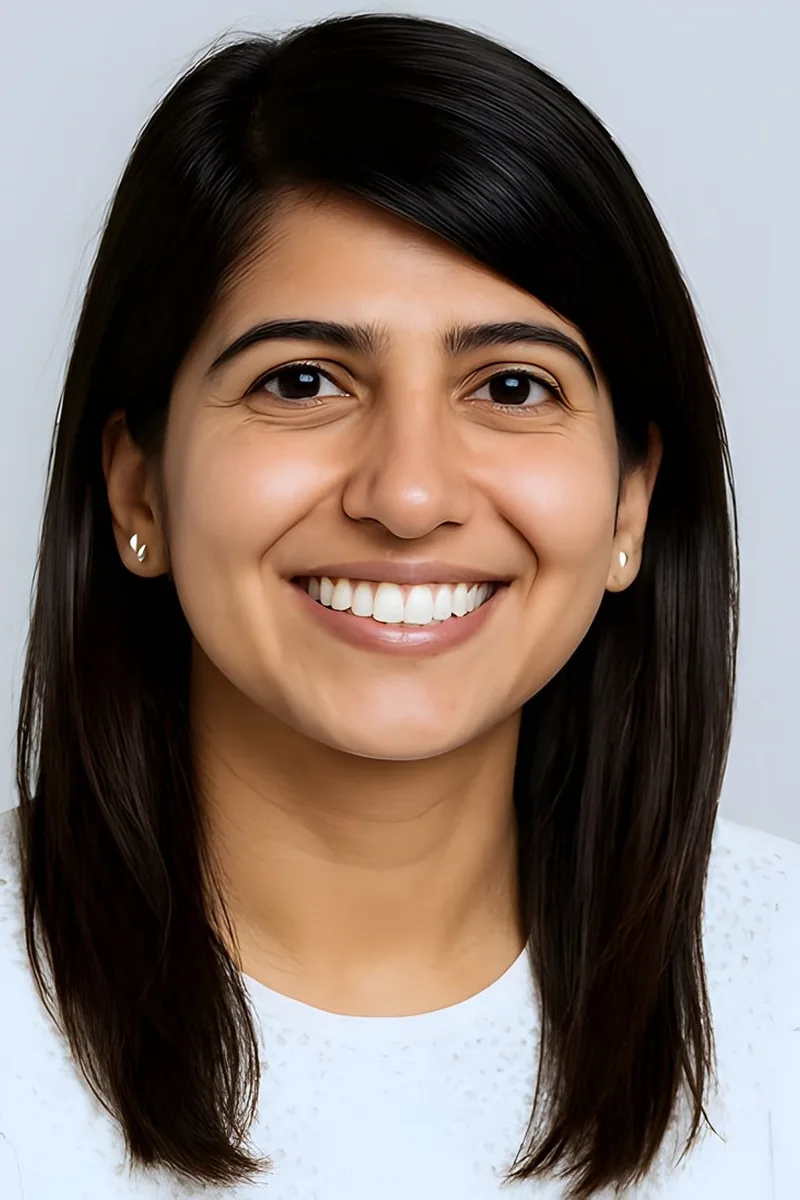
Studying neuroscience means Eshita encounters calculus constantly — modeling action potential rates with derivatives, quantifying signal accumulation through integration. That daily exposure gives her a practical grip on topics like related rates and differential equations that purely math-focused explanations often miss. Rated 5.0 by students, she holds a 35 ACT composite that speaks to her analytical precision.
Philosophy and neuroscience training might not scream calculus, but Reed's PNP degree involved enough quantitative modeling of neural processes — firing rates, signal decay, threshold functions — that derivatives and integrals became part of his everyday vocabulary. He breaks down concepts like limits and the chain rule by connecting them to how systems actually change, which clicks for students who need more than "just follow the formula." Rated 4.8 by students.
Neuroscience research runs on calculus — modeling neural firing rates, analyzing signal decay, interpreting area-under-the-curve data — so Josh learned derivatives and integrals not just as textbook exercises but as tools with real consequences. He's especially sharp at walking through the conceptual logic behind limits and the chain rule, the two places where most students first lose the thread.
Biochemistry coursework doesn't just touch calculus — it demands it, from modeling reaction rates with derivatives to integrating concentration curves in kinetics experiments. Lyndsey's biochemistry degree means she's applied the chain rule, related rates, and integral techniques to real chemical systems, not just textbook problem sets. Her 34 ACT and 5.0 tutoring rating back up that quantitative fluency.
An electrical engineering degree demands fluency in calculus — from computing integrals in circuit analysis to applying differential equations to signal processing. Judith brings that applied perspective to derivatives, limits, and integration techniques, showing students what these tools actually do beyond the textbook. She's especially effective at breaking down chain rule and u-substitution problems step by step.
A pharmacy curriculum runs on calculus — from pharmacokinetics modeling to rate-of-change problems in drug absorption. Lillian uses that applied lens to teach differentiation, integration techniques, and series so that students see the machinery behind the formulas. She scored a 34 on the ACT and carries that same precision into every session.
Psychology research leans heavily on statistical modeling, and William's BS in the field — combined with his neuroscience coursework — means he's worked through the calculus that underpins concepts like rates of change in neural signaling and area-under-the-curve analyses in experimental data. His 34 ACT composite confirms strong quantitative chops, and he teaches derivatives and integrals by connecting them to the real-world systems where they actually do something.
Teaching K-12 reading and ESL across all grade levels has given Crystal a knack for translating dense, unfamiliar notation into language that actually makes sense — a skill that transfers directly to unpacking what a limit or derivative is really saying beneath the symbols. Her English Education background means math isn't her primary lane, but her 5.0 rating speaks to a methodical, patient teaching style that's especially useful when students are hitting a wall with early calculus concepts.
Biology and chemistry minors at Sewanee meant Samuel spent real time inside calculus — modeling reaction rates, working through enzyme kinetics, and applying derivatives to the kinds of rate-of-change problems that actually show up in pre-health coursework. That science context gives him a way to anchor abstract rules in something tangible, especially when students hit the wall where the notation stops making intuitive sense. His 34 ACT and 5.0 tutoring rating back up the quantitative chops.
As a mathematics student at Vassar, Henry lives in the world of limits, derivatives, and integrals daily. He's especially sharp at walking through the conceptual leap from average to instantaneous rate of change, which is where most Calc I students first feel lost. His 4.9 rating speaks to how clearly he communicates these ideas.
Art history and opera performance aren't typical math backgrounds, but Elana's 1550 SAT demonstrates she can handle serious quantitative reasoning — and her analytical training in visual and musical pattern recognition translates surprisingly well to reading the behavior of functions. She teaches early calculus concepts like limits and continuity by emphasizing what the graph is actually doing, turning abstract notation into something students can see and interpret.
Two chemistry degrees mean Chad has spent serious time with calculus — reaction rate equations, thermodynamic integrals, and the differential equations that govern chemical kinetics all require fluency with derivatives and integration techniques. That physical chemistry background gives him a way to teach the chain rule or u-substitution through problems where the math describes something tangible, like how fast a reaction approaches equilibrium. Rated 4.8 by students.
While Trudy's primary expertise is in English and art history, her analytical background — particularly the research-heavy dissertation work she completed at the University of Edinburgh — translates well to breaking down calculus concepts like limits, derivatives, and integration into logical, step-by-step reasoning. She approaches math the same way she approaches a complex text: by identifying patterns and building understanding piece by piece.
Currently enrolled in Calculus himself, Robert knows exactly where students get tripped up — the jump from understanding limits conceptually to applying L'Hôpital's rule under pressure, or making sense of integration techniques when the problems stop looking like textbook examples. He breaks each new concept into the smaller algebraic and geometric ideas it depends on, so nothing feels like it came out of nowhere.
Economics relies heavily on calculus — optimization problems, marginal analysis, and interpreting rates of change are daily tools in Albert's coursework. That constant application gives him a practical lens for teaching derivatives, integrals, and limit concepts that connects abstract math to real decision-making models.
Philosophy trains you to follow long chains of logical reasoning without losing the thread — which is exactly what a calculus problem asks you to do when you're moving from a function to its limit to its derivative. Craig applies that same structured thinking to walking through each step of a problem, making sure the reasoning holds before moving on. His 34 ACT composite and 4.9 rating confirm the quantitative chops to back it up.
Neuroscience and physiology coursework at Ohio State meant Lauren spent years applying derivatives and integrals to real problems — modeling membrane potentials, analyzing rates of enzyme activity, and interpreting the curves that describe how biological systems change over time. That hands-on scientific context makes her especially effective at teaching the chain rule or integration techniques by connecting them to something tangible rather than leaving them as abstract procedures.
Finance coursework lives and breathes calculus — optimization problems, marginal analysis, and the derivative logic behind how costs and revenues actually shift at the margin. Troy's Operations Management studies layer on integral applications like inventory modeling and throughput analysis, so he teaches the material through problems where the math drives real decisions. Rated 5.0 by students.
Completing a biology degree at Miami University meant Manuel spent serious time with calculus — from derivatives in enzyme kinetics to integrals in population modeling. He teaches limits, differentiation, and integration by tying each concept back to what it actually represents, not just how to execute the steps. That science-trained intuition makes him especially effective at explaining why calculus works the way it does.
McKenna's Middle Childhood Education degree covers grades 4–9, so she's honest that calculus is a stretch beyond her primary training. That said, her deep comfort with pre-algebra and algebra means she's especially useful for students who keep stumbling on the foundational skills — fractions, function behavior, slope — that quietly make or break success in early calculus topics like limits and basic differentiation.
A chemistry major works with calculus constantly — reaction rates are derivatives, concentration-over-time curves demand integration, and equilibrium models lean on differential equations. Aaron brings that applied-science fluency to teaching calculus, connecting each rule to the quantitative reasoning he used throughout his B.S. coursework rather than presenting it as pure abstraction. His biology minor adds another layer of concrete examples, from enzyme kinetics to growth models.
Testimonials
Because the right Calculus tutor makes all the difference.
Average Session Rating – Based on 3.4M Learner Ratings
Other Cincinnati Tutors
Related Math Tutors in Cincinnati
Frequently Asked Questions
Many students struggle with the conceptual jump from algebra and precalculus to calculus—especially understanding why derivatives and integrals matter beyond memorizing formulas. Word problems involving rates of change, multi-step optimization problems, and connecting graphical, algebraic, and numerical representations often trip students up. Additionally, calculus requires strong foundational skills in functions and trigonometry, so gaps in those areas can compound quickly. Personalized tutoring helps students build conceptual understanding alongside procedural fluency, so they see the logic behind each technique rather than just memorizing steps.
During an initial session, a tutor will assess your current understanding of key precalculus concepts—functions, limits, and basic rate-of-change ideas—to identify any gaps that might affect calculus success. They'll discuss your specific challenges, whether that's limits, derivatives, integrals, or applications, and learn about your learning style and goals (AP exam prep, college readiness, grade improvement). From there, the tutor creates a personalized plan that targets your needs and aligns with your school's curriculum, whether you're using calculus textbooks from major publishers or a specialized approach.
Expert tutors focus on building conceptual understanding by connecting the "why" behind each rule—for example, explaining why the derivative represents instantaneous rate of change and how that links to slopes of tangent lines and real-world motion. Through guided problem-solving and visual explanations, students learn to recognize patterns and see how different calculus concepts relate to each other. This deeper understanding makes it easier to tackle unfamiliar problems and apply calculus to word problems, since you're solving based on logic rather than rote memorization.
Word problems require translating English into mathematical equations and then applying calculus techniques—a skill that takes deliberate practice. Tutors help by breaking down the process: identifying what you're looking for, setting up the right function or equation, choosing the appropriate calculus tool (derivative, integral, or optimization), and interpreting your answer in context. With personalized instruction, you'll work through multiple examples and develop a problem-solving strategy you can apply to new situations, building confidence and reducing the anxiety many students feel around applied problems.
Yes. Tutors can align instruction with either AP Calculus AB or BC curriculum and help you master both the multiple-choice and free-response sections, which require different skills. They'll focus on areas where you're weakest—whether that's integration techniques, related rates, or series—and teach you strategies for showing your work clearly and managing time during the exam. With Cincinnati's 18.4:1 average student-teacher ratio in schools, personalized 1-on-1 tutoring provides the focused attention needed to move from understanding concepts to applying them quickly and accurately under test conditions.
Math anxiety often stems from feeling lost or rushing through problems without understanding, which calculus can amplify due to its abstract nature. A tutor creates a low-pressure environment where you can ask questions freely, work through problems at your own pace, and celebrate small wins as you master each concept. By breaking calculus into manageable pieces and showing you that you're capable of understanding difficult ideas, personalized instruction builds genuine confidence—not just in calculus, but in your ability to tackle challenging material overall.
Look for tutors with strong mathematics backgrounds—ideally a degree in mathematics, engineering, or a related field, plus demonstrated teaching experience. They should be able to explain concepts clearly, adapt to your learning style, and have experience with your specific curriculum or exam (AP, IB, college placement, etc.). Varsity Tutors connects you with expert tutors who have been vetted for both subject expertise and teaching ability, so you can focus on learning rather than vetting credentials yourself.
Connect with Varsity Tutors to get matched with a tutor who fits your needs—whether you need help with a specific unit, exam prep, or ongoing support through the course. You'll discuss your goals, schedule, and learning preferences, and the tutor will design a personalized plan from the first session. Most students see improvement within a few weeks when they commit to regular sessions and practice between meetings.
Let’s find your perfect tutor
Answer a few quick questions. We’ll recommend the right plan and match you with a top 5% tutor.