Award-Winning Calculus Tutors
serving Dayton, OH
Calculus
Tutors in Dayton
Private 1-on-1 tutoring, weekly live classes for academic support, test prep & enrichment, practice tests and diagnostics, and more to elevate grades and test scores.
Based on 3.4M Learner Ratings
UniversitiesSchools & Universities
DeliveredHours Delivered
ProficiencyGrowth in Proficiency
Who needs tutoring?
No obligation. Takes ~1 minute.

Between a biology degree heavy on quantitative coursework and a perfect 36 ACT, Emily has the mathematical chops to teach calculus with real depth — not just procedure but the reasoning behind integration techniques and derivative applications. Her epidemiology training at Yale's School of Public Health meant working with rate-of-change models constantly, from disease transmission curves to survival analysis, so she can ground abstract calculus concepts in problems where the math actually drives decisions. Rated 5.0 by students.
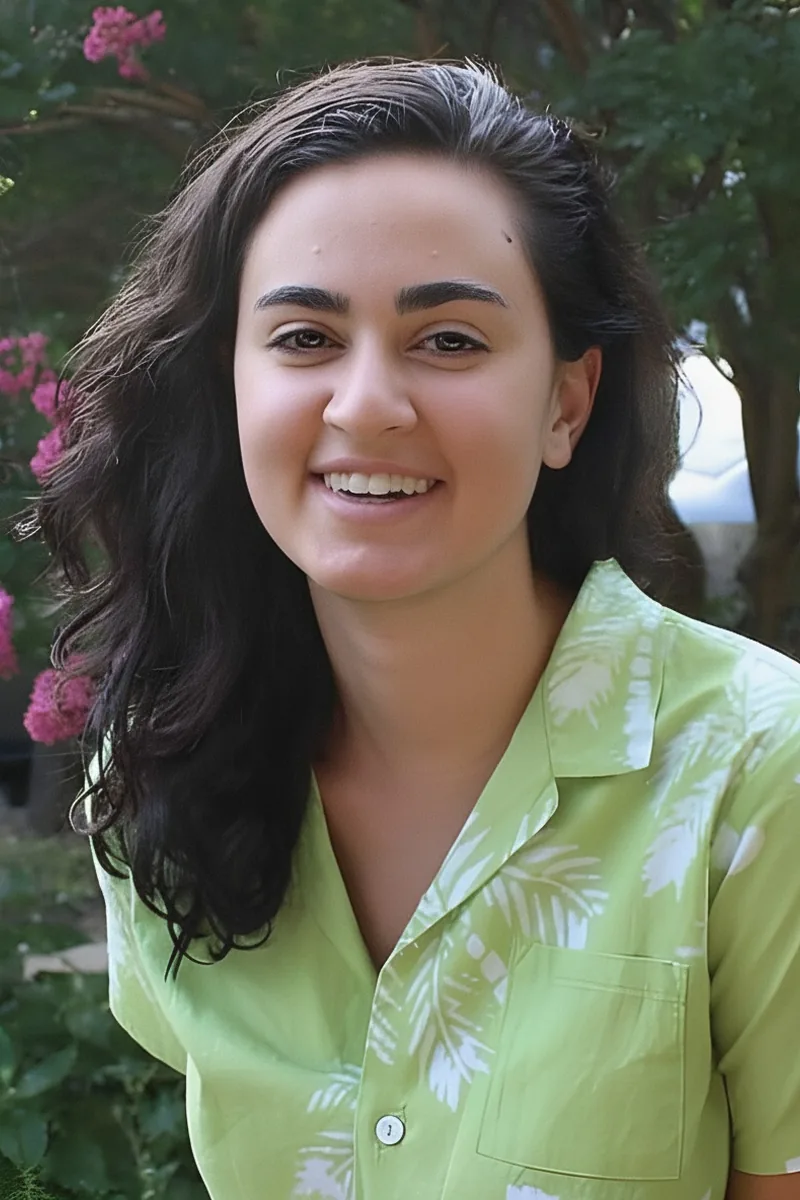
Biomedical engineering at Johns Hopkins is essentially calculus in disguise — Christine's coursework runs on differential equations, signal processing, and modeling how biological systems change over time, so derivatives and integrals are tools she uses constantly, not abstract exercises. That engineering fluency means she can unpack concepts like the chain rule or integration by parts by connecting them to problems where the math actually drives real results. Rated 5.0 by students.
Public policy analysis at Vanderbilt requires serious quantitative coursework — regression models, optimization problems, and the derivative-based logic behind cost-benefit analysis all depend on calculus fluency. Cynthia brings that applied perspective to teaching concepts like rates of change and integration, connecting the mechanics to questions about how systems actually shift in response to policy decisions. Rated 5.0 by students.
Teaching English grammar for years actually builds a surprisingly useful muscle for calculus — parsing complex structures into smaller logical parts, tracking how one piece of a sentence (or equation) modifies another. Zoe applies that same analytical breakdown to early calculus concepts like limits and derivative rules, translating dense notation into plain-language steps the way she'd diagram a difficult sentence. Rated 4.7 by students.
A PhD in applied mathematics means Samuel doesn't just teach calculus — he's built on top of it, using derivatives and integrals as daily tools in research-level work. That depth lets him trace a concept like the chain rule or integration by parts back to its underlying logic, so the technique makes sense instead of feeling like an arbitrary recipe. Holds a 5.0 rating.
Anna's background centers on reading, writing, and the humanities rather than mathematics, so she's honest that calculus isn't her deepest subject. Her 1450 SAT does show solid quantitative reasoning, though, and her emphasis on critical thinking — asking *why* a process works before drilling the *how* — can be especially useful for students struggling to make sense of early concepts like limits and continuity.
Biology coursework at the graduate and undergraduate level — population growth models, enzyme kinetics, ecological rate problems — all lean on calculus concepts like derivatives and integrals, and Emily has spent years immersed in that intersection. Her psychology and education training also sharpens how she explains abstract math: she breaks down notation and new rules by connecting them to the biological rate-of-change problems she's already fluent in. Rated 5.0 by students.
Most calculus struggles trace back to shaky algebra instincts — not being able to manipulate expressions quickly enough to focus on the new ideas. Shawn's broad math teaching background means he spots those underlying gaps fast and rebuilds the fluency students need to tackle differentiation and integration with confidence. Rated 5.0 by students.
Sery tutored math through AP Calculus BC in high school and carries that depth into her sessions, whether a student is grappling with limit definitions, chain rule applications, or integration techniques. Her approach leans on discussion — she asks targeted questions that lead students to see why a derivative behaves the way it does, not just how to compute it. Rated 4.9 by students.
As a mechanical engineering major at the University of Dayton, Nicholas applies calculus to real problems every week — computing integrals for fluid flow, using derivatives to optimize designs, and solving series convergence questions in coursework. He's been tutoring college peers in calculus since arriving on campus and approaches each session by having students narrate their problem-solving process so he can catch conceptual gaps in real time. Whether it's the chain rule, related rates, or integration by parts, he connects each technique to a concrete reason it exists.
Curriculum development — Elena's day job — is essentially about sequencing ideas so each one builds logically on the last, which is exactly what early calculus demands when students move from limits to derivatives to integration. Her McGill and Edinburgh training is in the humanities, not math, so she's transparent about the boundaries of her calculus expertise, but her knack for making abstract concepts click through analogy and structured explanation (she was named Scotland's International Young Thinker of the Year for that skill) carries over well to unpacking the reasoning behind rules like the chain rule or the fundamental theorem.
Lauren's degrees are in social sciences and French, so she's straightforward that calculus isn't her primary area — but her tutoring roster includes algebra and math broadly, meaning she's built a working fluency with the foundational reasoning that calculus demands. She takes a deliberate, concept-first approach to topics like continuity and rate of change, leaning on the same structured study methods that earned her a 5.0 rating across subjects.
An English major at Penn with a 1560 SAT, Amy brings strong quantitative reasoning to a subject outside her primary field — she's honest that calculus isn't her deepest expertise, but she can support students navigating the early conceptual hurdles like limits and continuity. Her approach treats mathematical definitions the way she'd treat a dense passage: slow down, parse each piece of the language, and make sure the meaning is clear before moving forward.
Between a math-economics degree from UCLA and medical school coursework modeling drug absorption rates and physiological decay curves, Vinay has used calculus from both the pure and applied sides — integration techniques in a problem set one semester, differential equations describing pharmacokinetics the next. That dual fluency means he can teach the mechanics of derivatives and integrals while also showing where they actually matter in quantitative modeling. Rated 5.0 by students.
History and Child Development at Yale aren't the typical path to calculus, and Arielle is straightforward that this isn't her deepest subject — but her 1380 SAT shows solid quantitative ability, and her early childhood education training has sharpened her instinct for breaking complex ideas into developmentally appropriate steps. That scaffolding skill applies surprisingly well to unpacking limits and introductory derivatives, where the gap between intuition and formal notation is exactly what trips most students up.
Between a biology undergraduate degree and a Master's in Biomedical Sciences, Sarah has worked through calculus repeatedly — modeling growth rates, interpreting concentration curves, and applying integration to systems where change is continuous. That scientific fluency means she teaches concepts like the chain rule or area under a curve by connecting them to problems she's actually solved in lab and coursework. Rated 5.0 by students.
Chemical engineering at Cornell meant Rahul didn't just take calculus — he used it daily, from modeling heat transfer rates to solving mass balance differential equations in reactor design. That engineering fluency lets him teach derivatives and integrals as tools with a job to do, connecting each technique to the physical problem it was built to solve. Rated 4.9 by students.
Human Development coursework at Cornell involves more statistics and data analysis than most people expect — Emma has worked with SPSS and quantitative modeling to study developmental trends, which means she's comfortable with the mathematical reasoning that underpins early calculus. Her approach to derivatives and rate-of-change problems leans on making the logic visible step by step, the same way she'd walk through a research design. Rated 5.0 by students.
Biology at Duke meant Emma's calculus wasn't theoretical — it showed up in population dynamics models, enzyme kinetics curves, and the rate equations behind ecological change. That background lets her teach derivatives and integrals as tools that describe how living systems grow, decay, and interact, grounding each concept in problems she's actually solved. Rated 4.9 by students.
As a math major at Vanderbilt, Priya doesn't just use calculus in passing — she's immersed in the theory behind it, from rigorous limit definitions to the proofs that make integration techniques work. That depth means she can unpack why the chain rule or the fundamental theorem operates the way it does, not just demonstrate the steps. Her 1570 SAT underscores the quantitative precision she brings to every problem.
Neuroscience coursework at Vanderbilt put Benjamin through the full calculus sequence in a context where it mattered — modeling action potentials, analyzing decay rates, working with the differential equations that describe how neurons communicate. That background means he teaches derivatives and integrals as tools with a purpose, connecting each rule to the quantitative reasoning he used daily in his science courses. His 34 ACT composite confirms the math fundamentals are sharp.
Biomedical engineering at Vanderbilt means Christian uses calculus daily — from modeling fluid dynamics in biological systems to applying differential equations in circuit analysis. He breaks down concepts like integration techniques, series convergence, and related rates by connecting them to tangible engineering problems that make abstract ideas click.
Gates Cambridge Scholars don't typically list calculus on their résumé, and Yusef's degrees are in political science and development studies — but his 32 ACT and analytical training mean he can break down the logic of limits and early derivatives with the same rigor he brings to policy analysis. He treats each calculus rule as an argument to be understood step by step, not a formula to accept on faith.
Neuroscience coursework at Vanderbilt put Nathan through the calculus gauntlet — modeling action potential propagation, analyzing rate-dependent synaptic changes, and working with the integrals behind signal processing in neural circuits. That hands-on quantitative training, backed by a 1520 SAT, means he teaches derivatives and integration techniques as tools with real scientific payoff rather than abstract exercises.
Peter's degrees are in Education and Journalism rather than mathematics, so calculus isn't his deepest subject — but his Master's in Education means he knows how to sequence difficult material so each concept builds cleanly on the last. He treats early calculus topics like limits and derivative rules the way he'd teach a complex writing structure: layering one logical step at a time until the full picture makes sense.
Engineering degrees — both undergrad and master's — mean Dillon didn't just take calculus; he used it daily to solve structural load problems, model material stress curves, and optimize designs where a misunderstood integral has real consequences. Now a high school math teacher, he brings that applied engineering intuition into how he teaches differentiation and integration, connecting each rule back to physical systems students can visualize. His 32 ACT composite backs up the quantitative fluency his classroom students already see.
Environmental toxicology is built on calculus — modeling how contaminant concentrations decay over time, calculating exposure rates through integration, and using differential equations to predict how pollutants move through ecosystems. Amy's master's work in that field means she teaches derivatives and integrals with real scientific context behind them, not just abstract symbol manipulation. Rated 5.0 by students.
An economics degree requires working through optimization problems, marginal analysis, and the derivative-driven logic that underpins supply and demand modeling — all core calculus territory Jera has navigated firsthand. That quantitative training, paired with a law degree's emphasis on building arguments step by step, gives her a structured way to unpack how and why a function behaves at a particular point before jumping to any formulas.
Data Analytics coursework at Ohio State put Vishank through the full calculus sequence — derivatives, integrals, and series — with the added pressure of applying each concept to real statistical modeling and data analysis problems. That means he teaches calculus as something with a destination, connecting topics like the chain rule or integration by parts to the quantitative work they actually power. Rated 4.9 by students.
Software engineering is essentially applied mathematics — Michael's CS degree meant working through calculus concepts like integration, summation, and optimization that underpin everything from algorithm analysis to graphics rendering. He teaches calculus the way he learned to write code: decompose the problem, understand each piece, then build back up to the full solution. Rated 4.9 by students.
Studying neuroscience means Eshita encounters calculus constantly — modeling action potential rates with derivatives, quantifying signal accumulation through integration. That daily exposure gives her a practical grip on topics like related rates and differential equations that purely math-focused explanations often miss. Rated 5.0 by students, she holds a 35 ACT composite that speaks to her analytical precision.
Studying neuroscience means John encounters calculus constantly — from modeling action potential propagation to quantifying neurotransmitter release rates, derivatives and integrals are the language his coursework speaks. That daily exposure lets him teach concepts like the chain rule or integration by parts with the fluency of someone who actually uses them, not just someone who passed the class. His 35 ACT composite and 5.0 tutoring rating back up the quantitative chops.
I am an upbeat and patient tutor. I like to make learning as fun as possible, and I'm constantly learning new things.
Studying mathematics at Penn means Bryan isn't just visiting calculus — he's deep in it, working through rigorous proofs of convergence, integration techniques, and the theoretical backbone that most introductory courses only sketch. That depth lets him explain not just how to apply the chain rule or evaluate an integral, but why each step is mathematically justified. Rated 4.9 by students.
Molecular and cellular biology at Vanderbilt means Carly uses calculus constantly — modeling reaction rates, analyzing enzyme kinetics curves, and interpreting the exponential growth equations that describe cell populations. That daily exposure to derivatives and integrals in a lab science context gives her a practical fluency with the material that makes abstract rules feel grounded. Rated 5.0 by students.
Scoring a 36 ACT composite puts Curtis in the 99th percentile for quantitative reasoning, and his Yale coursework — even within an English major — demands the kind of rigorous analytical thinking that translates to breaking down limits, derivatives, and the chain rule into clear, logical steps. He treats calculus notation the way he'd treat a difficult passage: pulling it apart piece by piece until every symbol carries meaning rather than confusion.
Marketing might seem far from calculus, but Lilian's business coursework at Washington University in St. Louis included the quantitative modeling side — marginal cost curves, revenue optimization, and the derivative-driven logic behind pricing strategy. She teaches early calculus concepts by grounding them in those business applications, making the jump from "find the derivative" to "here's why it matters" feel natural.
Teaching 5th through 8th grade math gave Michelle a sharp sense of where students' algebraic foundations have gaps — gaps that become real problems once limits and derivatives enter the picture. Her Science-Business degree from Notre Dame included the quantitative coursework that makes her comfortable with calculus concepts, and her Masters in Education means she knows how to sequence those ideas so each step builds naturally from the last.
Biology majors don't just memorize calculus — they use it, and Delaney's coursework meant modeling population dynamics, enzyme kinetics, and growth curves where derivatives and integrals describe real biological behavior. A 1520 SAT and 34 ACT confirm she's sharp with quantitative reasoning, and she teaches the material by connecting each rule back to the rate-of-change problems that make calculus feel purposeful. Rated 5.0 by students.
Biomedical engineering coursework puts calculus to work constantly — modeling blood flow dynamics, analyzing stress-strain curves in prosthetic design, and solving the differential equations that describe how biological systems change over time. Kevin brings that applied fluency to teaching integration techniques, related rates, and series convergence, connecting each concept to problems where the math has a tangible purpose. Rated 5.0 by students.
Testimonials
Because the right Calculus tutor makes all the difference.
Average Session Rating – Based on 3.4M Learner Ratings
Other Dayton Tutors
Related Math Tutors in Dayton
Frequently Asked Questions
Many students struggle with the shift from algebra and pre-calculus to calculus's conceptual focus on rates of change and limits. Common pain points include understanding why derivative and integral rules work (not just memorizing them), connecting abstract concepts to real-world applications, and tackling multi-step word problems that require both calculus knowledge and problem-solving strategy. Personalized tutoring helps students build conceptual understanding alongside computational skills, making the material stick.
During an initial session, a tutor will assess your current understanding of foundational concepts like limits, derivatives, and integrals—and identify specific gaps that might be holding you back. They'll discuss your course goals, the textbook or curriculum your school uses, and any particular topics causing frustration. This personalized approach ensures the tutoring plan is tailored to your learning style and academic needs.
Tutors teach you not just how to get the right answer, but why each step matters—essential for calculus exams and AP assessments. Through guided practice, you'll learn to organize multi-step problems clearly, justify your reasoning, and catch errors before they compound. This builds both mathematical confidence and the communication skills teachers look for on tests and assignments.
Word problems require you to translate real-world scenarios into mathematical language, set up equations correctly, and then apply calculus concepts—that's a lot of layers. Tutors break this process down by teaching you to identify what's being asked, recognize which calculus tools apply, and develop a problem-solving strategy before diving into calculations. With practice and feedback, you'll see the patterns and gain confidence tackling unfamiliar problems.
Yes. Varsity Tutors connects you with tutors who are familiar with different calculus textbooks and approaches—whether your school uses Stewart, Larson, or another standard curriculum. Tutors can align their instruction with your course pacing, the specific notation your teacher uses, and the types of problems emphasized in your class, making tutoring directly relevant to your coursework.
Math anxiety often stems from feeling lost or unsupported, but personalized 1-on-1 instruction creates a judgment-free space to ask questions and work through concepts at your own pace. Tutors build confidence by celebrating progress, breaking tough topics into manageable pieces, and helping you see that calculus is learnable—not mysterious. Many students find that understanding the 'why' behind concepts transforms anxiety into genuine interest.
Absolutely. Tutors can focus on high-yield topics, teach you test-taking strategies specific to the AP format, and provide targeted practice on free-response and multiple-choice questions. Whether you're aiming for a 3, 4, or 5, personalized instruction ensures you're using your study time efficiently and building the conceptual depth the AP exam rewards.
Simply tell Varsity Tutors about your calculus course, your goals, and your schedule. We'll connect you with an expert tutor who has availability and experience helping students in your situation. You can start with a single session to see if the fit is right, then build a consistent tutoring plan that works for your needs.
Let’s find your perfect tutor
Answer a few quick questions. We’ll recommend the right plan and match you with a top 5% tutor.