Award-Winning High School Chemistry
Tutors
Who needs tutoring?
FEATURED BY


TUTORS FROM
- YaleUniversity
- PrincetonUniversity
- StanfordUniversity
- CornellUniversity
Award-Winning High School Chemistry Tutors

Certified Tutor
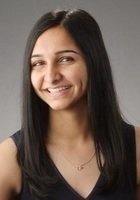
Most high school chemistry students hit a wall somewhere around mole conversions or balancing redox reactions — the point where the subject stops feeling like science and starts feeling like math. Jessica approaches those sticking points by explaining the underlying logic first, then layering on the...
Nova Southeastern University
PHD, Medicine
University of Pennsylvania
Bachelors, History
University of Pennsylvania
undergraduate
Certified Tutor
6+ years
Rhea
Balancing equations and stoichiometry problems tend to feel like arbitrary math until someone connects them back to what's actually happening at the molecular level — and Rhea's biology coursework at the University of Chicago means she thinks about chemical reactions in terms of real processes, not ...
University of Chicago
Bachelor of Science, Biology, General

Certified Tutor
6+ years
Rahul
When high school chemistry students hit a wall with mole conversions or balancing redox reactions, the issue is almost always conceptual, not computational. Rahul digs into the 'why' behind each step — why coefficients matter, how electron transfer actually works — drawing on his Cornell chemical en...
Cornell University
B.S. in Chemical Engineering

Certified Tutor
6+ years
David
Neuroscience at Yale meant David didn't just take chemistry — he needed it to work, especially when tracing how ion channels, neurotransmitters, and cellular signaling depend on concepts like electronegativity, polarity, and equilibrium. That gives him a concrete answer when students ask why any of ...
Yale University
Bachelor of Science in Neuroscience
Harvard University
Current Grad Student, Bioethics and Medical Ethics
Certified Tutor
James
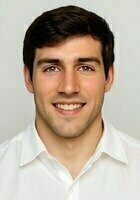
A chemistry major at Harvard who's heading to Columbia Medical School, James teaches high school chemistry with the kind of depth that makes concepts like stoichiometry and electron configurations click on a conceptual level — not just as formulas to memorize. He connects classroom topics to real-wo...
Harvard University
Bachelor in Arts, Chemistry

Certified Tutor
Michael
Fourth-year medical students don't usually think about stoichiometry or gas laws anymore, but Michael's path through Albert Einstein College of Medicine — plus his biology degree earned summa cum laude — means he's built on those high school chemistry foundations repeatedly in biochemistry, pharmaco...
Yeshiva University
Bachelors, Biology, General
Albert Einstein College of Medicine
Current Grad Student, Medical Doctor

Certified Tutor
Eric
Balancing equations and predicting reaction products can feel like learning a foreign language, but Eric breaks inorganic chemistry concepts down into logical steps that build on each other. His science training across biology and ecology gives him a knack for connecting chemical principles — like b...
Princeton University
Bachelor in Arts

Certified Tutor
9+ years
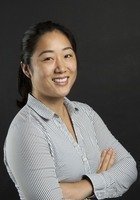
Priya's math degree at Vanderbilt gives her a real advantage when chemistry turns quantitative — dimensional analysis, molarity calculations, and stoichiometry all come down to setting up ratios correctly, which is exactly how a mathematician thinks. She teaches students to treat these problems as s...
Vanderbilt University
Bachelor in Arts, Mathematics
Certified Tutor
Asta
Chemistry can feel like learning a new language — balancing equations, interpreting the mole concept, predicting reaction types — and Asta treats it that way, breaking each topic into its own vocabulary and logic. Her experience tutoring internationally in Hong Kong gave her practice explaining scie...
University of Chicago
Bachelor in Arts in Political Science
Certified Tutor
6+ years
Lauren
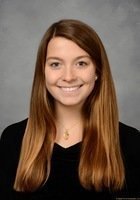
Balancing redox reactions, predicting molecular geometry, and navigating stoichiometry all require a different kind of thinking than most students have used before. Lauren minors in chemistry at Duke and uses that depth to explain *why* electron configurations drive periodic trends or *why* a reacti...
Duke University
Bachelor of Science, Neuroscience
Top 20 Science Subjects


Meet Our Expert Tutors
Connect with highly-rated educators ready to help you succeed.
Allan
12th Grade math Tutor • +85 Subjects
I'm a big Boston Celtics fan and I speak three languages. I can get you the test results you need to succeed because I went through the exams myself and performed well. The first time I took the SAT I actually wasn't satisfied with my score, so I spent 2 months working hard to get my score to where I wanted it to be. The second time I took the exam I saw a 200-point increase. Previously, I have had experience teaching the SSAT and the SAT. The student I tutored in SSAT successfully passed the exam is now attending a private high school abroad. With VarsityTutor's online learning platform, I will be able to transfer knowledge in a visual, easy-to-understand manner. I look forward to being your tutor and helping you reach your academic goals. :)
Sarah
Pre-Algebra Tutor • +28 Subjects
I am a pre-dental student at Vanderbilt University majoring in Human Organizational Development with a concentration in Health and Human Services. I am well versed in many science subjects (Biology and Chemistry, etc.), math, and Spanish. I tutor all ages and will tailor my methods based on any type of need. Hobbies: traveling, music, singing, art, travel, books, writing, reading, cooking
Ravnoor
AP Calculus AB Tutor • +37 Subjects
I am a undergraduate student at Cornell University. I am studying computer science in the College of Engineering. I have been tutoring in all subjects since 9th grade, mostly computer science and mathematics and SAT. My teaching philosophy is based on hands-on learning, and the motto of 'practice makes perfection'. The more you face the problem head on and break it into smaller pieces, the easier the problem becomes to solve. In my spare time, I like to go outside on runs and play basketball with my friends Hobbies: writing, music, art, movies, books, reading
Mark
Pre-Algebra Tutor • +25 Subjects
I am a recent Yale graduate with a B.S in chemical engineering. I have over 5 years of experience tutoring a wide range of subjects, and I am very passionate about math and science. My favorite part of tutoring is instilling confidence into students and making them feel that they can understand and enjoy a subject. Hobbies: books, writing, reading, music, art
Ethan
AP Statistics Tutor • +66 Subjects
I am not teaching or grading papers, I can usually be found playing some brass instrument or another, umpiring baseball, trying out a new recipe in the kitchen, or spending far too much time on Netflix.
Matthew
College Algebra Tutor • +38 Subjects
I'm particularly fond of math and science, I can provide assistance in almost any subject (from Latin to world geography to art history), and can also help in preparing students for standardized tests such as the SAT, GRE, and MCAT. Hobbies: books, writing, reading, music, art
Kelly
AP Calculus AB Tutor • +25 Subjects
I am still asked by my friends to help them with their math and chemistry homework. I get calls from home asking if I can get on Skype to explain something, and I am always happy to oblige. I understand that my education is a privilege, and I want to do my part to help every person have the same opportunities that I had.
Sugi
Pre-Algebra Tutor • +54 Subjects
I am currently a 4th year medical student at Baylor College of Medicine and previously graduated from Rice University, Summa Cum Laude with a Bachelor's degree in Cognitive Science and Biochemistry & Cell Biology. I have served on admissions interview committees for Rice and Baylor College of Medicine, have mentored and edited essays for numerous college and graduate school applicants, and served as a private tutor and classroom instructor for Advanced Biology and Chemistry courses for 3+ years.
Jason
College Algebra Tutor • +50 Subjects
I'm a fourth year medical student at the University of Pennsylvania who is applying to pediatrics residency programs. I graduated in 2006 from Yale University with a bachelors degree in History. I subsequently completed a post-baccalaureate program at Bryn Mawr College to complete the premedical course work and matriculated into Penn's medical school. I took a year off from medical school between my third and fourth year to get a masters degree in education focusing on medical education but also learning a tremendous amount about K-12 education as well. Hobbies: art, outdoors, books, writing, reading, music
Caroline
Pre-Algebra Tutor • +41 Subjects
I am currently a fourth year medical student in Chicago. I attended the University of Notre Dame for undergrad, where I was a double major in Chinese and pre-medicine. When I am not studying, I enjoy spending time with family, volunteering, traveling, baking, and being active. I love sharing with others the knowledge and advice I have received in my education.
Top 20 Subjects
Frequently Asked Questions
Students typically find balancing chemical equations, stoichiometry, and limiting reactants most challenging because they require both conceptual understanding and procedural fluency. Acid-base chemistry and equilibrium concepts also trip up many students since they're abstract and counterintuitive—for example, understanding why a weak acid can be stronger than a strong base requires grasping multiple layers of theory. Gas laws and thermodynamics round out the difficult topics because they demand visualization of molecular behavior and comfort with mathematical relationships. A tutor can break these down into digestible pieces and show how each concept connects to the bigger picture.
Many students approach balancing equations as pure memorization, but tutors help students see the underlying logic—that atoms are conserved and you're simply redistributing them on both sides. A tutor can teach systematic strategies like starting with the most complex compound or using inspection methods strategically, then practice problems build pattern recognition. Understanding *why* you balance equations (conservation of mass) rather than just *how* makes the process stick and transfers to more complex reactions like redox equations. This conceptual foundation also makes stoichiometry problems much less intimidating.
Tutors help students see that lab experiments aren't isolated exercises—they're demonstrations of principles that govern everything from cooking and batteries to water treatment and pharmaceuticals. For example, a titration lab becomes more meaningful when students understand it's the same technique used to test water quality or determine medication dosages. A tutor can highlight how the scientific method they practice in lab (forming hypotheses, controlling variables, analyzing data) directly applies to real-world problem-solving. This connection transforms abstract concepts into tangible understanding and makes chemistry feel relevant.
Many students struggle because chemistry requires thinking in three dimensions about particles they can't see. Tutors use multiple strategies—drawing Lewis structures step-by-step, using molecular models or digital tools to show spatial arrangements, and building analogies to everyday objects. For reactions like SN2 mechanisms or hybridization, a tutor can walk through the electron movement and orbital overlap visually, then have students practice drawing these themselves. Breaking down abstract concepts into visual representations helps students build mental models they can apply to new problems rather than memorizing isolated facts.
Unit conversions require students to think about ratios and proportions while managing multiple conversion factors—it's easy to get lost in the mechanics and lose sight of what you're actually calculating. Many students memorize conversion factors without understanding they're just ratios (like 1 mole = 6.02 × 10²³ particles), which leads to mistakes when tackling unfamiliar conversions. Tutors help by teaching dimensional analysis as a logical system where units cancel like fractions, then practicing with real scenarios (converting grams to moles to particles) so students build confidence. Once students grasp the underlying logic, they can tackle any conversion problem, not just the ones they've seen before.
Chemistry rewards understanding over memorization because there are too many reactions and scenarios to memorize—students need to recognize patterns and predict behavior. Tutors focus on building conceptual foundations first (like understanding electronegativity and bonding before memorizing specific compounds) so students can reason through new problems. They also help students ask the right questions: Why does this reaction happen? What would change if we altered temperature or pressure? This deeper thinking develops scientific reasoning skills that transfer across units and even to other sciences. Students who understand chemistry can tackle AP exams and college courses confidently; those who memorize hit a wall quickly.
Beyond content expertise, effective chemistry tutors excel at breaking down abstract concepts into concrete explanations and diagrams—they can explain why electrons behave the way they do or how to visualize molecular geometry. They should be comfortable with the math embedded in chemistry (logarithms for pH, exponentials for rate laws) and able to help students see how equations connect to real behavior. Strong tutors also ask diagnostic questions to uncover misconceptions (like thinking atoms have colors or that molecules are static) and address them directly rather than building on faulty foundations. Finally, they should connect concepts across units so students see chemistry as an integrated system rather than disconnected topics.
Rather than cramming facts, tutors help students identify which concepts are foundational and likely to appear in multiple forms on exams—like bonding, stoichiometry, and equilibrium. They practice working through multi-step problems where students must apply several concepts sequentially (like calculating pH after a neutralization reaction), which mirrors how exams are actually structured. Tutors also help students recognize common wrong answers and the misconceptions behind them, so they can avoid traps on multiple-choice questions. By test day, students aren't just hoping they remember facts; they've practiced reasoning through problems and can adapt their approach to unfamiliar scenarios.
Connect with High School Chemistry Tutors
Get matched with expert tutors in your subject