Award-Winning Biochemistry Tutors
serving Seattle, WA
Biochemistry
Tutors in Seattle
Private 1-on-1 tutoring, weekly live classes for academic support, test prep & enrichment, practice tests and diagnostics, and more to elevate grades and test scores.
Based on 3.4M Learner Ratings
UniversitiesSchools & Universities
DeliveredHours Delivered
ProficiencyGrowth in Proficiency
Who needs tutoring?
No obligation. Takes ~1 minute.
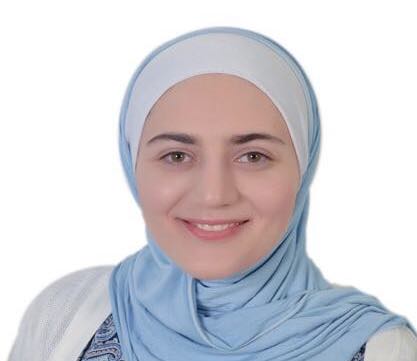
Helping students in their education is my passion. I understand how frustrating it is to keep trying on understanding a concept or master a skill without getting a satisfying result. I aim to help students enjoy learning and acquiring knowledge. Always remember that knowledge is power, and nobody can take it from you. I have sufficient tutoring and teaching experience in secondary and post-secondary settings. I worked as a tutor at the University of Wisconsin Oshkosh. I tutored college students different courses in mathematics, physics, biology, chemistry, and psychology. Also, l worked as a graduate teaching assistant at Marquette University. I taught the laboratory part of general chemistry, analytical chemistry, and organic chemistry. Furthermore, l worked as a science teacher at different secondary schools. I taught science for grades 4,5,6, and 8. Also, l taught chemistry for grade 9. When it comes to my education, l have a bachelor degree in biology healthcare science and chemistry biomolecular science (double major). In addition, l have a master's degree in chemistry. I received my undergraduate education at the University of Wisconsin Oshkosh and my graduate education at Marquette University. I tutor for numerous subjects such as algebra, trigonometry, calculus, physics, organic chemistry, analytical chemistry, human anatomy, developmental biology, ecology, and biochemistry. Also, l tutor for the GRE, DAT, TOEFL, and IELTS. My favorite subjects are the math, physics, biology, and chemistry subjects because l, simply, enjoy these fields. My teaching philosophy and tutoring style are based on practicing with various examples. When you are confronted with numerous problems to solve, you become more confident in that subject area. As a result, better performance in quizzes and exams. Outside of academia, learning about other cultures and countries around the world is my interest.
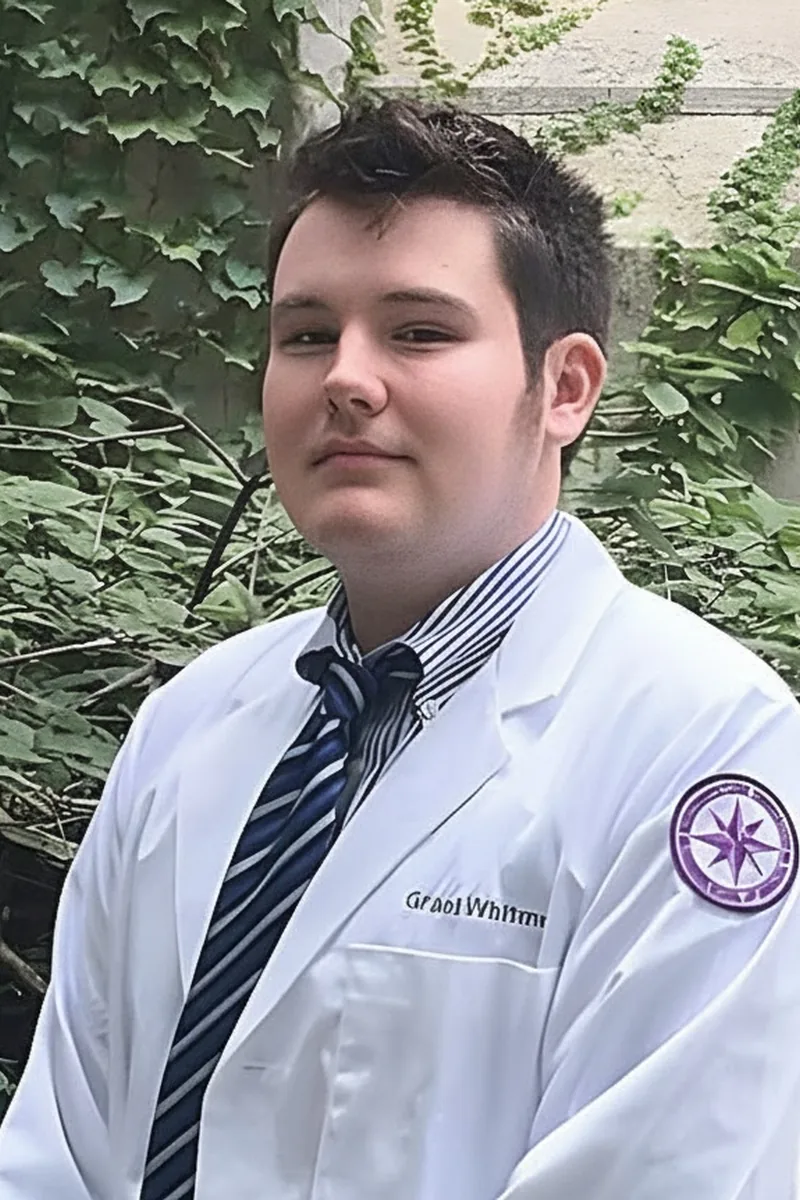
Medical school with a focus on infectious diseases means Grant thinks about biochemistry in terms of host-pathogen interactions — how bacteria hijack metabolic machinery, why certain enzyme targets make effective drug sites, and what happens to energy metabolism during sepsis. His biochemistry degree and MD training let him teach topics like amino acid pathways and enzyme inhibition by connecting each mechanism to the microbiology that brings it to life.
Having worked in biochemical laboratories alongside his dual bachelor's degrees — including one in biochemistry — and his architecture studies at Columbia, Andrew brings a rare structural intuition to topics like protein folding and macromolecular assembly. He teaches metabolic pathways by building them up from their organic chemistry foundations, so students see each reaction as a logical next step rather than an isolated arrow on a diagram. Rated 4.9 by students.
Physical chemistry PhD work at UC Berkeley means Jacob spent years quantifying the thermodynamic and kinetic principles that govern every biochemical process — from enzyme catalysis rates to the free energy changes driving metabolic pathways forward. He teaches biochemistry by unpacking the physical chemistry underneath it, so concepts like Michaelis-Menten kinetics or the energetics of oxidative phosphorylation feel like derivable logic rather than formulas to memorize. Rated 4.9 by students.
Enzyme kinetics, metabolic pathways, protein folding — Connor digs into biochemistry with the depth his biomedical sciences master's from Loyola Chicago demanded. He connects molecular-level details to physiological outcomes, so a student learning about Michaelis-Menten kinetics also understands what it means when a drug is a competitive inhibitor in a clinical context.
Two cancer research labs gave Brian a front-row seat to biochemistry in action — enzyme kinetics, metabolic pathways, and protein structure aren't abstractions for him but daily working tools. He's currently preparing for medical school and the MCAT's biochemical foundations section, which means topics like amino acid chemistry, glycolysis, and membrane transport are fresh and detailed in his teaching.
Enzyme kinetics, metabolic pathways, protein structure — biochemistry demands that students think simultaneously about chemistry and biology, which is exactly how Nathaniel trained. His degree in biochemistry and his MCAT preparation mean he can walk through everything from Michaelis-Menten plots to amino acid properties with the depth a college-level course requires.
Enzyme kinetics, metabolic pathways, and protein structure all demand a kind of thinking that sits right at the intersection of biology and chemistry — exactly where Jhonatan's neuroscience training lives. He unpacks topics like Michaelis-Menten kinetics and amino acid chemistry by connecting molecular details to the larger biological question of why a cell needs this reaction in the first place. Rated 5.0 by students.
This is Gabriel's home turf. His Bachelor of Science in Biochemistry from Texas A&M means he spent years immersed in enzyme kinetics, metabolic pathways, protein structure, and molecular interactions — and he can explain the difference between competitive and noncompetitive inhibition as clearly as he can walk through the citric acid cycle. Students get someone who genuinely enjoys the subject and knows where the exam traps hide.
David's neuroscience training at Yale meant wrestling with biochemistry from the nervous system's perspective — neurotransmitter synthesis, ion channel biophysics, and the metabolic demands that make the brain consume a disproportionate share of the body's glucose. Now pursuing a graduate degree in bioethics, he brings that mechanistic grounding to topics like amino acid chemistry and membrane transport, connecting each reaction to the biological system it supports. Holds a 5.0 rating.
Amino acid structures, enzyme kinetics, metabolic pathways — biochemistry demands that students hold molecular details and big-picture logic in their heads at the same time. Paul's biology honors work at Brown required exactly this kind of thinking, and he walks students through reaction mechanisms and pathway regulation with a clarity that makes the material stick.
Dental students live in biochemistry — enzyme kinetics, metabolic pathways, amino acid structures — and Josh is right in the middle of that curriculum at Penn. He unpacks topics like glycolysis and protein folding by tying each reaction to a biological consequence, which turns a wall of chemical structures into a story that's far easier to retain.
Enzyme kinetics, metabolic pathways, protein structure — biochemistry asks students to think across chemistry and biology simultaneously, which is exactly what Saniya's neuroscience and chemistry training prepared her for. She unpacks complex topics like Michaelis-Menten kinetics or amino acid properties by linking molecular behavior to biological function, making dense material more intuitive. Her continued coursework in physiology and histology keeps these connections sharp.
Testimonials
Because the right Biochemistry tutor makes all the difference.
Average Session Rating – Based on 3.4M Learner Ratings
Practice Biochemistry
Free practice tests, flashcards, and AI tutoring for Biochemistry
Other Seattle Tutors
Related Science Tutors in Seattle
Frequently Asked Questions
Biochemistry bridges chemistry and biology, examining how molecules interact within living systems—from enzyme catalysis to metabolic pathways. It's challenging because it requires understanding both chemical principles (bonding, thermodynamics, kinetics) and biological context simultaneously, plus visualizing molecular structures and reactions that aren't directly observable. Many students struggle with the abstract nature of these concepts and the sheer volume of interconnected pathways to learn.
Seattle students typically find enzyme kinetics, metabolic pathways (glycolysis, citric acid cycle, oxidative phosphorylation), protein structure and folding, and acid-base chemistry most difficult. Balancing redox equations, understanding free energy calculations, and connecting molecular-level mechanisms to cellular outcomes also trip up many learners. Personalized tutoring helps by breaking these interconnected topics into manageable pieces and showing how they relate to real biological processes.
True biochemistry mastery requires deep understanding over memorization. While knowing key pathways helps, the real skill is understanding *why* reactions occur, how enzymes catalyze them, and how cells regulate these processes. Expert tutors help you build conceptual frameworks so you can reason through unfamiliar problems rather than relying on rote memory—this approach leads to better grades and stronger preparation for advanced coursework or professional fields.
Molecular visualization is key to biochemistry success. Tutors use 3D molecular models, animations, and drawing techniques to help you see how atoms bond, how enzymes change shape to bind substrates, and how proteins fold based on chemical properties. Working through mechanisms step-by-step on paper, combined with digital tools, transforms abstract concepts into concrete mental models you can apply to new problems.
Personalized tutoring strengthens both your theoretical understanding and experimental skills. Tutors help you interpret lab results by connecting them to underlying biochemical principles, troubleshoot techniques, understand experimental design, and prepare for lab reports. This dual focus means you'll perform better in the lab itself and grasp why your results matter—not just how to write them up.
Your first session focuses on understanding your current level, identifying specific challenge areas, and building a personalized learning plan. Expect to discuss which topics confuse you most, review some foundational concepts, and work through a practice problem together to see how your tutor explains complex ideas. This gives you both a clear roadmap for future sessions and immediate insight into how tutoring can help.
Look for tutors with strong backgrounds in biochemistry, chemistry, or biology—ideally with college-level teaching or tutoring experience. They should understand current biochemistry curricula, be skilled at explaining complex mechanisms clearly, and have the ability to adapt explanations to your learning style. Varsity Tutors connects you with expert tutors who meet these standards and can tailor instruction to your specific needs.
Seattle's strong biotech and pharmaceutical presence means excellent real-world applications of biochemistry—companies like Amazon, UW Medicine, and numerous biotech firms use these concepts daily. The University of Washington offers rigorous biochemistry programs that set high standards for local high school and community college students. Personalized tutoring helps you meet these standards and prepares you for internships or advanced study at top institutions.
Let’s find your perfect tutor
Answer a few quick questions. We’ll recommend the right plan and match you with a top 5% tutor.