Award-Winning Biochemistry Tutors
serving Bremerton, WA
Biochemistry
Tutors in Bremerton
Private 1-on-1 tutoring, weekly live classes for academic support, test prep & enrichment, practice tests and diagnostics, and more to elevate grades and test scores.
Based on 3.4M Learner Ratings
UniversitiesSchools & Universities
DeliveredHours Delivered
ProficiencyGrowth in Proficiency
Who needs tutoring?
No obligation. Takes ~1 minute.
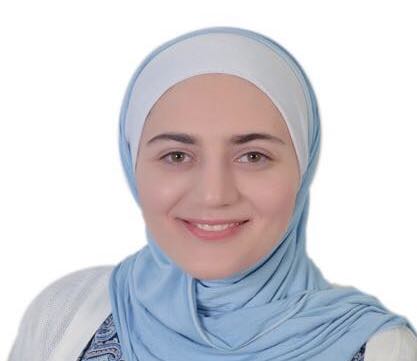
Helping students in their education is my passion. I understand how frustrating it is to keep trying on understanding a concept or master a skill without getting a satisfying result. I aim to help students enjoy learning and acquiring knowledge. Always remember that knowledge is power, and nobody can take it from you. I have sufficient tutoring and teaching experience in secondary and post-secondary settings. I worked as a tutor at the University of Wisconsin Oshkosh. I tutored college students different courses in mathematics, physics, biology, chemistry, and psychology. Also, l worked as a graduate teaching assistant at Marquette University. I taught the laboratory part of general chemistry, analytical chemistry, and organic chemistry. Furthermore, l worked as a science teacher at different secondary schools. I taught science for grades 4,5,6, and 8. Also, l taught chemistry for grade 9. When it comes to my education, l have a bachelor degree in biology healthcare science and chemistry biomolecular science (double major). In addition, l have a master's degree in chemistry. I received my undergraduate education at the University of Wisconsin Oshkosh and my graduate education at Marquette University. I tutor for numerous subjects such as algebra, trigonometry, calculus, physics, organic chemistry, analytical chemistry, human anatomy, developmental biology, ecology, and biochemistry. Also, l tutor for the GRE, DAT, TOEFL, and IELTS. My favorite subjects are the math, physics, biology, and chemistry subjects because l, simply, enjoy these fields. My teaching philosophy and tutoring style are based on practicing with various examples. When you are confronted with numerous problems to solve, you become more confident in that subject area. As a result, better performance in quizzes and exams. Outside of academia, learning about other cultures and countries around the world is my interest.
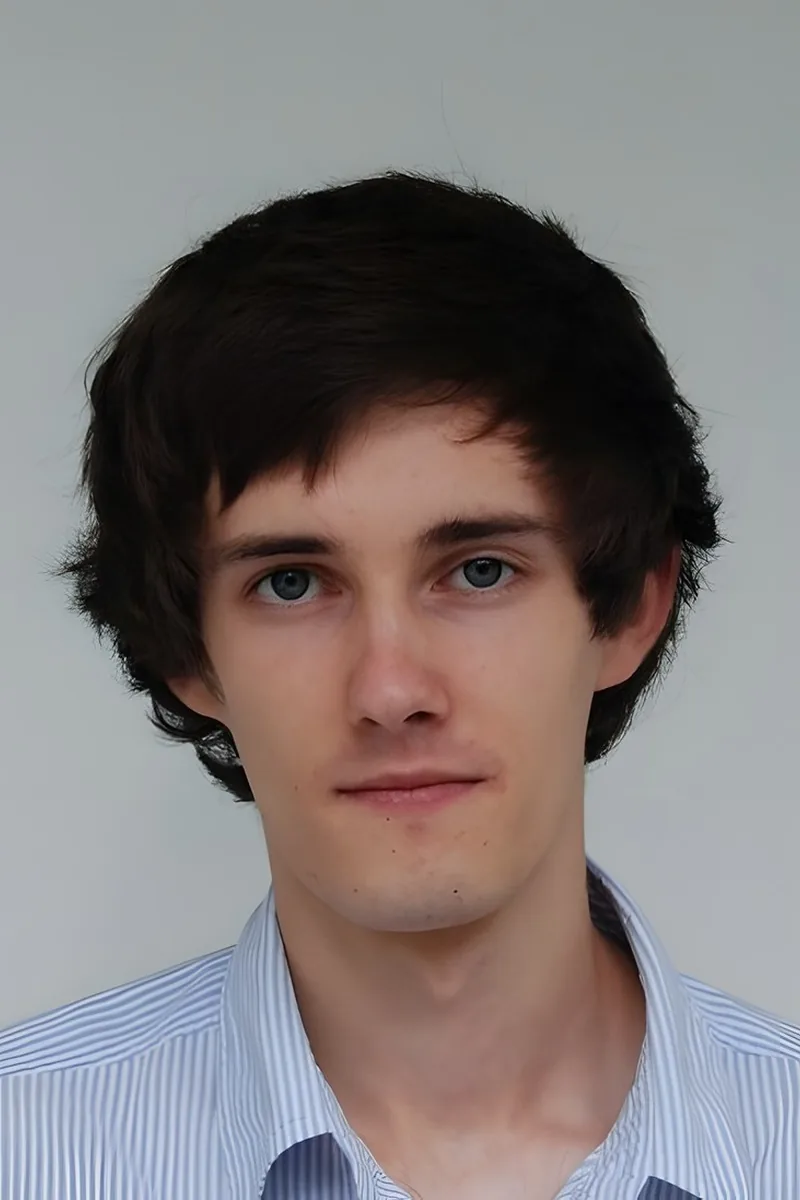
Enzyme kinetics, metabolic pathways, amino acid chemistry — biochemistry sits right at the intersection of Alex's Bio-Organic Chemistry training. He teaches students to trace the logic of each pathway, connecting molecular structure to biological function so that something like the citric acid cycle becomes a series of predictable chemical transformations rather than an overwhelming diagram to memorize.
Having worked in biochemical laboratories alongside his dual bachelor's degrees — including one in biochemistry — and his architecture studies at Columbia, Andrew brings a rare structural intuition to topics like protein folding and macromolecular assembly. He teaches metabolic pathways by building them up from their organic chemistry foundations, so students see each reaction as a logical next step rather than an isolated arrow on a diagram. Rated 4.9 by students.
Enzyme kinetics, amino acid structures, metabolic pathways — Biochemistry demands that students hold molecular details and big-picture biological function in their heads simultaneously. Ibi is actively studying these topics in her premedical post-bac program, so she explains concepts like Michaelis-Menten curves and lipid metabolism with the fluency of someone who just worked through them herself. That recency makes a real difference when a student is stuck at 11 p.m. before an exam.
Recent MCAT preparation gave Eric a sharp, up-to-date command of the biochemistry topics that trip students up most: enzyme kinetics, metabolic pathway regulation, and the interplay between protein structure and function. His graduate work in chemistry provides the molecular-level intuition that makes memorizing pathways feel less like brute force and more like following a logical story.
David's neuroscience training at Yale meant wrestling with biochemistry from the nervous system's perspective — neurotransmitter synthesis, ion channel biophysics, and the metabolic demands that make the brain consume a disproportionate share of the body's glucose. Now pursuing a graduate degree in bioethics, he brings that mechanistic grounding to topics like amino acid chemistry and membrane transport, connecting each reaction to the biological system it supports. Holds a 5.0 rating.
Matt's graduate work in human nutrition required him to trace every major metabolic pathway from the molecular level up — how macronutrients get broken down, shuttled through the citric acid cycle, and ultimately converted to usable energy. That nutritional biochemistry lens means he teaches topics like lipid metabolism and amino acid catabolism with a constant eye on physiological context, making reaction sequences feel purposeful rather than arbitrary. Holds a 5.0 rating.
Physical chemistry PhD work at UC Berkeley means Jacob spent years quantifying the thermodynamic and kinetic principles that govern every biochemical process — from enzyme catalysis rates to the free energy changes driving metabolic pathways forward. He teaches biochemistry by unpacking the physical chemistry underneath it, so concepts like Michaelis-Menten kinetics or the energetics of oxidative phosphorylation feel like derivable logic rather than formulas to memorize. Rated 4.9 by students.
Enzyme kinetics, metabolic pathways, protein structure — biochemistry asks students to think about molecules as dynamic systems, not static diagrams. Tina's engineering background at Cornell and her pre-med preparation mean she can unpack topics like Michaelis-Menten kinetics or amino acid chemistry with both quantitative rigor and biological context.
Four years of medical school gave Amanda a particular edge with the biochemistry that underpins clinical reasoning — she's internalized how disruptions in lipid metabolism or glycogen storage pathways manifest as actual disease states. Her biology degree and public health training add breadth, letting her teach topics like nucleotide biosynthesis or enzyme regulation by zooming out to the physiological stakes behind each reaction. Rated 4.7 by students.
Bintou's chemistry degree from Penn covered the organic and physical chemistry backbone that biochemistry builds on — reaction mechanisms, thermodynamics, molecular structure — and her year teaching high school science sharpened her ability to break layered concepts into steps students can actually follow. She approaches topics like enzyme kinetics and metabolic regulation by first making sure the underlying chemistry clicks, then building up to how those reactions behave inside a cell.
Enzyme kinetics, metabolic pathways, protein structure — biochemistry asks students to think across chemistry and biology simultaneously, which is exactly what Saniya's neuroscience and chemistry training prepared her for. She unpacks complex topics like Michaelis-Menten kinetics or amino acid properties by linking molecular behavior to biological function, making dense material more intuitive. Her continued coursework in physiology and histology keeps these connections sharp.
Few tutors can teach biochemistry from the perspective of someone who lived it at the graduate level. Dennis holds a Masters in Chemical and Physical Biology from Vanderbilt and an undergraduate degree in Biochemistry, so topics like enzyme kinetics, metabolic regulation, and protein structure are second nature. He walks through reaction mechanisms and pathway logic in a way that builds real understanding rather than rote memorization.
Testimonials
Because the right Biochemistry tutor makes all the difference.
Average Session Rating – Based on 3.4M Learner Ratings
Practice Biochemistry
Free practice tests, flashcards, and AI tutoring for Biochemistry
Other Bremerton Tutors
Related Science Tutors in Bremerton
Frequently Asked Questions
Varsity Tutors matches Bremerton students with expert Biochemistry tutors for 1-on-1 instruction. We pair each student with a tutor based on their specific needs, learning style, and goals.
Whether you need homework help, exam prep, or want to get ahead, our Biochemistry tutors are ready to help.
Common challenges include gaps from earlier material, difficulty with specific concepts, and trouble applying learning to new problems. These issues can snowball quickly in Biochemistry.
A tutor identifies where you're stuck, fills in gaps, and provides targeted practice. The 1-on-1 format means you get help exactly where you need it.
Tutors work with your student's actual coursework—homework assignments, class notes, and upcoming tests. This keeps tutoring directly relevant to what's happening in the classroom.
When you share information about your student's school and curriculum, we can match you with a tutor who has relevant experience.
All tutors complete background checks, credential verification, and teaching evaluation. Many of our Biochemistry tutors hold advanced degrees or have years of teaching experience.
You can review tutor profiles to find someone with the right background for your student's level and needs.
Many students see improved grades within a few weeks, along with better understanding of Biochemistry concepts and more confidence tackling challenging material.
Tutors track progress and adjust their approach to ensure continued improvement.
Most students benefit from 1-2 sessions per week. More frequent sessions help if your student is significantly behind or has an important exam coming up.
Your tutor can recommend a schedule based on your student's specific situation and goals.
Tutoring is purchased in packages of hours, with rates varying by tutor experience. Varsity Tutors offers several options to fit different budgets and needs.
You can discuss pricing during your consultation to find what works best.
Your tutor will assess where your student is, discuss goals, and start working on priority areas. Most students bring current homework or upcoming test material to focus on.
By the end, you'll have a clear sense of how the tutor can help and a plan for moving forward.
Let’s find your perfect tutor
Answer a few quick questions. We’ll recommend the right plan and match you with a top 5% tutor.