Award-Winning AP US History
Tutors
AP US History
Tutors
Private 1-on-1 tutoring, weekly live classes for academic support, test prep & enrichment, practice tests and diagnostics, and more to elevate grades and test scores.
Based on 3.4M Learner Ratings
UniversitiesSchools & Universities
DeliveredHours Delivered
ProficiencyGrowth in Proficiency
Who needs tutoring?
No obligation. Takes ~1 minute.

A biology undergrad who went on to earn a Master of Social Work brings an unusual combination to APUSH — Todd understands both the scientific and social dimensions of American history, from public health crises to Progressive Era reform to the policy debates that shaped the modern welfare state. That social work training means he naturally thinks in terms of systems, institutions, and their impact on communities, which is exactly the kind of causation and contextualization reasoning the DBQ and LEQ reward. Holds a 5.0 rating.
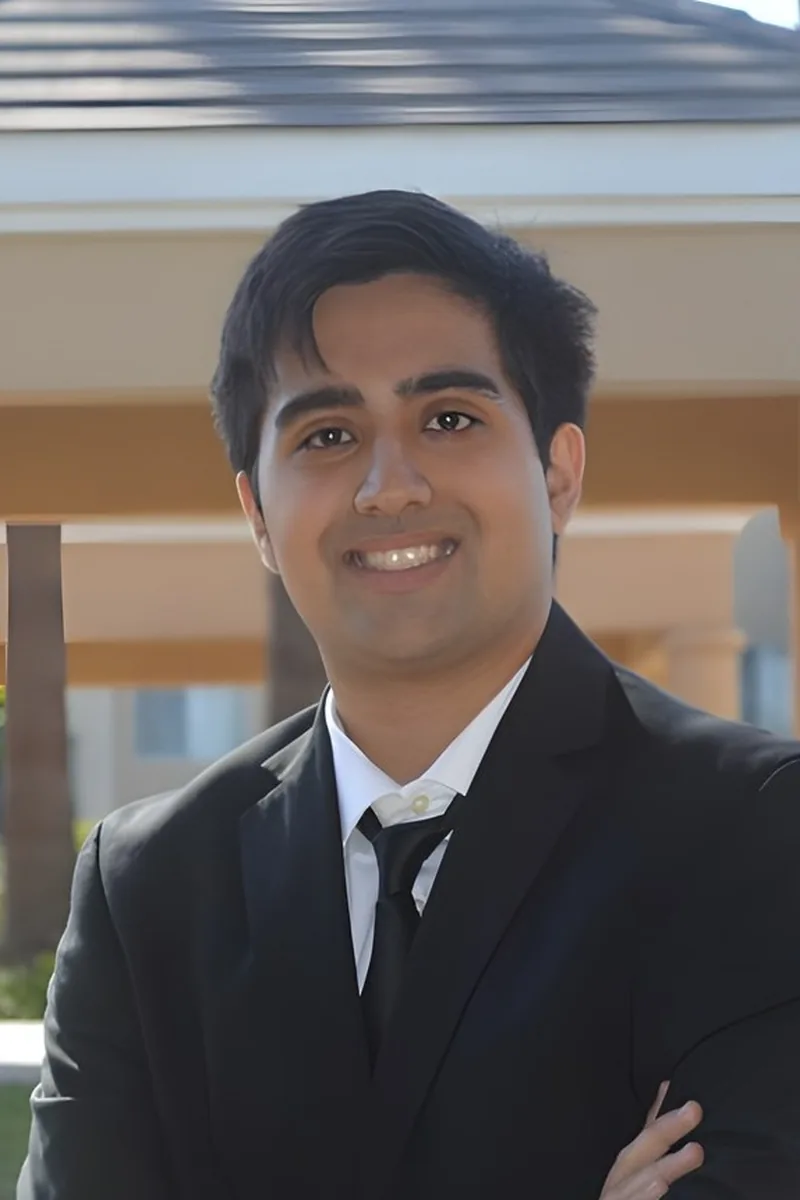
As a first-generation college student who graduated cum laude from UCLA with a biology degree and Asian Languages minor, Abrahim brings an outsider's analytical eye to American history — he learned to question assumptions rather than take narratives at face value. That mindset translates well to APUSH's emphasis on sourcing and contextualization, where students need to interrogate *why* a document was created, not just what it says. Rated 5.0 by students, he approaches each historical period as a puzzle to decode rather than a list to memorize.
A psychology and communication studies background gives Paula a dual lens that's particularly useful for APUSH's trickiest essay prompts — the ones asking students to analyze how rhetoric, propaganda, and public persuasion shaped movements from the Revolution through the Cold War. She teaches document analysis as an exercise in reading audience and intent, skills her communication training made second nature. Rated 4.8 by students.
Scoring a 4 or 5 on the AP US History exam comes down to writing sharp DBQs and LEQs under time pressure — not just knowing the content. Alex breaks down the rubric so students understand exactly how to contextualize documents, build a defensible claim, and earn synthesis points. His deep knowledge of American religious and social history adds particular depth to periods like the Great Awakenings and the Civil Rights movement.
Studying economics and public policy at the University of Chicago means Ethan spends his coursework analyzing the same forces — tariff debates, fiscal policy, institutional power shifts — that APUSH tests across every period from Hamilton's economic plan through Great Society legislation. That policy-analysis training makes him especially sharp on the causation and continuity-and-change reasoning the exam's essays demand, since he's used to tracing how one political decision cascades through decades of consequences. His 1550 SAT reflects the timed reading and argumentation stamina the DBQ requires.
Before medical school, Jessica earned her history degree at Penn — meaning she studied American political and constitutional development at a university where those debates literally happened, steps from Independence Hall and the National Constitution Center. That immersion in primary-source-rich coursework carries over to APUSH's document-based questions, where she teaches students to read for authorial intent and historical context before building their thesis. Rated 4.8 by students.
Studying government at Harvard means Priscilla lives inside the institutional frameworks — federalism, separation of powers, constitutional interpretation — that APUSH tests as recurring themes from the founding through the modern era. She's also currently teaching a civics course to younger students, which sharpened her ability to break down complex political developments into clear cause-and-effect narratives, exactly the kind of reasoning the DBQ and LEQ reward. Her 1540 SAT reflects the timed reading and analytical writing chops the exam demands.
An interdisciplinary degree blending economics and political science at Yale means Allen spent four years studying the exact forces — trade policy, constitutional interpretation, factional politics — that drive APUSH's most heavily tested periods from the Early Republic through the New Deal. He teaches students to build LEQ and DBQ arguments around economic and political causation rather than just narrating events, a skill his 1570 SAT confirms he can execute under timed pressure. Rated 5.0 by students.
The IB program's emphasis on extended essays and Theory of Knowledge — where students defend interpretive claims with structured evidence — builds the exact muscles APUSH's DBQ and LEQ require. Dalton completed the full IB diploma and now draws on that training to teach how to frame a historical argument around periodization or causation rather than just retelling events. His 35 ACT and 4.9 rating speak to the timed analytical performance the exam rewards.
A semester at Madrid's top-ranked university taking upper-level history courses alongside Spanish students gave Meghan something unusual for APUSH prep — the habit of examining American events through an outsider's lens, which is exactly the kind of contextualization and perspective-shifting the DBQ rewards. Her journalism training at Northwestern also means she treats every primary source like a reporter would, interrogating authorship, audience, and purpose before folding it into a thesis-driven argument. Rated 5.0 by students.
Document-Based Questions are where most AP US History students lose points — not because they lack knowledge, but because they don't know how to contextualize a source and weave it into an argument. Hannah holds a bachelor's degree in History and an MFA in Creative Writing, which means she tackles both the content (from colonial mercantilism through the Civil Rights era) and the writing skills the exam actually rewards.
Kristin's University of Chicago BA required the kind of intensive primary source analysis and argumentative writing that APUSH essays directly test — she spent years constructing evidence-based claims under the school's famously rigorous Core Curriculum. Her philosophy minor adds a layer of logical precision to thesis construction, particularly on LEQs where students need to sustain a causal or comparative argument across multiple periods without losing the thread. Rated 5.0 by students.
Studying molecular biology at Yale might seem unrelated to APUSH, but Maxwell's scientific training sharpens exactly the kind of evidence-based reasoning the exam demands — evaluating sources, identifying patterns across data, and defending a thesis. He applies that analytical rigor to helping students dissect documents for context and purpose, particularly in periods where science, policy, and society collide, like industrialization or Cold War-era politics. Rated 5.0 by students.
Theater training builds a surprisingly useful APUSH skill — Amber knows how to read a text for subtext, audience, and intent, which is exactly what document-based questions ask students to do with political speeches, editorials, and propaganda. Her 1570 SAT and 35 ACT reflect the kind of timed analytical performance the exam rewards, and her casting background means she's practiced at quickly sizing up what someone is really trying to communicate. Rated 5.0 by students.
A statistics and machine learning certificate at Princeton means Julie spends her coursework building arguments from data — the same evidentiary reasoning APUSH demands when students must synthesize unfamiliar documents into a coherent thesis under time pressure. Her philosophy training adds a layer most history tutors skip: she teaches students to identify the logical structure of an argument before writing one, which is exactly what separates strong DBQs from ones that just summarize sources. Rated 4.9 by students.
A University of Chicago political science degree means Asta spent four years immersed in the kind of rigorous argument-building and source analysis that APUSH essays demand — Chicago's core curriculum doesn't let you coast on surface-level claims. Her experience preparing international students in Hong Kong for U.S. college admissions also sharpened her ability to make American political and cultural context explicit, which is exactly what strong DBQ contextualization paragraphs require. Rated 5.0 by students.
The AP US History exam rewards students who can do more than recall events — they need to analyze documents, identify historical causation, and write a convincing DBQ under time pressure. Jeff earned his MA in history from UC Berkeley, where he taught undergraduates how to build arguments from primary sources. He applies that same document-analysis approach to APUSH prep, breaking down rubric expectations so students know exactly what earns top scores.
Tom earned his PhD in American Studies, which means AP US History content — from colonial mercantilism through Reconstruction amendments to Cold War containment policy — is his scholarly home turf. He breaks down DBQ and LEQ writing by teaching students to build arguments from documents rather than just summarizing them, a skill that consistently separates 4s and 5s from lower scores.
A Master of Public Policy degree means Erika spent graduate school analyzing how American institutions evolved and why specific policy decisions — from the New Deal to the Great Society — reshaped the country. That lens gives her a natural edge when teaching APUSH's thematic threads around government power, reform movements, and political realignment. Rated 5.0 by students, she connects policy context to the kind of argumentation the exam actually scores.
AP US History's document-based questions reward a specific skill: synthesizing multiple sources into a coherent argument under time pressure. Maggie teaches students to quickly categorize documents by perspective and purpose, then build a thesis that doesn't just describe events but explains why they mattered. Her perfect SAT score reflects the same analytical rigor she brings to historical reasoning.
A Government major at Harvard, Richard spends his coursework dissecting the same constitutional debates, policy battles, and institutional power shifts that dominate APUSH's most heavily tested periods — from federalism disputes through Civil Rights-era legislation. That political science lens means he teaches students to analyze primary sources for political context and intent, building the kind of causation arguments the DBQ and LEQ actually reward. His perfect 1600 SAT and 36 ACT speak to the timed analytical precision the exam demands.
Kirstie's liberal arts training and Master's in Education come together most visibly in APUSH's essay sections, where students need to do two things at once — read primary sources with a literary eye and marshal them into a historically grounded argument. She leans heavily on her AP English skills when teaching document analysis, showing students how to identify an author's purpose and audience before they ever start writing their thesis. Rated 5.0 by students.
The AP US History exam tests whether students can do what historians do: analyze documents, identify historical causation, and construct a defensible argument under time pressure. Rachel studied history in college and knows how to break down DBQ and LEQ prompts so students understand what the rubric actually rewards. She zeroes in on the periodization and thematic connections that turn a competent essay into one that scores a 4 or 5.
The AP US History exam rewards students who can do two things fast: identify historical causation and write a thesis-driven essay under time pressure. Scott tackles both by teaching students to read documents like an anthropologist — pulling out perspective, audience, and purpose before jumping to conclusions. His deep background in social studies and essay writing makes the DBQ and LEQ feel far less intimidating.
Studying political science at Stanford means Margaret spends her coursework inside the same institutional frameworks — constitutional design, federalism, party realignment — that APUSH tests most heavily across every period. That gives her a structural vocabulary for explaining why events like the Nullification Crisis or the New Deal reshape governance, which is exactly the causal reasoning the DBQ and LEQ score for. Her 1550 SAT also signals the timed reading and analytical writing stamina the exam demands.
Studying health policy at Stanford means Jake spends his coursework tracing how government decisions — from Progressive-era public health campaigns to the ACA — reshape American life, which is exactly the kind of policy-to-impact reasoning APUSH essays reward. His 34 ACT and dual background in SAT US History and Spanish give him both the timed analytical speed and the multicultural lens that strengthen document analysis on topics like immigration, expansion, and reform. Rated 5.0 by students.
AP US History's Document-Based Questions are really argumentation exercises disguised as history prompts, and Jean's legal background makes her a natural fit for teaching them. She earned her BA in History from Duke and unpacks how to synthesize primary sources into a coherent, evidence-driven essay under time pressure. Her approach to periodization and causation gives students the analytical vocabulary the exam rewards.
Molly's Columbia University history degree means she studied the same primary source debates and historiographical arguments that APUSH condenses into a single exam — from constitutional crises to westward expansion to twentieth-century reform. Her classroom teaching experience across elementary grades sharpened her ability to break complex ideas into clear, layered explanations, which pays off when walking students through the periodization and causation reasoning that separates a 3 from a 5. Rated 5.0 by students.
The AP US History exam tests a student's ability to construct document-based arguments under pressure, not just recall dates. Samantha tackles DBQ and LEQ writing head-on, teaching students to identify historical context, weigh evidence, and write essays that earn synthesis and complexity points. Her background in English gives her a particular edge on the writing-heavy portions of the exam.
A senior thesis on the Byzantine Basilica of San Vitale taught Elena to read historical sources the way APUSH expects — analyzing context, audience, and purpose rather than just summarizing what happened. Her double background in Art History and History from Washington University in St. Louis means she's practiced at connecting cultural evidence to broader political and social narratives, which is exactly the skill that separates strong DBQ and LEQ essays from mediocre ones.
AP US History's exam doesn't just test what happened — it tests whether a student can construct an argument using documents they've never seen before. Jon's Asian American Studies background at UCLA gave him deep experience analyzing primary sources through the lens of race, immigration, and social movements, which maps directly onto the DBQ and LEQ skills the exam demands.
AP U.S. History isn't Eileen's core subject area, but the exam's document-based and long-essay questions are fundamentally writing challenges — constructing an argument, weighing evidence, and managing time under pressure. Her 36 ACT (including the writing section) and deep experience with essay structure make her a strong fit for students who understand the history but struggle to put it on paper effectively.
A master's degree in Chinese politics means Elizabeth spent years analyzing how governments consolidate power, manage dissent, and navigate foreign relationships — the same analytical framework that unlocks APUSH's toughest comparative and causation questions, from Cold War containment policy to debates over executive authority. Her 1500 SAT and government coursework ground her in the primary-source reasoning and argumentative writing the DBQ demands. Rated 5.0 by students.
Economics majors spend their time tracing how incentive structures, trade policy, and financial systems reshape societies — which means Ryan already thinks in the cause-and-effect chains that APUSH essays reward, especially for periods like the Market Revolution, Gilded Age industrialization, and New Deal economic reform. His 1590 SAT signals serious reading and analytical chops, the kind that make timed document analysis feel manageable rather than frantic. Rated 5.0 by students.
Studying political science and government means Sarah spends her coursework inside the same constitutional debates, legislative battles, and shifts in federal power that APUSH tests most heavily — she's not reviewing this material secondhand but actively working through it in her current classes. That real-time fluency with American political development gives her a sharp handle on periodization and causation questions, especially from the founding era through twentieth-century policy reform. Rated 5.0 by students.
This isn't Nima's core subject — his background is in physics, not history — but a 1580 SAT means he's sharp at the kind of timed analytical reading and evidence-based argumentation that APUSH document questions actually test. He approaches the exam's essays like a scientist building a case: identify the claim, marshal the evidence, eliminate what doesn't support the thesis.
Tessa is pursuing a double major in Mathematics and History, which means she's actively immersed in the kind of source analysis and historiographical thinking that APUSH tests — not recalling it from years ago. That combination also gives her a quantitative edge for the exam's data-interpretation questions, where students need to read economic charts or demographic tables and fold them into a larger argument. Her 36 ACT and 4.9 rating speak for themselves.
Anthropology trains you to analyze how cultures construct meaning — the same interpretive muscle APUSH flexes when students must contextualize a Reconstruction-era political cartoon or explain why Progressive reformers framed their arguments the way they did. Samantha's anthropology degree from Northwestern gives her a knack for unpacking the cultural assumptions embedded in primary sources, which is where most students lose points on the DBQ. Her 33 ACT and 1490 SAT back up the timed analytical performance the exam demands.
AP U.S. History isn't just about knowing what happened — it's about constructing arguments around change over time, causation, and historical context under exam pressure. Ethan's public policy degree required deep engagement with American political and environmental history, giving him a strong command of the thematic threads the AP exam emphasizes. He teaches students to write DBQs that actually answer the prompt instead of just listing facts.
Architecture school at Columbia trains you to research how buildings, cities, and spaces reflect the political and economic forces of their time — a habit of thinking that maps surprisingly well onto APUSH's emphasis on causation and contextualization across periods. Andrew brings that design-history lens to document analysis, teaching students to read sources for intent and audience the way an architect reads a site for constraints and possibilities. His 4.9 rating speaks to how well that cross-disciplinary approach clicks.
Testimonials
Because the right AP US History tutor makes all the difference.
Average Session Rating – Based on 3.4M Learner Ratings
Practice AP US History
Free practice tests, flashcards, and AI tutoring for AP US History
Top 20 Social Studies Subjects


Top 20 Subjects
Frequently Asked Questions
Students typically find the period from 1890-1945 most challenging, particularly the complexities of US foreign policy, the causes and consequences of World War I, and the nuances of the Great Depression and New Deal. The Civil War and Reconstruction era also trips up many students because it requires understanding both political and social dimensions simultaneously. Additionally, students often struggle with thematic connections across time periods—like how different groups experienced American democracy differently—rather than just memorizing isolated events.
The exam has three distinct sections requiring different skills: the multiple-choice section (55 questions in 80 minutes) rewards quick pattern recognition and elimination strategies; the short-answer questions (3 questions in 40 minutes) require you to support claims with specific evidence; and the essays (DBQ and long essay) demand strong thesis statements and document analysis. Many students underestimate the short-answer section because they focus heavily on essay prep—but these questions test your ability to explain historical causation concisely, which is a distinct skill from writing longer arguments.
Strong document analysis goes beyond identifying what a source says—you need to consider the author's perspective, purpose, audience, and historical context. Many students lose points by treating documents as simple evidence rather than asking critical questions: Why did this person create this document? Who was it meant to persuade? What was happening in 1863 that shaped this perspective? A tutor can help you develop a systematic approach to quickly categorize documents (supporting your argument, complicating it, representing a particular viewpoint) so you use your 55-minute DBQ time efficiently.
Rather than memorizing dates, focus on understanding the key tensions and transformations that define each era—for example, the early republic's struggle between federal and state power, or the Progressive Era's competing visions of reform. Students who excel recognize that themes like American identity, conflict, and change repeat across periods in different forms. A tutor can help you build concept maps that connect events within and across periods, so you see how westward expansion, industrialization, and immigration are all part of the same story of American transformation, not separate topics.
Your thesis needs to make a specific, arguable claim about causation or change—not just summarize what happened. For example, "The New Deal was important" is too vague, but "The New Deal fundamentally shifted American expectations about government's role in economic security, though it faced significant opposition from those who feared federal overreach" takes a real position. Many students write theses that are either too obvious (restating the prompt) or too broad (covering too many ideas). Tutors can help you practice narrowing your argument and ensuring every paragraph supports your specific claim with relevant evidence.
The 55 multiple-choice questions should take roughly 80 minutes (about 90 seconds per question), but strong test-takers spend 60 minutes on these to leave buffer time. The short-answer section requires about 13 minutes per question to read, think, and write a solid response. For the essays, plan to spend 15 minutes reading and analyzing documents for the DBQ, then 40 minutes writing; the long essay gets 40 minutes total. Many students rush through multiple-choice to save time for essays, but this backfires because careless errors compound. A tutor can help you take practice tests under timed conditions and identify where you're losing time.
Most students who work with a tutor see a 2-4 point improvement on the AP scale (which ranges from 1-5), with larger gains possible if you're starting below a 3. The improvement depends heavily on where you're starting and how much you practice between sessions. If you're scoring 2s on practice tests, focused tutoring on document analysis and thesis-building can push you to 3s or 4s. If you're already at a 4, reaching a 5 requires mastering the most challenging synthesis questions and eliminating careless errors—work that's very doable with targeted feedback on your practice essays.
Beyond deep knowledge of American history, strong AP US History tutors understand the specific demands of the exam format—they can teach document analysis strategies, help you build efficient study plans, and provide detailed feedback on your essays that mirrors how AP graders evaluate them. They should be able to identify whether your struggles are conceptual (not understanding Reconstruction), strategic (poor time management), or technical (weak thesis statements), because each requires different solutions. Look for tutors who use practice tests diagnostically to pinpoint your weak areas rather than just reviewing material broadly.
Let’s find your perfect tutor
Answer a few quick questions. We’ll recommend the right plan and match you with a top 5% tutor.