Award-Winning AP Macroeconomics
Tutors
Who needs tutoring?
FEATURED BY


TUTORS FROM
- YaleUniversity
- PrincetonUniversity
- StanfordUniversity
- CornellUniversity
Award-Winning AP Macroeconomics Tutors

Certified Tutor
2+ years
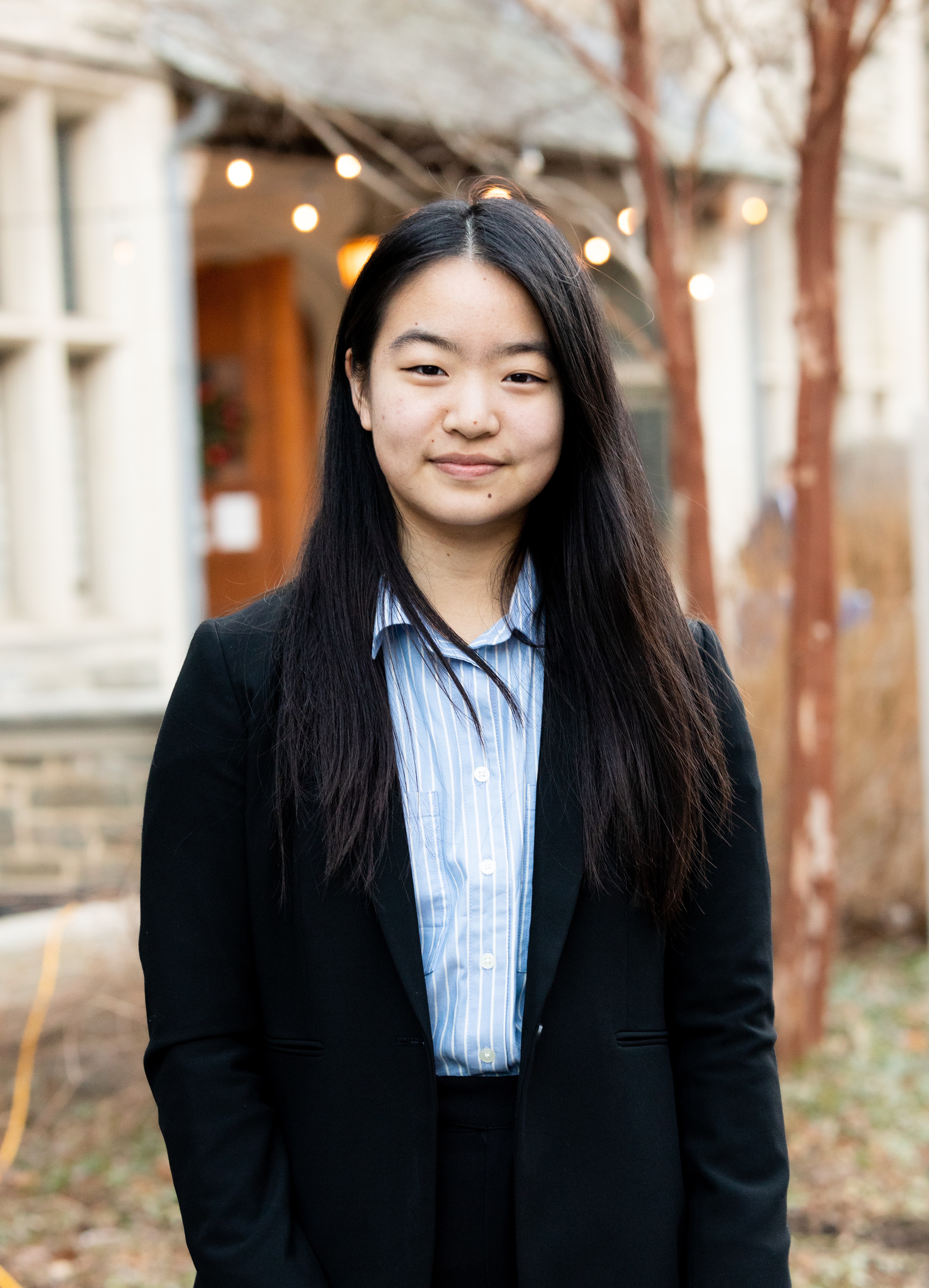
I'm an archaeology PhD student at the University of Pennsylvania with extensive teaching experience at the college level. I've taught at Penn, University of the Sciences, and Methodist University in various social sciences, including anthropology, sociology, statistics, public health, and psychology...
University of Pennsylvania
PhD
Kenyon College
PhD
Certified Tutor
2+ years
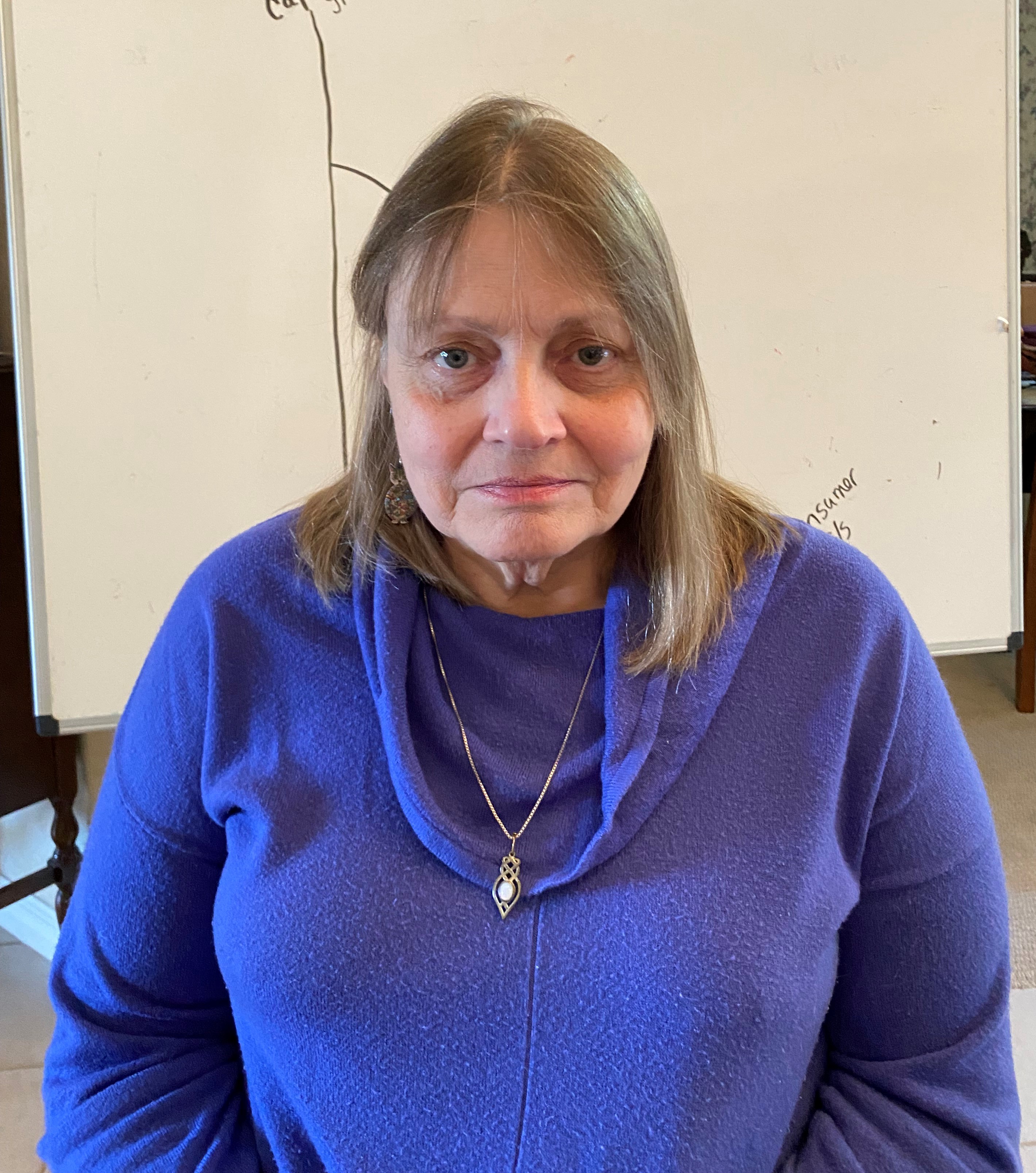
The jump from micro to macro trips up a lot of AP students, especially when aggregate models start layering fiscal policy, monetary tools, and international trade onto familiar supply-and-demand logic. Carina's Wharton economics training means she can unpack the AD-AS model or the money multiplier w...
University of Pennsylvania
BS
Certified Tutor
2+ years
Susan
I have a Ph.d in economics from Florida International University. I also have a masters in economics from Duke University and a B.S. from American University. I have taught economics in colleges and universities for over 20 years concentrating on principles courses which includes all AP econ. cour...
Florida International University
PhD
Duke University
PhD
American University
PhD

Certified Tutor
2+ years
Heberto
I am a graduate of The University of Colorado, Boulder and Harvard Kennedy School. I received my Bachelor of Arts in Economics and my Master in Public Policy with a focus on international and global affairs. Since graduation, I have worked in investment banking and management consulting, though I al...
Harvard University
Master's/Graduate

Certified Tutor
2+ years
William
I have a lot of teaching experience in both high-school and college settings, in the United States and abroad. I cover subjects ranging from ESOL, German, literature, and essay writing to most of the humanities topics that arise in AP and IB courses.
Yale University
PhD
Georgetown University
PhD

Certified Tutor
2+ years
Hi! I'm Sukwon Jeong, and I've worked as a professional tutor for over three years. I graduated from Vanderbilt University with a BA in Economics and a BA History, and since have been working with hundreds of students on a freelance basis. Teaching has always been a passion of mine, and I have exp...
Vanderbilt University
Bachelor
Certified Tutor
2+ years
Raymond
I have a Bachelor of Science degree in Industrial Management with Economic Honors from Purdue University. I attended Purdue under a full academic scholarship. After graduation I attended the University of Chicago where I first earned a Master of Arts in Economics and then proceeded to achieve the ...
University of Chicago
Master's/Graduate
Certified Tutor
2+ years
Vitoria
The AP Macroeconomics exam tests whether students can connect models — moving from the money market to the loanable funds market to aggregate demand in a single free-response question. Vitoria studied economics at St. Francis Xavier University and understands these linkages at a level that lets her ...
University
Bachelor's

Certified Tutor
2+ years
Sonali
I am an undergraduate student studying Bachelor of Commerce and planning to major in Finance and Economics/EnglishI.I have an 8.5 IELTS score and have aced Advanced Economics and English courses at University. I am an active volunteer at Days For Girls International and I am passionate about menstru...
University of Calgary
BOC

Certified Tutor
2+ years
Hi my name is Reed and I am a graduate from Carleton College with a degree in Economics. I have a passion for helping students learn and achieve their academic and personal goals. At Carleton, I played Varsity Soccer, hosted a radio show, and served as an economics prefect/TA for introductory microe...
Carleton College
Undergraduate Degree
Practice AP Macroeconomics
Free practice tests, flashcards, and AI tutoring for AP Macroeconomics
Top 20 Business Subjects


Meet Our Expert Tutors
Connect with highly-rated educators ready to help you succeed.
Rakib
AP Statistics Tutor • +22 Subjects
I am an undergraduate student at UC Berkeley in pursuit of a degree in Data Science. Prior experience has taught me that the difference between a wish and a goal is consistency. This ethos has enabled me to excel in primary school and allows me to continuously enjoy watching others make progress toward their academic objectives under my guidance.
Hailey
AP Calculus BC Tutor • +51 Subjects
I am a senior in the honors college at the University of Georgia, where I have a full tuition Zell Miller Scholarship, as well as a National Merit Scholarship and a Woodruff Scholarship. I am majoring in psychology and mathematics with a minor in German. In addition to my studies, I am active in the Psi Chi International Psychology Honor Society and a German language social program, and am heavily involved in social psychology research. Additionally I have received several awards for my performance in my math classes at UGA.
Gary
AP Calculus BC Tutor • +32 Subjects
I love math, and have a passion for sharing that love and knowledge. Progressing through courses of mathematics teaches much beyond what is on the page. It teaches problem-solving, critical and creative thinking. I try not only to teach the mechanics of math, but instill an appreciation for the skills the process can develop. And while math is my favorite subject to tutor, I have had training in and am qualified for all sections of SAT and ACT test prep, and enjoy working with students to help them learn and meet their college goals.
Mosab
College Algebra Tutor • +53 Subjects
I am currently applying to medical school and enjoy powerlifting, grand strategy games, historical fiction, and chocolate.
Catherine
SAT Reading Tutor • +25 Subjects
I am a National Board Certified Teacher, an achievement considered the "black belt of teaching" I have 30 years of teaching and tutoring experience. I have taught Government and Economic classes ranging from AP to ELL level; Special Education Math and Language Arts; Algebra I and II; Literature; Written Expression; Language Arts; and interesting electives such as Psychology and Robotics! I have extensive experience teaching SAT prep and assessing SAT exams. My experiences in both rural areas metropolitan areas make me a well-rounded teacher. I have considerable experience in on-line tutoring and teaching. As an educator, I believe that every student has a unique learning style and that it is my responsibility to tap that style and help create a path to success. I look forward to adding new students to my teaching world.
Jon
Macroeconomics Tutor • +7 Subjects
My B.A. is from Duke University and I completed all non-dissertation requirements for the Ph.D. in economics from the University of Pennsylvania, which was then the 7th-ranked Economics Ph.D. Program in the U.S. I also taught macro- and micro-economics at La Salle and Drexel Universities. I was rated highly by the students. In fact, for a particular spring semester at La Salle, 25 students petitioned the university to open another section of my microeconomics course, as my sections were filled to capacity. As a graduate student at the University of Pennsylvania, I tutored undergrads and Wharton MBA students in their macro- and micro-economics courses. I bring to the table over 40 years of experience as an economist with the U.S. government, academia, and the private sector (including with a large multinational Canadian bank) in a wide variety of areas, including international trade, macroeconomics, industry issues, and an immigration program. Given my interest in teaching, I continued to train many others in my positions with the U.S. government, including 70 colleagues in my last position. I very much enjoy teaching and tutoring and seeing and helping others learn, grow, and develop. I realize that a good tutor/teacher is one who not only understands the subject, but can communicate it effectively, as well. My priority/goal is to help the student learn, and there are no "dumb" questions. (Anything is askable.) I also work to make it a pleasant, personable experience.
Rene
Applied Mathematics Tutor • +27 Subjects
PhD Mathematics. Undergrads in Physics and Maths. Duke University and NYU alumni.
Brian
Geometry Tutor • +18 Subjects
I'm a law student and long time tutor who's just made the move to Varsity. I've been tutoring for about eight years now, since I first started working with a friend of a friend's child on his SATs. I graduated from Brooklyn College with a degree in economics, and I'm at Hofstra Law School. I tutor the SATs, ACTs, LSAT, GRE, basically all high school subjects, and a bevy of college ones, including history, psychology, economics, law, and writing. That's not because I'm an expert in everything - it's because the only thing I enjoy more than learning is helping someone else learn. A good tutor doesn't just explain the subject to you - they explain what's cool about it, how it applies to your life, and why you want to learn it. If I have to brush up on my AP Chemistry as an excuse to explain why dimensional analysis is actually the most useful math you'll ever learn, I find it thrilling, not a chore. That's really my whole paradigm, as a tutor. Every subject has a relation to both everyday life, and to the coolest parts of the collective achievements of humanity. Learning not just what Pi is, but what it means, is treading the same ground as the people who built the pyramids. We lose that joy - the enrichment granted by greater understanding - too often in sterile and boring classrooms. My goal is to help students attain mastery by providing the context and tools that let them have "Eureka!" moments. Learning is fun, and tutoring is more than just being a living wikipedia article. It's giving life to the dry and soulless problem set, making fun of the trap answers on the LSAT, and linking history to its greatest stories. I don't need gimmicks and games to make that happen. I just find where a student and I can connect over the material, how they learn, and what they're having trouble with. I won't guarantee anyone a score on a test or promise that everyone can get an A in every subject. But I do promise not to waste anyone's time or money. Every session, my students will learn new facts, new techniques, or new ways to understand some boring idea. That's not because I'm the smartest guy in the room: it's because I simply love seeing people learn.
Dariel
AP Statistics Tutor • +25 Subjects
Entrepreneur by day, educator by night. Have a burning passion for education that's hotter than the sun, which is over 27 million degrees Farenheit (F). Been teaching for 3 years across 2 different universities, 2 states, 100+ students, 10+ majors and 500+ subjects. I am most passionate about the subjects of Science, Math and Business. My goal is to inspire and educate the next generation of students who will be tomorrow's future leaders. Help me to reach this goal by making me the best educator around!
Gabrielle
Middle School Math Tutor • +6 Subjects
I am a student at Georgetown University majoring International Politics with minors in Economics and Latin American Studies.
Top 20 Subjects
Frequently Asked Questions
Students typically find the interconnected nature of macroeconomic models most difficult—particularly understanding how monetary policy, fiscal policy, and aggregate supply/demand interact. The Phillips Curve, foreign exchange markets, and the distinction between short-run and long-run aggregate supply often trip up test-takers because they require holding multiple economic relationships in mind simultaneously. Additionally, many students struggle with the graphical analysis required for these concepts; they can memorize definitions but freeze when asked to draw and interpret complex diagrams showing shifts in curves or movements along them.
The three FRQs require you to demonstrate both conceptual understanding and graphical communication. Start by identifying what economic model or concept the question targets—often the prompt contains keywords like "aggregate demand," "money supply," or "exchange rate." Then build your answer in layers: first explain the initial economic condition, then show the policy change or shock, then trace through the effects using graphs and economic reasoning. Many students lose points by jumping to conclusions without showing the causal chain; examiners reward clear step-by-step analysis even if your final answer isn't perfectly polished.
Graphical analysis is challenging because it requires translating between three languages: economic theory, mathematical relationships, and visual representation. Students often know that "higher interest rates reduce investment" conceptually, but can't reliably show this on an AD/AS diagram or loanable funds market graph. Improvement comes from practicing the same graphs repeatedly—AD/AS, Phillips Curve, money market, foreign exchange, and loanable funds—until you can draw them from memory and correctly identify what shifts versus what moves along a curve. A tutor can help you develop a systematic approach: label axes clearly, identify which variable changes first, then trace the ripple effects through your diagram.
The exam gives you 60 minutes for 60 multiple-choice questions (1 minute per question) and 50 minutes for 3 FRQs (roughly 15-17 minutes per response). The key is not spending more than 90 seconds on any single multiple-choice question—if you're stuck, flag it and move on; you can return if time permits. For FRQs, allocate your time by question difficulty: if one FRQ is clearly about a topic you know well, draft it first to build confidence and secure those points. Many students lose points by spending 25 minutes perfecting one FRQ while rushing through the others; aim for complete but concise responses across all three.
A common confusion point is mixing up which policy tools belong to which authority: fiscal policy (taxes and government spending) is controlled by Congress, while monetary policy (interest rates and money supply) is controlled by the Federal Reserve. To master their combined effects, practice working through scenarios where both policies move simultaneously—for example, "expansionary fiscal policy + contractionary monetary policy." This requires you to trace each policy's independent effect on output and price level, then determine the net result. Many exam questions test exactly this scenario because it challenges your understanding of how policies interact rather than just memorizing individual effects.
Confidence comes from repeated exposure to exam-style questions under timed conditions. Start by taking full-length practice tests at least 3-4 weeks before the exam, then review not just wrong answers but also questions you guessed on correctly—understanding why the right answer is right matters as much as catching mistakes. Identify your personal weak spots (perhaps exchange rates or monetary transmission mechanisms) and dedicate focused study sessions to those topics using both multiple-choice and FRQ practice. Finally, create a "cheat sheet" of the key graphs and economic relationships you want to internalize; reviewing this regularly in the weeks before the exam reinforces the core content that shows up most frequently on the test.
An effective macroeconomics tutor should be able to explain not just what happens in the economy, but why—connecting abstract models to real-world examples so concepts stick. They should be skilled at diagnosing where your understanding breaks down; for instance, recognizing whether you're confused about the concept itself, the graphical representation, or how to apply it to a new scenario. Additionally, they should be comfortable with the full range of AP content (from basic supply and demand through international economics) and experienced with the specific demands of the exam format, including how to structure FRQ responses to earn full credit. A tutor who can model their own problem-solving process—walking you through how they approach an unfamiliar question—is invaluable for building test-taking confidence.
Most students benefit from 4-8 weeks of focused preparation, with sessions roughly once or twice per week depending on your starting point and target score. If you're starting from a weak foundation (struggling with basic demand and supply), plan for longer and more frequent sessions; if you're aiming to move from a 3 to a 4 or 5, fewer, more targeted sessions on specific weak spots often suffice. Beyond tutoring, plan to spend 30-45 minutes on independent practice most days—working through multiple-choice sets, redrawing graphs from memory, or analyzing FRQ prompts. The weeks immediately before the exam should shift toward full practice tests and review rather than learning entirely new material.
Connect with AP Macroeconomics Tutors
Get matched with expert tutors in your subject