Award-Winning 3rd Grade English
Tutors
Who needs tutoring?
FEATURED BY


TUTORS FROM
- YaleUniversity
- PrincetonUniversity
- StanfordUniversity
- CornellUniversity
Award-Winning 3rd Grade English Tutors
Certified Tutor
2+ years
Julie
I am committed to providing academic support to students to help them reach their full potential. With a background in education and a passion for empowering learners, I strive to create a supportive and engaging learning environment. My goal is to inspire students to develop critical thinking skill...
The University of West Florida
Bachelor
Certified Tutor
9+ years
Jai
I'm a recent Stanford graduate (Electrical Engineering and Computer Science), and have been working at a major Management Consulting firm for a few years now. I personally scored a 2360 (out of 2400) on the SAT and 35 on the ACT and was successful in gaining admission to several top universities. I'...
Stanford University
Bachelors in Electrical Engineering and Computer Science
Certified Tutor
Kate
I'm available to tutor biology, chemistry, physics, math from Algebra up through AP Calculus, SAT test prep, and French. I've been tutoring students in science and math for 7 years. I also spent 8 months working and studying in France, and have tutored high school and adult students in French. When ...
Massachusetts Institute of Technology
Masters, Environmental Engineering
Massachusetts Institute of Technology
Bachelors
Certified Tutor
I am a licensed physician from Florida who is currently changing careers. I graduated from the University of Pennsylvania in 2009 and have extensive tutoring and editing experience. While a student, I became a certified writing tutor through the Critical Writing Department. Since I completed my writ...
Nova Southeastern University
PHD, Medicine
University of Pennsylvania
Bachelors, History
University of Pennsylvania
undergraduate
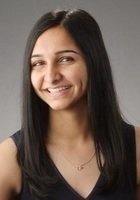
Certified Tutor
6+ years
Rhea
I am a current student at the University of Chicago. I am working towards a Bachelor of Science in Biological Sciences, and I am on the pre-medical track. I am extremely passionate about tutoring, and I have several years of experience tutoring students in my high school's learning center in various...
University of Chicago
Bachelor of Science, Biology, General

Certified Tutor
Erika
I am available to tutor middle and high school math, history and test prep. I have tutored math and history in the past and I previously taught a test prep course at a school in Hanoi, Vietnam. I have a lot of experience teaching all the need-to-know tricks to doing great on the SATS/ACTS! When I am...
Harvard University
Master of Public Policy, Public Policy

Certified Tutor
6+ years
Jeffrey
I am enrolled in the Mechanical Engineering PhD program at Rice University which will begin Fall 2020, and I am hoping to return to academia as a professor after earning my PhD. In the meantime, I am looking to share my passion for gaining knowledge, specifically in STEM, by educating the up and com...
University of Notre Dame
Bachelor of Science
Rice University
Doctor of Philosophy, Mechanical Engineering
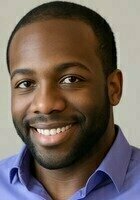
Certified Tutor
10+ years
Earnest
I am comfortable with either setting. I'm confident that I can help you (or your student) achieve to the best of their ability, so please don't hesitate to get in touch!
University of Pennsylvania
Masters, Chemical and Biomolecular Engineering
University of Pennsylvania
Bachelors, Chemical and Biomolecular Engineering
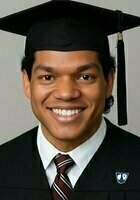
Certified Tutor
Tony
I am a recent graduate of Yale University and incoming first year medical student at Columbia University. Originally from the DC area, I have always had a passion for science and medicine and pursued a degree in Biology while at Yale. During the 2008-2009 academic year, I tutored science, math, Engl...
Yale University
Bachelor of Science in Biology

Certified Tutor
9+ years
Sami
I am a Duke University graduate in Economics and Computer Science. I am currently pursuing an MBA degree at the Yale School of Management. I have worked in the financial field, both at a management consulting firm and a fortune 500 company. My hobbies include playing and coaching soccer.
Duke University
Bachelor of Science (Economics and Computer Science)
Yale School of Management
Current Undergrad Student, Business Administration and Management
Top 20 English Subjects


Meet Our Expert Tutors
Connect with highly-rated educators ready to help you succeed.
Quinn
Calculus Tutor • +17 Subjects
I am willing to address any issue with an open mind and I try to develop strategies that play to a student's strengths. I would like to think I am very approachable and personable, and I have had very positive experiences with many students in the past using this philosophy. Outside of academics, I love playing basketball and watching sports, as well as chilling with friends, listening to music, and keeping up with politics and current affairs.
Pinelopi
Pre-Algebra Tutor • +25 Subjects
I am a Duke University graduate with a Bachelors degree in Psychology. I have experience tutoring all levels of Spanish language, all sections of the SAT, as well as algebra, pre algebra, geometry, and pre-calculus! I love kids & I have a very flexible schedule and a lot of patience! Let me help you :)
Matthew
Pre-Algebra Tutor • +39 Subjects
I'm a highly creative person who works best with visual thinkers. Very recently graduated from Stanford University, I majored in Human Biology with a concentration in Bioinformatics and Stem Cell Science. Technical though my background may be, I am currently gigging as a singer/songwriter/composer in NYC and tackle even the most hard-science of problems with a top-down, big-picture, holistic approach. If you have a propensity to look at problems in a cross- or inter-disciplinary manner (or want to learn how to do so), I'm the tutor for you!
Sharon
Pre-Algebra Tutor • +29 Subjects
I am a graduate of the University of Chicago, and I will be starting a graduate program at Columbia in August. I am about to complete a year of service with City Year, an education non-profit that places young adults into under-served schools. As a City Year member, I worked full-time in the classroom with middle-school students who were in approximately the 10th percentile for math (meaning they score lower than 90% of students). One-fourth of those students were able to grow around 15 percentile points by the end of the year! Hobbies: reading, cooking, gardening, music, art, nature, books, writing
Tiffany
Pre-Algebra Tutor • +56 Subjects
I am available to tutor a broad range of subjects, I am passionate about test preparation, Accountancy, and Algebra.
Zachary
Trigonometry Tutor • +35 Subjects
I am passionate about teaching and tutoring and I thoroughly enjoy helping students gain an understanding and a drive for their studies. I have a long history of working with students of all grade levels and abilities (elementary school through college), and I have a good understanding of strategies to excel in both general academics and standardized tests.
MaryAnn
Calculus Tutor • +21 Subjects
I am a published author who has enjoyed “coaching” our daughter, as she navigated through high school, college and graduate school. I mentor college juniors who are seeking careers in financial services, and I serve as a peer resource to professionals who are transitioning from private industry to the nonprofit sector. Hobbies: reading, cooking, writing, books, music, art, travel
Annie
Pre-Algebra Tutor • +28 Subjects
I am currently a second year medical student. I was a Physiological Sciences major at UCLA (class of 2015), and pursued research during my gap year between undergrad and medical school.
Samantha
Pre-Algebra Tutor • +38 Subjects
I'm a first-year medical student and recent graduate from Duke University, where I studied Global Health Determinants, Behaviors, and Interventions. From running a piano program at a nonprofit children's theatre to private tutoring in math, science, and standardized test prep, I enjoy helping my students become confident and self-sufficient learners! Hobbies: photography, travel, reading, music, writing, running, art, books, traveling
Charles
AP Calculus AB Tutor • +25 Subjects
I am a junior Mechanical Engineering major at Yale, and I hope to become a Naval Aviator after college. I am also a varsity sailor, and enjoy playing music with friends when I can get some free time. I have been tutoring my fellow students throughout my entire academic career, and I would best describe my tutoring style as one that adapts to each students' needs. For example, I have always tried to frame questions in a different way so that the student can better understand the question. Some students need visual representations of numbers and systems to understand them, and others benefit more by understanding the concepts behind each formula. I prefer to tutor in math and physics, and especially with real world application problems. I hope to help students improve their standardized test scores and their understanding of the math and sciences so that they can achieve their academic goals! Hobbies: art, books, running, reading, music, writing
Top 20 Subjects
Frequently Asked Questions
By the end of 3rd grade, students typically read at a level where they can understand grade-level texts independently, comprehend main ideas and key details, and begin making inferences about characters and plot. If your child is reading below grade level, a tutor can work on foundational skills like fluency, decoding multisyllabic words, and comprehension strategies—using texts at the right level to build confidence while gradually increasing complexity. Personalized instruction allows tutors to identify specific gaps (like struggling with vowel patterns or understanding cause-and-effect) and target those directly.
In 3rd grade, students move from simple sentences to basic paragraph structure—learning to write an introduction, supporting details, and a conclusion. Many struggle with staying on topic, organizing ideas in a logical order, or expanding sentences beyond basic statements. A tutor can teach explicit strategies like using graphic organizers (webs, outlines, or boxes-and-bullets) before writing, modeling how to turn ideas into complete sentences, and providing feedback on drafts. This hands-on approach helps students see writing as a process, not just a final product.
Both matter, but the approach differs. In 3rd grade, tutors prioritize mechanics that affect clarity—like capitalizing proper nouns, using periods and question marks correctly, and forming complete sentences—rather than drilling grammar rules in isolation. The most effective tutors weave grammar instruction into actual writing: they might point out a run-on sentence in a student's draft, explain why it needs a period, and have the student revise it. This connects rules to real writing, making them stick better than worksheets alone.
3rd graders benefit from learning to predict what happens next, ask questions while reading, visualize scenes, and identify the main idea. Many students read words fluently but don't understand what they've read—a common challenge at this grade level. Tutors teach these strategies explicitly by modeling them aloud (thinking out loud while reading), then gradually releasing responsibility to the student. During tutoring sessions, a tutor might pause mid-story to ask "What do you think will happen?" or "Why did the character do that?" to build active reading habits that stick.
Writer's block in 3rd grade often stems from perfectionism, lack of ideas, or not knowing how to continue once they start. Tutors combat this by teaching brainstorming techniques (like listing ideas, drawing pictures, or talking through a story first), breaking writing into manageable chunks, and normalizing rough drafts. A tutor might say "Let's just write one sentence about your favorite game, then we'll add more"—removing the pressure of a perfect final product. They also help students develop a personal writing voice by encouraging them to write about topics they care about, not just assigned prompts.
In 3rd grade, literary analysis is still concrete—students learn to identify characters, describe settings, explain what characters want and why, and recognize simple themes (like "teamwork helps" or "honesty matters"). Many struggle to move beyond plot summary to discuss why a character acts a certain way or what the author is teaching. Tutors scaffold this by asking guided questions: "How did the character feel? What made them feel that way? Would you do the same thing?" This helps students practice inferencing and connect to the text on a deeper level than simple recall.
Fluency means reading smoothly at an appropriate pace without stopping to decode every word; expression means reading with proper intonation and emphasis that matches the meaning (like reading a question with an upward tone or an excited sentence with energy). By 3rd grade, students should move beyond choppy, word-by-word reading, but many still struggle with both fluency and expression. Tutors improve this through repeated readings of engaging texts, modeling expressive reading aloud, and having students practice reading dialogue with different voices. This makes reading feel more natural and helps students understand that reading is about meaning, not just saying words correctly.
Learning words in context is far more effective than memorization alone. In 3rd grade, students encounter new vocabulary through reading and should learn to use context clues (looking at surrounding words and sentences) to figure out meaning. Tutors teach this by pausing during reading to discuss unfamiliar words, asking "What clues help you guess what this word means?" and then connecting the word to the student's own experiences. This approach builds independence—students learn a strategy they can use with any new word—rather than relying on flashcards or definitions they'll forget after the test.
Connect with 3rd Grade English Tutors
Get matched with expert tutors in your subject