Award-Winning Physics Tutors
serving Provo, UT
Physics
Tutors in Provo
Private 1-on-1 tutoring, weekly live classes for academic support, test prep & enrichment, practice tests and diagnostics, and more to elevate grades and test scores.
Based on 3.4M Learner Ratings
UniversitiesSchools & Universities
DeliveredHours Delivered
ProficiencyGrowth in Proficiency
Who needs tutoring?
No obligation. Takes ~1 minute.

Kendall studied physics at the undergraduate level and knows the subject from the inside — not just the equations, but the reasoning that connects Newton's laws to conservation principles to electromagnetic theory. Whether the challenge is free-body diagrams or circuit analysis, Kendall breaks problems into physical intuition first, math second. Holds a 5.0 rating from students.
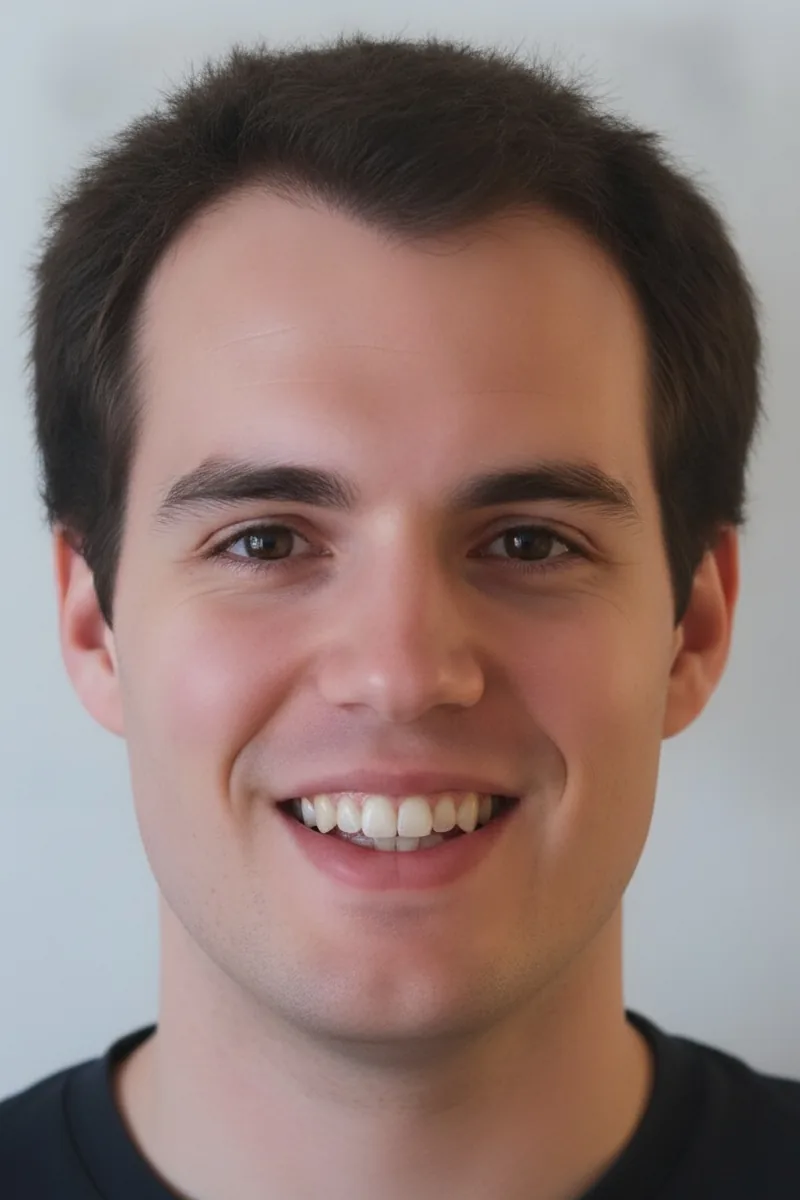
Running BYU's physics help lab since 2014 gave Matthew a front-row seat to every stumbling block students hit — from free-body diagrams to conservation of energy to rotational kinematics. He teaches the underlying principles first so that equations become logical conclusions rather than formulas to memorize. His applied physics degree and aerospace engineering ambitions keep him deeply embedded in the subject.
A physics degree means John didn't just study the subject — he spent years solving problems in mechanics, electromagnetism, thermodynamics, and wave theory at the university level. He teaches students to diagram a problem before touching an equation, a habit that turns intimidating multi-step questions into manageable pieces. Whether the topic is rotational dynamics or circuit analysis, he connects the math to the physical intuition behind it.
I am a Sophomore at BYU from Sacramento, CA. Currently, I am studying Mechanical Engineering with a minor in Management. I love understanding how everything works and that is one of my biggest motivators in school and learning in general. The subjects in which I am most proficient are Calculus, any type of Algebra and test-taking skills. I am also fluent in Spanish having spent two years in Spain where I talked with peoples of various Spanish-speaking countries emphasizing the Castillian accent. I would love to be able to share my enthusiasm for understanding with everyone.
My name is Jackson, and I have a passion for math and physics (I know, super nerdy). I graduated with a Bachelor's in Physics and a minor in mathematics, and I love helping students understand concepts in both these fields. I have one year of tutoring experience in college/AP-level physics and math (particularly calculus), and I tutor all levels of math and physics. I am a firm believer that there is no such thing as a "math" person. Math and Science are for everyone! That being said, I know these topics can be intimidating to many. I aim to help students understand the foundations of these subjects and prepare them to be better STEM learners.
Garrett studied geophysics at CU Boulder, which means he spent years applying Newtonian mechanics, wave behavior, and electromagnetism to real planetary systems. He brings that applied perspective into physics tutoring, using diagrams and real-world analogies to demystify free-body diagrams, energy conservation, and circuit analysis. His experience as a learning assistant in a university lab setting sharpened his ability to explain tricky concepts on the fly.
A B.S. in Physics from the University of Utah means Grey didn't just study physics — he lived inside Lagrangian mechanics, electromagnetism, and quantum theory for four years. He's a kinesthetic learner himself, so his sessions lean heavily on working through problems rather than watching someone else solve them. That hands-on approach is how physical intuition actually develops.
Eric's mechanical engineering background means he doesn't just teach physics formulas — he explains the physical intuition behind concepts like torque, energy conservation, and projectile motion so they actually make sense. He's especially sharp at identifying the specific step where a problem loses a student, then rebuilding understanding from that point. Rated 5.0 by students.
Studying mechanical engineering at the University of Utah means Samantha lives inside physics — Newtonian mechanics, energy conservation, rotational dynamics, and wave behavior are the foundation of her entire degree. She explains problems by starting with a free-body diagram or energy diagram before touching any equations, so students learn to set up problems correctly instead of hunting for the right formula. Her 33 ACT composite reflects strong standardized-test instincts she brings to problem-solving strategy as well.
I am here to provide encouragement and support and I am willing to go to great extents to help you reach your educational goals.
My tutoring approach is one of coaching, mentoring, and helping the student understand exactly what level and detail of help that they need to get ahead. Combining the personal discipline learned during 20 years as a Naval Officer with the unique expertise learned in one-on-one communication with peers and sailors as well as my five children, I can help you or your child succeed. A Bachelor's in Electrical Engineering, and a Math Minor help qualify me for tutoring in many subjects. My individualized tutoring methods also raised my step-son's Physics grade from a C to an A in one semester. I specialize in mathematics (basic arithmetic through calculus) but can help in many other subjects. Learning should be fun, but should also, at times, bring "Instant" results. I work to keep positive encouragement in every lesson, tutoring, or test preparation session. I speak fluent Spanish!
I enjoy helping students build confidence in chemistry, physics, and the ACT. I just finished up my sophomore year studying biomedical engineering with a 3.99 GPA. While at school, I am a peer tutor for general chemistry, organic chemistry, and physics 1. I love getting to know my students and helping them out with their unique concerns. I have a very problem-based teaching philosophy where we work through lots of practice problems together. I can't wait to meet you! Let's connect!
Understanding physics means seeing a word problem and knowing which principles apply — whether it's conservation of momentum in a collision or Faraday's law in a changing magnetic field. Zachary earned his B.S. in Physics summa cum laude from Utah State and now conducts research in quantum cosmology, so he teaches from genuine fluency rather than textbook familiarity. He unpacks each problem by connecting the math to the physical scenario, making equations feel like descriptions of reality instead of formulas to memorize.
Engineering students see physics differently than most tutors do — every force diagram, energy conservation problem, and wave equation is a tool they actually use. Ellie's biomedical engineering program at Yale means she tackles mechanics, electricity, and thermodynamics regularly in applied contexts. She unpacks the math behind each physics concept so students understand the equations instead of just memorizing them.
Studying computer science and mathematics at Rice, William tackles the same calculus and linear algebra that underpin every physics problem — from resolving force vectors to setting up integrals for work and energy. He teaches high school physics alongside AP Calculus AB and BC, so when a kinematics or momentum problem demands clean mathematical reasoning, he can address both the physics logic and the math execution without skipping a beat.
Serving as a Course Assistant for Harvard's calculus sequence means Sanjana regularly works through the exact derivatives, integrals, and differential equations that underpin every physics topic from kinematics to rotational dynamics — and she teaches AP Physics 1 through AP Physics C: E&M, so she knows where the math starts tripping students up in each course. She breaks problems down by isolating the physical principle first, then building the mathematical solution step by step so nothing feels like a leap. Rated 5.0 by students.
As a Yale physics major who also teaches thermodynamics, special relativity, and statics and dynamics, Ian has worked through the full arc from introductory mechanics to upper-division theory — so he knows exactly where each concept builds on the last and where students tend to lose the thread. He's particularly sharp at finding the analogy or reframing that makes a stubborn idea finally click, whether that's torque, wave superposition, or conservation laws in multi-body systems. His 1550 SAT speaks to the quantitative precision he brings to every problem.
A mechanical engineering degree from WashU means Caroline didn't just study physics — she applied it daily, from fluid dynamics to stress analysis. She teaches students to set up free-body diagrams and energy conservation problems by connecting the math to physical intuition, making kinematics and Newton's laws click rather than feel like formula hunts.
Studying mechanical engineering at Harvard means Christopher doesn't just remember physics — he's actively building on it every semester, from Newtonian mechanics and thermodynamics to electromagnetism and wave behavior. He breaks down complex problems by teaching students to draw clean free-body diagrams, identify which conservation law applies, and translate word problems into solvable equations. That systematic approach turns intimidating multi-step problems into manageable sequences.
Applied math at Caltech means Samuel's daily coursework is the calculus and differential equations that power every physics problem — from projectile motion to oscillating springs to electric fields. He teaches students to build the mathematical setup first, identifying which principles apply and why, so that plugging into formulas becomes the easy final step rather than a frantic guessing game.
Substitute teaching STEM to college-prep high schoolers gave Noel a clear picture of where physics concepts like Newton's laws and energy conservation tend to fall apart for students — usually at the transition from reading about a concept to actually setting up the problem. His public policy background at UChicago might seem unrelated, but it trained him to break complex systems into cause-and-effect chains, which is exactly the reasoning that kinematics and force problems demand. Rated 4.9 by students.
Teaching middle school science in Philadelphia meant John had to make forces, motion, and energy intuitive for students encountering those ideas for the first time — a skill that translates directly to breaking down introductory physics at any level. His history background also sharpened a habit of asking "why" before "how," so he digs into the reasoning behind Newton's laws or conservation principles before rushing to plug numbers into equations. Rated 5.0 by students.
Jackie took AP Physics C — the calculus-based version — and scored a 5 on the exam, which means she's comfortable with everything from Newtonian mechanics to electromagnetic induction. She unpacks free-body diagrams and energy conservation problems by tying the math to real physical situations students can visualize. That combination of calculus fluency and physical intuition makes her especially effective for students preparing for AP or college-level physics.
A PhD in biomedical engineering built on a bachelor's in physics means Andrew has spent years solving problems across mechanics, electromagnetism, and thermodynamics. He teaches physics by emphasizing free-body diagrams, unit analysis, and the habit of translating word problems into mathematical models before reaching for formulas. That systematic approach turns intimidating multi-step problems into manageable sequences.
Understanding physics means learning to translate a word problem into a free-body diagram or energy equation — and then trusting the math to get you to the answer. Dennis developed that skill set through years of quantitative research at Vanderbilt, where physical principles underpinned his graduate work in Chemical and Physical Biology. He's patient enough to let students wrestle with a concept before stepping in to clarify.
Testimonials
Because the right Physics tutor makes all the difference.
Average Session Rating – Based on 3.4M Learner Ratings
Practice Physics
Free practice tests, flashcards, and AI tutoring for Physics
Nearby Physics Tutors
Other Provo Tutors
Related Science Tutors in Provo
Frequently Asked Questions
Many students struggle with visualizing abstract concepts like forces, motion, and energy—especially when transitioning from memorizing formulas to understanding the physics principles behind them. Unit conversions, balancing equations, and applying concepts to real-world scenarios are frequent pain points. Personalized tutoring helps students move beyond rote memorization to develop the conceptual understanding and problem-solving skills that make physics click.
During the first session, a tutor will assess your current understanding of physics concepts, identify specific areas where you're struggling, and learn about your learning style and goals. Whether you're working through kinematics, thermodynamics, or preparing for the AP Physics exam, the tutor will create a personalized plan tailored to your needs. This foundation ensures every session builds on your strengths and addresses your unique challenges.
Yes. Tutors can help you understand the scientific method, design experiments, analyze data, and connect lab observations to the theoretical concepts you're learning in class. They can also help you prepare lab reports and develop the critical thinking skills needed to interpret experimental results. This bridges the gap between classroom learning and hands-on scientific reasoning.
Expert tutors help you see physics in action—from how forces affect motion in sports and vehicles to how energy principles apply in engineering and technology. By connecting abstract concepts to tangible examples, you develop deeper understanding and retention. This approach also makes physics more engaging and helps you appreciate why these concepts matter beyond the classroom.
Absolutely. Whether you're preparing for AP Physics, honors physics exams, or other standardized assessments, tutors can help you master content, practice problem-solving strategies, and build test-taking confidence. They'll focus on your weak areas, teach you how to approach different question types, and ensure you're ready on test day.
Varsity Tutors connects you with tutors who have strong backgrounds in physics—many hold degrees in physics, engineering, or related fields, and have proven experience teaching the subject. Each tutor is vetted to ensure they can explain complex concepts clearly and help students develop genuine understanding rather than just memorizing formulas.
Unit conversions and multi-step physics problems are easier when you understand the underlying logic rather than just following steps. Tutors break down the process, help you organize information, and teach strategies for approaching complex problems systematically. With practice and personalized feedback, these skills become second nature.
Physics moves quickly, and falling behind on one concept can make the next unit even harder. Personalized tutoring keeps you on track by addressing gaps immediately, reinforcing concepts your teacher covered, and preparing you for upcoming topics. With 19.6 students per teacher in Provo schools, personalized 1-on-1 instruction ensures you get the focused attention needed to stay confident and engaged.
Let’s find your perfect tutor
Answer a few quick questions. We’ll recommend the right plan and match you with a top 5% tutor.