Award-Winning AP Physics C: Electricity and Magnetism Tutors
serving Provo, UT
AP Physics C: Electricity and Magnetism
Tutors in Provo
Private 1-on-1 tutoring, weekly live classes for academic support, test prep & enrichment, practice tests and diagnostics, and more to elevate grades and test scores.
Based on 3.4M Learner Ratings
UniversitiesSchools & Universities
DeliveredHours Delivered
ProficiencyGrowth in Proficiency
Who needs tutoring?
No obligation. Takes ~1 minute.
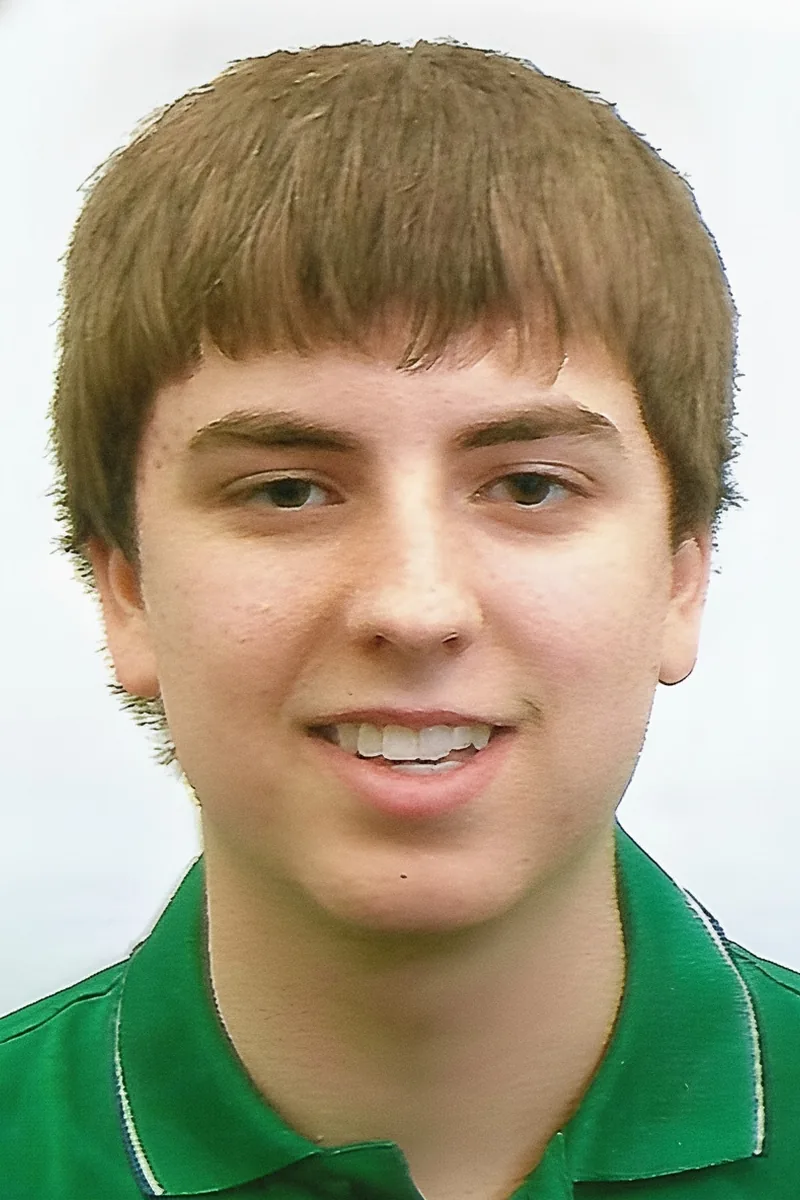
Gauss's law, Ampère's law, and RC circuits can feel impossibly abstract until someone connects the math to something tangible. Matthew's engineering coursework in electrical systems gives him practical fluency with E&M concepts, and he teaches students to visualize field lines and charge distributions rather than just grinding through integrals. His 5.0 rating speaks to how well that approach lands.

I love to teach. I love young minds and fresh brains. Those are just like clean sheets of papers I can draw anything I like. I really like to help young people to achieve their full capacities with my long experience of teaching. I am very patient and good at explaining complex concepts in simple terms. I am looking forward to meeting students who need my help.
I am an Applied Physics Major with an Emphasis in Mechanical Engineering at Brigham Young University. I love to share the joy I have in the sciences and math to show truly the applications are so far-reaching.
Gauss's law, Ampère's law, Faraday's law — E&M demands that students think in three dimensions about invisible fields, which is a fundamentally different challenge than mechanics. Corrina tackles this by connecting each Maxwell equation to physical setups she encountered in her engineering coursework, making abstract flux integrals feel concrete. Rated 4.7 by students.
Gauss's Law, Ampère's Law, Faraday's Law — E&M asks students to think in three dimensions about invisible fields, which is a genuinely different skill from anything in Mechanics. Lila tackles this by grounding each law in a concrete setup (a charged sphere, a solenoid, a changing flux through a loop) before generalizing, so the vector calculus feels like a tool rather than an obstacle.
AP Physics C: E&M is where most students first encounter vector calculus applied to real physical systems — Gauss's law in integral form, Ampère's law with displacement current, Faraday's law across non-trivial geometries. Burhanuddin's coursework at Georgia Tech goes deep into these topics daily, and he breaks down the connection between the math and the physics so that problems involving capacitors, inductors, and RC/RL circuits stop feeling like guesswork.
I have a Master's degree in Chemical Engineering, with additional graduate studies in Chemical Engineering and Computer Science, and over 10 years of experience teaching and tutoring STEM subjects. I work with students of different ages, backgrounds, and learning styles in mathematics, physics, chemistry, and related subjects. I believe the best tutoring starts with understanding how each student thinks. My goal is to identify where a concept becomes unclear, explain it from the student's perspective, and help them build both understanding and confidence. I want my students to learn not just how to find the right answer, but why it is the right answer and how to approach similar problems independently. I believe there is always learning in teaching, and that is one of the reasons I continue to enjoy working with students after all these years.
AP Physics C: E&M is where calculus and physics collide — Gauss's law, Ampère's law, and Faraday's law all require setting up and solving integrals that many students haven't encountered in their math classes yet. Raphael's combined strength in calculus and physics, built through his Cornell science curriculum, means he can teach both the mathematical machinery and the physical intuition behind electromagnetic fields and circuits. Rated 5.0 by students.
AP Physics C: E&M is where calculus and electromagnetism collide, and most of the difficulty lives in translating physical setups — Gaussian surfaces, Amperian loops, RC circuits — into the right integral or differential equation. Megan's applied mathematics degree gives her deep comfort with the vector calculus and differential equations that make this course so demanding. She breaks down Gauss's law and Faraday's law problems step by step, connecting the math to the physical intuition behind each result.
Gauss's law, Faraday's law, Ampère's law — AP Physics C: E&M asks students to wield vector calculus in ways that feel like a massive leap from mechanics. Lindamulage tackles these topics regularly in his research at Brookhaven National Laboratory, so he can unpack concepts like electric flux, induced EMF, and RC circuits with the kind of physical intuition that turns intimidating math into clear reasoning.
Gauss's law, Ampère's law, Faraday's law — AP Physics C: E&M asks students to wield vector calculus inside electromagnetic theory, which is a steep jump from mechanics. Richard's electrical and computer engineering background at the University of Tulsa means he's worked through these derivations extensively and can connect abstract field equations to tangible circuits and real devices. He breaks down each Maxwell equation into physical intuition first, then builds toward the math.
Gauss's law, Ampère's law, Faraday's law — AP Physics C: E&M asks students to wield vector calculus in the service of invisible fields, which is a genuinely difficult conceptual shift. Spencer's biomedical engineering studies require exactly this skill set, since electromagnetic principles drive technologies like MRI and neural signal processing. He unpacks each law with clear diagrams and step-by-step integral setups so the math reinforces the physics instead of obscuring it.
Testimonials
Because the right AP Physics C: Electricity and Magnetism tutor makes all the difference.
Average Session Rating – Based on 3.4M Learner Ratings
Practice AP Physics C: Electricity and Magnetism
Free practice tests, flashcards, and AI tutoring for AP Physics C: Electricity and Magnetism
Nearby AP Physics C: Electricity and Magnetism Tutors
Other Provo Tutors
Related Science Tutors in Provo
Frequently Asked Questions
AP Physics C: Electricity and Magnetism focuses on electrostatics, conductors and dielectrics, electric circuits, magnetic fields, and electromagnetic induction. The course emphasizes calculus-based problem-solving, requiring students to apply derivatives and integrals to understand how electric and magnetic fields behave. Mastering both the conceptual framework and the mathematical techniques is essential for success on the exam.
Many students struggle with visualizing abstract concepts like electric and magnetic fields, especially when applying Gauss's law and Ampère's law. The heavy calculus component—integrating to find flux, differentiating to understand changing fields—trips up students who aren't confident with multivariable calculus. Additionally, the exam's time pressure (90 minutes for 35 multiple-choice and 3 free-response questions) means students need both deep understanding and efficient problem-solving strategies.
Score improvement depends on your starting point and consistency. Students who work with a tutor to target weak areas—whether that's circuit analysis, electromagnetic induction, or calculus application—typically see meaningful gains. Many students jump from a 2 or 3 to a 4 or 5 by filling conceptual gaps and practicing under timed conditions. The key is identifying exactly where you're losing points and building targeted strategies early in your preparation.
Practice tests are critical—they reveal which topics you've mastered and where you need more work, plus they build your stamina and timing skills for exam day. Taking full-length, timed practice tests every 2-3 weeks lets you track progress and adjust your study plan. A tutor can review your practice test performance, pinpoint recurring mistakes (like sign errors in magnetic force calculations or integration mistakes), and help you develop strategies to avoid them on test day.
Your first session focuses on understanding where you stand. A tutor will assess your comfort with calculus, your grasp of foundational concepts like electric fields and Coulomb's law, and your test-taking approach. You'll discuss your goals (whether you're aiming for a 3, 4, or 5), review your current study materials, and create a personalized plan that targets your specific weak areas—whether that's problem-solving speed, conceptual understanding, or exam strategy.
The exam gives you roughly 90 minutes to complete 35 multiple-choice questions and 3 free-response problems—so pacing is crucial. Effective strategies include: spending 1-2 minutes per multiple-choice question and flagging harder ones to return to, starting free-response with the problem you find easiest to build confidence, and knowing when to estimate versus calculate exactly. A tutor can help you practice these strategies on real past exams so they become automatic, reducing anxiety and maximizing your score.
Provo's 33 schools and 4 school districts mean many students have access to school-based resources like AP coordinators, physics labs, and peer study groups. However, personalized 1-on-1 instruction is especially valuable for E&M because the calculus-heavy, conceptually dense material often needs individual pacing. Varsity Tutors connects you with expert tutors who can work around your school's schedule and tailor explanations to your learning style, complementing classroom instruction and school resources.
Look for tutors with strong physics backgrounds—ideally those who've taught AP Physics C or scored well on the exam themselves. They should be comfortable with calculus and able to explain both the "why" behind concepts and the "how" of problem-solving. Experience with test-taking strategies and familiarity with College Board's exam format and scoring rubrics is also valuable. Varsity Tutors connects you with tutors who have proven expertise in AP Physics C: Electricity and Magnetism and a track record of helping students improve their scores.
Let’s find your perfect tutor
Answer a few quick questions. We’ll recommend the right plan and match you with a top 5% tutor.