Award-Winning Physical Chemistry Tutors
serving Provo, UT
Physical Chemistry
Tutors in Provo
Private 1-on-1 tutoring, weekly live classes for academic support, test prep & enrichment, practice tests and diagnostics, and more to elevate grades and test scores.
Based on 3.4M Learner Ratings
UniversitiesSchools & Universities
DeliveredHours Delivered
ProficiencyGrowth in Proficiency
Who needs tutoring?
No obligation. Takes ~1 minute.
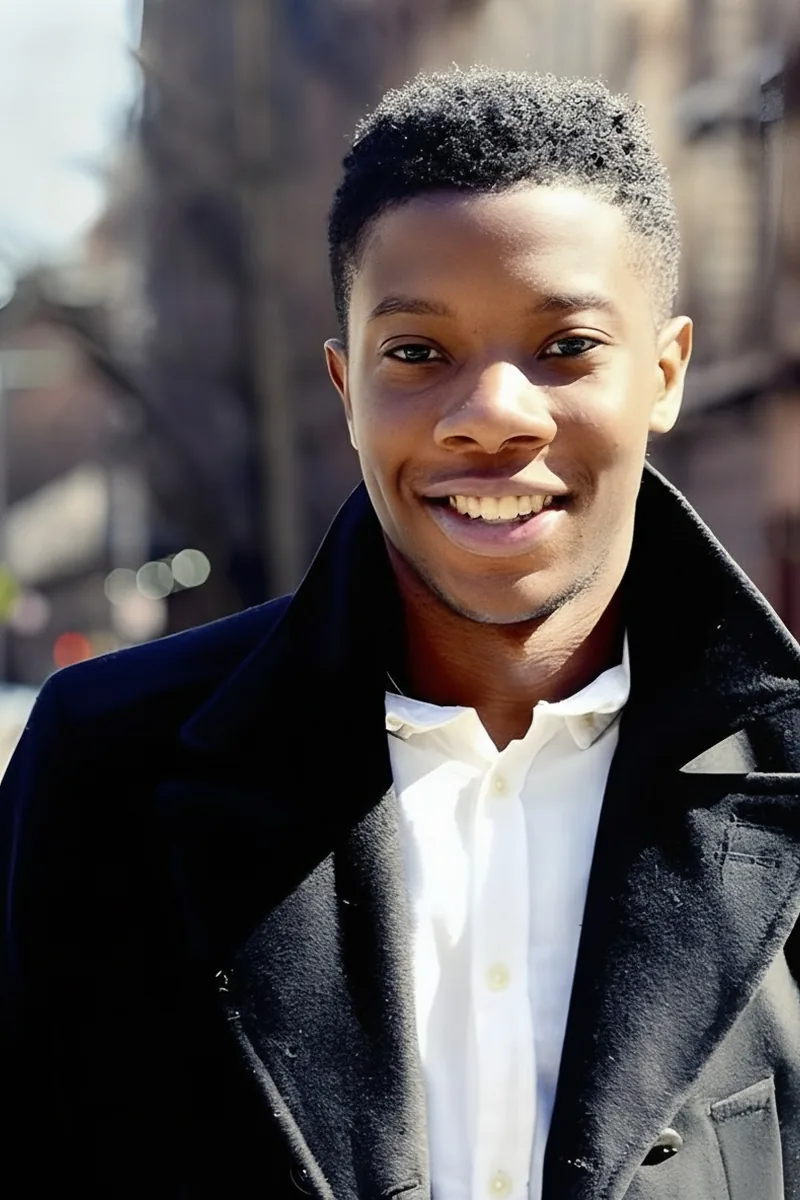
Before switching to economics at Columbia, Damani was on the pre-med track — which means he's recently sat through the same thermodynamics, kinetics, and calculus-intensive chemistry coursework that p-chem demands, and remembers exactly where the conceptual gaps tend to open up. He approaches topics like enthalpy, equilibrium constants, and rate laws by reconstructing the reasoning behind each equation rather than just presenting the final derivation. Rated 5.0 by students.

Genetics PhD work is surprisingly calculus-intensive — population dynamics, statistical mechanics of molecular interactions, and the thermodynamic stability of nucleic acid structures all demand the same quantitative reasoning that drives p-chem. Nicholas brings that background to topics like free energy calculations and kinetic modeling, where his comfort with both the math and the molecular biology underneath it keeps derivations grounded in actual chemical behavior. Rated 4.8 by students.
Two biomedical engineering degrees mean Allyson has been doing the calculus-heavy thermodynamics and kinetics work that p-chem formalizes — modeling energy transfer in biological systems, working through rate equations for physiological processes — since undergrad. She zeroes in on the specific mathematical step where a derivation goes from followable to opaque, whether that's a tricky partial derivative in a Maxwell relation or the statistical reasoning inside a Boltzmann distribution. Rated 4.9 by students.
Differential equations, calculus, and organic chemistry all sit in Nate's regular teaching rotation, which means he's constantly moving between the math and the chemistry that p-chem smashes together — and he knows exactly where students lose the thread between the two. He zeroes in on building intuition around concepts like chemical potential and equilibrium thermodynamics by tying each derivation back to the reaction behavior students already recognize from general and organic chemistry. Rated 5.0 by students.
Maurice's teaching background in special education sharpens his ability to break down the layered abstractions in p-chem — when a student is lost inside a Gibbs free energy derivation, he isolates exactly which conceptual step broke down and rebuilds from there. His coursework across calculus, statistics, and chemistry gives him enough quantitative range to walk through the thermodynamic and kinetic formalisms, even if p-chem isn't his deepest specialty.
Medical school at the Medical College of Wisconsin means Abrahim encounters p-chem's core concepts daily — reaction kinetics in pharmacology, thermodynamic energy balances in physiology, and the quantum mechanical principles behind spectroscopic diagnostics. His UCLA biology degree and 34 ACT demonstrate the mathematical fluency needed to work through derivations involving state functions, equilibrium constants, and entropy calculations without losing sight of what the chemistry actually describes. Rated 5.0 by students.
Eight years as a chemistry professor at Trinity College meant Maria taught p-chem repeatedly — not just lecturing on thermodynamic state functions and quantum mechanical models, but sitting with students in office hours untangling the specific derivation step where they got lost. That Ph.D.-level command of the subject, combined with a 5.0 rating, reflects someone who knows exactly which Maxwell relation or partition function integral is about to cause trouble and can rework it on the spot.
Environmental statistics at Rice required Alex to work extensively with the same calculus-heavy quantitative methods — differential equations, statistical modeling, multivariable analysis — that students encounter in thermodynamics and kinetics derivations throughout a p-chem sequence. His geography background adds a surprising edge: understanding energy balances and phase transitions in Earth systems translates directly to making sense of state functions and equilibrium in a chemistry context.
Biomedical engineering at BU and Tufts meant Anthony lived in the math that makes p-chem intimidating — differential equations, thermodynamic modeling, and the kinetics of biological systems — long before applying it to physical chemistry specifically. His research background studying neurodegenerative disease therapies keeps him fluent in the quantitative reasoning behind concepts like Gibbs free energy, phase equilibria, and reaction rate theory. Rated 4.9 by students, he connects each derivation to the physical system it describes so the notation carries real meaning.
Pre-med coursework at Rice plus dual degrees in environmental sciences and ecology meant Daniel was solving energy balance problems and applying thermodynamic reasoning to natural systems well before encountering p-chem's formal derivations. His lab technician work at Rice keeps the quantitative skills sharp — setting up calculations involving enthalpy, equilibrium, and kinetic models is part of the daily routine, not a distant textbook memory.
Katherine's broad math and science background — spanning calculus, thermodynamics, and physics — means she's comfortable with the multivariable calculus and differential equations that make p-chem derivations so dense. She takes apart concepts like Maxwell relations and chemical potential by slowing down at the exact algebraic step where the physical intuition tends to disappear. Rated 5.0 by students.
An applied mathematics degree plus active graduate math coursework gives Drisana the calculus fluency that p-chem demands — she's comfortable with the differential equations, multivariable integrals, and linear algebra that show up in everything from quantum mechanical wave functions to statistical thermodynamics. Where many chemistry students struggle because the math outpaces them, she tackles derivations from the opposite direction, building physical meaning onto mathematical structures she already knows cold. Rated 5.0 by students.
Testimonials
Because the right Physical Chemistry tutor makes all the difference.
Average Session Rating – Based on 3.4M Learner Ratings
Nearby Physical Chemistry Tutors
Other Provo Tutors
Related Science Tutors in Provo
Frequently Asked Questions
Physical Chemistry bridges chemistry and physics by studying the physical properties of molecules and how chemical reactions occur at a molecular level. It's challenging because it requires strong math skills, abstract thinking to visualize molecular behavior, and the ability to connect theoretical concepts like thermodynamics and kinetics to real lab observations. Many students struggle with balancing the mathematical problem-solving with conceptual understanding of why reactions happen the way they do.
Students typically find thermodynamics, quantum mechanics, and chemical kinetics most difficult because they require visualizing invisible molecular processes and applying complex math simultaneously. Unit conversions, setting up equilibrium problems, and understanding concepts like entropy and enthalpy also trip up many learners. Personalized tutoring helps by breaking these abstract concepts into concrete explanations and showing how the math connects to actual molecular behavior.
Personalized instruction connects classroom theory to what you're actually observing in the lab, making experiments more meaningful and helping you understand *why* results occur. Tutors can help you design experiments, interpret data, apply the scientific method rigorously, and troubleshoot when results don't match predictions. This bridges the gap between memorizing formulas and developing real scientific reasoning skills.
Yes—Physical Chemistry relies heavily on calculus, algebra, and unit conversions, so solid math fundamentals are essential. If math isn't your strength, tutoring can help you build confidence with the mathematical tools you'll need while also explaining the chemistry concepts they represent. Many students find that understanding *why* the math matters (rather than just memorizing steps) makes Physical Chemistry click.
Your first session focuses on understanding your specific challenges—whether that's quantum mechanics, thermodynamics, problem-solving strategy, or exam preparation. A tutor will assess your current level, identify gaps in foundational concepts, and create a personalized plan tailored to your goals. You'll leave with concrete strategies for tackling difficult topics and a clear sense of how tutoring will help you succeed.
Yes, Varsity Tutors connects Provo students with expert tutors who specialize in Physical Chemistry and understand the specific curriculum and expectations of local schools and universities. Whether you attend Brigham Young University, Utah Valley University, or a local high school, you can get matched with a tutor who knows the material deeply and can explain complex concepts clearly.
Tutoring emphasizes conceptual understanding by connecting formulas to real molecular behavior, using visualizations and analogies to make abstract ideas concrete, and having you explain concepts back in your own words. Rather than drilling memorization, tutors ask questions that deepen your reasoning and help you see how different topics relate to each other. This approach builds lasting understanding and makes problem-solving much easier on exams.
Tutors help you identify which topics are most likely to appear on your specific exam, practice problems under timed conditions, review past exams, and develop test-taking strategies. They also help you catch conceptual gaps before the exam rather than just reviewing material the night before. With personalized preparation, you'll feel confident tackling both calculation problems and conceptual questions.
Let’s find your perfect tutor
Answer a few quick questions. We’ll recommend the right plan and match you with a top 5% tutor.