Award-Winning Geometry Tutors
serving Provo, UT
Geometry
Tutors in Provo
Private 1-on-1 tutoring, weekly live classes for academic support, test prep & enrichment, practice tests and diagnostics, and more to elevate grades and test scores.
Based on 3.4M Learner Ratings
UniversitiesSchools & Universities
DeliveredHours Delivered
ProficiencyGrowth in Proficiency
Who needs tutoring?
No obligation. Takes ~1 minute.
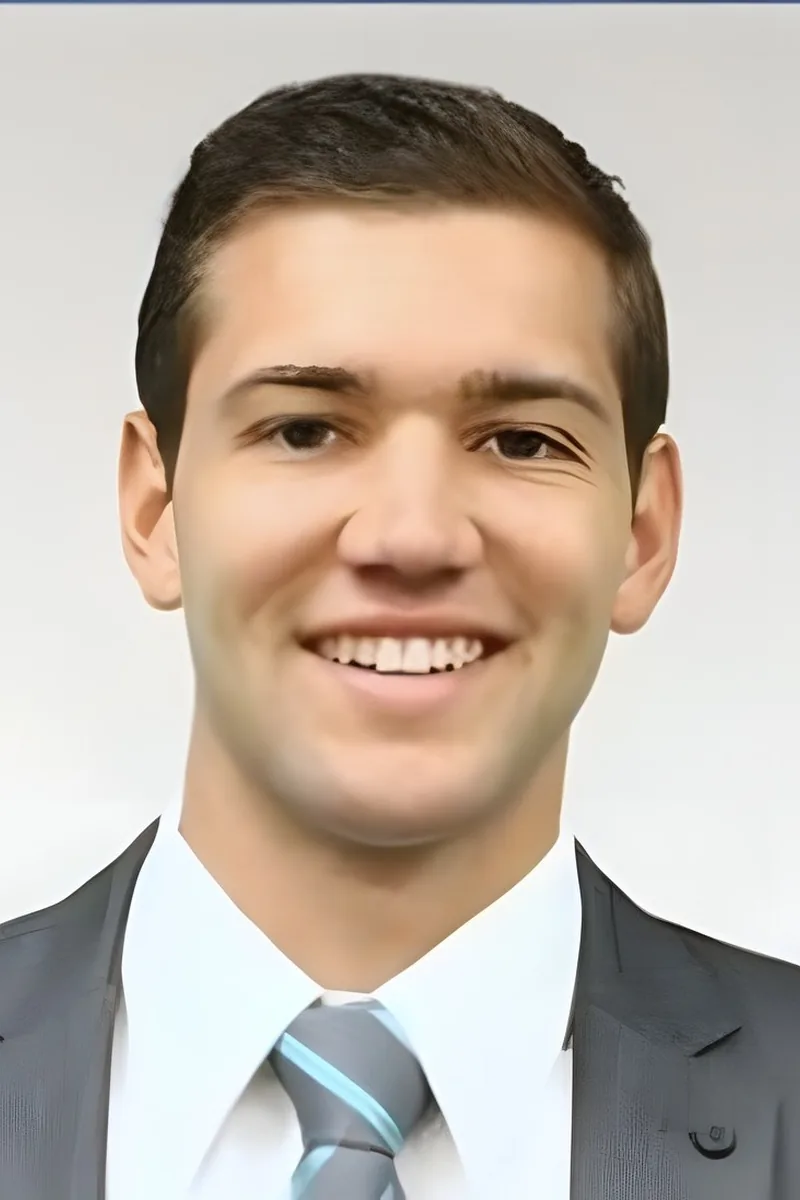
Proofs and spatial reasoning make Geometry feel like a completely different subject from the algebra most students are used to. Taylor approaches it by teaching students to visualize transformations and angle relationships systematically, connecting geometric logic to the kind of structured thinking he uses in his mechanical engineering program at BYU.
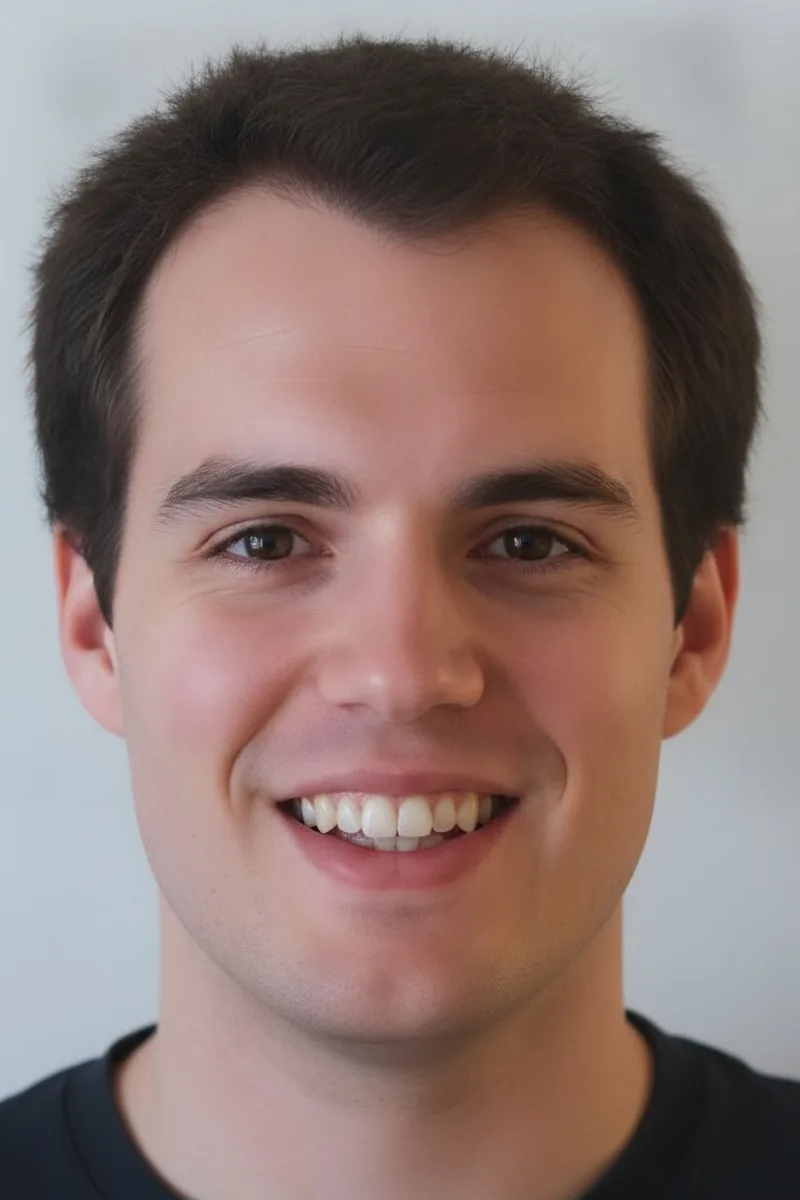
Most Geometry struggles come down to proof structure — students can see that two triangles look congruent but can't articulate why in a logical chain. Matthew approaches proofs the same way he approaches physics derivations: identify what you know, state your assumptions, and build toward the conclusion one justified step at a time. His 34 ACT composite reflects the kind of precise, methodical reasoning he brings to angle relationships, similarity, and circle theorems.
Proofs are usually the make-or-break moment in geometry — students who've relied on formulas suddenly have to construct logical arguments. John's physics training gave him years of practice translating spatial reasoning into precise, step-by-step logic, and he brings that same rigor to angle relationships, triangle congruence, and coordinate geometry. He teaches students to see the structure behind each proof rather than guessing at the next line.
Proofs are what make geometry feel alien compared to every math class before it, because suddenly students need to justify every step in a logical chain. Kacey teaches proof-writing as a skill separate from the theorems themselves — once a student learns to organize given information, identify what's missing, and build an argument, even circle theorems and triangle congruence become manageable.
Teaching across six languages and subjects from pre-algebra through calculus, Helaman has an unusual ability to explain geometric vocabulary and reasoning in ways that cut through the jargon — especially useful for students who understand shapes visually but freeze when a problem uses formal terms like "corresponding angles" or "AA similarity." He breaks down the language of proofs and theorem statements the way he'd break down a new phrase in Spanish or German: piece by piece, until the structure makes sense on its own.
I'm patient, personable, and have an incredible gift for explaining things in a way that makes sense. I majored in Math Education (with a minor in Computer Science), and I have more than eight years of experience teaching math and other STEM subjects.
Proofs trip up a lot of Geometry students because they demand a completely different kind of thinking — logical chains instead of computation. Joseph approaches each proof as a puzzle, teaching students to identify congruence shortcuts like SAS and AAS and then assemble arguments that hold together. His computational math training gives him a knack for making abstract reasoning feel concrete.
Proofs tend to be the stumbling block in Geometry — students can calculate angles but freeze when asked to justify why. Kristina's doctoral research in Biomedical Engineering required rigorous logical argumentation, and she applies that same structured reasoning to teach students how to build a proof from postulates and theorems step by step.
My tutoring approach is one of coaching, mentoring, and helping the student understand exactly what level and detail of help that they need to get ahead. Combining the personal discipline learned during 20 years as a Naval Officer with the unique expertise learned in one-on-one communication with peers and sailors as well as my five children, I can help you or your child succeed. A Bachelor's in Electrical Engineering, and a Math Minor help qualify me for tutoring in many subjects. My individualized tutoring methods also raised my step-son's Physics grade from a C to an A in one semester. I specialize in mathematics (basic arithmetic through calculus) but can help in many other subjects. Learning should be fun, but should also, at times, bring "Instant" results. I work to keep positive encouragement in every lesson, tutoring, or test preparation session. I speak fluent Spanish!
The jump from algebra to geometry trips up a lot of students because suddenly math is about diagrams, spatial relationships, and building arguments — not just solving equations. Matthew tackles that transition head-on, teaching students to read figures carefully and connect properties of parallel lines, triangles, and circles to the logical steps needed in each problem. Rated 4.8 by students.
Proofs trip up a lot of geometry students because they require a completely different kind of thinking than computation — you're building a logical argument, not solving for x. Kristin approaches proofs and constructions by connecting them to visual intuition first, then layering in the formal reasoning. She also covers the measurement and coordinate geometry sides of the course that often get overshadowed.
A geophysics degree from CU Boulder means Garrett spent years interpreting subsurface structures, reading topographic maps, and thinking in three dimensions — skills that translate directly to geometry problems involving spatial reasoning, angle relationships, and properties of shapes. He leans heavily on visual aids and real-world analogies to make abstract concepts like transformations and similarity feel concrete. Rated 4.8 by students.
Proofs are usually the first place Geometry students feel lost, because suddenly math requires written reasoning instead of just computation. Ali's training in Writing and Rhetoric at the University of Utah gives her an unusual edge here — she teaches students to build a logical argument with definitions and theorems the same way they'd structure a persuasive essay. That combination of math skill and communication makes proof-writing far less intimidating.
Eric's mechanical engineering background means he's spent years working with geometric constraints in real design contexts — tolerances, angles, load-bearing shapes — which gives him a practical feel for why properties of triangles and circles matter beyond the textbook. He unpacks proof logic by treating each step like a troubleshooting sequence, helping students see what information they already have and what single relationship unlocks the next line. Rated 5.0 by students.
Proofs are usually where Geometry stops feeling like math class and starts feeling like a logic puzzle with no clear entry point. Samantha approaches them as structured arguments — teaching students to identify given information, choose the right theorem, and build each step deliberately. Her analytical training as a mechanical engineering major at the University of Utah carries over naturally to geometric reasoning and spatial thinking.
Proofs are usually the moment geometry stops feeling intuitive and starts feeling impossible. Noah approaches them as logical arguments rather than memorization exercises, drawing on the same analytical reasoning he sharpened through his political science training at Penn. He also tackles coordinate geometry and triangle congruence by emphasizing the visual logic behind each theorem.
Proofs are usually where geometry stops feeling intuitive and starts feeling intimidating. Allen tackles that head-on by teaching students to read a diagram like a puzzle — identifying congruent triangles, parallel-line angle relationships, or circle theorems before writing a single line of formal reasoning. His Yale-trained analytical rigor translates well to the logical structure geometry demands.
Proofs are usually where geometry students panic, but they're really just structured arguments — and Dane approaches them that way. Studying engineering at Duke sharpened his spatial reasoning across topics like congruence, similarity, and coordinate geometry, and he teaches students to visualize relationships before translating them into formal logic.
Proofs are usually the sticking point in geometry — students can calculate angles and areas but freeze when asked to construct a logical argument from postulates. Kevin tackles this by teaching proof strategy as a skill: identifying what's given, what's needed, and which theorems connect the two. His background in computational geometry and algorithmic thinking at Stanford gives him a structured approach that clicks for students who think logically.
Economics at UChicago is surprisingly proof-heavy — Ellie's coursework in mathematical economics requires the same kind of structured, step-by-step logical reasoning that geometry proofs demand. She applies that training to help untangle the visual-to-logical leap students struggle with, particularly when translating a diagram involving circle theorems or polygon properties into a written argument. Her 1520 SAT speaks to the broader math fluency she brings to the table.
Cognitive science — Sugi's major at Rice — is fundamentally about how people build mental models, and geometry is one of the few math subjects where that matters enormously: students who can't visualize a rotation or mentally decompose a figure into simpler shapes will struggle no matter how many theorems they memorize. Sugi teaches the visualization first, then layers in the formal reasoning for congruence, similarity, and circle properties so that proofs feel like describing something you can already see. Rated 5.0 by students.
Mechanical and aerospace engineering at Princeton means Matthew lives in a world of geometric constraints — fitting components into tight spaces, calculating load-bearing angles, reasoning about three-dimensional shapes on paper before they ever get built. He brings that same step-by-step precision to teaching triangle properties, angle relationships, and the logic behind constructions, typically demonstrating a technique and then handing students progressively harder problems until the reasoning becomes automatic.
Proofs are usually where geometry students panic, so Samantha teaches them as structured arguments rather than mysterious rituals — each statement earns its place with a reason. She also digs into the spatial reasoning behind congruence, similarity, and circle theorems, connecting diagrams to the algebra students already know. Her Duke science background means she's comfortable making abstract relationships concrete.
Proofs trip up a lot of Geometry students because they require a completely different kind of thinking — constructing logical arguments instead of just computing answers. Michelle approaches proofs and spatial reasoning the way she approaches scientific problems: systematically, breaking each claim into smaller pieces until the conclusion becomes obvious.
Proofs are usually the first time a geometry student has to explain *why* something is true, not just calculate an answer. Vansh teaches proof-writing as a logical argument rather than a mysterious format, walking through triangle congruence, parallel-line theorems, and circle properties with enough patience to make the reasoning feel natural.
Proofs are usually where geometry students hit a wall — the shift from calculating answers to constructing logical arguments feels like a completely different subject. Tom's background in American Studies, which is essentially built on evidence-based argumentation, gives him a unique angle on teaching students to chain geometric theorems into airtight reasoning. He also covers the computational side, from triangle congruence to circle theorems, with the same step-by-step precision.
Theater training builds a surprising skill for geometry: Amber's background in staging and set design means she's used to thinking about space, angles, and spatial relationships in practical, visual terms — which translates directly to topics like transformations, reflections, and symmetry. She teaches students to sketch and annotate diagrams before jumping into calculations, turning abstract problems into something they can actually see and reason through. Rated 5.0 by students.
Testimonials
Because the right Geometry tutor makes all the difference.
Average Session Rating – Based on 3.4M Learner Ratings
Practice Geometry
Free practice tests, flashcards, and AI tutoring for Geometry
Nearby Geometry Tutors
Other Provo Tutors
Related Math Tutors in Provo
Frequently Asked Questions
Many students struggle with the shift from algebra's computational focus to geometry's emphasis on visual reasoning and logical proofs. Common pain points include understanding why geometric properties work (not just memorizing them), constructing and writing formal proofs, and applying theorems to word problems involving real-world shapes and spatial relationships. Personalized tutoring helps students build conceptual understanding so they see the "why" behind each theorem, making the material stick.
Proofs require both logical thinking and clear communication—skills that benefit greatly from one-on-one guidance. A tutor can break down the proof-writing process into manageable steps, help you identify which theorems apply to specific problems, and give you immediate feedback on your reasoning. With personalized instruction, you'll develop the confidence to tackle unfamiliar proofs by recognizing patterns and applying strategies you've practiced.
Geometry word problems require you to translate written descriptions into visual diagrams, then apply theorems to solve for unknowns—multiple steps where confusion can happen. Students often struggle with deciding which properties are relevant or setting up equations from geometric relationships. Tutors help by teaching you to systematically visualize problems, identify key information, and choose the right approach, turning word problems from intimidating into manageable.
Your first session is about understanding where you are and what you need. A tutor will review your current coursework, identify specific topics causing difficulty (whether that's angle relationships, area formulas, or proof structure), and assess your learning style. From there, they'll create a personalized plan targeting your gaps and building confidence in geometry's core concepts.
Yes. Provo's schools use various textbooks and approaches, and tutors who work with students across the area understand these differences. When you connect with a tutor, let them know which curriculum your school uses—whether it's Houghton Mifflin, Big Ideas Math, or another program—so they can align their instruction with your specific assignments and pacing.
Math anxiety often comes from feeling lost or rushed, which personalized tutoring directly addresses. Working one-on-one means you can ask questions without pressure, move at your own pace, and build confidence through small wins. As you understand geometry concepts more deeply and see yourself solving problems successfully, anxiety naturally decreases and your relationship with math improves.
Geometry is built on patterns—angle sums, similarity ratios, symmetry, and more. Tutors help you recognize these patterns by working through multiple examples, asking guiding questions that highlight connections, and encouraging you to predict outcomes before calculating. This pattern recognition shifts you from memorizing isolated facts to understanding geometry as an interconnected system.
Varsity Tutors connects you with expert tutors who have geometry expertise and experience working with students in your area. You'll share your goals, current challenges, and preferred meeting times, and we'll match you with someone who fits your needs. Most students meet with their tutor within a few days and begin seeing progress quickly.
Let’s find your perfect tutor
Answer a few quick questions. We’ll recommend the right plan and match you with a top 5% tutor.