Award-Winning Calculus Tutors
serving Provo, UT
Calculus
Tutors in Provo
Private 1-on-1 tutoring, weekly live classes for academic support, test prep & enrichment, practice tests and diagnostics, and more to elevate grades and test scores.
Based on 3.4M Learner Ratings
UniversitiesSchools & Universities
DeliveredHours Delivered
ProficiencyGrowth in Proficiency
Who needs tutoring?
No obligation. Takes ~1 minute.

Three semesters as a college chemistry TA meant Joshua was constantly working with calculus concepts — reaction rates, concentration curves, and the math behind kinetics all depend on derivatives and integrals. That hands-on repetition gives him a practical fluency with differentiation and integration that translates well to tutoring, especially for students who need to see why the math matters before the formulas click.
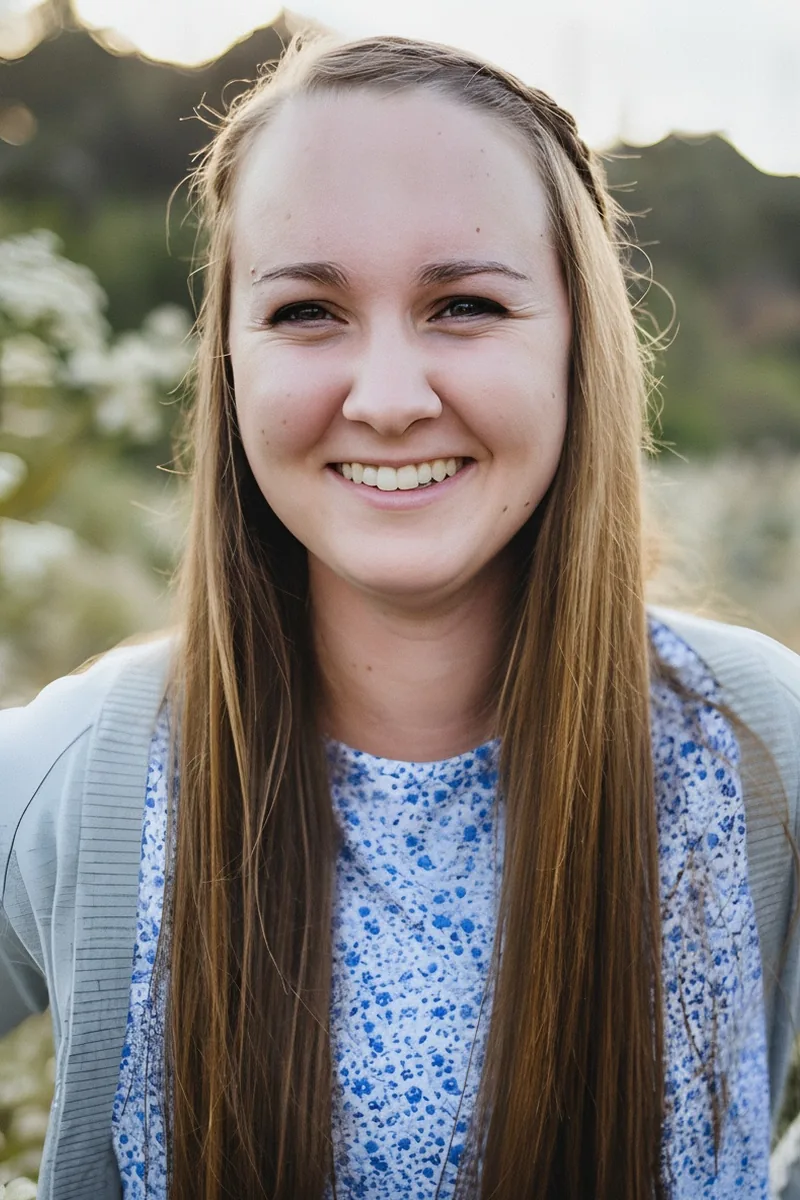
An Elementary Education major isn't the typical calculus background, but Heather's 33 ACT composite shows she can handle serious quantitative reasoning, and her teaching training means she's practiced at breaking down multi-step processes into pieces that actually make sense to the learner. She applies that same scaffolding instinct to early calculus — walking through what a limit is doing conceptually before jumping into the notation, or connecting derivative rules back to the rate-of-change intuition students already have from algebra.
The jump to calculus trips up a lot of students who were strong in algebra, usually because limits and derivatives require a completely different way of thinking about change. Jared's math background and structured approach mean he can pinpoint exactly where a concept stops making sense — whether that's the chain rule, related rates, or integration by parts — and rebuild understanding from that point.
Rachel's academic focus is in communications and humanities, not mathematics, so she's upfront that calculus sits outside her core strengths. Her 33 ACT and experience tutoring math at multiple levels mean she can support students working through early concepts like limits and basic differentiation, bringing the same structured, detail-oriented approach she applies to her research and writing work.
Biophysics lives in calculus — modeling membrane potentials, diffusion rates, and the differential equations that govern how molecules move through biological systems. Benjin tackles that math daily in his coursework, which means he can walk through derivatives, integrals, and their applications with the fluency of someone who actually uses them. His perfect 36 ACT composite confirms the quantitative chops to back it up.
An English major might seem like an unlikely calculus tutor, but Samantha's 34 ACT composite and seven years of tutoring across math levels mean she's comfortable walking through the conceptual shift from algebra into limits and early derivatives. Her teaching instinct is to translate dense notation into plain language — the same close-reading skill she uses in her English coursework — so that each step in a problem actually makes sense before moving to the next. Rated 5.0 by students.
An English major at BYU might not be the first person you'd picture teaching calculus, but Grace's experience tutoring both algebra and math alongside her analytical training means she can walk through the conceptual groundwork — what a derivative is actually saying, how slope becomes a living quantity — in clear, jargon-free language. Her instinct as a writer to break complex ideas into precise, logical steps translates surprisingly well to unpacking early calculus notation.
Physics majors don't just take calculus — they use it constantly, from deriving equations of motion to computing work done by variable forces. Kendall's physics degree means derivatives and integrals aren't abstract procedures to him; they're tools he's applied to real problems involving acceleration, flux, and energy. Rated 5.0 by students, with a 35 ACT backing up the quantitative depth.
Mechanical engineering at BYU means Taylor isn't just taking calculus — he's using it daily, applying integrals to stress analysis and derivatives to motion and thermodynamic systems. That hands-on engineering context makes him especially effective at teaching concepts like the chain rule or integration by parts, because he can point to exactly where each technique shows up in real problem-solving. His 33 ACT composite backs up the quantitative chops.
Physics majors don't just take calculus — they use it constantly, from deriving equations of motion to calculating work done by variable forces. John's BS in Physics means he can teach derivatives and integrals as tools that actually describe how the physical world behaves, grounding each concept in problems where the math has a clear, tangible purpose. Rated 4.8 by students.
Working in BYU's physics help lab means Matthew tackles calculus daily in its natural habitat — velocity functions, acceleration curves, and the integrals that connect force to work. His applied physics training gives him a fluency with derivatives and integrals that's rooted in solving real problems, not just manipulating symbols on a page. That 34 ACT composite backs up the quantitative chops.
Understanding what a derivative actually measures — not just how to compute one — is the difference between surviving calculus and commanding it. Kacey's applied and computational math training keeps her close to integration techniques, differential equations, and real-world modeling problems every semester, so she explains concepts with the fluency of someone who actively uses them.
Limits, derivatives, and integrals each demand a different kind of thinking, and Helaman tackles them by anchoring abstract definitions to visual and real-world interpretations — what a derivative actually means as a rate of change, why the integral accumulates area. His broad math background across algebra through calculus lets him quickly identify which prerequisite gaps are causing confusion and address them on the spot.
Finance majors at BYU don't just take calculus — they rely on it, using derivatives for marginal analysis and integrals for present value calculations in nearly every upper-level course. Jared brings that applied perspective to tutoring, connecting rules like the chain rule or optimization techniques to the financial models where they actually matter. Rated 5.0 by students.
From epsilon-delta definitions to integration by parts, Calculus rewards students who understand the why behind each technique. Joseph is currently deep in a computational mathematics program, which means he isn't recalling this material from years ago — he's actively using derivatives, integrals, and differential equations in his own coursework. That proximity to the material keeps his explanations sharp and current.
I'm patient, personable, and have an incredible gift for explaining things in a way that makes sense. I majored in Math Education (with a minor in Computer Science), and I have more than eight years of experience teaching math and other STEM subjects.
My name is Jackson, and I have a passion for math and physics (I know, super nerdy). I graduated with a Bachelor's in Physics and a minor in mathematics, and I love helping students understand concepts in both these fields. I have one year of tutoring experience in college/AP-level physics and math (particularly calculus), and I tutor all levels of math and physics. I am a firm believer that there is no such thing as a "math" person. Math and Science are for everyone! That being said, I know these topics can be intimidating to many. I aim to help students understand the foundations of these subjects and prepare them to be better STEM learners.
Statistical analysis in clinical psychology research relies heavily on calculus — understanding how probability density functions work, why the area under a curve matters for hypothesis testing, and how optimization underlies the models Hidefusa has built in SPSS and Stata. That quantitative backbone, developed across two master's programs and ongoing PhD work in clinical neuropsychology, means he can teach derivatives and integrals as tools with real analytical purpose. Rated 4.9 by students.
Clinical psychology PhD work involves more quantitative methods than most people realize — Ben has spent years working with statistical modeling, research design, and the kind of rate-of-change reasoning that underpins derivatives and integration. A 1550 SAT and 34 ACT back up that quantitative fluency, and his training in how people actually learn means he can pinpoint exactly where a concept like the chain rule or u-substitution is breaking down and restructure the explanation on the spot. Rated 5.0 by students.
A genetics degree requires pushing through multivariable calculus and differential equations, so Spencer has been deep in the weeds of limits, derivatives, and integrals from both the pure math and applied science sides. He's especially effective at walking through chain rule and integration-by-parts problems step by step, connecting each technique back to why it works rather than just when to use it.
Studying math at the University of Utah means Rebecca doesn't just remember how to do calculus — she's actively immersed in it. She walks through limits, differentiation techniques, and integral applications by connecting each new idea to the geometric or physical intuition behind it, which makes concepts like the Fundamental Theorem feel logical rather than arbitrary.
Limits, derivatives, and integrals all demand comfort with abstraction, and Kristina's PhD work in Biomedical Engineering meant applying calculus daily to model biological systems. She unpacks each concept by tying it to a concrete scenario — rates of change in cell growth, areas under pharmacokinetic curves — so the notation stops feeling arbitrary and starts making sense.
An English Education major isn't the typical calculus background, but Joseph's 31 ACT composite and his experience tutoring math across elementary through high school levels mean he's built real comfort with the quantitative reasoning that underpins early calculus. He takes the same close-reading instinct he applies to literature — slow down, break the problem apart, figure out what each piece is doing — and applies it to unpacking limits and derivative rules so the notation stops feeling like a foreign language. Rated 5.0 by students.
When students first encounter the limit definition of a derivative, the notation alone can feel like a foreign language — Matthew tackles that by translating each symbol into plain English before working through the mechanics. His 35 ACT composite reflects genuine quantitative ability, and his broad tutoring range across algebra, geometry, and pre-algebra means he understands the prerequisite gaps that often trip students up once they hit calculus. Rated 4.8 by students.
Sociology at the University of Utah isn't a math degree, so Kristin is straightforward that calculus isn't her deepest subject — but her tutoring background spans pre-algebra through algebra 2, which means she knows the building blocks that make or break a student's entry into calculus. She's particularly effective at bridging the gap between algebraic manipulation and calculus reasoning, walking through what a limit is actually doing before the formal notation takes over. Rated 5.0 by students.
Miles's subject list leans heavily toward writing, literature, and humanities — so he's upfront that calculus is far from his primary area. That said, his experience tutoring math and pre-algebra means he can support students working through early concepts like limits and basic derivatives, bringing the same structured, step-by-step thinking he applies to breaking down complex essays.
From epsilon-delta proofs to integration techniques like u-substitution and integration by parts, Garrett breaks calculus down using the visual and applied approach he developed while earning a math minor at CU Boulder. His geophysics coursework demanded heavy use of differential equations and multivariable calculus, so he can connect abstract theorems to tangible, real-world problems students actually find interesting.
Kjirsten's Communication Disorders degree isn't a math credential, so she's straightforward that calculus isn't her deepest subject — but her 33 ACT composite shows she can handle rigorous quantitative material, and her broad tutoring range across math and science means she's comfortable walking through the conceptual groundwork. She's strongest with the early building blocks like limits and basic differentiation, where careful, step-by-step explanation matters more than advanced theory.
A physics degree from the University of Utah means Grey didn't just take calculus — he lived in it, applying derivatives to kinematics, using integrals to solve energy problems, and working through differential equations that describe real physical systems. That hands-on, problem-driven relationship with the material lets him teach concepts like the chain rule or integration by parts as tools with clear purposes, not abstract procedures. Rated 4.7 by students.
Ali's academic strengths live squarely in writing and psychology, so calculus isn't the subject where he's deepest. That said, his experience tutoring peers through math and science coursework means he can support students working through early concepts like limits and basic derivatives, bringing the same structured, patient approach that's earned him a 5.0 rating across subjects.
I am a teacher that loves to teach grammar, vocabulary, writing, reading. ACT Prep. I love to travel and ride motorcycles. I am an avid reader.
Pre-med biology coursework means Brett has worked through the calculus that drives enzyme kinetics, population modeling, and pharmacokinetic curves — so he can ground derivatives and integrals in the life-science contexts where they actually matter. He breaks down problems by connecting each step back to the underlying concept, making techniques like the chain rule or u-substitution feel logical rather than mechanical. Holds a 5.0 rating.
Mechanical engineering coursework is essentially calculus in action — Eric spent his studies working through integrals for stress analysis, derivatives for motion equations, and differential equations for system dynamics, so the material never feels abstract when he explains it. That engineering fluency means he can connect a chain rule problem to something physical and tangible, which tends to make the logic stick. Rated 5.0 by students.
Mechanical engineering at the University of Utah means Samantha doesn't just remember Calculus — she's actively using derivatives and integrals to solve real problems in dynamics, thermodynamics, and fluid mechanics. That constant application gives her a practical vocabulary for explaining concepts like the chain rule, u-substitution, and area between curves. She connects each technique to a concrete purpose so the material sticks beyond the final exam.
My tutoring approach is one of coaching, mentoring, and helping the student understand exactly what level and detail of help that they need to get ahead. Combining the personal discipline learned during 20 years as a Naval Officer with the unique expertise learned in one-on-one communication with peers and sailors as well as my five children, I can help you or your child succeed. A Bachelor's in Electrical Engineering, and a Math Minor help qualify me for tutoring in many subjects. My individualized tutoring methods also raised my step-son's Physics grade from a C to an A in one semester. I specialize in mathematics (basic arithmetic through calculus) but can help in many other subjects. Learning should be fun, but should also, at times, bring "Instant" results. I work to keep positive encouragement in every lesson, tutoring, or test preparation session. I speak fluent Spanish!
I recently graduated Summa Cum Laude from Utah State University with a minor in Mathematics, a B.S. in Physics, and a B.A. in Philosophy. I work in research related to quantum cosmology and the philosophy of time. I have years of experience teaching and tutoring in math, science, and literature at the high school and university level. By a comprehensive study and mastery of the ACT test, I achieved a composite score of 35 on the exam. I enjoy sharing the techniques and strategies I used to score in the 99th percentile, knowing that all student can increase their scores and master the test with guidance and practice. My approach in ACT tutoring focusses on strengthening key content knowledge, increasing answer accuracy and speed, and building up an understanding of the test dynamics. I work one-on-one with students to develop a custom study plan. Equipped with these skills and background, students will feel confident and primed for success on test day. My tutoring in mathematics and physics draws on many of those same principles and also focuses on intuitive approaches to understanding the methods in a straightforward, meaningful way. I affirm that learning is a source of great satisfaction and a powerful tool, and I enjoy sharing the experience of education with my students.
Between a biomedical engineering degree and a PhD in statistics, Sam has used calculus as a daily working tool — from modeling biological systems to deriving the probability distributions that underpin advanced statistical theory. That means he teaches integration techniques, series convergence, and multivariable concepts as tools with clear purpose, not just abstract exercises. Rated 4.9 by students.
Scoring a 34 on the ACT means Solange has the quantitative chops to handle calculus, even though her Harvard degrees are in sociology and women's studies. Her eight years of tutoring math at multiple levels give her a clear read on where students get stuck — particularly the conceptual shift from algebraic manipulation to thinking about instantaneous rates of change and accumulation. She breaks down the logic behind each new idea before diving into computation, so the notation stops feeling like a foreign language.
Between a physics bachelor's and a PhD in biomedical engineering, Andrew has used calculus as a daily working language — from modeling tissue mechanics to solving the differential equations that describe biological systems. That depth means he can teach derivatives, integrals, and multivariable concepts not as isolated procedures but as tools with clear physical meaning. Rated 4.9 by students.
The University of Chicago's core curriculum put Valerie through rigorous quantitative coursework alongside her Classics and Theatre majors, so she's encountered calculus even if math isn't her primary lane. Her 1540 SAT confirms she can handle the reasoning, and her instinct as a writing-trained thinker — breaking a complex argument into its smallest logical moves — maps surprisingly well onto unpacking what a derivative is actually doing step by step.
Testimonials
Because the right Calculus tutor makes all the difference.
Average Session Rating – Based on 3.4M Learner Ratings
Nearby Calculus Tutors
Other Provo Tutors
Related Math Tutors in Provo
Frequently Asked Questions
Many students struggle with the transition from algebra and precalculus to the conceptual thinking that Calculus requires. Common pain points include understanding limits and continuity, applying derivatives and integrals to real-world problems, and connecting visual graphs to symbolic notation. Personalized 1-on-1 instruction helps students see the underlying patterns and build confidence in these foundational concepts before moving to more complex applications.
During the first session, a tutor will assess your current understanding of prerequisite topics like limits and basic derivatives, identify specific areas where you're struggling, and discuss your goals—whether that's improving your grade, preparing for an AP exam, or building conceptual mastery. This personalized approach ensures that subsequent sessions are tailored to your learning style and pace, rather than following a one-size-fits-all curriculum.
Expert tutors work with you to break down multi-step problems into manageable pieces, teaching you how to identify which calculus concepts apply to different problem types. Rather than just showing you the answer, tutors guide you through the reasoning process, helping you understand why certain strategies work and how to recognize similar patterns in new problems. This builds both your confidence and your ability to tackle unfamiliar questions on tests.
Word problems require you to translate real-world scenarios into mathematical equations—a skill that combines reading comprehension, conceptual understanding, and procedural fluency. Tutors help you develop a systematic approach: identifying what you're solving for, setting up the correct derivative or integral, and interpreting your answer in context. With consistent practice and personalized feedback, you'll start to recognize the patterns behind different problem types.
Yes. Varsity Tutors connects you with tutors who can work with your specific textbook, course sequence, and teaching approach—whether your school in Provo uses AP Calculus, IB, or a standard college-prep curriculum. Tutors are familiar with different pedagogical approaches and can help you bridge any gaps between how concepts are presented in class and how you understand them best.
Math anxiety often stems from feeling lost or making mistakes without understanding why. Personalized tutoring creates a low-pressure environment where you can ask questions, make mistakes, and learn from them without judgment. As you work through problems step-by-step with a tutor and begin to see patterns and connections, your understanding deepens and your confidence naturally grows—transforming Calculus from intimidating to manageable.
Writing rigorous proofs requires understanding not just how to solve a problem, but why your solution is correct. Tutors teach you how to structure arguments logically, identify what assumptions you're making, and communicate your reasoning clearly. Through guided practice and feedback, you'll develop the ability to justify your work in ways that demonstrate true conceptual mastery rather than just procedural steps.
Varsity Tutors matches you with expert tutors based on your specific needs, learning style, and goals. You can discuss your preferences—whether you want someone who emphasizes conceptual understanding, test preparation, or building foundational skills—and we'll connect you with a tutor whose expertise and teaching approach align with what you're looking for. The first session helps confirm it's a great fit before you commit to ongoing tutoring.
Let’s find your perfect tutor
Answer a few quick questions. We’ll recommend the right plan and match you with a top 5% tutor.