Award-Winning AP Calculus BC Tutors
serving Provo, UT
AP Calculus BC
Tutors in Provo
Private 1-on-1 tutoring, weekly live classes for academic support, test prep & enrichment, practice tests and diagnostics, and more to elevate grades and test scores.
Based on 3.4M Learner Ratings
UniversitiesSchools & Universities
DeliveredHours Delivered
ProficiencyGrowth in Proficiency
Who needs tutoring?
No obligation. Takes ~1 minute.
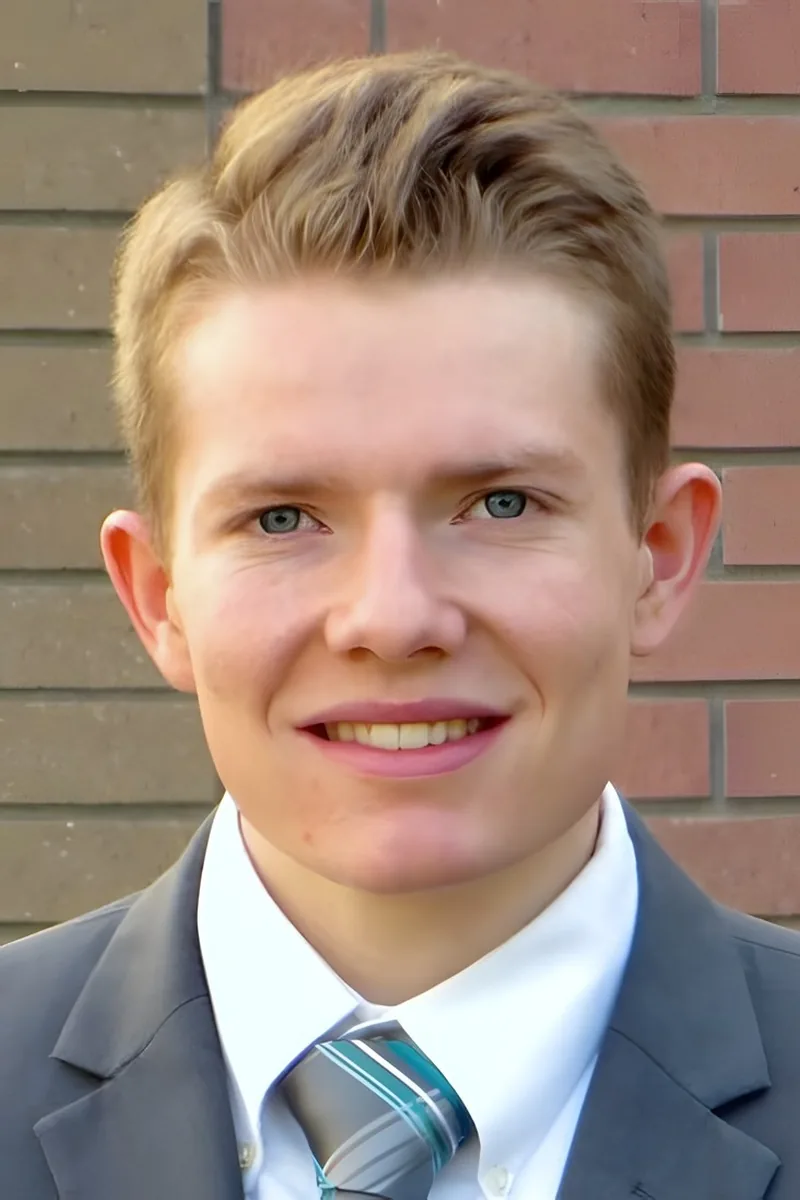
BC Calculus piles convergence tests, parametric equations, and polar integration on top of an already demanding AB curriculum, so pacing matters as much as comprehension. Kacey's applied and computational math coursework means she uses series and differential equations daily, and she teaches students to recognize which technique a problem is really asking for before they start writing. Rated 4.8 by past students.
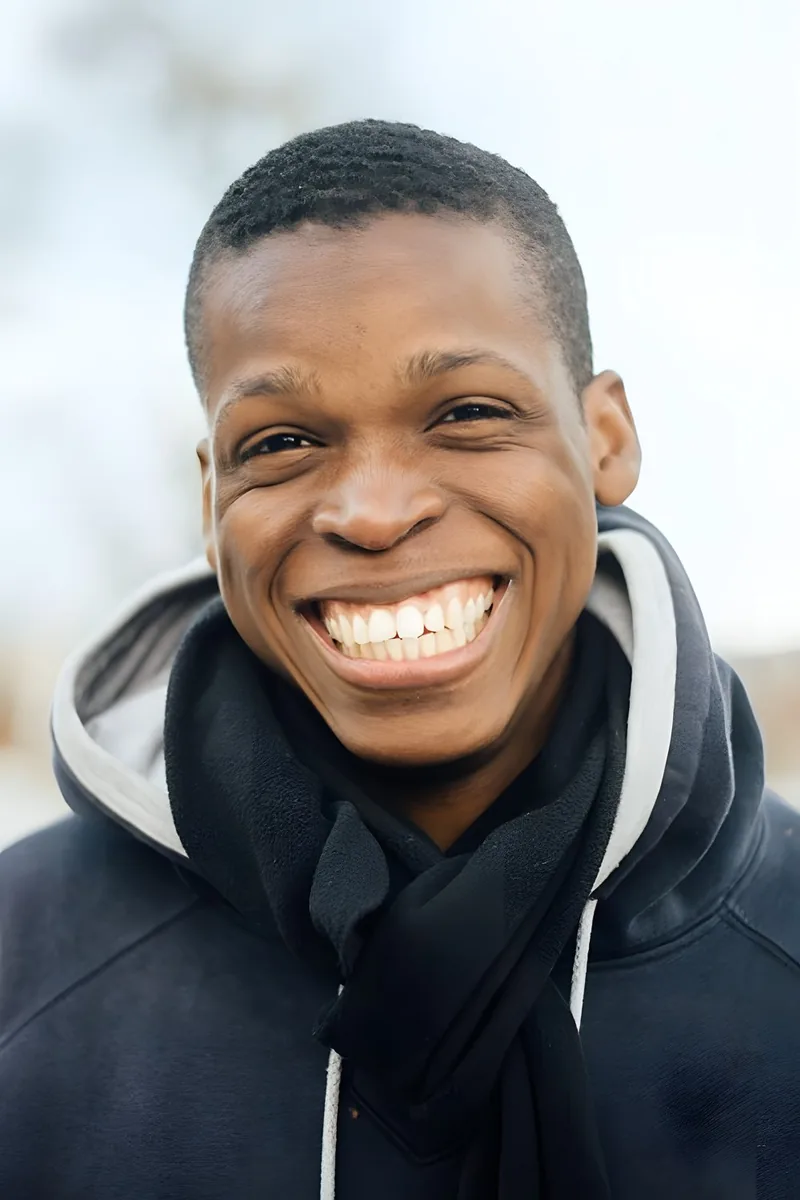
I'm patient, personable, and have an incredible gift for explaining things in a way that makes sense. I majored in Math Education (with a minor in Computer Science), and I have more than eight years of experience teaching math and other STEM subjects.
Computational mathematics as a major means Joseph isn't just learning BC techniques like convergence tests and Taylor series — he's studying the algorithms and numerical methods those techniques feed into, which gives him an unusually clear picture of why each concept matters beyond the AP exam. His 33 ACT and 5.0 tutoring rating back up an approach that traces every new BC idea to the AB reasoning underneath it, so topics like parametric derivatives or the Lagrange error bound land as logical next steps rather than disconnected formulas.
My name is Jackson, and I have a passion for math and physics (I know, super nerdy). I graduated with a Bachelor's in Physics and a minor in mathematics, and I love helping students understand concepts in both these fields. I have one year of tutoring experience in college/AP-level physics and math (particularly calculus), and I tutor all levels of math and physics. I am a firm believer that there is no such thing as a "math" person. Math and Science are for everyone! That being said, I know these topics can be intimidating to many. I aim to help students understand the foundations of these subjects and prepare them to be better STEM learners.
BC Calculus covers everything in AB plus topics like Taylor and Maclaurin series, parametric equations, and polar coordinates — all of which Rebecca tackles regularly as a University of Utah math major. She breaks down convergence tests and integration techniques in ways that build real intuition, not just formula memorization. Rated 5.0 by students.
Grey's physics degree from the University of Utah means he didn't just take BC Calculus — he spent years applying series expansions, parametric equations, and differential techniques to real physical systems where getting the math wrong meant getting the physics wrong. That background makes him especially effective at unpacking why a particular convergence test applies or how polar and parametric representations connect back to the core derivative and integral ideas students carried over from AB. Rated 4.7 by students.
Mechanical engineering at the University of Utah means Samantha is actively using series expansions, parametric equations, and advanced integration in her coursework — so when she teaches BC topics like Taylor polynomials or convergence tests, she's drawing on problems she solved last week, not concepts she memorized years ago. She's particularly effective at walking through the logic of why each convergence test applies in a given situation, turning what feels like guesswork into a clear decision process.
Quantum cosmology research requires building solutions out of infinite series and differential equations — tools Zachary uses daily that map directly onto BC's core territory of Taylor polynomials, convergence analysis, and advanced integration. His physics and math training at Utah State means he teaches these topics by grounding them in the physical intuition behind the formulas, so a concept like the Lagrange error bound becomes a question about how closely your approximation tracks reality rather than just another memorized inequality.
Series convergence tests, parametric equations, polar curves — BC Calculus piles on concepts fast, and falling behind on one unit can cascade through the rest of the course. Ethan breaks each new topic back to its AB foundation before building upward, so students see Taylor series and integration techniques as extensions of ideas they already own rather than entirely new material.
Scoring a 36 on the ACT while studying environmental engineering at Cornell means Akanksha lives in the calculus that BC demands — her coursework in fluid dynamics and pollutant modeling leans heavily on integration techniques, series approximations, and differential equations. She breaks down the transition from AB to BC by treating topics like convergence tests and parametric curves as practical extensions of tools students already trust, not as an overwhelming new syllabus. Rated 4.8 by students.
Justin's PhD work in Computational and Applied Mathematics at the University of Chicago means he doesn't just teach Taylor series and convergence — he builds on them daily in research involving image processing and climate modeling, where approximation methods have to actually hold up under real conditions. That perspective sharpens how he explains error bounds and series manipulation, grounding each technique in why it matters rather than just how to execute it on an exam. Rated 5.0 by students.
Biomedical engineering at Johns Hopkins means Bidyut uses series approximations and differential equations to model biological systems — the same convergence tests and integration techniques that define the BC curriculum beyond AB. He's especially sharp at showing how a topic like Taylor polynomial error bounds connects back to the derivative reasoning students already trust, turning what feels like a wall of new material into a logical extension. Holds a 5.0 rating and a 36 ACT composite.
Most BC students hit a wall not because the new material is impossibly hard, but because their AB foundations have quiet gaps that only surface once series and parametric curves enter the picture. Eric, a computer science major at WashU, approaches calculus the way he approaches debugging code — tracing errors back to their source, whether that's a shaky understanding of limits feeding into convergence tests or weak integration skills undermining Taylor polynomial construction. His logical, step-by-step problem-solving style translates naturally into breaking down BC's trickiest topics.
Kenan's mathematical economics training means he's comfortable with the kinds of series, parametric equations, and integration techniques that make BC a step up from AB. He walks through convergence tests and Taylor polynomials by connecting each tool to the problem it was invented to solve, which keeps the logic clear even when the notation gets dense.
Chemical and biomolecular engineering at Johns Hopkins means Joshitha is actively using series approximations and integration techniques in thermodynamics and transport courses — so when she teaches Taylor polynomial construction or walks through convergence test logic, it comes from current, hands-on application rather than distant memory. Her 1580 SAT and 5.0 tutoring rating back up an approach that prioritizes building problem-solving intuition over drilling formulas.
Coming out of Thomas Jefferson High School for Science and Technology — one of the most rigorous STEM pipelines in the country — Rhamy had BC Calculus concepts like series convergence and parametric integration locked down before most students even encounter them. His computer engineering program at Vanderbilt keeps those tools sharp daily, since signal analysis and circuit design lean heavily on the same Taylor expansions and differential equations that define the BC curriculum. Rated 5.0 by students.
Most BC students can mechanically apply a ratio test or crank out a Taylor expansion — where they get stuck is understanding *when* each tool is the right one and *why* it works. Alexander, an applied math major at Rice with a 1580 SAT, approaches BC as a problem-solving course rather than a formula catalog, building each new concept from the reasoning students already developed in AB. That mindset is especially useful for the trickier BC territory — convergence arguments, error bounds, and parametric integration — where intuition matters more than memorization.
BC Calculus covers a massive range — from parametric equations and polar curves to Taylor series and convergence tests — and Dennis's physics research at Princeton demanded fluency in all of it. He connects topics like integration techniques and differential equations to the physical problems they were invented to solve, which makes the logic behind each method click.
Biochemistry lab work at Columbia demands comfort with the calculus that models reaction kinetics and molecular behavior — Andrew has spent years using integration techniques and series approximations in that context, which gives his BC teaching a practical edge when students ask "why does this matter?" He's especially effective at breaking down the transition from AB to BC, tracing topics like Taylor polynomial construction and convergence criteria back to the derivative and integral logic students already trust. Rated 4.9 by students.
Series convergence tests, parametric equations, polar curves — BC Calculus piles on topics fast, and falling behind on even one unit can snowball. JF scored a perfect 1600 SAT and is studying mathematical and computational science at Stanford, where the calculus concepts from BC are the everyday language of coursework. That recent fluency means explanations stay intuitive rather than overly formal.
Testimonials
Because the right AP Calculus BC tutor makes all the difference.
Average Session Rating – Based on 3.4M Learner Ratings
Practice AP Calculus BC
Free practice tests, flashcards, and AI tutoring for AP Calculus BC
Nearby AP Calculus BC Tutors
Other Provo Tutors
Related Math Tutors in Provo
Frequently Asked Questions
AP Calculus BC builds on AB material and covers limits, derivatives, integrals, differential equations, sequences, series, and parametric/polar equations. The course emphasizes conceptual understanding alongside computational skills, with about 60% of exam questions focused on calculus concepts and 40% on applications. Many students in Provo find that working through these topics with personalized instruction helps clarify connections between different units.
Score improvement depends on your starting point and consistency with practice. Students who work through practice problems systematically, review mistakes, and focus on weak areas typically see meaningful gains—often 1-2 score points over a semester. The key is identifying exactly where you struggle (conceptual gaps vs. calculation errors vs. test-taking speed) and addressing those specific areas through targeted practice and feedback.
Students commonly struggle with series convergence tests, parametric and polar calculus, and applying derivatives/integrals to unfamiliar contexts. Time management is another major challenge—the exam requires working through multi-step problems quickly and accurately. Many students also find the transition from AB concepts to BC-specific material disorienting. Personalized instruction can help you master these sticking points before test day.
Effective strategies include: on the multiple-choice section, eliminating clearly wrong answers first; on free-response, showing all work even if you're unsure (partial credit is valuable); and practicing with a timer to build pacing skills. Many students benefit from working through released AP exams under timed conditions to identify whether they struggle with specific question types or with time management. A tutor can help you develop personalized strategies based on your strengths and weaknesses.
Ideally, preparation begins early in the school year so you can learn material thoroughly and have time for practice and review. If you're starting later or struggling with specific topics, even 8-12 weeks of focused tutoring can significantly strengthen weak areas. The goal is to complete your content review by late March, leaving 4-6 weeks for full-length practice tests and targeted drilling of difficult concepts.
Your first session focuses on understanding where you stand: reviewing your current coursework, discussing which topics feel strongest and weakest, and identifying your goals (score target, timeline, specific problem areas). The tutor will likely work through a few problems with you to assess your conceptual understanding versus computational skills. From there, you'll develop a personalized study plan targeting your priorities before test day.
Practice tests are essential—they reveal exactly which topics need more work, help you build test-day stamina, and let you practice pacing under realistic conditions. Research on learning shows that practice testing is one of the most effective study strategies. Most students benefit from taking at least 3-4 full-length practice exams in the weeks before the test, reviewing every mistake carefully to understand why you missed it.
Look for tutors with strong calculus backgrounds—ideally those who have taught or tutored AP Calculus BC specifically and understand the exam format and common student misconceptions. Experience with test preparation and familiarity with how the College Board grades free-response questions is valuable. Varsity Tutors connects you with expert tutors in Provo who know the AP Calculus BC curriculum inside and out and can tailor instruction to your learning style.
Let’s find your perfect tutor
Answer a few quick questions. We’ll recommend the right plan and match you with a top 5% tutor.