Award-Winning College Physics Tutors
serving Provo, UT
College Physics
Tutors in Provo
Private 1-on-1 tutoring, weekly live classes for academic support, test prep & enrichment, practice tests and diagnostics, and more to elevate grades and test scores.
Based on 3.4M Learner Ratings
UniversitiesSchools & Universities
DeliveredHours Delivered
ProficiencyGrowth in Proficiency
Who needs tutoring?
No obligation. Takes ~1 minute.
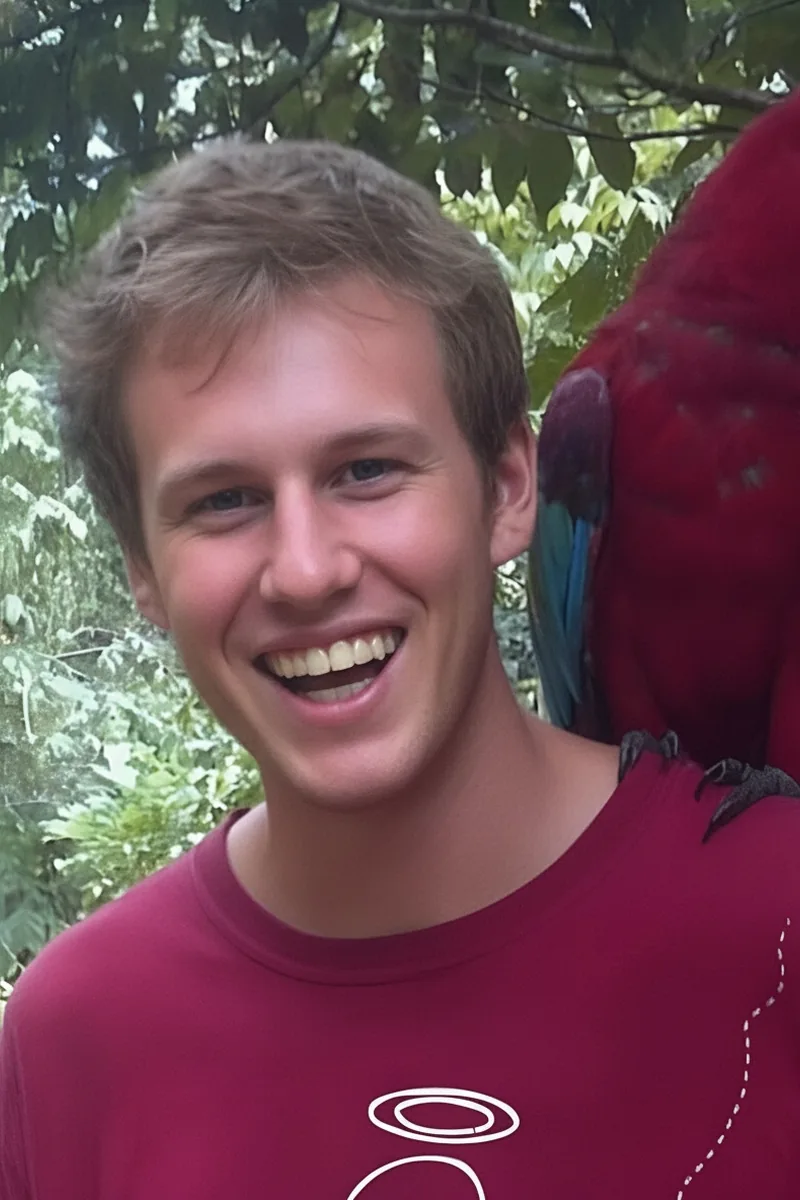
A physics degree means Kendall didn't just pass college physics — she lived in it for four years, building fluency across mechanics, E&M, waves, and thermal physics from the theory up. She's particularly good at walking through the conceptual leaps that textbooks gloss over, like why you can treat a pulley system as a single equation or when to switch from force analysis to energy methods. Rated 5.0 by students, with a 35 ACT backing up her quantitative chops.
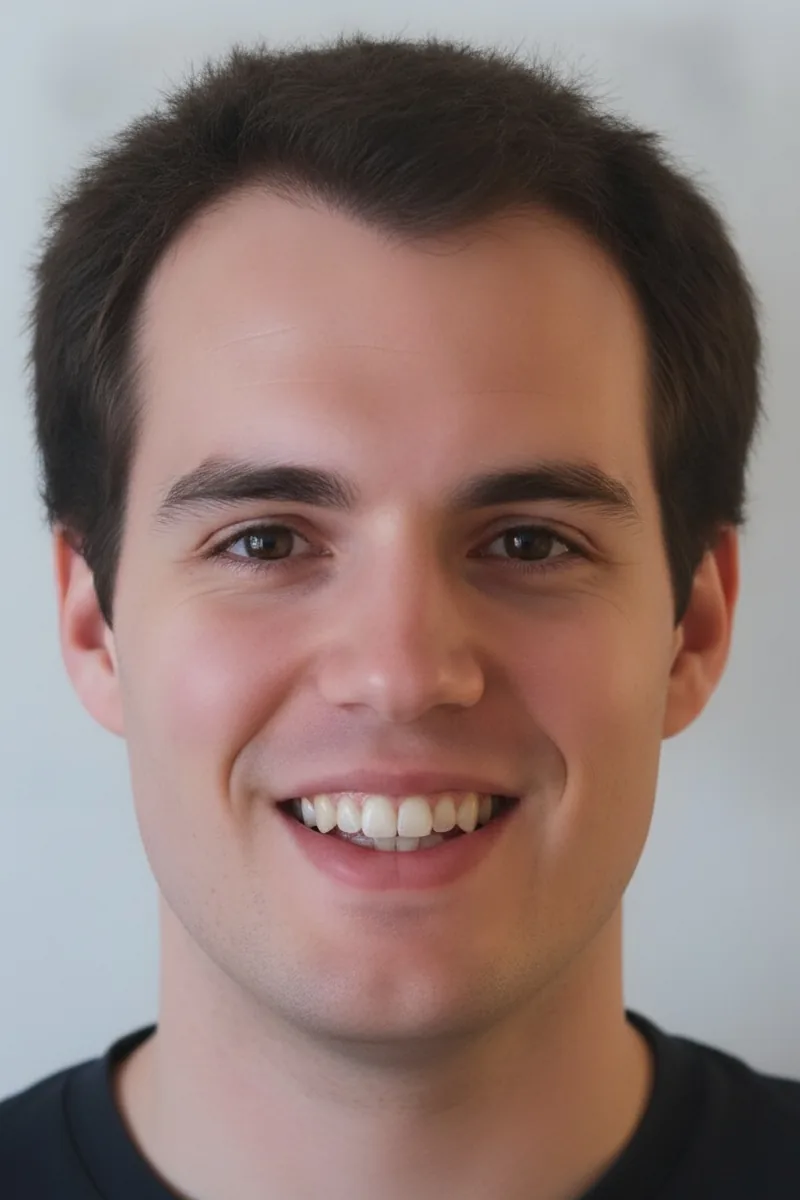
College-level physics ramps up fast, especially when calculus-based mechanics or electromagnetism enter the picture. Matthew has worked in BYU's physics help lab throughout his applied physics degree, troubleshooting everything from Gauss's law problems to multi-step thermodynamics derivations with students in real time. That daily exposure to where people get stuck makes him efficient at diagnosing and clearing up confusion.
Grey earned his B.S. in Physics from the University of Utah, which means college-level mechanics, electromagnetism, and thermodynamics aren't abstract textbook topics for him — they're the core of his training. He emphasizes hands-on problem solving, walking through free-body diagrams, circuit analysis, and wave equations step by step until the physics clicks. Rated 4.7 by students.
I enjoy helping students build confidence in chemistry, physics, and the ACT. I just finished up my sophomore year studying biomedical engineering with a 3.99 GPA. While at school, I am a peer tutor for general chemistry, organic chemistry, and physics 1. I love getting to know my students and helping them out with their unique concerns. I have a very problem-based teaching philosophy where we work through lots of practice problems together. I can't wait to meet you! Let's connect!
Eric's mechanical engineering background means he didn't just study college physics — he applied it, working through statics, dynamics, and thermodynamics problems where getting the setup wrong has real design consequences. That engineering instinct shows when he breaks down force diagrams or walks through energy conservation scenarios, because he treats each problem as something to reason through physically, not just solve algebraically. Rated 5.0 by students.
A dual BS in physics and math from Yale means Anthony didn't just take college physics — he took the honors sequence and then kept going through differential equations, multivariable calculus, and upper-division mechanics. His PhD work in economics at Yale still draws on that training daily, since building economic models requires the same setup-and-solve discipline as a multi-step Newton's law problem. Rated 5.0 by students.
Chemical engineering at Georgia Tech means Aimee's spent years solving problems that blend thermodynamics, fluid mechanics, and energy balances — the same physics concepts that make college-level courses demanding, except she's applied them to reactor design and process optimization. Her biosystems engineering graduate work adds another layer, connecting classical mechanics and heat transfer to biological systems in ways that make abstract problem sets feel more concrete. Rated 4.9 by students.
Predentistry requires a deep pass through college physics — optics, fluid dynamics, mechanics of materials — and Erica tackled that coursework at Harvard alongside a History of Science degree that gave her an unusual ability to explain *where* physical concepts come from and how they evolved into the frameworks students use today. She breaks down problem-solving by connecting the conceptual narrative to the math, so students aren't just plugging into formulas but understanding the physics driving each step. Rated 4.9 by students.
Studying biophysics at Rice means Aadith lives where physics and biology collide — modeling protein folding forces, analyzing fluid flow through membranes, applying thermodynamic principles to living systems — so he brings a concrete, research-informed perspective to the mechanics, waves, and electromagnetism that fill college physics syllabi. His 1590 SAT reflects serious quantitative chops, and his dual exposure to physics and biochemistry means he can walk through a tough problem from multiple angles until the reasoning clicks.
Biomedical engineering at Yale means Ellie applies physics daily — from fluid dynamics in circulatory models to electromagnetic principles in medical imaging. She breaks down topics like torque, wave optics, and circuit analysis by connecting them to real systems she encounters in her coursework and research. Rated 5.0 by students.
Chemical engineering at Vanderbilt means Greg solves physics problems daily — fluid mechanics, heat transfer, thermodynamics, and force balances are baked into every core course, so his explanations come from repeated, hands-on application rather than textbook summaries. His math double major gives him the calculus fluency to walk through derivations cleanly, especially when problems involve integration over continuous systems or solving second-order differential equations of motion. Rated 5.0 by students.
Molecular biology might seem like a different world from physics, but Annabel's coursework lives in the overlap — understanding diffusion requires thermodynamics, membrane potentials are voltage problems, and imaging techniques depend on wave optics and electromagnetism. She brings that life-sciences lens to college physics topics like energy conservation and fluid dynamics, making the material click for pre-med students who need to see why these concepts matter beyond the problem set.
Biomedical engineering at Brown means Phillip solves physics problems with real biological stakes — modeling fluid flow through vessels, analyzing stress on implant materials, calculating electrical signals in tissue. That daily overlap with mechanics, thermodynamics, and electromagnetism gives him a practical fluency that makes college physics problem sets feel less abstract and more like puzzles with actual answers. Rated 5.0 by students.
Theater might not scream physics, but Amber's breadth across math and science tutoring — from calculus to chemistry to AP-level coursework — means she's comfortable with the quantitative reasoning that college physics demands, and her 5.0 rating confirms students agree. She's particularly effective at teaching the problem-setup habits that separate students who flounder from those who don't: sketching free-body diagrams, identifying conservation laws, and translating word problems into equations before plugging in numbers. Her ACT 35 reflects the kind of cross-disciplinary sharpness that keeps pace with fast-moving, concept-dense courses.
Statics, dynamics, circuits, electromagnetics — Steve didn't just take these courses, he took them twice over, earning degrees in both mechanical and electrical engineering before working as a practicing engineer. That dual perspective is especially useful in college physics, where a problem about induced EMF or stress in a beam benefits from someone who's designed real systems around those principles. Rated 4.9 by students.
Between earning a mechanical engineering bachelor's and pursuing his master's, Aaron has taken calculus-based physics from every angle — statics, dynamics, thermodynamics, fluid mechanics — and now applies those principles daily in graduate-level research and coursework. He breaks down problems by teaching students to sketch the physical situation first, identify constraints, and only then select the right conservation law or force equation. Holds a 5.0 rating.
Three years of tutoring introductory physics while completing dual bachelor's degrees in physics and mathematics gave Justin a detailed map of exactly where students lose the thread — the jump from one-dimensional kinematics to rotational analogs, the shift from intuitive force reasoning to formal energy methods. His PhD in Computational Mathematics at the University of Chicago deepened that foundation, adding fluency with the differential equations and vector calculus that make the leap from algebra-based to calculus-based physics so steep. Rated 5.0 by students.
Testimonials
Because the right College Physics tutor makes all the difference.
Average Session Rating – Based on 3.4M Learner Ratings
Nearby College Physics Tutors
Other Provo Tutors
Related Science Tutors in Provo
Frequently Asked Questions
College Physics students often struggle with translating abstract concepts—like electromagnetic fields and quantum mechanics—into concrete understanding. Many find it difficult to connect theoretical equations to real-world applications, and topics like force diagrams, energy conservation, and rotational motion require strong visualization skills. Additionally, problem-solving in physics demands both conceptual clarity and mathematical precision, which can be overwhelming without targeted support.
Expert tutors focus on building your conceptual foundation first, helping you understand *why* equations work rather than just when to apply them. Through guided problem-solving and real-world examples, you develop the scientific reasoning skills needed to tackle unfamiliar problems on exams. This approach transforms physics from a formula-memorization challenge into a logical system you can actually understand and apply.
Yes—tutors can help you understand the physics principles behind lab experiments, interpret data, and develop stronger scientific method skills. They can also help you prepare for lab reports by explaining how to connect your experimental observations to theoretical concepts. This support strengthens both your lab performance and your overall grasp of how physics works in practice.
Your first session is focused on understanding your specific challenges—whether that's kinematics, thermodynamics, electromagnetism, or problem-solving strategies in general. The tutor will assess your current understanding, identify gaps, and work with you to create a personalized plan. You'll likely work through a practice problem together to establish a baseline and determine the best approach for your learning style.
Tutors teach you a systematic approach to physics problems: identifying what you know, visualizing the scenario, selecting relevant equations, and checking your work for reasonableness. Rather than just showing you solutions, they guide you through the thinking process so you develop independence. Over time, you'll recognize problem patterns and build confidence tackling new challenges on your own.
Many College Physics students find the mathematical demands challenging, especially if calculus or dimensional analysis aren't strong areas. Tutors can strengthen these foundational skills while connecting them directly to physics applications, so you understand how math serves the physics concepts. This integrated approach helps you build confidence in both the math and the physics simultaneously.
Starting 3-4 weeks before an exam gives you time to identify weak areas, build understanding of key concepts, and practice problem-solving under timed conditions. However, even shorter-term tutoring can help if you focus on the most challenging topics. The ideal timeline depends on your current understanding—your tutor can help you prioritize what to focus on based on your specific needs.
Varsity Tutors connects you with experienced physics tutors in Provo who understand college-level coursework and can provide personalized instruction tailored to your needs. You can share your specific challenges—whether that's conceptual understanding, problem-solving, or exam prep—and get matched with a tutor who fits your learning style. The process is straightforward, and you can start sessions on a schedule that works for you.
Let’s find your perfect tutor
Answer a few quick questions. We’ll recommend the right plan and match you with a top 5% tutor.