Award-Winning Math Tutors
serving Ogden, UT
Math
Tutors in Ogden
Private 1-on-1 tutoring, weekly live classes for academic support, test prep & enrichment, practice tests and diagnostics, and more to elevate grades and test scores.
Based on 3.4M Learner Ratings
UniversitiesSchools & Universities
DeliveredHours Delivered
ProficiencyGrowth in Proficiency
Who needs tutoring?
No obligation. Takes ~1 minute.
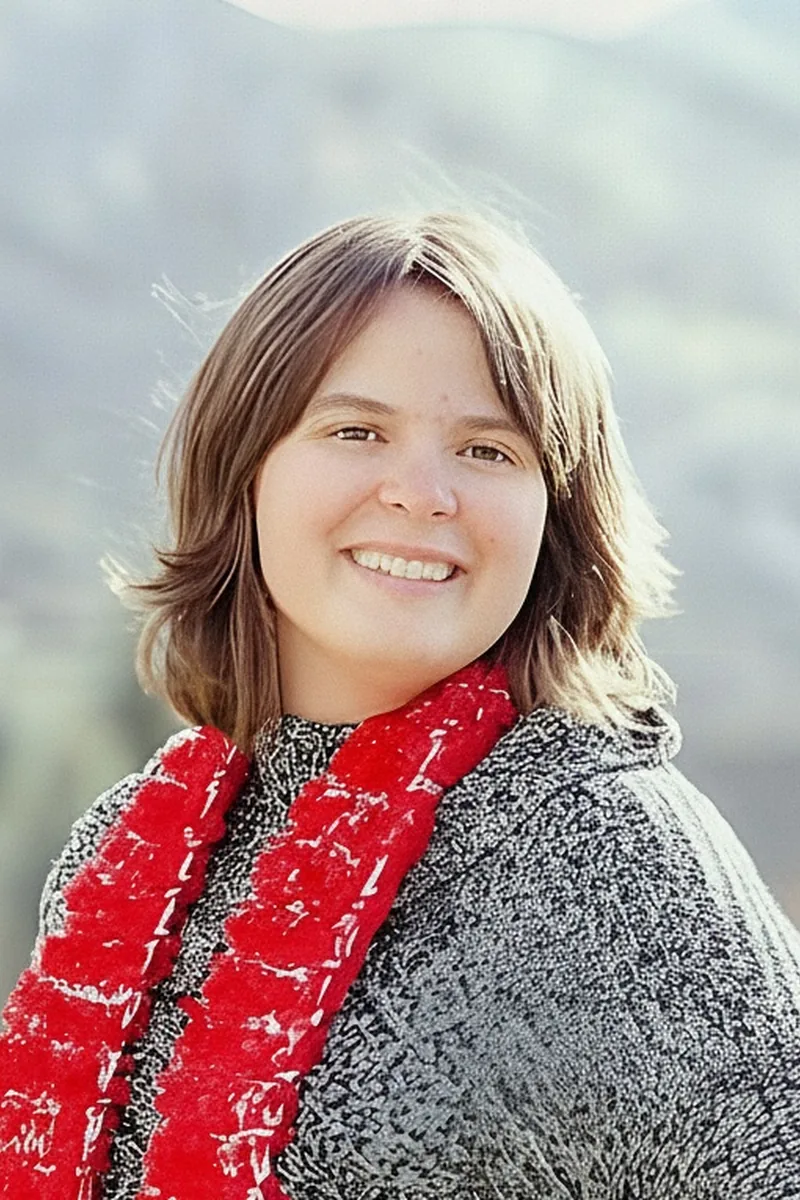
Before focusing on writing and psychology, Ali spent years tutoring peers through everything from fraction operations to quadratic equations. She's especially effective at identifying the specific step where a student's understanding breaks down — whether that's setting up a word problem or simplifying an algebraic expression — and rebuilding from there.

Joshua's math background spans pre-algebra through calculus and includes a 33 ACT composite, so he's comfortable whether a student is wrestling with fraction operations or tackling integration by parts. He emphasizes understanding the reasoning behind each step so that when a problem looks slightly different on a test, students aren't thrown off.
From elementary arithmetic through algebra and into calculus, Hidefusa adjusts his explanations based on where a student's understanding actually breaks down — whether that's fraction operations, solving systems of equations, or grasping limits. His quantitative training runs deep: statistics at the graduate level, econometrics, and data analysis are all part of his daily toolkit. That breadth means he can connect a middle schooler's ratio problem to the bigger mathematical reasoning it's building toward.
From arithmetic fundamentals through calculus, Spencer covers a wide range of math levels and knows where the common stumbling blocks sit — fractions and proportional reasoning early on, then the leap to abstract thinking when variables enter the picture. His science background means he naturally ties math concepts to real applications, which tends to make ideas like slope or rate of change click faster.
Whether a student is stuck on fraction operations or lost in early calculus, Ben identifies the exact conceptual gap holding them back and addresses that first. He teaches across the full math spectrum — from pre-algebra through calculus — which means he can trace a current struggle back to the foundational idea that didn't fully land the first time around.
As a math major at the University of Utah who's also pre-med, Rebecca lives in the overlap between abstract mathematical thinking and applied problem-solving — she knows what it takes to push through a tough proof and also why quantitative fluency matters in fields well beyond mathematics. Her 34 ACT and 5.0 tutoring rating back up what her course load suggests: she can break down everything from fraction operations to calculus concepts with the clarity of someone who genuinely loves the subject.
Kristina's math background stretches from early arithmetic through calculus and quantitative reasoning, which means she can spot exactly where a gap in understanding started — even if the student is struggling several grade levels later. She traces confusion back to the specific concept that didn't click and rebuilds from there, whether that's place value for a second grader or proportional reasoning for a middle schooler.
From basic multiplication tables through pre-algebra concepts like order of operations and working with fractions, Heather covers the math fundamentals that set students up for every course that follows. Her Elementary Education program at BYU emphasized teaching math conceptually — using visual models and manipulatives so students understand why a method works, not just how to follow the steps.
Having tutored primarily in math, test prep, and Spanish, Jared knows how to switch between structured problem-solving and pattern recognition depending on what a student actually needs — whether that's setting up equations from scratch or debugging a process that keeps going sideways. His National Merit scholarship and 34 ACT back up the fundamentals, but it's his breadth across algebra, calculus, and applied business math that lets him connect topics students often treat as unrelated. Rated 4.9 by clients.
Joseph's teaching background spans elementary through middle school math topics like fractions, ratios, and introductory algebra. He emphasizes word problem translation — turning a confusing paragraph into a clear equation — which draws on his English training in close reading. Students who struggle with math often struggle with the language of math, and that's exactly where Joseph bridges the gap.
From 1st-grade arithmetic through calculus, Matthew covers an unusually wide span of math levels — and his 35 ACT and 1530 SAT confirm he's not just broad but sharp across all of them. What sets him apart is his background as an avid reader and writer, which gives him a knack for untangling word problems and teaching students to translate messy real-world language into clean mathematical setups. Rated 4.8 by students.
Kristin covers math from elementary arithmetic through calculus, but what sets her apart is her ability to trace a concept across levels — showing how fraction operations in fifth grade connect to rational expressions later on. Her 32 ACT composite reflects the kind of cross-topic fluency that keeps students from treating each math unit as an isolated chapter.
Biophysics forces you to treat math as a language for describing real systems — diffusion equations, force vectors, thermodynamic models — so Benjin's coursework keeps him fluent in the kind of applied problem-solving that makes algebra and calculus feel purposeful. His 36 ACT composite means the fundamentals are locked in, but his real edge is remembering what it felt like to not understand something, which makes him quick to reframe a concept three different ways until one lands.
Rachel tackles math by connecting abstract procedures to concrete reasoning, especially for students who feel more at home with words than numbers. Her 33 ACT composite reflects sharp quantitative skills, and she's particularly effective at translating word problems into equations — a crossover skill her communications background makes intuitive.
Grace's English major training means she spends her days dissecting structure and logic in texts — skills that map directly onto parsing word problems and organizing multi-step solutions where sloppy reasoning leads to wrong answers. She's particularly sharp at teaching students to slow down and identify what a problem is actually asking before jumping into calculations, a habit that cleans up careless mistakes across everything from algebra to basic calculus.
Seven years of tutoring across subjects taught Samantha that math anxiety usually isn't about the math — it's about a student convinced they're "not a math person" after one bad experience with fractions or negative numbers. Her English teaching training at BYU actually sharpens her approach: she listens carefully to how a student explains their thinking, catches the precise language that reveals a misconception, and reframes the idea until it clicks. She scored a 34 on the ACT and is rated 5.0 by students.
Miles teaches pre-algebra through calculus, but his real edge shows up when students hit word problems — his extensive writing and composition background means he can quickly untangle what a question is actually asking and teach students to do the same. He approaches math the way he approaches a piece of writing: break the structure down, figure out what each part is doing, then build it back up step by step. Rated 5.0 by students.
Real-life applications make abstract math click, and Garrett leans heavily on visual models and analogies drawn from physics and earth science to make concepts tangible. Whether a student is struggling with fractions or working through function notation, he connects each idea to something concrete so the reasoning sticks longer than a memorized formula.
From arithmetic through precalculus, Kendall connects each new math concept to the reasoning behind it so that students aren't just memorizing steps they'll forget by next chapter. Her physics degree required fluency across algebra, geometry, trigonometry, and data analysis — the same topics that come up across middle and high school math curricula. She's rated 5.0 and scored a 35 on the ACT.
I am a teacher that loves to teach grammar, vocabulary, writing, reading. ACT Prep. I love to travel and ride motorcycles. I am an avid reader.
Grey earned his B.S. in Physics at the University of Utah, which meant living inside math daily — from algebra and trigonometry through differential equations and linear algebra. Whether a student is working through fraction operations for the first time or wrestling with integration techniques, he digs into the reasoning behind each step so the next problem doesn't feel like starting over. Rated 4.7 by students.
Kjirsten covers math fundamentals through early algebra, emphasizing the conceptual reasoning behind operations rather than rote procedure. She's particularly effective at translating word problems into mathematical expressions — a skill her communication training makes second nature. Students who freeze when they see a story problem tend to find her step-by-step breakdown approach clicks quickly.
From pre-algebra through calculus, Taylor sees math as one connected language rather than a series of disconnected courses. His engineering background means he constantly uses algebra, geometry, and calculus together to solve real problems — and he brings that integrated perspective when unpacking whatever concept a student is stuck on.
Physics demands serious math fluency, and Matthew's Applied Physics coursework at BYU means he's spent years using algebra, geometry, and calculus to solve real problems — not just textbook exercises. He breaks down concepts like proportional reasoning, unit conversions, and multi-step problem solving by connecting them to how things actually work in the physical world. His 34 ACT composite speaks to the kind of cross-subject mathematical thinking he brings to every session.
Studying applied and computational mathematics means Kacey doesn't just solve problems — she understands the underlying structures that connect arithmetic patterns in elementary school to the abstraction of calculus, which makes her unusually effective across the full K-12 math spectrum. She scored a 33 on the ACT and carries a 4.8 rating, and her computational training gives her a knack for teaching students to spot efficient solution paths instead of grinding through every problem the slow way.
From arithmetic fundamentals through calculus, John covers the full range of math topics and is especially strong at spotting the exact concept where a student's understanding breaks down. His physics degree required constant mathematical problem-solving — not just computing answers but understanding why a particular method works — and he brings that same emphasis on reasoning to every session.
A biology degree requires more math than most people expect — from statistical analysis in genetics to logarithmic models in population ecology — and Brett has put all of it to use. He breaks down problems involving fractions, proportions, and algebraic reasoning by connecting them to real scenarios, making abstract operations feel less arbitrary. Rated 5.0 by students.
Scoring a 1520 SAT and 33 ACT required Helaman to be sharp across arithmetic, algebra, geometry, and data analysis — and he draws on that range when working across grade levels. Whether a student is stuck on fraction operations or wrestling with quadratic equations, he pinpoints the specific gap causing confusion rather than re-teaching an entire chapter.
Eric's background in mechanical engineering means he doesn't just teach math procedures — he shows students how concepts like proportional reasoning, number sense, and algebraic thinking actually connect to real problems. Whether it's fractions tripping someone up or variables feeling abstract for the first time, he traces the confusion back to its root before moving forward. Rated 5.0 by students.
From pre-algebra fundamentals through Calculus 2, Samantha covers an unusually wide range of math and understands how each level builds on the last. Her engineering background means she can show students where abstract concepts like slope, systems of equations, or function behavior actually show up in real problems — which tends to make the material click faster.
From arithmetic shortcuts to setting up proportions and working with fractions, Jared breaks math problems into clear, repeatable steps that stick. His finance coursework at BYU keeps him immersed in applied math daily — calculating compound interest, analyzing data sets, building models — so he brings real context to why these skills matter. Rated 5.0 by students.
Whether a student is wrestling with fraction operations in middle school or function transformations in high school, Joseph identifies the specific conceptual gap holding them back and addresses that directly. His computational mathematics coursework spans everything from abstract algebra to numerical methods, giving him a deep bench of knowledge to draw from. Rated 5.0 by students across a wide range of math levels.
Hi, my name's Jeff. I'm 34 years old and I live in the United States of America. I received a bachelor's of science in biochemistry from Brigham Young University. With the hard sciences, you have to take a methodical and meticulous approach to learning. I believe this applies to teaching as well. I used this methodology when I taught English for two years in the Ukraine. I worked with multiple small groups, each with their own leader who I had chosen for their skill. They would perform their exercises while I would monitor their progress. We would also have a discussion afterward about topics that concerned or interested them. When I have time to myself, I enjoy keeping both my body and mind sharp. To achieve this, I like learning other languages as well as practicing gymnastics. I am also interested in reading scientific articles because I want to keep up with current developments in my field.
I'm patient, personable, and have an incredible gift for explaining things in a way that makes sense. I majored in Math Education (with a minor in Computer Science), and I have more than eight years of experience teaching math and other STEM subjects.
I am dedicated, passionate, patient, and enthusiastic. I am also empathetic, and above all, I love teaching..Helping students is fulfilling because it allows educators to inspire and empower young people to reach their full potential.Believing in the student's potential to develop into extraordinary young learners.I'm passionate about education,and I'm actively engaged in various activities that promote learning and knowledge sharing.I volunteer at local schools,helping students with their studies and providing mentorship.I do believe that passion in education acts as a guiding light that motivates students to excel in their academic endeavors.It fuels one's determination,resilience,and performance leading to holistic growth and success.And ignites a fire within students,pushing them to go the extra mile in pursuit of their goals.Increased resilience when faced with setbacks,drives the student to bounce back stronger,learning valuable lessons along the way.Passion in education,lead the students to strive for excellence,resulting in a higher level of achievement in their academic pursuits.
When math stops making sense, it's usually because a key earlier concept — fractions, proportional reasoning, or how variables actually work — didn't fully land. Yu is skilled at pinpointing exactly where that gap is and rebuilding understanding from there. Her Harvard education background means she doesn't just re-explain the same way louder; she finds a different angle that matches how each student thinks.
While Brittney's primary expertise is in English and literature, she also tutors math and brings the same structured, step-by-step reasoning she applies to literary analysis. Her SAT composite of 1440 reflects strong quantitative skills, and she's particularly effective at translating word problems into mathematical language for students who think more verbally.
Solange approaches math as a subject that rewards structured thinking over speed, breaking problems into logical steps students can follow and eventually internalize. Her 34 ACT composite reflects sharp quantitative reasoning, and she applies that same methodical approach to arithmetic, pre-algebra, and foundational concepts that younger or struggling students need to build confidence.
A biology major at Penn, Shayan brings a scientist's precision to math — breaking down word problems into variables, teaching proportional reasoning through real-world dosage calculations, and making algebra feel like a tool rather than an abstract exercise. His tutoring spans everything from fractions and ratios up through calculus, and he's rated 5.0 by students.
Medical school at Baylor forced Sugi to live inside quantitative reasoning — pharmacokinetics, biostatistics, interpreting dose-response curves — all built on the algebra and calculus fundamentals she mastered while earning a dual degree in Cognitive Science and Biochemistry at Rice. That science-heavy path means she teaches math as something with real stakes and real applications, connecting concepts like rates of change or exponential growth to problems students can actually visualize. She scored a 36 on the ACT and is rated 5.0 by students.
Testimonials
Because the right Math tutor makes all the difference.
Average Session Rating – Based on 3.4M Learner Ratings
Practice Math
Free practice tests, flashcards, and AI tutoring for Math
Nearby Math Tutors
Other Ogden Tutors
Related Math Tutors in Ogden
Frequently Asked Questions
Getting started is simple—tell us about your student's current math level, specific challenges, and goals. Varsity Tutors will connect you with a tutor who understands Ogden's school curriculum and can personalize instruction to fill gaps and build confidence. Your first session focuses on understanding where your student is and creating a plan that works for them.
This is one of the most common challenges in math—students memorize procedures without grasping underlying concepts. Expert tutors help bridge this gap by connecting procedural steps to the bigger picture, showing patterns, and explaining the reasoning behind each step. When students understand the 'why,' they can tackle unfamiliar problems with confidence and retain what they learn much longer.
Word problems require students to translate real-world scenarios into math—a skill that takes practice and strategy. Tutors work with students to break problems into manageable steps: identifying what's given, what's being asked, and which operations apply. With guided practice and explicit problem-solving strategies, students learn to see word problems as puzzles they can solve rather than sources of anxiety.
Absolutely. Math anxiety often stems from past struggles or feeling rushed in a classroom setting. Personalized 1-on-1 instruction creates a low-pressure environment where students can ask questions, make mistakes safely, and see their own progress. As students experience success with concepts they previously found confusing, confidence naturally grows—and that mindset shift is often as valuable as the math skills themselves.
Yes. Varsity Tutors connects you with tutors who are familiar with Ogden's school districts and the various textbooks and approaches they use—whether it's traditional algebra sequences, integrated math programs, or other frameworks. This curriculum knowledge means tutors can align their instruction with what your student is learning in class and help bridge any gaps between different teaching styles.
Graphing and equations often trip students up because they require both procedural accuracy and visual-spatial understanding. Tutors break these topics into clear steps, use visual representations to show what's happening, and have students practice with varied examples until patterns click. With personalized guidance, students move from confusion to seeing how equations, graphs, and real-world situations connect.
Showing work isn't just about getting the right answer—it reveals your student's thinking process and helps identify where mistakes happen. Tutors emphasize clear, organized work from the start, teaching students to communicate their reasoning step-by-step. This habit not only improves grades but also deepens understanding, since the act of writing out steps forces clearer thinking and makes it easier to catch errors.
Proofs are a major shift for many students—they require logical reasoning and the ability to justify every step, which feels abstract compared to earlier math. Tutors help students understand proof structure, teach them to identify what they know and what they need to prove, and guide them through practice with increasingly complex problems. With scaffolded support, students develop the logical thinking skills proofs demand.
Let’s find your perfect tutor
Answer a few quick questions. We’ll recommend the right plan and match you with a top 5% tutor.