Award-Winning AP Calculus AB Tutors
serving Ogden, UT
AP Calculus AB
Tutors in Ogden
Private 1-on-1 tutoring, weekly live classes for academic support, test prep & enrichment, practice tests and diagnostics, and more to elevate grades and test scores.
Based on 3.4M Learner Ratings
UniversitiesSchools & Universities
DeliveredHours Delivered
ProficiencyGrowth in Proficiency
Who needs tutoring?
No obligation. Takes ~1 minute.
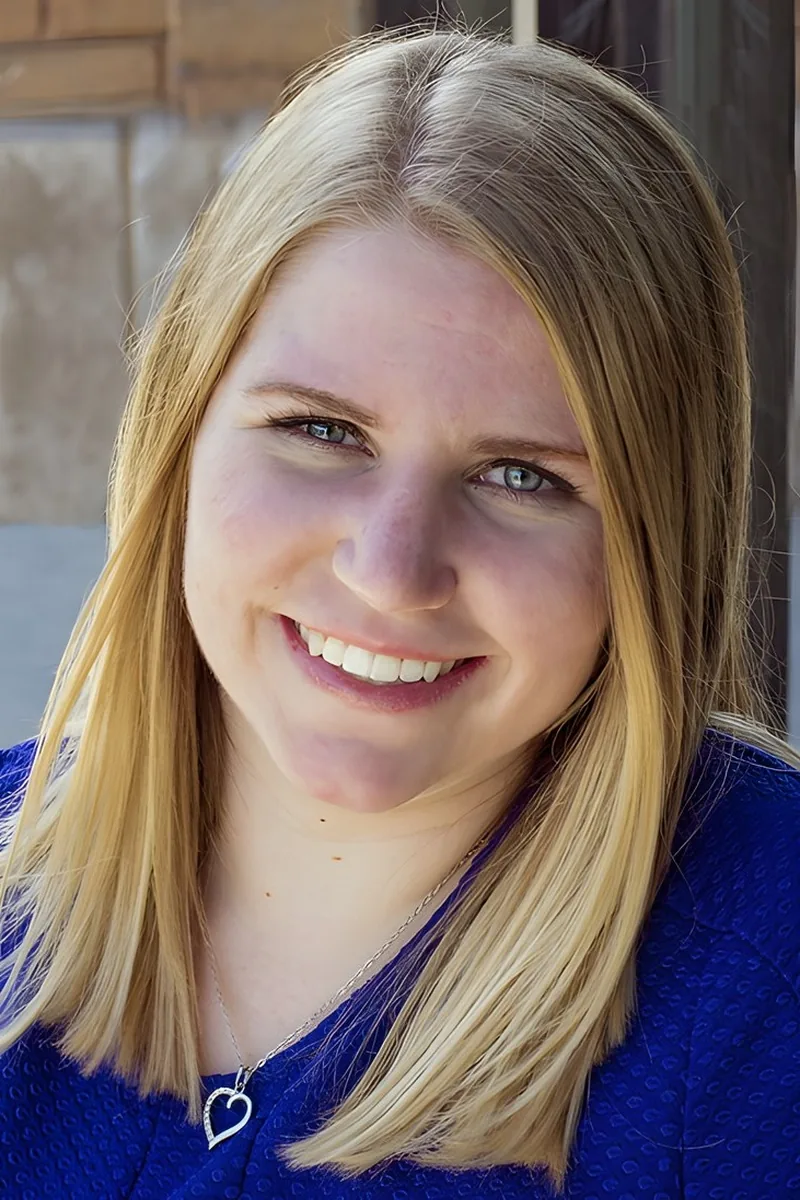
Limits, derivatives, and integrals click faster when someone can explain the reasoning behind each rule instead of just demonstrating steps. Rebecca's math coursework at the University of Utah means she understands AB Calculus at a depth that lets her trace every concept back to why it works — from the chain rule to related rates to area between curves.

My tutoring approach is one of coaching, mentoring, and helping the student understand exactly what level and detail of help that they need to get ahead. Combining the personal discipline learned during 20 years as a Naval Officer with the unique expertise learned in one-on-one communication with peers and sailors as well as my five children, I can help you or your child succeed. A Bachelor's in Electrical Engineering, and a Math Minor help qualify me for tutoring in many subjects. My individualized tutoring methods also raised my step-son's Physics grade from a C to an A in one semester. I specialize in mathematics (basic arithmetic through calculus) but can help in many other subjects. Learning should be fun, but should also, at times, bring "Instant" results. I work to keep positive encouragement in every lesson, tutoring, or test preparation session. I speak fluent Spanish!
Garrett's own AP Calculus AB course in high school laid the groundwork for a math minor at CU Boulder, so he knows exactly which concepts — limits, the chain rule, related rates — tend to trip students up on the exam. He leans on visual aids and real-world applications to make ideas like Riemann sums and the Fundamental Theorem click intuitively. Rated 4.8 by students.
Limits, derivatives, and the Fundamental Theorem of Calculus all click faster when a student sees them in action — and Grey's physics background gives him a deep well of real-world applications to draw from. He earned his B.S. in Physics at the University of Utah, where he also tutored fellow students through the campus academic center. Rated 4.7 by students, he emphasizes doing problems over passively watching solutions.
The leap from memorizing derivative rules to actually applying them — related rates, optimization, accumulation functions — is where most AP Calc AB students stall. Kacey unpacks each problem type by connecting it back to the graphical and numerical reasoning that the AP exam rewards, not just the algebraic shortcuts.
I'm patient, personable, and have an incredible gift for explaining things in a way that makes sense. I majored in Math Education (with a minor in Computer Science), and I have more than eight years of experience teaching math and other STEM subjects.
Between a mechanical engineering background and teaching across differential equations, physics, and trigonometry, Eric has the kind of cross-subject fluency that makes him especially good at explaining why a derivative describes instantaneous rate of change — not just how to find one using the power rule. He zeroes in on the conceptual transitions that trip up AB students, like moving from average to instantaneous rates or connecting a function's graph to its antiderivative's behavior. Rated 5.0 by students.
Limits, derivatives, and integrals each build on the last — so one shaky concept can snowball fast in AP Calculus AB. Samantha's engineering studies at the University of Utah keep her fluent in every core AB topic, from the chain rule to Riemann sums to related rates problems. She walks through each problem type with enough repetition that the logic clicks, not just the steps.
My name is Jackson, and I have a passion for math and physics (I know, super nerdy). I graduated with a Bachelor's in Physics and a minor in mathematics, and I love helping students understand concepts in both these fields. I have one year of tutoring experience in college/AP-level physics and math (particularly calculus), and I tutor all levels of math and physics. I am a firm believer that there is no such thing as a "math" person. Math and Science are for everyone! That being said, I know these topics can be intimidating to many. I aim to help students understand the foundations of these subjects and prepare them to be better STEM learners.
The jump from pre-calc to AP Calculus AB trips up students who memorized trig identities and function rules without understanding why they work. Kerr rebuilds that foundation by unpacking derivatives and integrals as ideas — rates of change and accumulated quantities — before drilling the mechanics of chain rules and Riemann sums. Rated 4.9 by students, he brings a concept-first approach shaped by his quantitative coursework at Vanderbilt.
The jump from pre-calculus to AP Calculus AB is often the biggest conceptual shift in a student's math career — suddenly everything revolves around rates of change and accumulation. Julie's philosophy background at Princeton sharpened her ability to explain abstract ideas with clarity, and she applies that skill to unpacking limits, derivatives, and the Fundamental Theorem. She earned a 1570 SAT and teaches math at every level, so she knows how to bridge gaps in algebra or trig that can hold AB students back.
When limits and derivatives feel like arbitrary rules, it often helps to have a tutor who genuinely enjoys the logic underneath — James pairs a math background with the kind of close-reading discipline that comes from studying paleography, which means he's unusually patient at walking through each step of a proof or free-response setup until the reasoning is airtight. His 1590 SAT and 5.0 rating back up an approach that prioritizes understanding why L'Hôpital's Rule or the Fundamental Theorem works, not just when to apply it.
Princeton's aerospace engineering program throws you into differential equations and multivariable calculus early, which means Fred had to master the AB fundamentals — limits, derivatives, integration techniques — so thoroughly that they became second nature before the harder material piled on. That depth shows when he teaches topics like the chain rule or area between curves, where he can explain not just the procedure but the reasoning that makes it transferable to unfamiliar exam questions. His 1550 SAT speaks to the same precision he brings to breaking down free-response setups.
Limits, derivatives, and integrals each build on the last, so a shaky understanding of one topic creates problems that compound through the entire AP Calculus AB curriculum. Alex's applied math background at Stanford keeps him immersed in calculus daily, and he teaches the chain rule, related rates, and accumulation functions by tying abstract procedures to the reasoning behind them. Rated 4.8 by students.
Three engineering degrees mean Andrea has spent years where calculus isn't a course but a daily language — computing derivatives to analyze mechanical stress, integrating to find volumes and energy transfers across systems. That fluency shows up most when she teaches limits and continuity, building the conceptual scaffolding that keeps students from hitting a wall once the AB curriculum reaches the Fundamental Theorem. Her 32 ACT and 4.8 rating back up an approach grounded in genuine mechanical intuition.
The jump from Pre-Calc to AP Calculus AB trips up students who never fully grasped limits or the logic behind the chain rule. Daniel's approach is to rebuild each concept from scratch when needed — he's an applied math major who got where he is by sitting with hard material until it clicked, not by breezing through it. That means he knows exactly where the confusion usually lives in topics like related rates, Riemann sums, and the Fundamental Theorem.
Neuroscience research at places like the Jungers Center and Oregon National Primate Research Center means Daniel has spent real time using calculus to model biological data — fitting curves to neural signals, differentiating rate functions, interpreting what a change in slope actually means in a living system. That research instinct sharpens how he teaches AB topics like the chain rule and definite integrals, because he's used to asking what the math is telling you before jumping to computation. His 1530 SAT and biomedical engineering coursework at Rice anchor the quantitative rigor behind his approach.
Mechanical engineering at Harvard means Christopher builds with calculus daily — every force balance is a derivative, every energy calculation an integral — so the AB curriculum maps directly onto problems he's already solving in his coursework. He's especially sharp at teaching students how to navigate optimization and area-between-curves setups, where translating the scenario into the right expression is the real challenge. His 35 ACT and 4.8 rating back up an approach grounded in engineering intuition rather than formula memorization.
Having tutored college students through calculus at Harvard while majoring in chemistry, James knows exactly where AB students hit friction — limits that seem pointless, the conceptual jump to integration, and free-response problems that demand more than mechanical differentiation. His approach leans on building the reasoning behind each technique, so when the exam asks students to justify a answer using the Mean Value Theorem or interpret a definite integral in context, the logic is already there. A 1570 SAT and 4.9 rating back up the precision he brings to every session.
Between a 35 ACT and a computer science track at Rice, Rishi's calculus foundation is built on the kind of mathematical rigor that treats limits, derivatives, and integrals as interconnected ideas rather than isolated chapters. He's especially sharp at showing students how recurring patterns — like the relationship between a function and its rate of change — thread through the entire AB curriculum, making each new topic feel like an extension of something they already know. His schedule as a Division I golfer also means he values efficiency, so sessions stay focused and waste nothing.
Studying chemical engineering and math at Vanderbilt means Greg lives in calculus — using derivatives to model reaction rates and integrals to balance mass and energy flows — so the AB curriculum's toughest concepts have a concrete anchor in his everyday coursework. His 1550 SAT and 5.0 tutoring rating back up an approach that emphasizes building each problem's setup from the physics or chemistry it describes, which is exactly the skill that separates strong free-response scores from mediocre ones.
Testimonials
Because the right AP Calculus AB tutor makes all the difference.
Average Session Rating – Based on 3.4M Learner Ratings
Practice AP Calculus AB
Free practice tests, flashcards, and AI tutoring for AP Calculus AB
Nearby AP Calculus AB Tutors
Other Ogden Tutors
Related Math Tutors in Ogden
Frequently Asked Questions
AP Calculus AB covers limits, continuity, derivatives, and integrals—the foundational concepts of single-variable calculus. The course emphasizes understanding rates of change, optimization problems, and accumulation, with roughly 60% of the exam focusing on derivatives and 40% on integrals. Tutors can help you master each unit's conceptual foundation and develop the problem-solving strategies the AP exam rewards.
Score improvement depends on your starting point and consistency, but personalized 1-on-1 instruction typically helps students close knowledge gaps much faster than classroom review alone. Many students see meaningful gains by focusing on their weakest topics—whether that's derivative rules, integration techniques, or applied problems—and practicing with real AP exam questions under timed conditions.
Students often struggle with the conceptual leap from algebra to limits, applying derivative and integral rules correctly, and translating word problems into mathematical models. Time management is another major challenge—the AP exam requires both computational accuracy and strategic pacing. Tutors can break down these concepts into digestible pieces and build your confidence through targeted practice.
The AP Calculus AB exam is 3 hours and 15 minutes, split into two sections: a 105-minute multiple-choice section (45 questions, half with a calculator and half without) and a 90-minute free-response section (6 questions, also split between calculator and non-calculator). Success requires both accuracy and strategic time allocation, which tutors can help you develop through practice tests and timed drills.
Most students benefit from consistent preparation throughout the school year, but if you're starting closer to exam day, even 4-6 weeks of focused tutoring can help you solidify weak areas and build test-taking confidence. The key is identifying your specific gaps early and practicing with real AP questions—tutors can accelerate this process by targeting exactly what you need to improve.
Look for tutors with strong calculus backgrounds—ideally with college-level math experience or AP exam teaching history. They should understand both the conceptual foundations and the specific demands of the AP exam format, including time management and multiple-choice strategy. Varsity Tutors connects you with expert tutors who can tailor their approach to your learning style and exam goals.
Your first session typically includes a diagnostic assessment to identify your current strengths and gaps—whether that's conceptual understanding, computational skills, or test-taking strategy. From there, your tutor will create a personalized study plan focused on the topics where you need the most support, so you make the most of your preparation time.
Ogden's 8 school districts serve over 29,000 students, and many high schools offer AP Calculus AB courses with strong math programs. Beyond classroom instruction, personalized tutoring provides the focused, one-on-one support that helps you master challenging concepts and build exam confidence—especially valuable given typical classroom sizes and the need for individualized pacing.
Let’s find your perfect tutor
Answer a few quick questions. We’ll recommend the right plan and match you with a top 5% tutor.