Award-Winning AP Calculus BC Tutors
serving Ogden, UT
AP Calculus BC
Tutors in Ogden
Private 1-on-1 tutoring, weekly live classes for academic support, test prep & enrichment, practice tests and diagnostics, and more to elevate grades and test scores.
Based on 3.4M Learner Ratings
UniversitiesSchools & Universities
DeliveredHours Delivered
ProficiencyGrowth in Proficiency
Who needs tutoring?
No obligation. Takes ~1 minute.
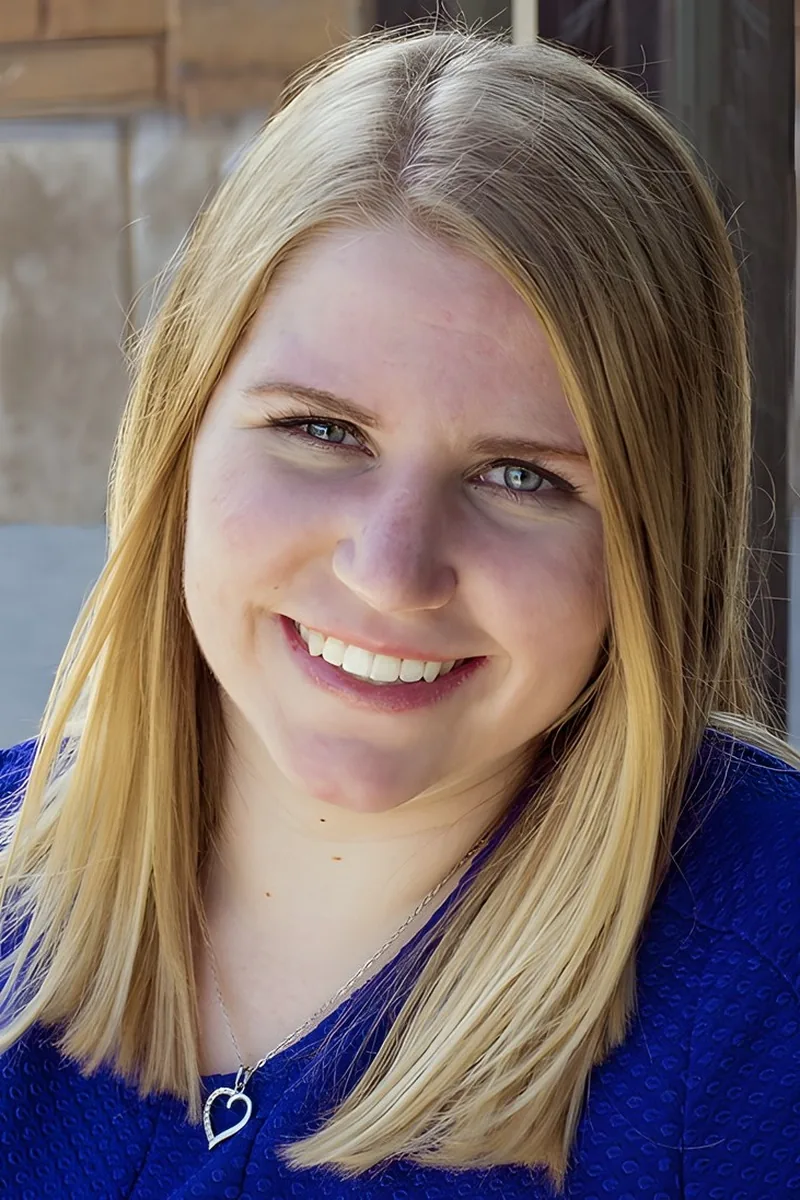
BC Calculus covers everything in AB plus topics like Taylor and Maclaurin series, parametric equations, and polar coordinates — all of which Rebecca tackles regularly as a University of Utah math major. She breaks down convergence tests and integration techniques in ways that build real intuition, not just formula memorization. Rated 5.0 by students.

Grey's physics degree from the University of Utah means he didn't just take BC Calculus — he spent years applying series expansions, parametric equations, and differential techniques to real physical systems where getting the math wrong meant getting the physics wrong. That background makes him especially effective at unpacking why a particular convergence test applies or how polar and parametric representations connect back to the core derivative and integral ideas students carried over from AB. Rated 4.7 by students.
BC Calculus piles convergence tests, parametric equations, and polar integration on top of an already demanding AB curriculum, so pacing matters as much as comprehension. Kacey's applied and computational math coursework means she uses series and differential equations daily, and she teaches students to recognize which technique a problem is really asking for before they start writing. Rated 4.8 by past students.
I'm patient, personable, and have an incredible gift for explaining things in a way that makes sense. I majored in Math Education (with a minor in Computer Science), and I have more than eight years of experience teaching math and other STEM subjects.
Mechanical engineering at the University of Utah means Samantha is actively using series expansions, parametric equations, and advanced integration in her coursework — so when she teaches BC topics like Taylor polynomials or convergence tests, she's drawing on problems she solved last week, not concepts she memorized years ago. She's particularly effective at walking through the logic of why each convergence test applies in a given situation, turning what feels like guesswork into a clear decision process.
Computational mathematics as a major means Joseph isn't just learning BC techniques like convergence tests and Taylor series — he's studying the algorithms and numerical methods those techniques feed into, which gives him an unusually clear picture of why each concept matters beyond the AP exam. His 33 ACT and 5.0 tutoring rating back up an approach that traces every new BC idea to the AB reasoning underneath it, so topics like parametric derivatives or the Lagrange error bound land as logical next steps rather than disconnected formulas.
Quantum cosmology research requires building solutions out of infinite series and differential equations — tools Zachary uses daily that map directly onto BC's core territory of Taylor polynomials, convergence analysis, and advanced integration. His physics and math training at Utah State means he teaches these topics by grounding them in the physical intuition behind the formulas, so a concept like the Lagrange error bound becomes a question about how closely your approximation tracks reality rather than just another memorized inequality.
My name is Jackson, and I have a passion for math and physics (I know, super nerdy). I graduated with a Bachelor's in Physics and a minor in mathematics, and I love helping students understand concepts in both these fields. I have one year of tutoring experience in college/AP-level physics and math (particularly calculus), and I tutor all levels of math and physics. I am a firm believer that there is no such thing as a "math" person. Math and Science are for everyone! That being said, I know these topics can be intimidating to many. I aim to help students understand the foundations of these subjects and prepare them to be better STEM learners.
Scoring a 36 on the ACT while majoring in chemistry at MIT means Nicholas lives in the overlap where rigorous math meets scientific application — and BC Calculus sits right at that intersection. He's especially good at breaking down series convergence and integration techniques by grounding them in the kind of approximation problems he encounters in physical chemistry coursework, so the logic behind a ratio test or a Taylor expansion feels earned rather than arbitrary. Rated 5.0 by students.
Biomedical engineering at Yale means Jonathan lives in the calculus that comes after most students stop — modeling biological systems with differential equations, approximating nonlinear tissue behavior with series expansions, running convergence analysis on numerical simulations. That daily exposure makes him especially effective at teaching the logic behind the ratio and integral tests, because he's seen firsthand what happens when you pick the wrong one. Holds a 5.0 rating.
Biomedical engineering at Cornell throws parametric modeling, series approximations, and heavy integration at Annie every semester — BC Calculus is essentially the prerequisite language for her entire degree. Her year as a teaching assistant for introductory biology sharpened her instinct for spotting exactly where a student's reasoning goes sideways, whether it's a shaky limit concept underneath a convergence test or a misread of how polar area integrals accumulate. Rated 4.9 by students.
Winning Duke's DT Stallings Award for sustained tutoring of local school students means Taariq has logged serious hours watching where calculus understanding actually breaks down — and BC's leap into series, parametric curves, and advanced integration is where breakdowns happen fastest. His math degree from Duke gives him the theoretical grounding to trace a student's confusion with, say, a ratio test or a polar area integral back to the specific AB concept that isn't solid yet. Rated 4.9 by students.
Running a peer-tutoring program in high school meant Ryan spent years diagnosing exactly where classmates got stuck on calculus problems — a skill he's sharpened further through his civil engineering coursework at Cornell, where series expansions and integration techniques show up constantly in structural analysis and fluid mechanics. He breaks down the BC-specific leap into convergence tests and Taylor polynomials by grounding each new idea in the derivative and integral logic students built in AB. His 35 ACT and 4.7 rating speak to the precision he brings to every session.
BC Calculus throws students into series convergence tests, parametric equations, and polar coordinates — topics that feel disconnected unless someone ties them back to the core ideas of AB. Dylan's physics major at Vanderbilt means he uses calculus daily and can show exactly how Taylor series or integration by parts behave visually, not just symbolically. He turns abstract series into something students can sketch, interpret, and reason through on exam day.
Penn's economics program leans heavily on calculus-driven modeling, and Mandy is working through that curriculum right now — which means BC topics like series approximations and integration techniques show up in her coursework as tools for analyzing economic behavior, not just abstract exercises. She's especially clear at walking through the logic of convergence tests and connecting new BC material back to the AB foundations underneath it. Holds a 5.0 rating.
Series convergence tests, parametric equations, polar curves — BC Calculus piles on concepts fast, and falling behind on one unit can cascade through the rest of the course. Ethan breaks each new topic back to its AB foundation before building upward, so students see Taylor series and integration techniques as extensions of ideas they already own rather than entirely new material.
When students hit BC's convergence tests and feel like they're just memorizing a checklist of names — ratio, root, integral, comparison — Samuel reframes each test as a question about how a series behaves, turning rote steps into genuine reasoning. His applied mathematics coursework means he's actively using Taylor series and parametric models in contexts where getting the convergence wrong isn't just a lost point but a broken solution. That perspective, plus a 1590 SAT reflecting sharp quantitative instincts, keeps his teaching grounded in understanding rather than procedure-shuffling.
Biomedical engineering at Johns Hopkins means Bidyut uses series approximations and differential equations to model biological systems — the same convergence tests and integration techniques that define the BC curriculum beyond AB. He's especially sharp at showing how a topic like Taylor polynomial error bounds connects back to the derivative reasoning students already trust, turning what feels like a wall of new material into a logical extension. Holds a 5.0 rating and a 36 ACT composite.
BC Calculus throws students into convergence tests, parametric equations, and polar curves on top of an already demanding AB foundation — it's a lot to hold in your head at once. Corrina's mechanical engineering degree meant living in multivariable and differential equations daily, so she teaches series and integration techniques with the fluency of someone who actually uses them. Rated 4.7 by students.
Scoring a 36 on the ACT while studying Human Biology at Cornell means Sharan lives at the intersection of rigorous quantitative thinking and applied science — exactly where BC Calculus sits when series approximations and integration techniques start modeling real biological systems. She breaks down the AB-to-BC jump by treating topics like Taylor polynomials and convergence tests as logical extensions of limits and derivatives, not a separate universe of formulas to memorize. Rated 5.0 by students.
Testimonials
Because the right AP Calculus BC tutor makes all the difference.
Average Session Rating – Based on 3.4M Learner Ratings
Practice AP Calculus BC
Free practice tests, flashcards, and AI tutoring for AP Calculus BC
Nearby AP Calculus BC Tutors
Other Ogden Tutors
Related Math Tutors in Ogden
Frequently Asked Questions
AP Calculus BC builds on AB concepts and covers limits, continuity, derivatives, applications of derivatives, integrals, differential equations, sequences, series, and parametric/polar equations. The course moves faster than AB and includes additional topics like Taylor series and L'Hôpital's rule. For students in Ogden preparing for the May exam, a tutor can help you master both the foundational concepts and the advanced material unique to BC.
Score improvement depends on your starting point and consistency with practice, but students typically see meaningful gains when they work with a tutor to identify weak areas and build problem-solving strategies. Many students improve by 1-2 score points (on the 1-5 scale) by focusing on their specific challenges—whether that's understanding conceptual foundations, mastering integration techniques, or improving exam pacing. Starting tutoring several months before the exam gives you the best opportunity to solidify concepts and build confidence.
Students often struggle with the conceptual understanding of limits and derivatives, applying calculus to real-world problems, managing the pace of series and sequences material, and distinguishing between when to use different integration techniques. Time management during the exam is another major challenge—the multiple-choice section requires quick problem-solving, while the free-response section demands clear communication of your work. A tutor can help you practice these specific areas and develop strategies to work efficiently under test conditions.
Varsity Tutors connects you with expert tutors who assess your current understanding, identify gaps, and create a personalized study plan aligned with the AP Calculus BC curriculum and your exam timeline. Tutors work with you on conceptual understanding, problem-solving techniques, and practice with released AP exams and practice tests. Sessions typically focus on your weakest areas while reinforcing strengths, so you build both confidence and competence before test day.
Practice tests are essential—they help you understand the exam format, identify specific topics where you need work, and build your pacing strategy for the timed sections. Taking full-length practice exams under realistic conditions several times before May reveals patterns in your mistakes and helps you manage test anxiety. A tutor can review your practice test results with you, pinpoint whether errors stem from conceptual misunderstanding or careless mistakes, and adjust your study plan accordingly.
Ideally, start tutoring 3-4 months before the May exam if you're working to strengthen weak areas or improve your score significantly. If you're already performing well and just need targeted help with specific topics, even 6-8 weeks of focused tutoring can make a difference. Starting earlier gives you time to build conceptual understanding, practice extensively, and adjust your strategy based on practice test performance—rather than cramming in the final weeks.
Look for tutors with strong mathematics backgrounds, experience teaching or tutoring calculus, and familiarity with the AP Calculus BC curriculum and exam format. Ideally, they've helped multiple students prepare for the AP exam and understand common misconceptions and high-yield topics. When you connect with a tutor through Varsity Tutors, you can discuss their experience with AP Calculus BC specifically and ensure they're a good fit for your learning style and goals.
Varsity Tutors connects you with expert tutors who can provide personalized 1-on-1 instruction tailored to your AP Calculus BC needs and schedule. Whether you need help with specific topics, full-course review, or intensive exam prep, you can get matched with a tutor experienced in helping students in Ogden succeed on the AP exam. The process is straightforward—tell us your goals and timeline, and we'll connect you with the right tutor for your situation.
Let’s find your perfect tutor
Answer a few quick questions. We’ll recommend the right plan and match you with a top 5% tutor.