Award-Winning Python Tutors
serving Philadelphia, PA
Python
Tutors in Philadelphia
Private 1-on-1 tutoring, weekly live classes for academic support, test prep & enrichment, practice tests and diagnostics, and more to elevate grades and test scores.
Based on 3.4M Learner Ratings
UniversitiesSchools & Universities
DeliveredHours Delivered
ProficiencyGrowth in Proficiency
Who needs tutoring?
No obligation. Takes ~1 minute.
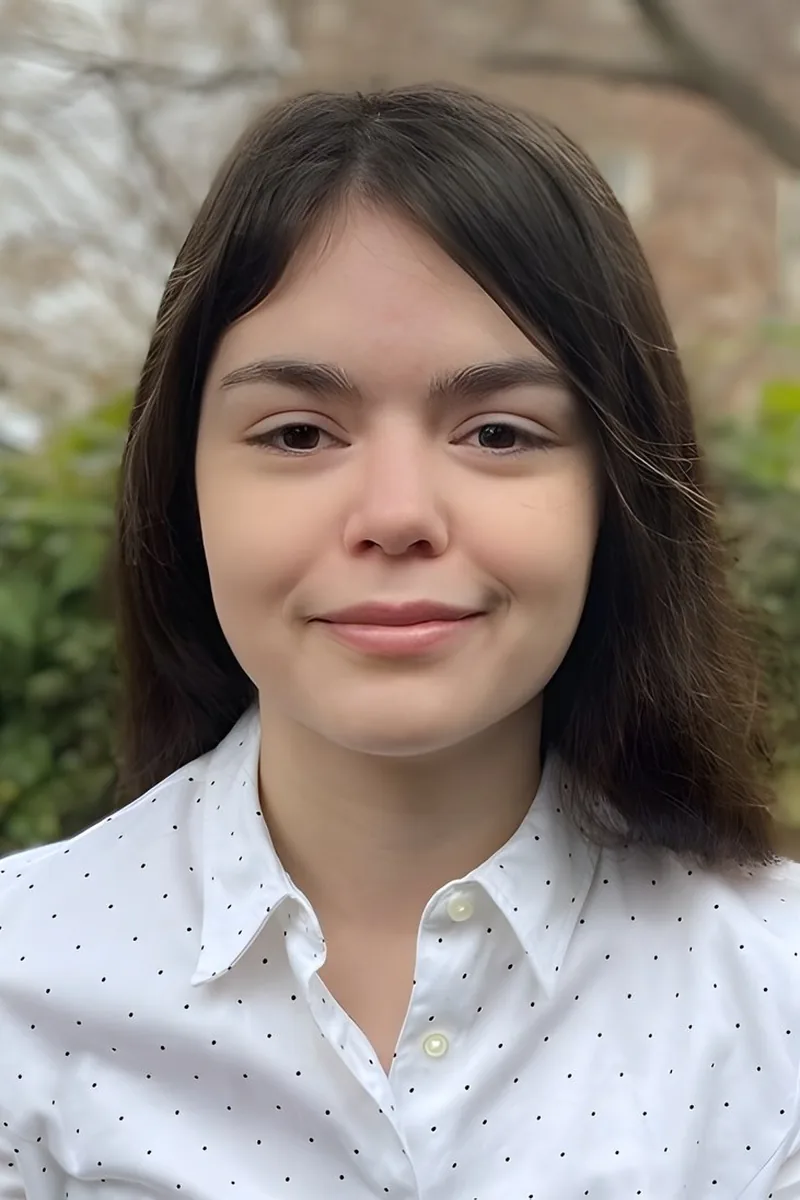
Sarah's statistics minor at Penn involved writing Python scripts for data analysis — cleaning datasets, building visualizations, and automating repetitive calculations. She teaches Python fundamentals like loops, functions, and data structures by connecting each concept to a concrete mini-project, so students see their code do something useful right away.

Between robotics coursework and biomedical engineering projects at Penn, Ronil writes Python to control hardware, process sensor data, and automate systems that bridge code and the physical world. That mechatronics context means he teaches scripting fundamentals — functions, loops, data handling — through projects where students can see their code actually make something move or respond. Rated 5.0 by students.
Annie uses Python daily in her biomedical engineering work at Cornell, from writing scripts to analyze immunotherapy research data to building computational models in MATLAB and Python side by side. She teaches core concepts like loops, functions, data structures, and libraries such as NumPy by connecting them to real problems — not just abstract exercises.
Python's readability makes it easy to start but deceptively tricky to use well — list comprehensions, generator expressions, and class design all require thinking beyond basic scripts. Matthew teaches Python through the lens of someone who uses it alongside heavier languages like C++ and Java, which gives students a clearer sense of when to reach for Pythonic shortcuts versus writing more explicit code.
Carnegie Mellon's engineering curriculum leans heavily on Python for everything from numerical simulations to data visualization, so Vincent writes and debugs Python code regularly. He breaks down core concepts like loops, functions, list comprehensions, and object-oriented design by building small projects that make abstract syntax feel purposeful.
Before tutoring Python, Lucas spent time as a lead instructor at Code Ninjas, teaching kids and teens to build actual games — which means he knows how to make a first programming language feel like a creative tool rather than a chore. His CS degree at Penn State covers Python, Java, and JavaScript, so he can explain Python-specific quirks like indentation rules and dynamic typing by contrasting them with how other languages handle the same ideas. Rated 4.9 by students.
Golda uses Python daily in her biomedical engineering coursework at Georgia Tech, writing scripts for everything from data analysis with NumPy to signal processing and automation. That real-world context means she teaches loops, functions, and libraries as tools for solving actual problems, not just abstract exercises. Rated 5.0 by students.
From writing simple scripts to building out data structures and working with libraries like NumPy, Python covers a huge range depending on where a student is. Ishaan's CS studies at Pitt mean he uses Python regularly and can walk through everything from list comprehensions to file I/O with clear, practical examples. Rated 4.9 by students.
Python's readability makes it a great first language, but students still stumble on list comprehensions, scope rules, and the difference between mutable and immutable types. Jared uses Python daily in machine learning and NLP work, so he teaches the language the way it's actually used — with an emphasis on writing clean, Pythonic code and understanding libraries like NumPy and pandas.
Debugging a script teaches more than any lecture, which is why Aditya structures Python sessions around actually building and fixing code — from basic syntax and control flow through libraries like NumPy and pandas. His professional experience fine-tuning large language models and developing AI systems at companies like Orfiq AI means he writes Python daily and knows the difference between code that merely runs and code that's clean, efficient, and readable.
Chemical engineering at Columbia means writing Python constantly — from modeling reaction kinetics to automating data analysis with NumPy and Pandas. Devin teaches Python the way he learned it: by building real scripts that solve actual problems, so concepts like loops, functions, and data structures click through practice rather than abstract exercises.
Python's readable syntax makes it a popular first language, but students still struggle when projects move beyond print statements into list comprehensions, file I/O, or object-oriented design. Sarah programs in Python as part of her computer science degree and walks through each concept with clear examples, building from simple scripts to more structured, modular code.
I am a graduate from Rochester Institute of Technology with a master's in Game Design and Development. My passions lie in everything related to games and mathematics. In the past, I have tutored various subjects in mathematics throughout high school and college, including but not limited to Algebra, Algebra II, Trigonometry, Calculus, Discrete Mathematics, Mathematics of Graphical Simulation, and Linear Algebra. As for technology, I am more than happy to reach out for help in Web Development (HTML, CSS, Javascript) or C# programming. I believe that every person can learn any topic. While every individual has different tastes, strengths, and weaknesses, there is no such thing as an "incapability" to know a subject. Education often possesses a guise of anti-fun, but I can promise you that all topics can be engaging, and I am willing to show you how engaging mathematics and technology can be. As a Game Designer, I have a deep interest in both playing games and making games. This includes games of all kinds: video games, board games, tabletop role-playing games, trading card games, miniatures, and even some sports like tennis or ping pong. Games act as a fantastic teaching tool. They teach by design without users recognizing. It is always a satisfying moment when somebody says "I learned that word from Magic" or "D&D taught me that." Remember: you can succeed. If something is important to you, then it's always worthwhile.
Python's readability makes it the go-to first language, but that simplicity hides real depth — list comprehensions, generators, decorators, and object-oriented design all trip up students who learned syntax without learning structure. Brandon uses Python daily in his AI and machine learning research at RIT and breaks down these intermediate concepts by building small, working projects rather than abstract exercises.
As an electrical and computer engineering student, Alfonso writes Python regularly for coursework involving data processing, automation, and problem-solving. He teaches core concepts like loops, conditionals, functions, and data structures by building small projects that show why each tool exists. Students pick up not just syntax but the logic of thinking like a programmer.
Tim writes Python daily as part of his Computational Neuroscience work at MIT, building scripts for data analysis and simulation rather than just textbook exercises. That real-world coding context means he can walk students through everything from basic syntax and control flow to libraries like NumPy and Matplotlib, connecting each concept to problems that actually do something interesting.
Learning Python is less about memorizing syntax and more about thinking through problems step by step — how to structure a loop, when to use a dictionary versus a list, why your function returns None instead of a value. Harry uses Python in his economics and math coursework for data analysis and modeling, so he teaches it with practical applications rather than abstract exercises. He walks through debugging methodically, turning error messages into learning moments.
Python's clean syntax makes it a great first language, but students still struggle when they hit list comprehensions, recursion, or the jump to libraries like NumPy and pandas. Firas uses Python daily in his machine learning research at Princeton, so he teaches it the way working engineers actually write it — readable, modular, and testable. He's equally comfortable introducing beginners to variables and control flow or walking advanced students through data pipelines.
Eric writes Python daily in Duke's data science program, working with pandas DataFrames, NumPy arrays, and visualization libraries like Matplotlib. He teaches coding the way he learned it — by building real projects, debugging line by line, and understanding why a list comprehension behaves differently from a for loop. Students walk away writing clean, functional scripts, not just copying syntax.
Having built projects in Java, JavaScript, C#, and Unity alongside his Penn State CS degree, Nicholas teaches Python with a polyglot programmer's perspective — he can pinpoint exactly where Python's syntax feels weird if you're coming from another language, and where its simplicity is a genuine superpower. He's especially sharp at debugging sessions, breaking down error messages and tracing logic step by step until students can diagnose their own code. Rated 5.0 by students.
TA'ing college-level computer science courses at MIT and Georgia Tech gave Isabella a clear picture of where students stumble in Python — from misunderstanding how mutable default arguments behave to writing tangled spaghetti code when a clean function would do. Her operations research background means she teaches Python as a tool for solving optimization and decision-making problems, not just passing intro assignments. Rated 5.0 by students.
From list comprehensions to class hierarchies to libraries like NumPy and pandas, Vincent covers Python at every level — whether a student is writing their first loop or building a machine learning pipeline. His computational science background at MIT means he doesn't just teach syntax; he connects each concept to practical problems in data analysis, automation, and algorithm design.
Stephanie's computer science degree from MIT means Python isn't just a language she picked up from a tutorial — she understands it from the ground up, from list comprehensions and dictionary manipulation to object-oriented design and algorithmic complexity. Whether a student is writing their first for-loop or debugging a recursive function, she explains the logic behind the syntax so concepts transfer to real projects.
Nicholas approaches Python through the lens of data and computation, drawing on his statistics background to teach not just syntax but how to think algorithmically. Whether it's writing functions, manipulating lists, or building loops for data analysis, he connects each concept to problems students actually want to solve. Rated 5.0 by students.
A computer science bachelor's and ongoing PhD work at Columbia and Chicago mean David writes code to answer research questions — scraping datasets, running statistical models, and automating the kind of tedious data processing that social science demands. That research-driven workflow translates directly into teaching Python, because he can show students how core concepts like loops, dictionaries, and file I/O come together in scripts that actually produce answers. Rated 4.9 by students.
Testimonials
Because the right Python tutor makes all the difference.
Average Session Rating – Based on 3.4M Learner Ratings
Other Philadelphia Tutors
Related Technology and Coding Tutors in Philadelphia
Frequently Asked Questions
Python tutoring covers everything from foundational syntax and data types to more advanced topics like functions, object-oriented programming, and working with libraries. Depending on your goals, you might focus on web development with frameworks like Flask or Django, data science with pandas and NumPy, game development, or general algorithmic thinking. A tutor can tailor the curriculum to match your interests and skill level, whether you're just starting out or building on existing knowledge.
Debugging is one of the most valuable skills in programming, and it's something that's hard to learn alone. A tutor can teach you systematic approaches to reading error messages, using debugging tools, and thinking through logic problems step-by-step. Rather than just fixing your code, they'll help you develop the problem-solving mindset that makes you independent—so when you encounter new errors, you'll know how to tackle them.
Syntax is the rules of the language itself—how to write a for loop or define a function correctly. Logic is the thinking behind your code—how to break down a problem into steps and design a solution. Many students struggle because they focus too much on syntax and not enough on logic. A tutor helps you build both: they'll correct your syntax, but more importantly, they'll teach you how to think algorithmically so you can solve problems you've never seen before.
With personalized 1-on-1 instruction, a tutor can watch you code in real-time, catch misconceptions immediately, and guide you through your thinking process. They can also assign projects tailored to your level, review your code for best practices, and answer questions as they come up—rather than you getting stuck and searching for answers online. This hands-on feedback loop dramatically speeds up learning and helps you build confidence faster.
Absolutely. Project-based learning is one of the most effective ways to solidify Python skills. Whether you want to build a web app, analyze a dataset, create a game, or automate a task, a tutor can guide you through the entire process—from planning and design to implementation and debugging. Working on real projects helps you see how the concepts you're learning actually apply, and you'll end up with something tangible to show for your effort.
Data structures (like lists, dictionaries, and sets) and algorithms (like sorting and searching) are fundamental to writing efficient, clean code. They're also critical if you're preparing for coding interviews or advanced computer science work. Many students skip over these topics because they seem abstract, but a tutor can make them concrete by showing you how they work with real Python code and why choosing the right structure matters for performance.
Your first session is about understanding where you're starting from and what you want to achieve. A tutor will ask about your experience level, your goals (whether that's school, a personal project, or interview prep), and any specific challenges you're facing. They'll likely give you a small coding task or problem to see how you approach things, then create a plan tailored to you. By the end, you'll have clarity on what to focus on and how tutoring can help.
Varsity Tutors connects students across Philadelphia with expert tutors who work with learners from all schools and backgrounds—whether you're in a public school, private school, or homeschooled. Tutors are familiar with different curricula and can adapt to your school's specific approach to computer science. No matter where you're learning, personalized instruction can help you master Python at your own pace.
Let’s find your perfect tutor
Answer a few quick questions. We’ll recommend the right plan and match you with a top 5% tutor.