Award-Winning AP Computer Science Principles Tutors
serving Philadelphia, PA
AP Computer Science Principles
Tutors in Philadelphia
Private 1-on-1 tutoring, weekly live classes for academic support, test prep & enrichment, practice tests and diagnostics, and more to elevate grades and test scores.
Based on 3.4M Learner Ratings
UniversitiesSchools & Universities
DeliveredHours Delivered
ProficiencyGrowth in Proficiency
Who needs tutoring?
No obligation. Takes ~1 minute.
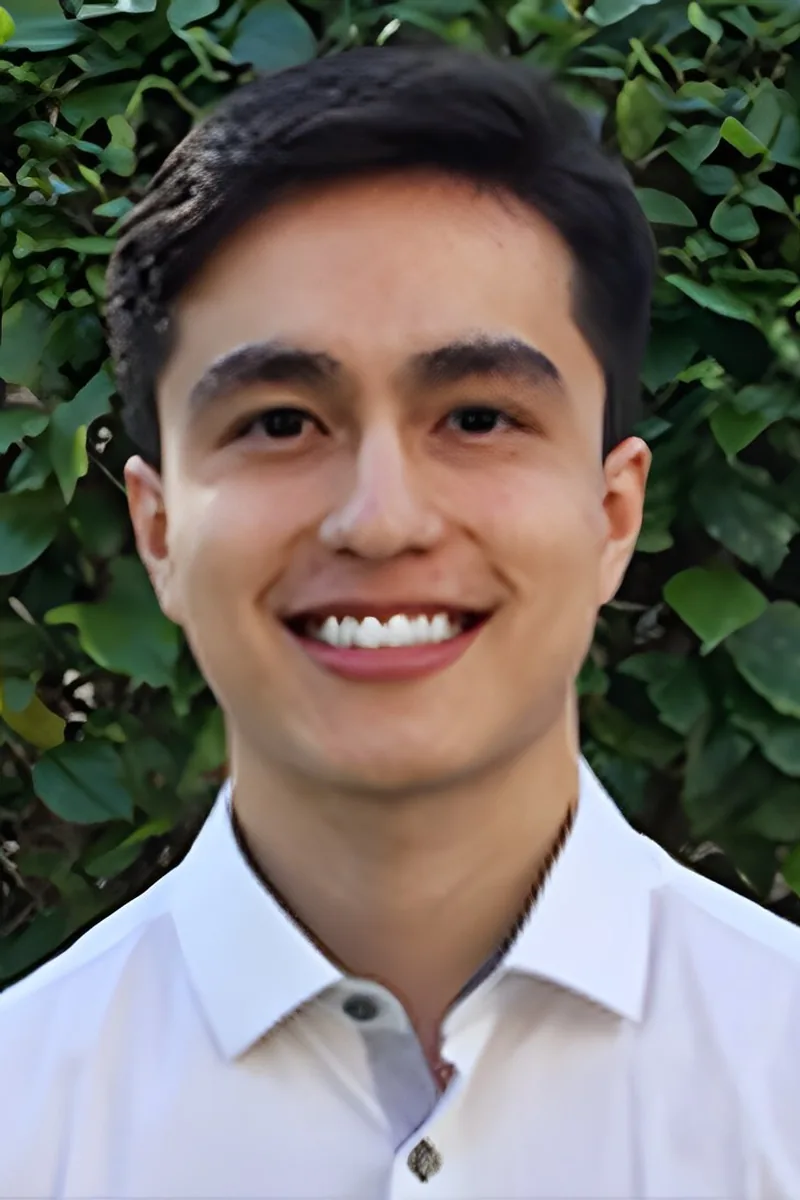
Teaching discrete math at Penn means Keenan spends his weeks translating abstract computational thinking into language undergraduates actually absorb — a skill that maps directly onto AP CSP's pseudocode reasoning and algorithm analysis questions. His philosophy degree also gives him an unusual edge on the exam's societal-impact questions, where students need to construct clear written arguments about data privacy, bias in algorithms, and computing ethics. Rated 5.0 by students.

Kevin has taught AP CSP to first-time coders and students prepping specifically for the exam, so he knows the exact gap between 'I get the concept' and 'I can explain it in exam language.' His data science concentration sharpens the units on data representation and analysis, where he teaches students to interpret tables and draw conclusions the way a working analyst would. The Create Task gets special attention — he builds it backward from the rubric so no documentation points slip away.
Biomedical engineering at Cornell means Annie writes Python and MATLAB to process real research data — skills that map directly onto AP CSP's emphasis on programming, data analysis, and algorithmic thinking. She teaches the Create Task as a scaled-down version of the same design process she uses in lab: define the problem, plan the logic, build iteratively, then explain your choices clearly. Rated 4.9 by students.
Matthew codes in Java, C++, Python, and JavaScript — so when AP CSP asks students to reason about algorithms or explain how a program works in pseudocode, he can ground those abstractions in actual programming logic most students haven't seen yet. His Harvard math and CS coursework also means he's sharp on the data analysis and binary representation questions that trip up students who only studied the vocabulary. Rated 4.9 by students.
Programming in Java and C# across multiple courses gives Steven a working vocabulary for the kind of logic AP CSP tests — but instead of syntax, he zeroes in on the conceptual layer: how loops, conditionals, and variables behave in pseudocode traces where you can't rely on a compiler to catch mistakes. That shift from writing real code to reasoning about code on paper is exactly where most students lose points, and his 5.0 rating suggests he's closing that gap effectively.
AP CSP's exam leans heavily on reading and reasoning through pseudocode — a skill that clicks faster when you already think in real programming languages. Sarah codes in C++ and Python as part of her computer science degree and works as an IT technician, so she bridges the gap between the abstract logic on the exam and the concrete debugging instincts students need for the Create Task.
Statistics training builds exactly the kind of thinking AP CSP actually tests — reading data representations, reasoning through algorithms on paper, and understanding how information gets encoded and compressed. Kyle applies that quantitative lens to the course's Big Ideas, turning abstract pseudocode traces and binary problems into structured, solvable puzzles. Rated 4.9 by students.
Evan's game development work in Unity — building systems that rely on abstraction layers, event-driven logic, and efficient data handling — maps directly onto the computational thinking AP CSP tests. He uses his own projects to show students how pseudocode translates into real design decisions, which makes the Create Task feel like building something instead of checking rubric boxes. His 34 ACT reflects the kind of cross-disciplinary reasoning this exam rewards.
Ritesh's physics training at Cornell actually maps neatly onto AP CSP — both demand thinking about systems in layers, whether that's abstraction in computing or modeling forces in mechanics. He teaches the pseudocode and algorithm-tracing portions by treating them like physics problem-solving: break the system into parts, track what changes at each step, and verify the output makes sense.
Payton is a Computer Science major at Texas A&M who codes in Python, C++, and Haskell — but AP CSP's exam cares more about pseudocode reasoning and explaining computational ideas in plain English than writing compilable programs. She teaches students to bridge that gap, translating real programming instincts into the kind of clear, structured responses the Create Task and multiple-choice questions actually reward. Rated 4.9 by students.
Most AP CSP students get tripped up not by the technical content but by the exam's pseudocode — reading and tracing algorithms written in a language nobody actually codes in. Maxwell's math and physics training means he thinks naturally in abstractions and logical structures, so he can teach students to parse those pseudocode questions the way he'd parse a proof: step by step, tracking what changes and why. Rated 5.0 by students.
I am a recent graduate with a master's in electrical engineering from Case Western Reserve University. I won the Bill and Melinda Gates Millennium Scholarship which covers full tuition up to Ph.D. I was on the Dean's List for three consecutive years. Additionally, I won the OZY Media Genius Award in 2015 to work on high-temperature superconductors. I currently work as a Technology Analyst at Accenture. I am also seriously considering whether I should go for a Ph.D. or not.
I'm always up for the challenge of changing my methods of instruction and breaking down topics to foster a deeper understanding of a subject. On a different note, I generally spend my spare time playing lacrosse or running outdoors when possible. I also play the violin with a school quartet, and teach lessons to beginning students working through the Suzuki program.
With a strong background in STEM education and administration, I am passionate about helping students achieve academic success through personalized learning. My experience as a high school STEM teacher has allowed me to guide students in subjects such as artificial intelligence, machine learning, renewable energy technology, supply chain management, and manufacturing systems. Additionally, my administrative expertise has honed my ability to provide structured and efficient support to learners of all levels. I have earned certifications from the Massachusetts Institute of Technology, International Business Machines (IBM), and the New York Institute of Finance, dedicating years to making complex concepts more engaging and accessible. My tutoring style is adaptive, ensuring that each student's unique learning needs are met with patience and clarity. I believe in creating a supportive learning environment where students feel confident in tackling challenges and mastering new skills. While I tutor a broad range of subjects, I am particularly passionate about STEM-related fields, as they shape the future of technology and innovation. Beyond academics, I enjoy exploring advancements in artificial intelligence, renewable energy solutions, and automotive technology. My goal is to inspire curiosity, critical thinking, and a lifelong love of learning in every student I work with.
Nicholas codes in Java, Python, JavaScript, C#, and HTML/CSS daily — so when AP CSP asks students to reason about algorithms or data representation in pseudocode, he can instantly translate those abstractions into real programming scenarios that make the logic click. His Penn State CS degree also means he understands the networking and cybersecurity concepts woven through the course at a technical level most high schoolers never see. Rated 5.0 by students.
Robotics engineering at WPI means Matthew writes code that has to actually control physical systems — sensors, motors, feedback loops — which gives him a practical lens on AP CSP's units on algorithms, abstraction, and data representation. He teaches the pseudocode reasoning behind exam questions by tying each concept back to how real machines process information. Rated 5.0 by students.
Having tutored everything from basic programming constructs to finite automata and computational theory, Andrew brings unusual depth to a course most students treat as surface-level. He digs into the algorithmic thinking and pseudocode reasoning behind AP CSP's exam questions, showing students how concepts like abstraction and data representation connect to the real CS pipeline he studied in his degree. Rated 5.0 by students.
Currently studying Computer Science at UCLA's Engineering School with a software engineering internship at Adobe under his belt, David knows how the abstractions taught in AP CSP — algorithms, data representation, internet protocols — actually play out in production code. He uses that industry context to make pseudocode tracing and the Create Task feel purposeful rather than academic. Rated 4.8 by students.
Testimonials
Because the right AP Computer Science Principles tutor makes all the difference.
Average Session Rating – Based on 3.4M Learner Ratings
Nearby AP Computer Science Principles Tutors
Other Philadelphia Tutors
Related Technology and Coding Tutors in Philadelphia
Frequently Asked Questions
AP Computer Science Principles focuses on broad computational thinking skills rather than heavy programming syntax. The course covers five big ideas: creative development (designing programs), data (collecting and analyzing information), algorithms (solving problems step-by-step), programming (writing code), and the internet (how systems connect). Students for students in Philadelphia typically explore real-world applications like social media algorithms, cybersecurity, and artificial intelligence throughout the year.
The AP CSP exam consists of two components: a multiple-choice section (70% of the score) and a create task (30% of the score). The multiple-choice portion tests conceptual understanding of computing principles, while the create task requires you to design and develop a program that solves a real-world problem. The exam emphasizes problem-solving and computational thinking over memorizing syntax, making it accessible to students with varying programming backgrounds.
Many students struggle with translating algorithmic thinking into actual code, especially if they're new to programming. The create task can feel overwhelming because it requires both technical skills and clear documentation of your design process. Additionally, understanding how internet protocols and data structures work conceptually—without getting lost in technical jargon—trips up many learners. Personalized 1-on-1 instruction helps you break down these concepts and build confidence in your problem-solving approach.
Scores range from 1 to 5, with a 3 typically considered passing and qualifying for college credit at many institutions. Most colleges award credit for scores of 3 or higher, though some schools require a 4 or 5 for advanced placement. Your target score depends on your college goals and the schools you're applying to—it's worth checking specific college policies. A tutor can help you identify which topics need the most focus to reach your target score.
The create task requires you to develop a program, document your process, and explain your design decisions—all under specific College Board guidelines. Expert tutors can help you brainstorm project ideas that showcase your skills, guide you through the development process, and ensure your written explanations meet the rubric requirements. They'll also help you practice articulating your computational thinking, which is often where students lose points even when their code is solid.
AP CSP is language-agnostic, meaning you can use Python, JavaScript, Java, C++, or any other programming language—the exam focuses on computational thinking, not syntax. However, your school typically chooses one language for the course to maintain consistency. If you're struggling with your school's chosen language or want to strengthen your fundamentals, a tutor can help you practice and build fluency in whichever language your class uses.
Most students benefit from consistent study throughout the school year rather than cramming before the exam. If you're starting tutoring mid-year, dedicating 5-7 hours per week to focused practice—combining concept review, coding practice, and create task preparation—can make a meaningful difference. The timeline depends on your starting point: students new to programming may need more foundational support, while experienced coders might focus more on exam strategy and the create task requirements.
Varsity Tutors connects you with expert tutors in Philadelphia who have deep knowledge of the AP CSP curriculum and exam format. When you get matched with a tutor, you can discuss your current programming experience, which language your class uses, and whether you need help with specific topics or the create task. The right tutor will tailor their approach to your learning style and help you build both technical skills and test-taking confidence.
Let’s find your perfect tutor
Answer a few quick questions. We’ll recommend the right plan and match you with a top 5% tutor.