Award-Winning Geometry Tutors
serving Philadelphia, PA
Geometry
Tutors in Philadelphia
Private 1-on-1 tutoring, weekly live classes for academic support, test prep & enrichment, practice tests and diagnostics, and more to elevate grades and test scores.
Based on 3.4M Learner Ratings
UniversitiesSchools & Universities
DeliveredHours Delivered
ProficiencyGrowth in Proficiency
Who needs tutoring?
No obligation. Takes ~1 minute.
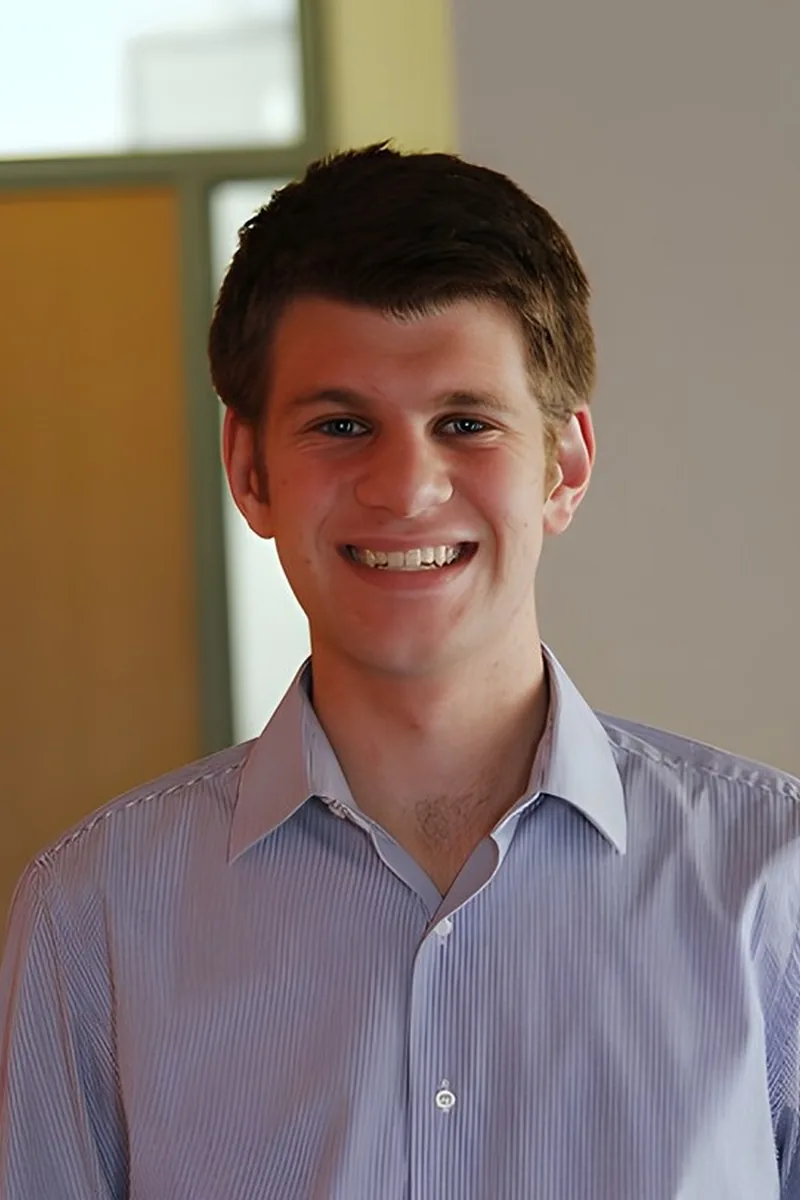
Kevin's Philosophy, Politics, and Economics program at Penn is essentially a training ground in structured argumentation — building claims from premises, identifying logical gaps, defending conclusions — which maps directly onto geometric proof-writing. He teaches students to treat two-column proofs the same way they'd treat a debate: state what you know, justify every step, and never skip a link in the chain. His 34 ACT composite reflects the kind of precise, methodical reasoning that makes geometry's logical demands feel manageable.
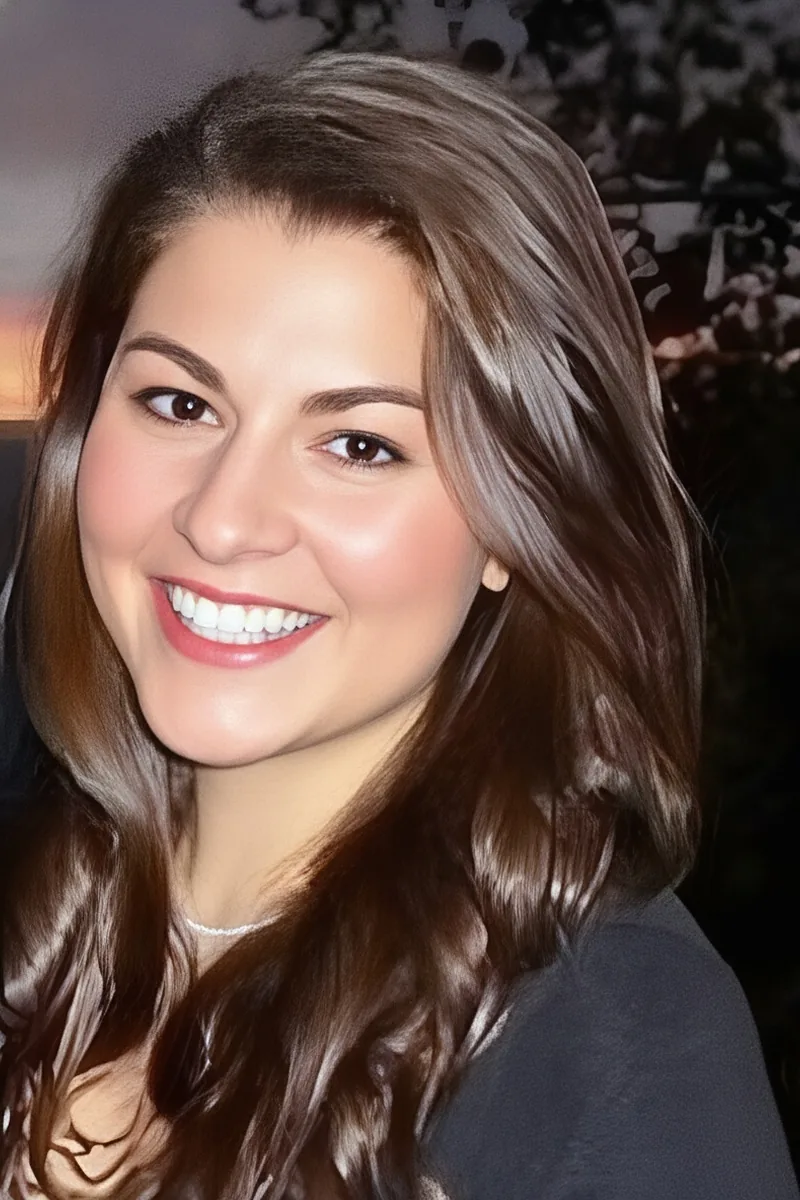
Cornell's biological engineering program threw Mary into years of modeling physical systems — fluid flow through channels, stress on biomaterials, device dimensions — all of which demand precise geometric reasoning about shapes, cross-sections, and spatial relationships. She brings that practical fluency to topics like circle theorems, properties of quadrilaterals, and area-volume calculations, making abstract definitions feel grounded in real measurement. Rated 5.0 by students.
Having taught Geometry at a charter high school, Wamweni knows exactly where students get stuck — whether it's writing two-column proofs, applying triangle congruence theorems, or visualizing transformations on the coordinate plane. She approaches each topic by connecting it to something concrete before moving into formal reasoning. Her 5.0 rating speaks to how well that method lands with students.
Proofs are usually where geometry goes from comfortable to confusing — suddenly students need to justify every step with logic instead of just measuring. Matt approaches geometric reasoning as a structured argument, walking through angle relationships, congruence criteria, and parallel-line theorems in a way that makes each proof feel like solving a puzzle rather than following a script.
Proofs and spatial reasoning make geometry feel like a different species of math compared to algebra, and that shift frustrates a lot of students. Steve tackles it by grounding geometric logic in tangible examples — angle relationships in trusses, symmetry in mechanical parts — drawing on his engineering background to make abstract theorems feel concrete.
Proofs trip up a lot of geometry students because they require a completely different kind of thinking — constructing logical arguments instead of just computing answers. Kirstie's liberal arts background actually strengthens her approach here, since she treats geometric proofs the way she'd treat building a persuasive essay: claim, evidence, reasoning. She also covers the computational side, from triangle congruence to circle theorems.
Proofs are usually the sticking point in geometry — going from "I can see it's true" to writing a logical argument for why it must be true. Keenan studied philosophy as an undergraduate, which means constructing rigorous arguments from axioms is something he's trained in across multiple disciplines. He brings that logical scaffolding to triangle congruence, circle theorems, and coordinate geometry problems.
Proofs are usually the first time geometry students have to construct a logical argument instead of just computing an answer, and that shift in thinking is where most frustration lives. Sarah pairs her Penn mathematics training with a creative writing minor, which means she's unusually good at teaching students to build a clear, step-by-step case — whether it's a two-column proof about congruent triangles or an argument involving parallel lines and transversals.
Proofs are usually the biggest hurdle in Geometry — not because the logic is hard, but because nobody explains why you're writing them in the first place. Jonathan walks through each proof as a chain of reasoning about angles, congruence, or similarity, drawing on the structured problem-solving approach he developed through his biomedical engineering training at Yale.
Proofs are the part of geometry that makes students question everything they thought they knew about math. Ade approaches them as logical arguments rather than rigid formulas, walking through each theorem — from triangle congruence to circle properties — so that writing a two-column proof feels like building a case, not guessing at steps.
Proofs are usually the make-or-break moment in geometry, and Abhinav tackles them by teaching students to map out their logical chain before writing a single statement. His approach connects angle relationships, congruence criteria, and parallel line theorems into a coherent toolkit rather than a disconnected list of rules.
Proofs are usually the moment geometry goes from comfortable to confusing, because students suddenly need to justify every step with logical reasoning instead of just calculating. Joyce walks through the structure of two-column and paragraph proofs methodically, while also reinforcing the spatial reasoning behind triangle congruence, circle theorems, and coordinate geometry.
Proofs are usually the first time a math student has to explain *why* something is true, not just compute an answer. Felipe walks through each proof as a logical argument — identifying given information, choosing a strategy like SAS or CPCTC, and building the chain of reasoning step by step — so the format stops feeling mysterious.
Anneliza's dual background in civil engineering and landscape architecture makes geometry one of her most natural subjects — she's spent years calculating angles, areas, and spatial relationships for actual built projects. She breaks down proofs and theorems by connecting them to tangible shapes and structures students can visualize, from triangle congruence to circle properties.
Proofs are usually the make-or-break moment in geometry — students who breeze through angle calculations suddenly struggle when asked to construct a logical argument. Jean teaches proof-writing as a skill in structured reasoning, walking through each theorem and postulate until the logic feels natural rather than forced. Her certified teaching background across math and English gives her a unique ability to sharpen both the mathematical and written-communication sides of geometry.
Proofs are usually where geometry stops feeling intuitive and starts feeling impossible. Ian teaches students to read diagrams like arguments — identifying given information, spotting congruence relationships, and building logical chains step by step. He also reinforces the algebraic skills that geometry quietly demands, from solving for unknown angles to working with coordinate-based distance and midpoint formulas.
I am happy when my student completely understands the material. I highly discourage memorization.
Proofs are usually the make-or-break moment in Geometry: students who can write a logical chain of reasoning thrive, and those who can't tend to struggle the rest of the year. Tom teaches proof-writing as a structured argument — claim, evidence, justification — a skill he sharpened through scientific writing at Penn. He also covers coordinate geometry and circle theorems with an emphasis on visualization over rote formula use.
Proofs are usually where geometry students hit a wall — suddenly math requires structured logical arguments instead of computation. SriSaiSuhita teaches students to read diagrams like puzzles, identifying congruence relationships and angle properties before writing a single line of proof. Her economics and neuroscience background gives her a knack for explaining how spatial reasoning actually works in the brain, which makes the subject less mysterious.
Proofs are the part of geometry that most students dread, yet they're the part that teaches the clearest thinking. Bahaeddine uses his background in formal mathematics to demystify two-column and paragraph proofs, showing how each theorem about congruence, similarity, or circle relationships follows logically from the one before it.
Proofs are usually the first time a math student has to build a logical argument from scratch, and that's where geometry gets intimidating. Dhinakaran teaches students to approach congruence, similarity, and angle relationships as a chain of reasoning — each step justified, each theorem earned. His engineering background means spatial thinking is second nature, which makes concepts like surface area and volume feel concrete rather than formulaic.
I am currently a graduate student in Chemical Engineering at the University of Delaware. I am working on using magnetic and flow fields to create advanced materials by directing the self-assembly process of nanoparticles . I have tutored students in Chemistry, Physics and Math all throughout undergraduate and graduate work. I truly enjoy breaking material down into its core components that allows the students to understand complicated information.
Mechanical engineering is really just geometry with consequences — Hallie's MS in engineering meant years of working with cross-sections, tolerances, and three-dimensional assemblies where a misread angle or miscalculated dimension could tank an entire design. She brings that precision to teaching geometric constructions and the logic behind circle theorems, making sure students understand not just the steps but why each one holds. Her range across math subjects from pre-algebra through calculus also means she can spot and patch foundational gaps on the fly.
Jeremiah taught geometry in the classroom, so he knows exactly where students get stuck — proofs that feel like they come out of nowhere, area formulas for irregular shapes, and the logic behind angle relationships. He walks through each theorem with clear, numbered steps and checks understanding at every stage rather than rushing to the next topic.
An English major might seem like an unlikely geometry tutor, but Stephen's strength is in the proof-writing side of the course — constructing a two-column proof requires the same structured argumentation he honed writing analytical essays throughout his degree. He breaks down each geometric claim into a clear logical sequence, making the jump from "I see why it's true" to "I can prove why it's true" feel manageable for students who freeze up at formal reasoning.
I am a recent graduate of University of Pennsylvania. I love teaching, and have experience teaching students from different backgrounds and experiences. This past summer, I was a teaching fellow at the Social Justice Research Academy at the University of Pennsylvania. I mentored a small group of high-school students, many of them international, and help them navigate a rigorous research-based curriculum. Before coming to college, I co-founded a teaching center, tutoring economically disadvantaged students in English. In the summer of 2011, I taught creative writing at my high school.
Where most geometry tutors jump straight to proofs, Cheridan spends time on the visual and measurement foundations — area, perimeter, surface area, volume — that students actually need solid before formal reasoning makes sense. Her sociology training at Temple sharpened her ability to break down complex systems into parts, which translates naturally to dissecting composite figures and multi-step word problems.
Proofs are where most geometry students hit a wall — suddenly math requires structured arguments instead of just calculations. Ian teaches students to read a diagram like a detective, identifying congruent triangles, parallel-line relationships, and angle properties before writing a single line of proof. His analytical training at Cornell translates naturally into this kind of logical reasoning.
A political science degree is essentially training in structured argumentation — building a claim, supporting it with evidence, and anticipating counterarguments — which maps directly onto geometric proof-writing. Alex applies that same logical framework to two-column and paragraph proofs involving triangle congruence and parallel line theorems, making the reasoning feel less like a math exercise and more like building a case. Rated 4.8 by students.
Proofs are usually the part of geometry that makes students want to quit — they understand shapes intuitively but struggle to build a logical argument on paper. Alex walks through each proof as a chain of small, defensible steps, treating it almost like debugging code. His engineering training sharpened that structured reasoning, and he applies it to everything from triangle congruence to circle theorems.
An environmental science degree means Christine spent years reading topographic maps, interpreting spatial data from satellite imagery, and calculating areas of irregular land formations — all geometry in disguise. She brings that real-world spatial fluency to topics like transformations, properties of circles, and the logic behind geometric constructions, making abstract diagrams feel grounded. Rated 5.0 by students.
Four years of GED tutoring taught Walter something useful about geometry: students who struggle with it almost always have the spatial intuition but lack the vocabulary to connect what they see to what a problem is asking. His education degree from Temple and classroom experience with middle schoolers means he's practiced at bridging that gap — translating between diagrams and the formal language of angle relationships, congruence, and parallel line reasoning. Rated 4.8 by students.
Economics trains you to build arguments from assumptions to conclusions — which is exactly the muscle geometry proofs require. Hunter applies that same logical sequencing to working through triangle congruence and angle relationship problems, treating each given as a premise that leads somewhere specific. His comfort with high-level math coursework means the algebraic side of coordinate geometry comes naturally too.
Proofs are where most geometry students get stuck — the jump from calculating angles to constructing logical arguments feels enormous. James breaks proof-writing into a step-by-step process, treating each theorem like a puzzle where the given information and the goal dictate the path forward.
Proofs are where most geometry students panic — the jump from calculating angles to constructing logical arguments feels like a completely different subject. Jillian's biology background actually gives her a useful lens here, since scientific reasoning follows the same if-then logic that underpins geometric proofs. She breaks each proof into small, sequential claims so students can see the structure before worrying about the formality.
Proofs trip up most geometry students because they require a completely different kind of thinking than arithmetic or algebra. Ashley breaks them into logical chains, teaching students to identify given information, spot congruence relationships, and build arguments step by step. Rated 4.9 by students, she brings the same structured reasoning her biochemistry training demanded.
Proofs are usually the first time a math student has to build a logical argument from scratch, and that shift from computation to reasoning is where Melissa excels. She walks through each proof type — two-column, paragraph, coordinate — by asking students to explain their thinking at every step, which makes the logic feel natural rather than scripted. Her background in psychology gives her a sharp sense of how students process spatial and deductive reasoning.
A math and English double major from Swarthmore, Aidan brings an unusual skill to geometry: he treats every proof like a persuasive essay, where each statement needs to earn its place in the argument. That literary sense of structure makes him especially effective when teaching students to build two-column and paragraph proofs around triangle congruence and circle theorems — he insists on understanding *why* each step follows, not just *that* it does.
Studying art and art history means Madeleine thinks spatially every day — analyzing symmetry, proportion, and perspective in visual compositions. She brings that same spatial intuition to geometry, whether a student is working through triangle congruence proofs, circle theorems, or coordinate geometry problems.
A lot of geometry frustration comes down to not knowing how to start — students stare at a diagram full of intersecting lines and marked angles and freeze. Erin's math degree means she can teach the actual decision-making process: which relationships to identify first, when to set up equations from angle sums or congruence conditions, and how to build toward a solution one logical step at a time.
Testimonials
Because the right Geometry tutor makes all the difference.
Average Session Rating – Based on 3.4M Learner Ratings
Practice Geometry
Free practice tests, flashcards, and AI tutoring for Geometry
Other Philadelphia Tutors
Related Math Tutors in Philadelphia
Frequently Asked Questions
Many students struggle with the transition from computational math to geometric reasoning and proof-writing. Common pain points include visualizing 3D shapes, understanding why geometric theorems work (not just memorizing them), writing logical proofs, and applying geometric concepts to word problems. Personalized tutoring helps students move beyond memorization to develop deeper conceptual understanding of angles, triangles, circles, and spatial relationships.
Proofs require both logical thinking and clear communication—skills that develop through guided practice and feedback. Tutors work with students to break down the proof-writing process, identify key theorems and postulates to use, and practice organizing their reasoning step-by-step. With personalized instruction, students build confidence in constructing valid arguments and understanding the 'why' behind each step, rather than just following a formula.
Absolutely. Many students are visual learners who benefit from drawing, manipulating models, and seeing how 2D and 3D shapes relate to one another. Expert tutors use multiple strategies—sketching, using physical or digital models, and connecting abstract concepts to real-world examples—to help students develop spatial reasoning. With personalized tutoring, your student can work at their own pace to build these critical visualization skills.
Word problems require students to extract relevant information, translate it into geometric diagrams, and apply appropriate theorems or formulas. Tutors teach problem-solving strategies like drawing diagrams first, identifying what's given and what needs to be found, and working through multi-step solutions systematically. By practicing these strategies with personalized guidance, students develop the confidence and skills to tackle unfamiliar problems independently.
Yes. Philadelphia's 91 school districts use various textbooks and curriculum approaches, and Varsity Tutors connects you with tutors who are familiar with different standards and teaching methods. Whether your student's school uses a traditional approach or an integrated curriculum, tutors can adapt their instruction to complement what's being taught in class and fill in any conceptual gaps.
Math anxiety is real, and personalized tutoring creates a low-pressure environment where students can ask questions, make mistakes, and learn at their own pace. Tutors build confidence by breaking complex concepts into manageable pieces, celebrating progress, and helping students see patterns and connections they might have missed. As students experience success with personalized instruction, their confidence grows and anxiety decreases.
The first session focuses on getting to know your student—their current level, learning style, specific challenges, and goals. The tutor will likely review recent classwork or assessments to identify strengths and areas for improvement, then begin addressing immediate concerns or upcoming topics. This personalized approach ensures that tutoring is tailored to your student's needs from day one.
Many students see noticeable improvement in understanding and confidence within a few weeks of consistent tutoring, especially when sessions target specific challenges like proofs or word problems. Long-term benefits—such as deeper conceptual understanding and stronger problem-solving skills—develop over weeks and months of personalized practice. The timeline depends on your student's starting point, frequency of sessions, and how actively they engage with the material between sessions.
Let’s find your perfect tutor
Answer a few quick questions. We’ll recommend the right plan and match you with a top 5% tutor.