Award-Winning AP Calculus AB Tutors
serving Philadelphia, PA
AP Calculus AB
Tutors in Philadelphia
Private 1-on-1 tutoring, weekly live classes for academic support, test prep & enrichment, practice tests and diagnostics, and more to elevate grades and test scores.
Based on 3.4M Learner Ratings
UniversitiesSchools & Universities
DeliveredHours Delivered
ProficiencyGrowth in Proficiency
Who needs tutoring?
No obligation. Takes ~1 minute.
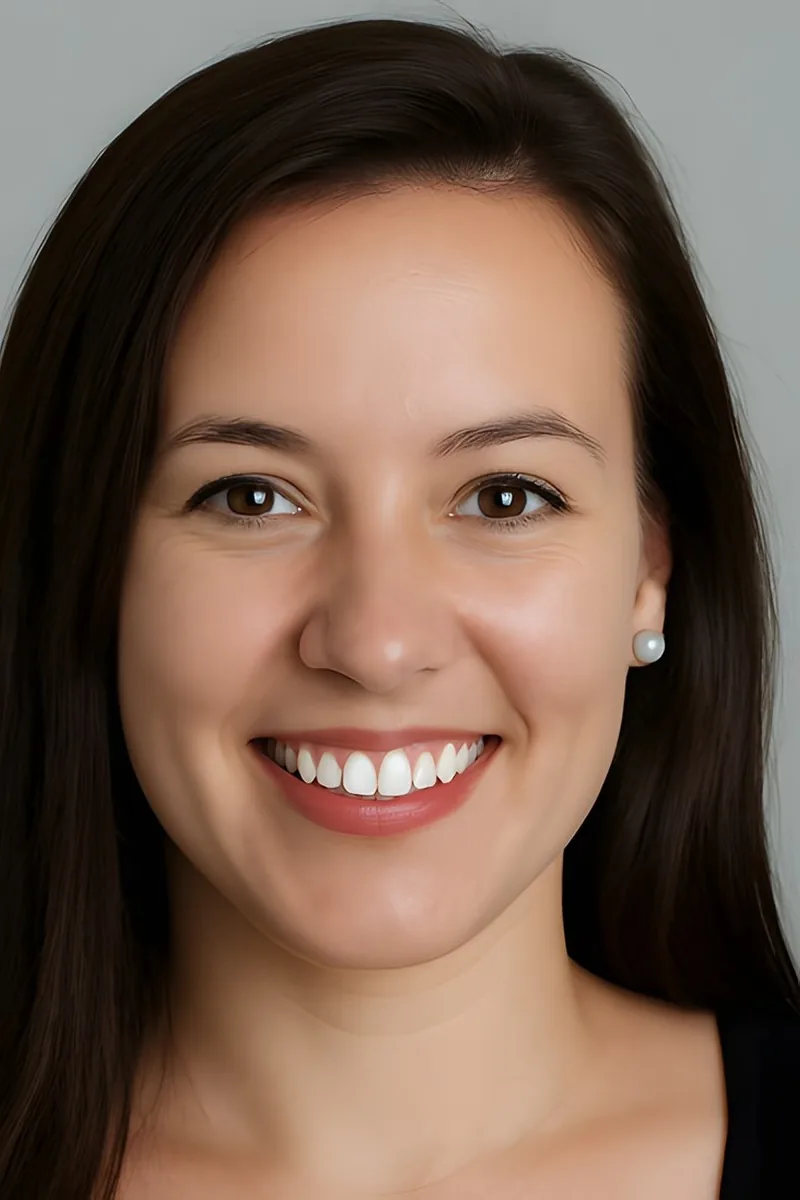
Kate breaks AB Calculus into two core skills: understanding what derivatives and integrals actually represent, and learning the mechanical techniques to compute them quickly. Her environmental engineering training required heavy use of related rates, optimization, and area-under-the-curve problems, so she can show students exactly how these concepts connect to real applications.
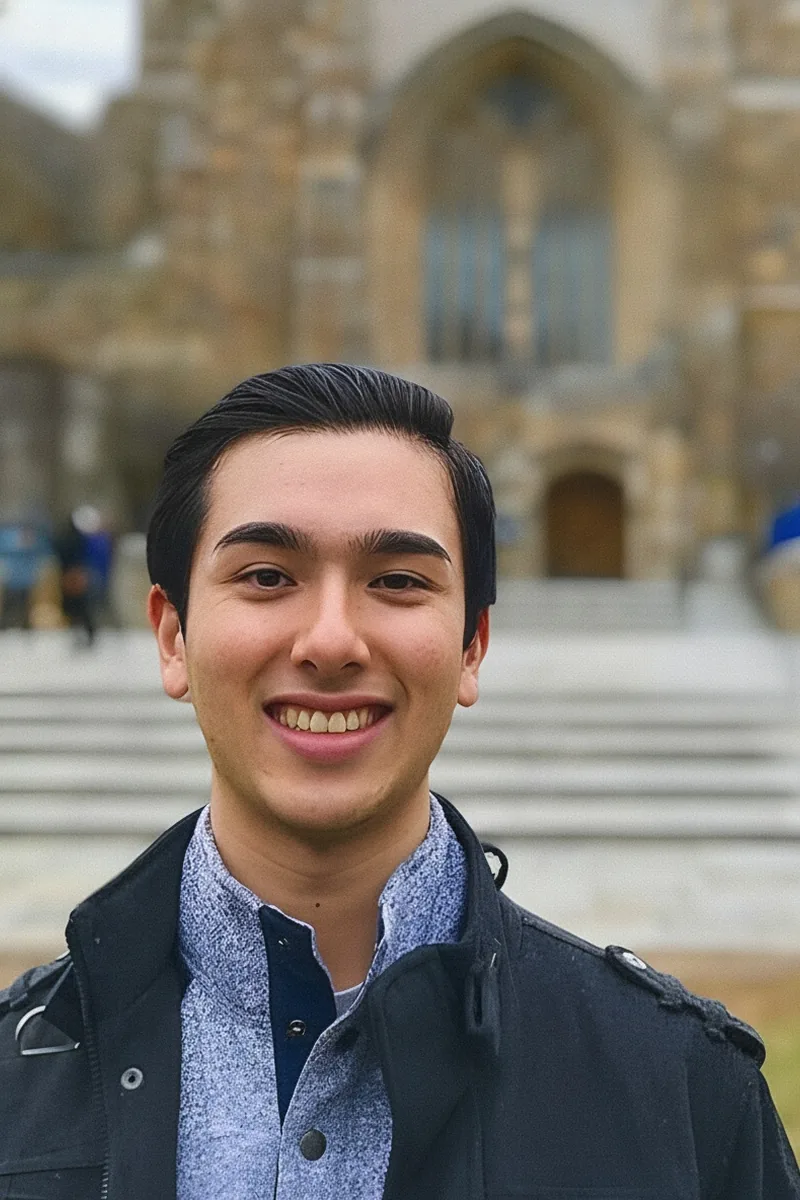
Jonathan treats AP Calculus AB as a course in learning to think about change — rates, accumulation, and the connection between them — rather than a collection of derivative rules to memorize. As a Yale biomedical engineering student heading into a Ph.D. program, he regularly applies concepts like related rates and Riemann sums to research problems, which gives his explanations a practical edge.
Limits, the chain rule, and related rates problems each represent a different conceptual leap — and AP Calculus AB asks students to make all of them in a single year. Spencer tackles these topics through the lens of a biomedical engineering student who depends on calculus as a working language, not just a course requirement. He breaks down each concept into the underlying logic so students can handle free-response questions with confidence.
A neurobiology concentration at Penn means Tom spent years working with rate-of-change models — neural signal propagation, membrane potential curves, dose-response dynamics — all of which run on the same derivative and integral concepts tested in AB. He teaches limit definitions and the Fundamental Theorem by grounding them in the biological systems where he first learned to use them, which makes the abstractions stick instead of just sitting on a formula sheet.
The jump from Pre-Calc to AP Calculus AB is where a lot of students lose confidence, especially around limits, the chain rule, and related rates. Steven treats each of these as a logical extension of algebra skills students already have, rebuilding intuition before layering on new notation. His 5.0 client rating speaks to how well that approach clicks.
I am a very passionate teacher who has worked in public and private school settings at both the high school and college level. I have an undergraduate mathematics degree, and taught AP Calculus at a North Carolina high school. I also have a PhD in philosophy, and have taught at major research universities in Missouri and Ohio. I am personally invested in my students' success, and take pride in being clear, conscientious, and accessible.
Limits, derivatives, and integrals each build on each other in AP Calculus AB, and a single gap early on can snowball by the time related rates or the Fundamental Theorem appear. Bahaeddine's fifteen-plus years teaching calculus at the college level give him a sharp sense for where those gaps form and how to close them before exam day.
I am currently a graduate student in Chemical Engineering at the University of Delaware. I am working on using magnetic and flow fields to create advanced materials by directing the self-assembly process of nanoparticles . I have tutored students in Chemistry, Physics and Math all throughout undergraduate and graduate work. I truly enjoy breaking material down into its core components that allows the students to understand complicated information.
Limits, derivatives, and integrals make more sense when a student can see what they actually describe in the real world. Jacob studied astrophysics in college, where differential calculus wasn't abstract — it was how you model the motion of planets and the behavior of light. He brings that concrete perspective to AB topics like related rates, the Fundamental Theorem, and optimization problems.
Engineering students at Penn don't get to treat calculus as an abstraction — Michael's chemical and biomolecular engineering coursework means he's constantly applying derivatives to model reaction kinetics and integrals to solve mass and energy balances. That daily fluency makes him especially effective at teaching the AB exam's application-heavy free-response problems, where translating a scenario into the right mathematical setup is the real challenge. Rated 5.0 by students.
Limits, derivatives, and integrals each build on the last, so one shaky concept can quietly undermine everything that follows. Aidan taught 10th grade math in a Newark classroom before shifting to one-on-one tutoring, and that experience sharpened his ability to diagnose exactly where a student's understanding breaks down. His approach to AP Calculus AB leans heavily on guiding students through problems with targeted questions rather than lecturing through solutions.
Limits, derivatives, and integrals each build on the last, so a shaky understanding of one concept compounds quickly in AP Calc AB. Ben unpacks each topic by tying it to its geometric meaning — the slope of a tangent line, the area under a curve — so that formulas feel intuitive rather than arbitrary. His 5.0 client rating speaks to how well that approach lands with students.
Limits, derivatives, and integrals each build on the last, so one shaky concept can snowball through the entire AP Calculus AB curriculum. Annie breaks down each idea with concrete visual intuition — what a derivative actually means on a graph, why the chain rule works the way it does — drawing on the rigorous calculus sequence she completed as a biomedical engineering major at Cornell. Rated 4.9 by students.
Materials science engineers live in calculus — Jennifer's coursework meant using derivatives to characterize how material properties change under stress and integrals to calculate energy absorption across deformation curves, so she teaches AB concepts with that built-in sense of what the math physically describes. Her 1550 SAT and 33 ACT back up the quantitative precision she brings to tricky topics like implicit differentiation and area-between-curves problems. Rated 5.0 by students.
Cognitive science at Penn might not scream calculus, but Samantha's coursework required enough mathematical modeling — derivatives for rate-of-change problems, integrals for cumulative distributions — that she teaches AP Calculus AB with real fluency. She's especially effective at walking through optimization and curve-sketching problems, where translating a word problem into the right function is half the battle. Her 1460 SAT reflects the quantitative precision she brings to exam prep.
Most AP Calculus AB struggles come down to one thing: students can follow a derivative rule mechanically but can't interpret what the derivative means in context. Samuel tackles that gap head-on by grounding every concept — related rates, Riemann sums, the Fundamental Theorem — in applied problems where the math describes something real. His background in applied mathematics and differential equations gives him a deep bench of examples to draw from.
The jump from memorizing derivative rules to applying them — related rates, optimization, accumulation functions — is where most AP Calc AB students get stuck. Peter's math degree from Georgetown and years of tutoring high school and college students in calculus give him a clear read on exactly where conceptual gaps form and how to close them.
The leap from "find the derivative" to "set up and interpret an accumulation function" is where AB Calculus gets genuinely hard. Matthew tackles that conceptual gap head-on, teaching students to read integral problems as stories about rates and totals rather than just antiderivative exercises. His math background at Harvard means the underlying theory is second nature to him.
Studying economics and mathematics at Boston College means Patrick builds calculus into economic models daily — computing marginal functions, finding optimal production levels, analyzing surplus as area under a curve — so the AB curriculum's core techniques are tools he actively uses, not abstract exercises. He's particularly effective at teaching students how to set up optimization and accumulation problems from the ground up, since that's exactly what his economics coursework demands every week.
The jump from Pre-Calc to AP Calculus AB is where a lot of students first encounter limits, derivatives, and the meaning behind the Fundamental Theorem of Calculus. Zach's approach is to build intuition around rates of change before diving into computation, so students understand what a derivative actually represents — not just how to apply the power rule. His 5.0 rating speaks to how well that lands.
The jump from memorizing derivative rules to actually applying them — related rates, optimization, accumulation functions — is where most AP Calc AB students get stuck. Rishi tackles these application problems by teaching students to translate word problems into mathematical setups before touching any formulas. His math coursework at Yale keeps these concepts sharp and immediately accessible.
I am very big on allowing my students to actively learn. I believe that this is the best way for my students to learn because it helps them pick up on new information and skills quickly.
Limits, derivatives, and integrals each build on the last — and a shaky understanding of one derails everything that follows. Vincent graduated in the top two percent of his high school class and now applies AB-level calculus constantly in his mechanical engineering program at Carnegie Mellon, giving him a practical fluency that makes abstract rules click for students.
Limits, derivatives, and integrals each build on the last, so a shaky grasp of one concept tends to snowball fast in AP Calculus AB. Benjamin tackles this by connecting each new idea back to its graphical and physical meaning — something his engineering background makes second nature. His 4.9 rating speaks to how well that concrete, visual approach clicks with students.
When students can compute a derivative but can't explain what it means on a graph — or nail a multiple-choice limit problem but blank on the free-response accumulation question — that's the gap Katelyn zeros in on. Her math degree means she teaches the AB curriculum with the formal precision to explain why theorems work, not just when to apply them. Rated 5.0 by students.
Computer science trains you to think algorithmically — breaking complex problems into discrete steps — and Lucas applies that same structured logic to AP Calculus AB topics like limits, derivative rules, and definite integrals, where students often lose track of which technique to reach for and why. His 1510 SAT and CS coursework at Penn State mean he's comfortable with the mathematical rigor behind the AB curriculum while keeping explanations methodical enough that each step feels earned. Rated 4.9 by students.
Mechanical engineering students at Temple don't just take calculus — they lean on it daily for everything from force analysis to fluid mechanics, which means Ryan teaches derivatives and integrals as tools with a job to do, not just exam material. He's particularly strong at walking through the limit definition and building intuition for why differentiation rules work, so students aren't just pattern-matching on free-response questions but actually understanding the setup. His 32 ACT and engineering coursework give him the quantitative grounding to make those connections stick.
Between bioengineering and economics coursework, Michael has spent years wielding calculus as a working language — modeling biological system dynamics in one class, then optimizing cost functions in the next. That dual fluency makes him especially sharp at teaching the AB exam's limit and continuity concepts, where understanding the underlying logic prevents the chain rule and integration techniques from feeling like disconnected recipes. His 1560 SAT and 5.0 rating back up an approach built on creative visualization rather than rote procedure.
Years as an instructional assistant in both public and private schools meant Alexander taught AP Calculus AB alongside students working through it for the first time — catching the exact moments where limits, the chain rule, or integration by substitution stop making sense. That classroom-level pattern recognition lets him zero in on where a student's reasoning goes off track, particularly on free-response questions that demand setup and interpretation rather than just computation. His Politics degree from Pomona may seem unrelated, but the habit of building rigorous arguments transfers surprisingly well to writing clear, justified solutions the AP graders reward.
The jump from memorizing derivative rules to actually applying them — related rates, optimization, accumulation functions — is where AP Calculus AB gets difficult. Andreas approaches each application problem by teaching students to translate the English into calculus before touching any algebra. His 4.8 rating speaks to how well that structured method clicks for students.
I am currently an undergraduate studying Statistics and Machine Learning + Computer Science at Carnegie Mellon University. At CMU, I am an undergraduate research assistant for the AI for Intelligent Tutoring Systems Team, and I am a teaching assistant for Fundamentals of Programming. My teaching philosophy centers on fostering a supportive learning environment where students feel empowered to tackle challenging concepts. I believe in using real-world applications to make math relatable and engaging, which helps my students build confidence and achieve academic success. I am passionate about tutoring because I enjoy seeing students overcome obstacles and progress over time, while developing a love for the subject. Outside of tutoring, I enjoy tennis, playing violin in an orchestra, and delving into literary classics.
Limits, derivatives, and integrals tend to make more sense when someone walks you through the reasoning behind each step rather than just racing to the answer — Amina pairs worked examples with real-world context drawn from her chemistry studies, where rates of change and accumulation show up constantly. Her 32 ACT reflects solid quantitative instincts, and she applies that same structured thinking to breaking down AB free-response problems into manageable pieces.
The jump from Pre-Calc to AP Calculus AB trips up students who never fully grasped limits or the logic behind the chain rule. Daniel's approach is to rebuild each concept from scratch when needed — he's an applied math major who got where he is by sitting with hard material until it clicked, not by breezing through it. That means he knows exactly where the confusion usually lives in topics like related rates, Riemann sums, and the Fundamental Theorem.
The jump from memorizing derivative rules to actually understanding what a limit means — and why the Fundamental Theorem ties everything together — is where AP Calculus AB gets interesting. Rithi approaches each unit by building the logic behind the procedures, so students can tackle free-response questions with genuine comprehension rather than formula-hunting.
Studying chemical engineering and math at Vanderbilt means Greg lives in calculus — using derivatives to model reaction rates and integrals to balance mass and energy flows — so the AB curriculum's toughest concepts have a concrete anchor in his everyday coursework. His 1550 SAT and 5.0 tutoring rating back up an approach that emphasizes building each problem's setup from the physics or chemistry it describes, which is exactly the skill that separates strong free-response scores from mediocre ones.
Neuroscience research at places like the Jungers Center and Oregon National Primate Research Center means Daniel has spent real time using calculus to model biological data — fitting curves to neural signals, differentiating rate functions, interpreting what a change in slope actually means in a living system. That research instinct sharpens how he teaches AB topics like the chain rule and definite integrals, because he's used to asking what the math is telling you before jumping to computation. His 1530 SAT and biomedical engineering coursework at Rice anchor the quantitative rigor behind his approach.
Limits, derivatives, and the fundamental theorem of calculus click faster when a student sees how they connect — not just how to compute them in isolation. Nicholas approaches AP Calculus AB by building intuition around rates of change and accumulation, drawing on the applied math side of his Johns Hopkins engineering program. His 4.8 rating speaks to how well that conceptual clarity translates for students prepping for the AP exam.
The jump from pre-calculus to AP Calculus AB is often the biggest conceptual shift in a student's math career — suddenly everything revolves around rates of change and accumulation. Julie's philosophy background at Princeton sharpened her ability to explain abstract ideas with clarity, and she applies that skill to unpacking limits, derivatives, and the Fundamental Theorem. She earned a 1570 SAT and teaches math at every level, so she knows how to bridge gaps in algebra or trig that can hold AB students back.
The jump from memorizing derivative rules to applying them on AP free-response questions is where most Calc AB students lose points. Adam breaks down each problem type — related rates, accumulation functions, slope fields — by teaching the reasoning behind setups so students can handle unfamiliar prompts on exam day.
MIT's core curriculum throws you into calculus, physics, and chemistry simultaneously — Vania has been tutoring peers through all three via MIT's Seminar XL and Tutorial Services Room, which means she's spent years watching exactly where AB students lose the thread between derivative rules and what those rules actually compute. Her 1590 SAT and mechanical engineering training give her the quantitative fluency to unpack topics like the Mean Value Theorem or area-between-curves setups in ways that feel concrete rather than formulaic. Rated 5.0 by students.
Testimonials
Because the right AP Calculus AB tutor makes all the difference.
Average Session Rating – Based on 3.4M Learner Ratings
Practice AP Calculus AB
Free practice tests, flashcards, and AI tutoring for AP Calculus AB
Other Philadelphia Tutors
Related Math Tutors in Philadelphia
Frequently Asked Questions
AP Calculus AB focuses on limits, continuity, derivatives, and integrals—the foundational concepts of single-variable calculus. The course emphasizes both computational skills and conceptual understanding, with major units covering rates of change, applications of derivatives (optimization, related rates), and accumulation through integration. For students in Philadelphia, understanding these core topics deeply is essential for scoring well on the May AP exam, which tests your ability to solve problems and explain mathematical reasoning.
Many students struggle with the transition from algebra and precalculus to the abstract thinking required in calculus, particularly understanding limits conceptually and applying derivatives to real-world scenarios. Time management during the exam is another frequent challenge—the free-response section requires clear written explanations alongside calculations, which trips up students who focus only on getting the right answer. Pacing through practice problems and learning to communicate your mathematical reasoning are critical skills that personalized instruction can help develop.
Score improvement depends on your starting point and consistency with practice, but students typically see meaningful gains when they work with a tutor to identify weak areas and build targeted study habits. Many students improve by 1-2 score points (on the 1-5 scale) over a semester of focused preparation, especially when tutoring addresses conceptual gaps rather than just drilling problems. The key is starting early enough to allow time for deep understanding and multiple practice tests before the May exam.
Varsity Tutors connects you with expert tutors who assess your current understanding of calculus concepts and create a personalized study plan targeting your specific needs. Sessions typically involve working through challenging problems, reviewing test-taking strategies, and practicing free-response questions with detailed feedback on your explanations. Your tutor can also help you develop a timeline for covering all AP Calculus AB units before the exam and build confidence through timed practice tests.
The AP Calculus AB exam has two sections: a 60-minute multiple-choice section (45 questions) and a 90-minute free-response section (6 questions). For multiple-choice, aim to spend about 1-1.5 minutes per question, leaving time to review. On free-response, allocate roughly 15 minutes per question, but don't get stuck—move on and return to difficult problems if time allows. A tutor can help you practice pacing strategies and teach you which problems to prioritize based on difficulty and your strengths.
Derivatives measure rates of change and slopes of curves—they tell you how fast something is changing at any moment. Integrals measure accumulation and area under curves—they help you find total quantities from rates of change. Both are interconnected through the Fundamental Theorem of Calculus, and the AP exam tests your ability to apply each concept to real-world situations like optimization problems and motion. Understanding when to use each tool is just as important as computing them correctly.
Most students benefit from working through 100+ practice problems across all major topics, plus at least 2-3 full-length practice exams taken under timed conditions. Spacing out your practice over several months—rather than cramming—helps solidify concepts and build speed. A tutor can guide you through a structured practice schedule, identify which problem types you need to repeat, and provide feedback on your free-response explanations to ensure you're not just getting right answers but demonstrating clear mathematical reasoning.
Varsity Tutors connects you with expert tutors who specialize in AP Calculus AB and understand the specific challenges students face preparing for the May exam. You can get matched with a tutor who fits your schedule and learning style, whether you're looking to start in the fall for a full-year preparation or jump in closer to test day for focused review. The matching process takes your goals, availability, and preferred learning approach into account to ensure a good fit.
Let’s find your perfect tutor
Answer a few quick questions. We’ll recommend the right plan and match you with a top 5% tutor.