Award-Winning Science Tutors
serving Tulsa, OK
Science
Tutors in Tulsa
Private 1-on-1 tutoring, weekly live classes for academic support, test prep & enrichment, practice tests and diagnostics, and more to elevate grades and test scores.
Based on 3.4M Learner Ratings
UniversitiesSchools & Universities
DeliveredHours Delivered
ProficiencyGrowth in Proficiency
Who needs tutoring?
No obligation. Takes ~1 minute.
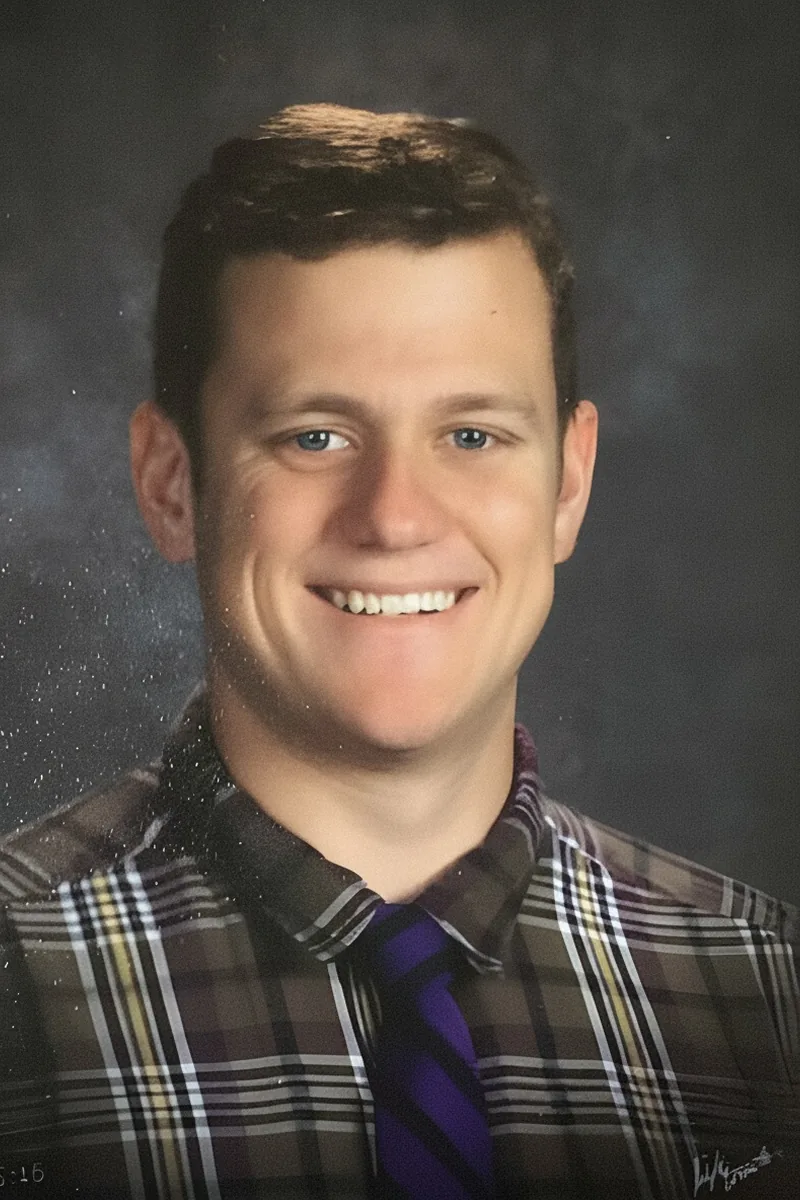
I am excited to be working with Varsity Tutors. I currently teach middle and high school social studies at Bishop Dunne Catholic School in Dallas. I teach 8th Grade US History, Spanish 3, AP Microeconomics, and Economics. I also have experience tutoring middle school Math while in college.
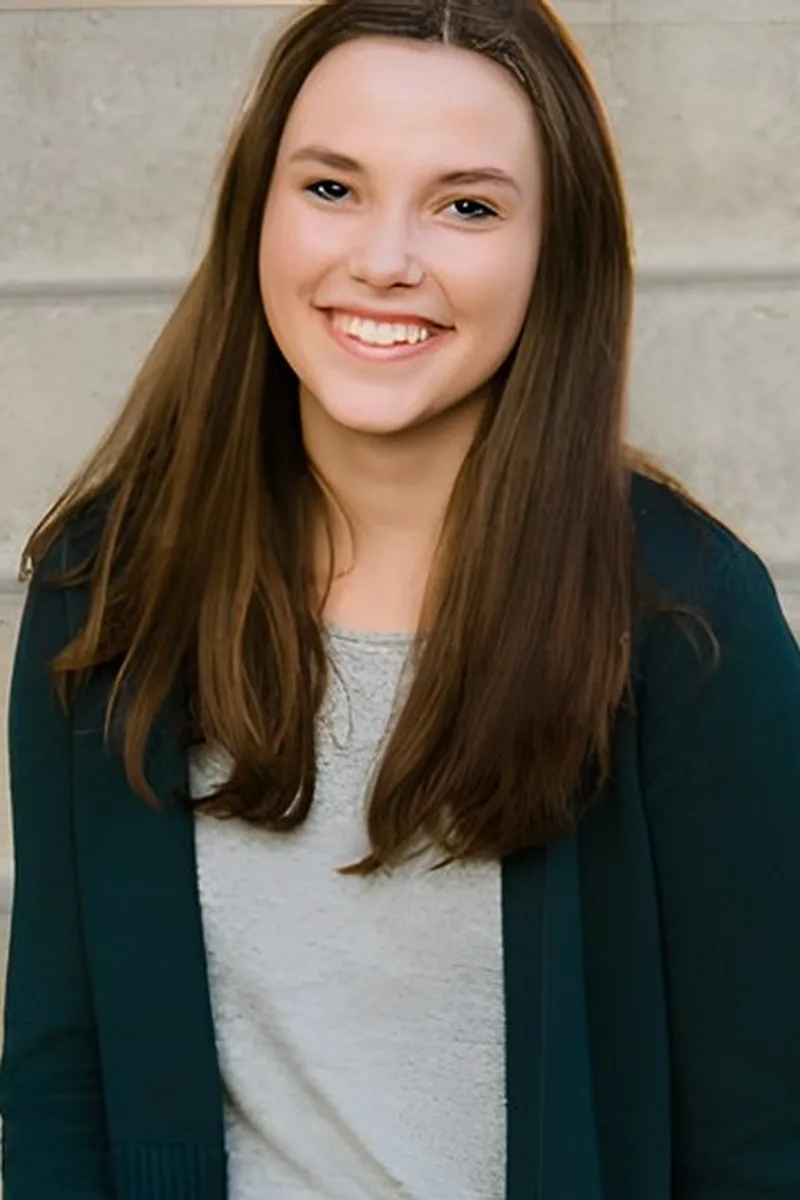
A history major learns to weigh evidence, spot patterns in messy data, and build arguments that hold up under scrutiny — and Rachel applies that same discipline when walking students through scientific reasoning tasks like interpreting graphs, evaluating experimental designs, and explaining cause-and-effect relationships. Her 35 ACT confirms she can handle the quantitative and analytical demands of science material, and her 4.9 rating suggests she makes the process click even for students who don't think of themselves as "science people."
Shanta's applied mathematics background means she approaches science through quantitative reasoning — interpreting data tables, unit conversions, and translating word problems into equations students can actually solve. Her experience teaching developmental college courses gave her a sharp sense of where students lose the thread between a science concept and the math underneath it.
The overlap between science and engineering runs deep, and Barry uses that perspective to make physics concepts like kinematics, energy conservation, and circuit analysis feel intuitive rather than abstract. His 1550 SAT score speaks to his comfort across quantitative and analytical reasoning, which he applies to unpacking lab data and connecting formulas to real phenomena.
Emily tutors science at the foundational level, where the biggest hurdle is often reading comprehension disguised as science — parsing lab instructions, interpreting data tables, and writing clear conclusions. Her Stanford training in analytical reading and her Creative Writing minor make her especially effective at teaching students how to pull meaning from dense scientific texts.
Brandy approaches science the way she approaches any complex subject: by teaching students to read carefully, extract key information, and build logical arguments from evidence. Her background in academic coaching means she also tackles the study habits side — how to organize notes, review effectively, and prepare for exams with a real plan.
Madeline's science background spans an unusual range: geophysics and mathematics at MIT, followed by teaching reactor physics to Navy nuclear operators, and now graduate-level atmospheric science at the University of Oklahoma. That cross-disciplinary experience means she can connect a middle schooler's lesson on energy transfer to the same thermodynamic principles she uses in her own research — making science feel like one coherent story rather than isolated chapters.
I am a 26 year old who obtained a Bachelors of Science in Biology in 2017 and a Masters of Science in Medical Science in 2020. My masters research was in the field of immunology where I studied Bisphosphonate Related Osteonecrosis of the Jaw (BRONJ), however I have knowledge in a wide range of subject matters. I have lived and studied in a variety of places including Scotland, Germany, Cambodia, and Alaska, and bring a unique world view to tutoring. I am so passionate about making tutoring an accessible, non-intimidating, super effective, and fun experience for all of my students. I look forward to being a part of your educational journey!
Kate's PhD work in psychology means she designs and evaluates research studies regularly — forming hypotheses, controlling variables, and analyzing results are part of her daily routine. That hands-on research experience, combined with her public health training in epidemiology, gives her a practical grip on scientific reasoning that translates directly to topics like experimental design, data interpretation, and understanding how evidence supports (or undermines) a conclusion.
Chemical engineering sits at the intersection of chemistry, physics, and applied math, which gives Cory a cross-disciplinary perspective that's hard to find in a single tutor. He's particularly strong at explaining how scientific concepts connect to real-world systems — reaction kinetics in industrial processes, thermodynamic principles in energy systems, stoichiometry in lab settings. Students rated him 4.9 out of 5.0.
Studying neuroscience and biomedical engineering means Daniyal lives at the intersection of biology, chemistry, and physics every day. He unpacks scientific concepts — cell signaling, energy transfer, experimental design — by connecting them to real systems in the body, which makes the material stick long after the test is over.
Growing up homeschooled through grade 12, Jordan learned science the way it sticks best — through individualized exploration rather than standardized worksheets, with each concept connected to the next until the bigger picture emerged. That background in Classics also means scientific terminology (most of it Greek and Latin in origin) is something he can unpack at the root level, turning intimidating vocab into something students can decode on their own. Rated 4.8 by students.
Not every science tutor comes from a lab background, but Meredith's interdisciplinary training — including research methods and data analysis in her PhD program — gives her a sharp eye for how to read scientific texts, interpret graphs, and think through cause-and-effect reasoning. She's especially effective with students who struggle to connect vocabulary-heavy material to the underlying concepts being tested.
Lina's engineering background means she learned science by doing it — applying physics principles to real systems, using chemistry in materials analysis, and interpreting data under pressure. She brings that hands-on perspective to science tutoring, breaking down topics like force diagrams, the periodic table, or experimental design into concrete, solvable problems.
Not many science tutors have actually taught high school biology and middle school science in a classroom setting — Anna has, and she's certified in the subject. She breaks down topics like cell energy processes, ecosystem dynamics, and basic chemistry by building visual models and real-world analogies that stick longer than rote memorization ever could.
Blake is currently pursuing a graduate degree in sports medicine after completing a biochemistry and molecular biology degree, so he lives in the world of scientific thinking daily — designing experiments, interpreting data, and connecting molecular-level processes to real outcomes. He unpacks topics like cell biology, genetics, and chemical reactions by grounding them in concrete examples students can visualize. Whether the class is life science or physical science, he knows how to make the material click.
Nathan's approach to science leans on the same structured thinking that drives his computer science work: isolate variables, test ideas, and interpret results. He walks students through how to read data tables, design simple experiments, and connect observations back to core concepts in life and physical science.
Petroleum engineering sits at the intersection of chemistry, physics, and applied math, so Adam tackles science topics with real fluency across disciplines. Whether a student is struggling with balancing chemical equations, understanding Newton's laws, or interpreting data from a lab report, he connects abstract concepts to tangible examples that make the material click.
Cellular and molecular biology sits at the intersection of biology, chemistry, and physics, which gives Nathaniel an unusually broad scientific vocabulary to draw from. He unpacks concepts like enzyme kinetics, cell signaling, or chemical equilibrium by tying them back to real biological systems students can visualize. His 5.0 rating speaks to how well that cross-disciplinary perspective lands.
As a math major who also tutors biology and college biology, Robert brings genuine scientific literacy to the table — he's comfortable with the quantitative side (interpreting graphs, calculating rates, working through dimensional analysis) and the conceptual side (cell biology, genetics, ecological systems). His 35 ACT confirms he can handle the data-interpretation and passage-based reasoning that modern science curricula increasingly demand.
An engineering graduate who studied physics, chemistry, and thermodynamics in depth, Richard approaches science as an interconnected system rather than isolated facts. Whether a student is learning about energy transfer, chemical reactions, or forces, he ties each topic back to observable, everyday phenomena — like why a car engine heats up or how bridges bear weight — to make the reasoning intuitive.
A computer science degree from Northwestern means Naythen spent four years immersed in the same core skills science coursework demands — forming hypotheses, running controlled tests, and debugging results when the output doesn't match the prediction. He's particularly strong on the quantitative side, walking students through data tables, graphing relationships, and making sense of units and formulas that often feel like a foreign language.
A professional writing career — blogging, technical writing, freelance journalism — trains you to research unfamiliar topics fast and explain them clearly, which is exactly what Marisa brings to science tutoring. She's strongest on the communication side: helping students decode dense textbook passages, organize lab write-ups, and translate observations into precise explanations that actually demonstrate understanding.
Biology is Bailey's home base, but her pre-med coursework spans chemistry, organic chemistry, and physics, giving her a broad scientific toolkit to draw from. She explains concepts like cellular respiration or genetic inheritance by connecting them to tangible examples — how muscles fatigue during exercise, or why siblings look different from each other.
An English composition degree might not scream science, but Isabel's strength is in the skill that trips up more science students than content ever does: explaining their thinking clearly on paper. Lab reports, experiment write-ups, and constructed-response questions all demand precise, organized writing — exactly what she's trained to teach. Her 4.9 rating suggests students walk away not just understanding the material but able to articulate it.
Greg's math degree means he's comfortable with the quantitative backbone of science — calculating velocity in physics, balancing equations, converting units — and he teaches those skills as part of the science rather than as separate math problems. His physics tutoring experience is especially relevant here, since he can walk students through force diagrams, energy calculations, and motion problems with the fluency of someone who actually enjoys the math behind the concepts.
Aerospace engineering sits at the intersection of physics, chemistry, and applied mathematics, so Riley's daily coursework involves the same scientific reasoning students encounter in middle and high school science classes. Whether it's interpreting data from an experiment, understanding forces and motion, or connecting energy concepts across disciplines, Riley unpacks the logic behind each topic rather than just handing over formulas.
A biochemistry degree means Susan spent years in labs running experiments firsthand — titrations, gel electrophoresis, microscopy — so she teaches the scientific method as something she's actually done, not just a five-step list on a worksheet. She's especially strong on the life and physical science side, connecting topics like cell biology, chemical reactions, and metabolism to the underlying logic that makes them predictable rather than random.
Engineering coursework at the University of Oklahoma means Lily tackles science through applied problem-solving — physics principles in structural analysis, chemistry in materials science, and biology in environmental systems. She breaks down scientific reasoning into the same systematic steps she uses in her own lab work, making topics like energy transfer, experimental design, and data interpretation click for students who need a concrete, logical approach.
An engineering background means Alexander learned science by applying it — calculating forces, analyzing material properties, and solving problems where getting the physics or chemistry wrong has real consequences. He leans heavily on asking students to reason through problems themselves rather than handing them answers, which builds the kind of independent thinking science coursework actually rewards. His math-heavy subject list also means he's comfortable with the quantitative side, from unit conversions to interpreting data sets.
Joseph's economics coursework — building models, testing predictions against real-world data, isolating variables — mirrors the scientific method so closely that the jump to science tutoring is shorter than it looks. He's particularly strong at walking students through how to read graphs and interpret experimental results, since that's essentially what economists do with different datasets. His 35 ACT and 5.0 rating back up the cross-disciplinary range.
I am a graduate of the University of Oklahoma. I received by Bachelor of Science in Chemical Engineering. I have mostly tutored privately on my own time in one on one sessions. I mostly enjoy helping others with math and science related problems. Education is necessary to improve life and I want others to realize this. In my spare time I enjoy thought provoking literature.
Carson approaches science the way he approached the ACT Science section, where he scored a 35 composite: as an exercise in reading data carefully and drawing defensible conclusions. He teaches students to interpret graphs, identify variables, and distinguish correlation from causation — skills that transfer across biology, chemistry, and earth science coursework.
Amber's agricultural education coursework covers biology, chemistry, and environmental science in applied settings — soil composition, plant physiology, ecosystem dynamics — which gives her a practical lens for explaining scientific concepts. She connects abstract ideas like the scientific method and data interpretation to tangible, real-world examples that make the material easier to retain.
I am a graduate of Oklahoma State University. I received my Bachelor of Science in Industrial Engineering and Management. Since graduation, I have taught secondary science courses both in-person and online. I have tutored middle school students in afterschool mathematics intervention tutoring programs. I am also certified in Teaching English as a Foreign Language (TEFL) and Teaching English to Speakers of Other Languages (TESOL). I myself am studying Spanish and find language learning fascinating. I am most passionate about helping students in mathematics, science, and English. Seeing students who once struggled and felt really anxious about certain subjects start to improve is really exciting!
A neurobiology-focused biology degree from Northwestern means Nina didn't just take introductory science — she studied cellular mechanisms, genetics, and brain physiology in depth. She connects textbook concepts like mitosis or enzyme kinetics to real research contexts, which tends to make the material click faster than rote memorization. Rated 5.0 by students.
Studying biomedical sciences across multiple degree programs gave Sam a deep comfort with biology, chemistry, and the overlap between them — cell signaling pathways, enzyme kinetics, physiological systems. He unpacks scientific concepts by tying them to real-world applications, like how understanding osmosis explains IV fluid choices in a hospital. That clinical framing tends to make abstract processes click faster for students.
A PhD program in Spanish and Iberian Studies might not scream 'science,' but Renee's doctoral training drilled the same core skills science coursework requires — forming a thesis from evidence, analyzing patterns in complex material, and defending conclusions under scrutiny. She's particularly useful for students who struggle with the literacy-heavy side of science: parsing dense textbook passages, interpreting diagrams, and writing clear lab reports that actually explain what happened and why.
Emily's undergraduate degree in Molecular, Cellular, and Developmental Biology and her MPH in Epidemiology give her deep fluency in both life sciences and the quantitative reasoning that underpins them. She unpacks topics like cell division, genetics, and experimental design by tying abstract concepts to real-world examples from public health research. Rated 5.0 by students.
Testimonials
Because the right Science tutor makes all the difference.
Average Session Rating – Based on 3.4M Learner Ratings
Practice Science
Free practice tests, flashcards, and AI tutoring for Science
Nearby Science Tutors
Other Tulsa Tutors
Related Science Tutors in Tulsa
Frequently Asked Questions
Many students struggle with connecting abstract scientific concepts to real-world applications, especially in chemistry and physics where visualization is critical. Additionally, with an average student-teacher ratio of 20.8:1 in Tulsa schools, students often don't get enough individualized feedback on lab work, problem-solving approaches, or misconceptions about foundational topics like energy transfer or cellular processes. Personalized tutoring helps students work through these gaps at their own pace and build confidence in areas where they're falling behind.
In a classroom setting, teachers must pace instruction for 20+ students with varying needs, which can leave some students behind or others unchallenged. Personalized 1-on-1 instruction allows tutors to focus entirely on your student's learning style, identify specific misconceptions, and adjust explanations in real time. This targeted approach is especially valuable in science, where hands-on problem-solving and conceptual understanding are critical to success in higher-level courses.
Varsity Tutors connects you with tutors who are familiar with Oklahoma's science standards and the specific curricula used across Tulsa's 14 school districts. During your first session, tutors will review your student's textbooks, assignments, and learning goals to align instruction with what's being taught in their classroom. This ensures tutoring reinforces and extends what students are already learning, rather than teaching in isolation.
Tutors work with students across all grade levels, from elementary science through advanced courses like AP Biology, AP Chemistry, AP Physics, and IB Science. Whether your student needs help with foundational concepts like life cycles and ecosystems, or is preparing for college-level exams, Varsity Tutors can connect you with a tutor who specializes in the specific course and level your student needs.
Yes. Tutors can help students understand the purpose behind experiments, work through lab reports, troubleshoot results, and develop stronger experimental design and data analysis skills. This is especially valuable for students preparing for AP or IB exams, where understanding the 'why' behind experiments is just as important as the technical execution. Personalized guidance on these skills builds scientific thinking that transfers across all science courses.
Tutors help students master both content knowledge and test-taking strategies specific to exams like the ACT Science section, AP exams, or end-of-course assessments required in Oklahoma. Rather than cramming, personalized instruction focuses on building deep understanding of core concepts and practicing retrieval of that knowledge under timed conditions. This approach leads to stronger performance and greater retention of material for future science courses.
In the first session, your tutor will assess your student's current understanding, identify specific areas of struggle, and learn about their learning style and goals. They'll review relevant coursework and discuss what success looks like—whether that's improving grades, building confidence, or preparing for an exam. This foundation allows the tutor to create a personalized plan that addresses your student's unique needs from day one.
Contact Varsity Tutors to tell us about your student's science goals, current level, and any specific challenges they're facing. We'll match your student with an expert tutor who fits their needs and schedule. Most students begin seeing improvement within a few sessions as they gain clarity on difficult concepts and develop stronger problem-solving skills.
Let’s find your perfect tutor
Answer a few quick questions. We’ll recommend the right plan and match you with a top 5% tutor.