Award-Winning Calculus Tutors
serving Tulsa, OK
Calculus
Tutors in Tulsa
Private 1-on-1 tutoring, weekly live classes for academic support, test prep & enrichment, practice tests and diagnostics, and more to elevate grades and test scores.
Based on 3.4M Learner Ratings
UniversitiesSchools & Universities
DeliveredHours Delivered
ProficiencyGrowth in Proficiency
Who needs tutoring?
No obligation. Takes ~1 minute.
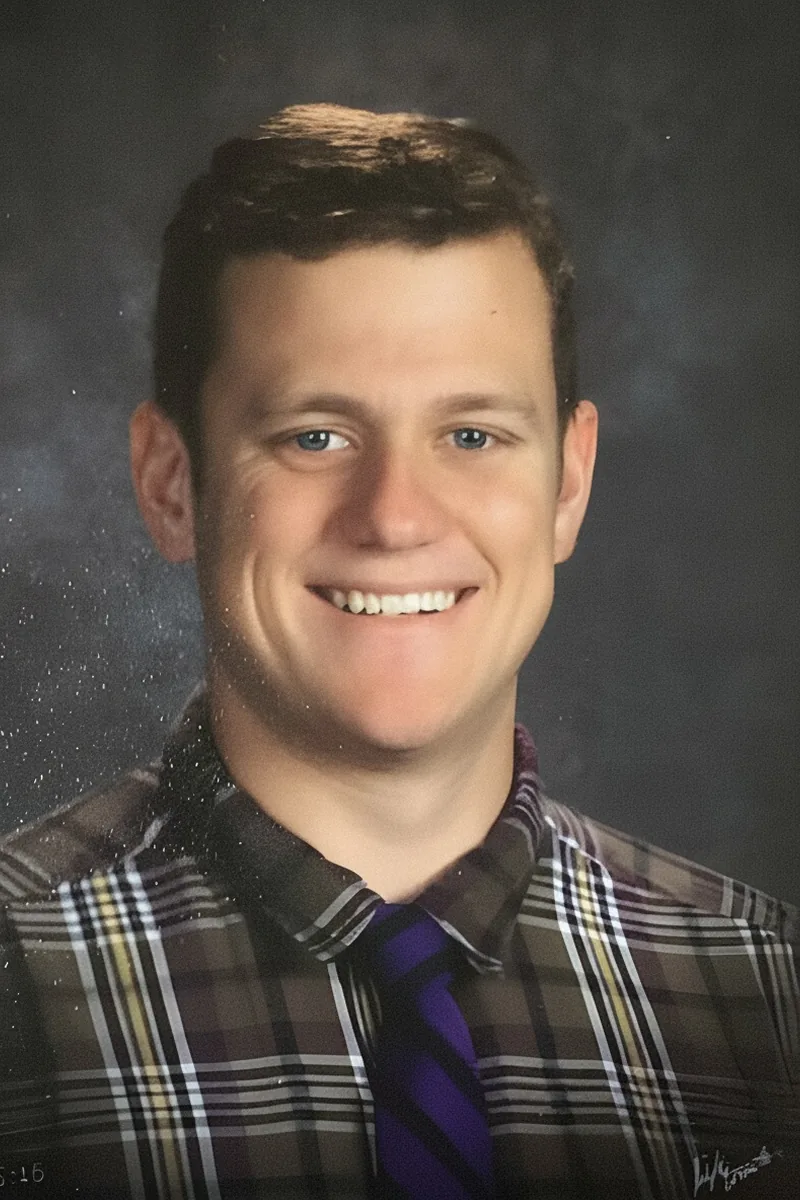
I am excited to be working with Varsity Tutors. I currently teach middle and high school social studies at Bishop Dunne Catholic School in Dallas. I teach 8th Grade US History, Spanish 3, AP Microeconomics, and Economics. I also have experience tutoring middle school Math while in college.
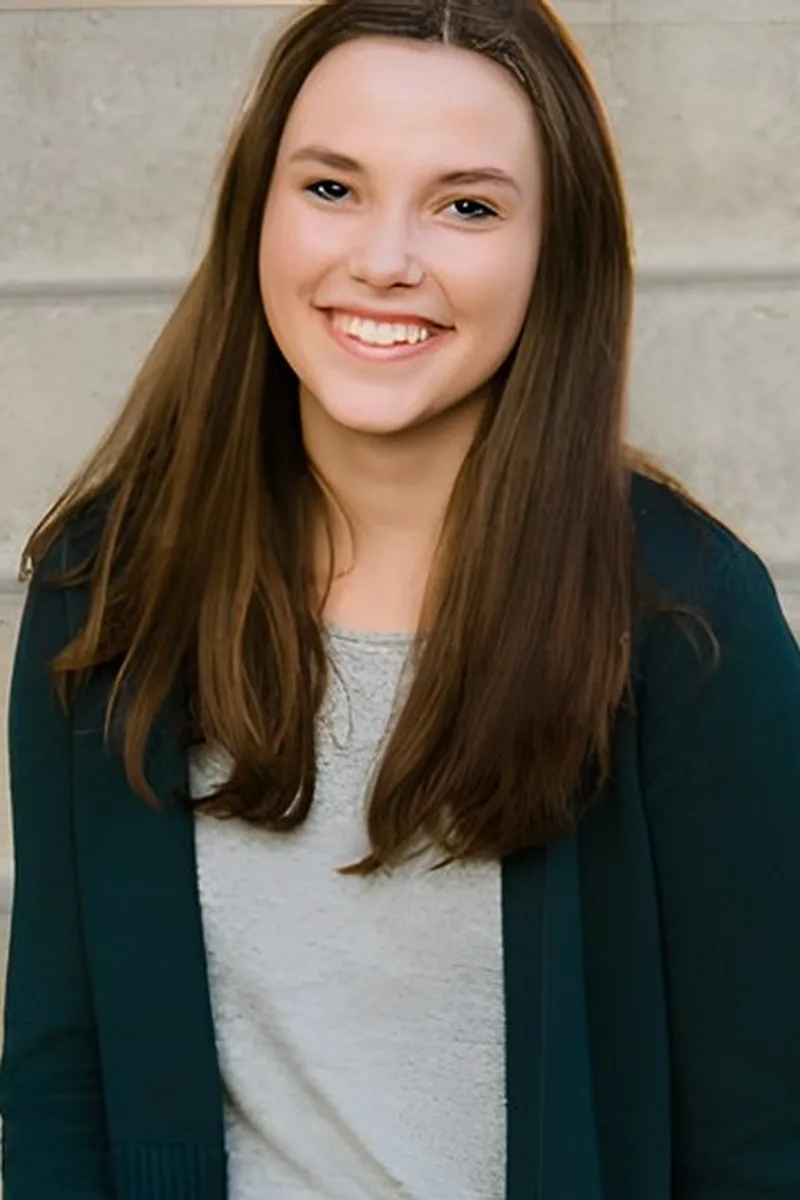
Rachel's history degree at Columbia means calculus isn't her home turf, but her 35 ACT composite reflects the kind of sharp quantitative reasoning that makes early calculus concepts accessible. She approaches limits and derivatives the way she'd approach a historical argument — methodically, making sure each logical step is airtight before moving to the next.
Limits, derivatives, and integrals each demand a different kind of mathematical reasoning, and Shanta's master's in applied mathematics means she can unpack the theory behind each one — not just the mechanical steps. She's taught undergraduate calculus courses and knows how to connect the epsilon-delta definition of a limit to the intuitive idea of approaching a value. That dual perspective, rigorous but accessible, is what makes difficult calculus topics click.
Computer engineering coursework puts Barry squarely in calculus territory — from signal processing to circuit analysis, the math he uses daily is built on derivatives, integrals, and differential equations. His 1550 SAT confirms the quantitative chops, and his engineering context means he can show students what a Riemann sum or chain rule problem actually looks like when it's doing real work in a system design.
Honestly, calculus is a stretch from an American Studies and Creative Writing background — Emily doesn't pretend otherwise. But she tutors math alongside her humanities subjects, and her knack for making abstract ideas concrete through clear, structured explanations carries over well to early calculus territory like limits and slope-of-a-tangent problems, where the conceptual "what's actually happening here" matters as much as the computation.
Music composition is surprisingly calculus-adjacent — Brandy's MFA work involved analyzing waveforms, harmonic series, and the mathematical structures underlying sound, all of which rely on the same rate-of-change and accumulation thinking that drives derivatives and integrals. Her 1510 SAT confirms strong quantitative chops, and she teaches calculus concepts by connecting abstract notation to the patterns and transformations she's spent years working with in composition.
Four years teaching physics to Navy sailors at Nuclear Power School meant Madeline was constantly working with the calculus underneath reactor dynamics — heat transfer rates, fluid flow equations, and the differential relationships that govern how a nuclear plant behaves. Her MIT math degree supplies the theoretical backbone, while that hands-on teaching experience means she knows exactly where students get tripped up on integration techniques, series convergence, and the chain rule. Rated 4.9 by students.
I am a 26 year old who obtained a Bachelors of Science in Biology in 2017 and a Masters of Science in Medical Science in 2020. My masters research was in the field of immunology where I studied Bisphosphonate Related Osteonecrosis of the Jaw (BRONJ), however I have knowledge in a wide range of subject matters. I have lived and studied in a variety of places including Scotland, Germany, Cambodia, and Alaska, and bring a unique world view to tutoring. I am so passionate about making tutoring an accessible, non-intimidating, super effective, and fun experience for all of my students. I look forward to being a part of your educational journey!
Psychology PhD work is surprisingly calculus-adjacent — Kate's graduate statistics training involves the continuous probability distributions, area-under-the-curve reasoning, and rate-of-change logic that sit at the heart of integral and differential calculus. She teaches those concepts by connecting them to the applied contexts she uses daily, like modeling how a variable shifts over time in longitudinal research, which gives abstract notation a concrete purpose.
Derivatives and integrals click faster when a student sees them as tools for describing real change, not just symbol-pushing exercises. Daniyal's neuroscience coursework at Agnes Scott requires heavy use of calculus in modeling biological systems, so he teaches the subject with concrete applications already built in.
Chemical engineering doesn't just use calculus — it lives inside it, from heat transfer equations to reaction rate modeling to fluid dynamics. Cory's engineering training means he can teach derivatives, integrals, and series not as abstract procedures but as tools he's actually applied to solve real problems. His 1550 SAT and 4.9 rating back up that quantitative depth.
Growing up homeschooled through grade 12 meant Jordan learned math the way it makes the most sense — one concept building carefully on the last, with room to ask why at every step. That individualized foundation, paired with a 33 ACT composite, gives him the quantitative chops and the teaching instinct to walk through early calculus ideas like limits and derivative rules at whatever pace actually lets them sink in.
International studies isn't a math-heavy field, so Meredith is straightforward that calculus sits outside her core academic training. That said, her 33 ACT composite demonstrates solid quantitative reasoning, and her PhD-level research habits — breaking dense, unfamiliar material into structured arguments — give her a methodical way to unpack early calculus ideas like limits and instantaneous rate of change for students who need the conceptual logic laid bare before the formulas make sense.
Industrial engineering at Oklahoma means Lina didn't just take calculus — she relied on it daily, using integration for process optimization, derivatives for minimizing production costs, and differential equations for modeling system throughput. That applied engineering context lets her explain *why* a technique works by connecting it to a real problem, which tends to make concepts like the chain rule or area-under-the-curve stick far longer than rote practice alone. Rated 4.8 by students.
Blake's biochemistry background means he encountered calculus not as abstract theory but as a tool — modeling reaction rates, enzyme kinetics, and changes in concentration over time. He teaches derivatives and integrals by grounding each concept in what it actually represents, which makes the leap from limits to applications feel natural rather than overwhelming.
Teaching high school Biology and middle school Science meant Anna regularly used calculus concepts in disguise — exponential growth models, rates of chemical reactions, and the slope-based reasoning that underpins so much of the physical sciences. Her math certification and classroom experience across multiple grade levels give her a clear picture of where students' algebra foundations tend to crack under the weight of new calculus notation, so she can patch those gaps while introducing derivatives and integrals.
A computer science degree means Nathan has used calculus as a working tool — from analyzing algorithm complexity with limits to applying integrals in graphics and signal processing — rather than just learning it in isolation. That practical fluency lets him explain concepts like the chain rule or area-under-a-curve problems by connecting them to computational logic, where each step has to make sense before the next one runs.
Engineering programs throw calculus at real systems from day one — pressure gradients, flow rates, optimization under constraints — so Adam learned these tools by actually using them. He tackles integration techniques, series convergence, and multivariable concepts by anchoring each method to a concrete problem that makes the abstraction click.
Having TA'd computer science courses at Northwestern, Naythen is comfortable in the math that underpins algorithms — and calculus is the backbone of much of it, from optimization problems to the convergence analysis behind iterative methods. His CS training means he can walk through integration techniques and multivariable concepts (he teaches through Calc 3) with the rigor of someone who's actually applied them in code, not just on paper.
Pre-med biology at Oklahoma means Nathaniel uses calculus constantly — modeling reaction rates in biochemistry, analyzing enzyme kinetics curves, and interpreting the differential equations that describe how biological systems change over time. That daily exposure to derivatives and integrals in a scientific context gives him a practical vocabulary for explaining what these tools actually do, not just how to compute them. Holds a 5.0 rating.
Biology majors use calculus constantly — modeling population growth with differential equations, analyzing rates of enzyme reactions, interpreting area under pharmacokinetic curves. Bailey brings that applied perspective to calculus tutoring, connecting derivatives and integrals to real scenarios so the concepts click rather than feel abstract.
Limits, derivatives, and integrals each layer on top of each other, so a shaky grasp of one concept compounds into confusion on everything that follows. Robert's mathematics coursework means he doesn't just know how to solve calculus problems — he understands the underlying theory well enough to explain why the chain rule works or what an integral actually represents geometrically.
Honestly, calculus is a long way from Marisa's master's-level writing expertise — but her English and writing background trained her to dissect complex, layered arguments, and she applies that same careful logic to unpacking what a limit or a derivative is actually saying beneath the notation. Her approach treats each new calculus concept like a dense paragraph: slow down, identify what each piece does, and rebuild understanding from there.
Engineering coursework at the University of Tulsa put Richard through the full calculus sequence in contexts that matter — analyzing circuit behavior, modeling thermodynamic systems, and solving the differential equations behind mechanical motion. That applied background means he teaches integration techniques and derivative rules by connecting them to the physics and engineering problems they were invented to solve. Rated 4.7 by students.
Greg's math degree means he didn't just pass calculus — he spent years building on it through courses like discrete math and advanced analysis, so he can trace exactly how a concept like the Fundamental Theorem connects differentiation and integration into one coherent idea. He's particularly strong at diagnosing where an algebra gap is silently wrecking a student's chain rule or integration-by-parts work, then fixing that root issue so the calculus itself stops feeling impossible.
An English composition degree doesn't scream calculus, but Isabel's tutoring roster spans pre-algebra through calculus, meaning she's walked the full conceptual staircase with students and knows exactly where each step trips people up. Her 4.9 rating across 52 subjects reflects a teaching style built on translating intimidating notation into clear, plain-language explanations — particularly useful when limits and early derivatives are more about reading the math carefully than crunching numbers.
Aerospace engineering doesn't just use calculus — it lives in it. Riley's coursework involves applying derivatives to model flight dynamics and integrals to calculate thrust and aerodynamic loads, so when he teaches concepts like the chain rule or integration by parts, he can point to exactly where they show up in real rocket science. That hands-on engineering context turns abstract procedures into problems with physical meaning.
I am a graduate of the University of Oklahoma. I received by Bachelor of Science in Chemical Engineering. I have mostly tutored privately on my own time in one on one sessions. I mostly enjoy helping others with math and science related problems. Education is necessary to improve life and I want others to realize this. In my spare time I enjoy thought provoking literature.
Economics coursework is where calculus stops being abstract — Joseph uses marginal analysis, cost optimization, and elasticity models daily in his studies, which means he can explain derivatives and integrals as tools that answer real questions about how markets behave. His 35 ACT composite confirms the quantitative chops to back that up, and his 5.0 tutoring rating suggests he communicates the material clearly once he gets there.
Pre-engineering coursework means Alexander didn't just pass calculus — he relied on it daily, applying derivatives to motion problems and integrals to force and energy calculations where getting the math wrong meant getting the physics wrong. That applied foundation lets him teach concepts like the chain rule or integration by parts as tools with a job to do, not abstract procedures to memorize.
Derivatives and integrals clicked for Susan when she started applying them to real biochemical systems — reaction rates, area under concentration curves, related rates in fluid dynamics. She teaches calculus by grounding each rule (chain rule, integration by parts, L'Hôpital's) in problems that show why the technique exists, not just how to execute it.
Limits, derivatives, and integrals aren't just academic exercises for Lily — her systems engineering program at OU treats them as essential tools for modeling everything from production rates to dynamic systems. She breaks down tricky topics like the chain rule, implicit differentiation, and integration techniques by connecting each one to a concrete problem worth solving.
Philosophy trains you to follow an argument step by step and spot exactly where the logic breaks — which is precisely the skill that makes limits and derivatives accessible rather than mysterious. Carson's 35 ACT composite backs up his quantitative chops, and his approach to calculus mirrors how he tackles a philosophical proof: isolating each claim, testing it, and building toward the conclusion so nothing feels like a magic trick.
Agricultural Education at OSU isn't a typical calculus background, but Amber's coursework includes the applied math behind crop yield modeling and resource optimization — places where derivatives and rates of change show up in practical, tangible ways. She teaches early calculus concepts by connecting them to real-world quantities that change over time, which tends to make the abstraction less intimidating. Rated 5.0 by students.
Hi, I'm Trace! I graduated summa cum laude with a Bachelor's degree in Music and a minor in Organizational Leadership. I'll be starting graduate school in the fall, studying Arts Administration. I'm a National Merit Scholar, AP Capstone Diploma recipient, Duke TIPster, and award-winning writer with 7+ years of professional tutoring experience. I'm passionate about helping students find confidence and initiative in all of their academic endeavors. Whether it's preparing for a major exam or working through homework questions, I approach every session with care, intentionality, and enthusiasm.
Biomedical engineering at Brown means Phillip uses calculus daily — whether it's modeling fluid flow through blood vessels, analyzing stress-strain curves in tissue mechanics, or solving the differential equations behind medical device design. That hands-on engineering context lets him teach integration techniques and derivative applications as tools with real physical meaning, not just abstract procedures. Rated 5.0 by students.
Between a physics bachelor's and a PhD in biomedical engineering, Andrew has used calculus as a daily working language — from modeling tissue mechanics to solving the differential equations that describe biological systems. That depth means he can teach derivatives, integrals, and multivariable concepts not as isolated procedures but as tools with clear physical meaning. Rated 4.9 by students.
Journalism might not scream calculus, but Meghan's 1520 SAT demonstrates she can handle rigorous quantitative work, and her reporting career has trained her to take dense, unfamiliar material and make it clear and logical on deadline. She brings that same skill to early calculus — breaking down what a limit is actually saying or why a derivative describes a rate of change — so the reasoning lands before the formulas pile up.
Biostatistics at the master's and doctoral level means Nina uses calculus constantly — integration for probability density functions, derivatives for maximum likelihood estimation, and multivariable chain rules that underpin regression models. That daily fluency lets her teach concepts like Riemann sums or related rates by connecting them to the statistical machinery they actually power. Rated 5.0 by students.
Testimonials
Because the right Calculus tutor makes all the difference.
Average Session Rating – Based on 3.4M Learner Ratings
Nearby Calculus Tutors
Other Tulsa Tutors
Related Math Tutors in Tulsa
Frequently Asked Questions
Many Calculus students struggle with the shift from algebra and precalculus to abstract, conceptual thinking—especially understanding limits, derivatives, and integrals beyond just memorizing formulas. Word problems that require translating real-world scenarios into mathematical models, multi-step proofs, and connecting graphical, analytical, and numerical representations often create bottlenecks. Personalized 1-on-1 instruction helps students see the underlying patterns and logic, transforming Calculus from a collection of procedures into a coherent framework.
During an initial session, a tutor will assess your current understanding of key precalculus concepts (functions, trigonometry, limits), identify specific topics causing difficulty, and learn your learning style and goals. This diagnostic approach allows the tutor to create a personalized plan tailored to your needs—whether you're catching up, aiming for a higher grade, or preparing for AP Calculus or college-level work. You'll leave with clarity on next steps and momentum moving forward.
Calculus instructors expect students to justify each step and explain the reasoning behind their approach—not just arrive at an answer. Tutors help you develop a clear problem-solving process by walking through examples together, asking guiding questions that build your understanding, and teaching you how to communicate mathematical ideas in writing. This builds both conceptual mastery and the communication skills needed for exams, AP tests, and college-level coursework.
Word problems require translating English into mathematical equations and then applying Calculus techniques—a skill that takes practice and strategy. Tutors teach you a systematic approach: identifying what you know and what you're solving for, sketching diagrams, choosing the right Calculus tool (derivative, integral, optimization), and checking whether your answer makes sense in context. Breaking these problems into manageable steps removes the overwhelm and builds confidence.
Math anxiety is common, especially in advanced courses like Calculus, but personalized instruction in a low-pressure environment makes a real difference. Working one-on-one allows you to ask questions without judgment, move at your own pace, and celebrate small wins as you master concepts. Many students find that understanding the 'why' behind Calculus—rather than just memorizing rules—transforms anxiety into genuine interest and confidence.
Yes. Tulsa students use different textbooks and curricula depending on their school and program—whether it's AP Calculus AB/BC, IB Higher Level Math, honors Calculus, or college-level courses. Tutors are experienced across these different approaches and can align their instruction with your specific curriculum, notation, and learning objectives. This ensures continuity between classroom and tutoring sessions.
Absolutely. AP Calculus AB and BC exams require both procedural fluency and conceptual understanding, plus the ability to explain reasoning clearly on free-response questions. Tutors help you master the full curriculum, practice exam-style problems, develop time-management strategies, and identify weak areas before test day. Personalized instruction is especially valuable for closing gaps and building the confidence needed to perform well under pressure.
Varsity Tutors connects you with expert tutors who have strong backgrounds in mathematics—including degrees in math, engineering, physics, or related fields, plus proven experience teaching or tutoring Calculus at the high school and college levels. Tutors understand both the subject matter and how students learn, and they're matched with you based on your specific needs and goals to ensure the best fit.
Let’s find your perfect tutor
Answer a few quick questions. We’ll recommend the right plan and match you with a top 5% tutor.