Award-Winning Algebra Tutors
serving Tulsa, OK
Algebra
Tutors in Tulsa
Private 1-on-1 tutoring, weekly live classes for academic support, test prep & enrichment, practice tests and diagnostics, and more to elevate grades and test scores.
Based on 3.4M Learner Ratings
UniversitiesSchools & Universities
DeliveredHours Delivered
ProficiencyGrowth in Proficiency
Who needs tutoring?
No obligation. Takes ~1 minute.
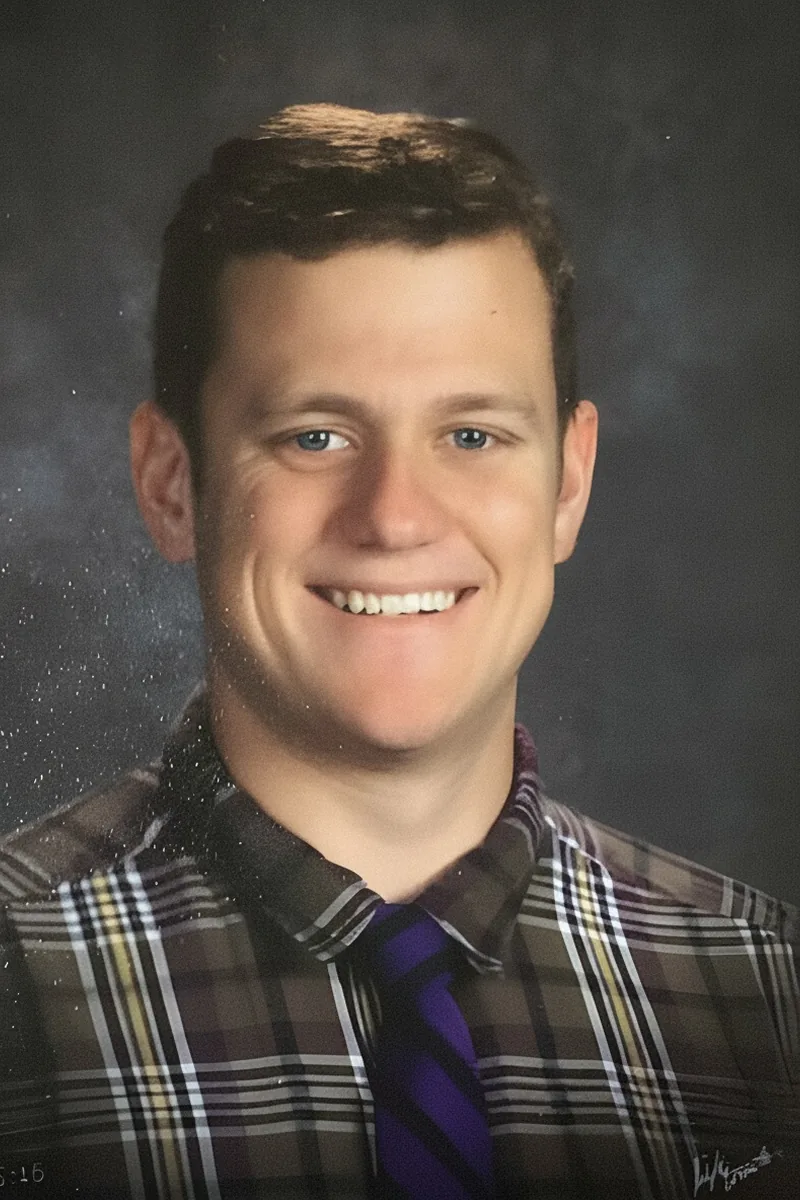
I am excited to be working with Varsity Tutors. I currently teach middle and high school social studies at Bishop Dunne Catholic School in Dallas. I teach 8th Grade US History, Spanish 3, AP Microeconomics, and Economics. I also have experience tutoring middle school Math while in college.

Rachel approaches algebra the way she approaches historical arguments: by making sure every step has a logical reason behind it. Whether it's solving systems of equations or simplifying rational expressions, she walks students through the underlying logic so they can reconstruct solutions on their own rather than relying on memorized shortcuts. Rated 4.9 by students.
The leap from solving simple equations to manipulating expressions with multiple variables, factoring polynomials, and interpreting graphs trips up a lot of students. Shanta's approach is to trace each algebra rule back to a concrete idea — showing, for instance, why distributing actually works, not just how to do it. Her university teaching background in both developmental and undergraduate math means she's comfortable meeting a wide range of algebra skill levels.
Barry breaks algebraic concepts like systems of equations and polynomial manipulation into logical steps that mirror how engineers actually solve problems. His computer engineering background means he treats algebra not as an abstract exercise but as the essential toolkit it really is — building toward everything from physics to programming.
Emily tackles algebra by anchoring abstract variables to real situations — translating word problems into equations, graphing linear relationships, and building intuition for why inverse operations work. Her Stanford training in American Studies may seem unrelated, but the discipline of constructing logical arguments transfers directly to solving multi-step algebraic problems.
Before anyone can tackle calculus or physics, the algebraic machinery has to be second nature — factoring, manipulating rational expressions, solving systems of equations without hesitation. Madeline spent four years at Nuclear Power School watching students stumble on physics problems because of shaky algebra, so she knows exactly which skills to shore up and how to make them stick.
I am a 26 year old who obtained a Bachelors of Science in Biology in 2017 and a Masters of Science in Medical Science in 2020. My masters research was in the field of immunology where I studied Bisphosphonate Related Osteonecrosis of the Jaw (BRONJ), however I have knowledge in a wide range of subject matters. I have lived and studied in a variety of places including Scotland, Germany, Cambodia, and Alaska, and bring a unique world view to tutoring. I am so passionate about making tutoring an accessible, non-intimidating, super effective, and fun experience for all of my students. I look forward to being a part of your educational journey!
The jump from arithmetic to algebra trips up many students right at the point where equations start representing relationships instead of just answers. Brandy zeroes in on that transition, teaching how to translate word problems into expressions and how to manipulate equations with confidence. Her 1510 SAT score speaks to the kind of quantitative fluency she brings to every session.
The moment algebra stops making sense is usually the moment a student loses track of what the variables actually represent. Kate anchors abstract expressions and equations in concrete meaning, whether that's solving systems of equations or factoring quadratics, so the steps feel logical rather than like arbitrary rules to memorize.
When a student stalls on systems of equations or quadratic functions, the issue is almost always a gap in how they think about variables and relationships — not a lack of practice problems. Daniyal diagnoses exactly where that gap lives and rebuilds the reasoning around it. His 35 ACT and 1520 SAT speak to the kind of mathematical fluency he brings to every session.
A lot of Algebra frustration comes from being told to follow steps without understanding why they work — especially with factoring, distributing, and solving multi-step equations. Cory reverses that pattern by showing the logic first, then the shortcut, so students can reconstruct a method even when a problem looks unfamiliar. His engineering mindset keeps every explanation structured and practical.
A clear, logical thinker with a knack for breaking problems into smaller pieces, Meredith tackles algebra by connecting equations to real-world reasoning — the same skill set she honed studying international relations at Pepperdine. She's especially effective at demystifying variables, inequalities, and systems of equations for students who feel stuck on the "why" behind each step.
The jump from arithmetic to algebra often feels like learning a new language, and Jordan — who studied classical languages and comparative mythology at the University of Oklahoma — actually treats it that way. He teaches students to read an equation the way you'd parse a sentence: identifying what each term does, isolating the unknown, and building fluency with expressions, factoring, and linear systems through repeated, structured practice.
When variables start replacing numbers, many students lose their footing because they're memorizing steps without understanding what an equation is really saying. Blake tackles algebra by making sure students can translate word problems into expressions and back again, building the kind of flexible thinking that carries through to every math course that follows.
A certified math teacher with experience spanning elementary through high school, Anna tackles algebra by grounding abstract ideas — like solving systems of equations or simplifying rational expressions — in concrete reasoning. She's taught students at vastly different starting points and knows that the jump to symbolic thinking is where most confusion begins. Her approach zeroes in on that transition, building fluency with variables one concept at a time.
The jump from arithmetic to algebra — where numbers become variables and equations become puzzles — is where many students lose confidence. Lina tackles this by grounding abstract ideas like solving systems of equations or factoring polynomials in concrete examples drawn from her engineering training, so the 'why' behind each rule is always visible.
Most Algebra frustration comes not from the new material itself but from gaps in number sense that surface once variables enter the picture. Nathan diagnoses exactly where a student's understanding breaks down — whether it's distributing negatives, solving multi-step equations, or graphing linear functions — and rebuilds from that specific point forward.
Most algebra frustration comes not from the operations themselves but from not understanding what a variable represents or why an equation balances. Adam addresses that head-on, teaching students to translate word problems into expressions and to read equations as statements they can test and verify. His 1480 SAT score speaks to the kind of mathematical fluency he brings to foundational topics.
Factoring a quadratic or solving a system of equations isn't just about getting the right answer — it's about recognizing structure. Nathaniel unpacks algebraic reasoning by showing students the "why" behind each manipulation, building the kind of number sense that carries into every math and science course that follows.
When a student stalls on systems of equations or quadratic factoring, the issue is usually a shaky grasp of what the symbols represent rather than a lack of effort. Richard tackles this by demonstrating what an equation actually models — showing, for instance, how a linear system describes two constraints colliding at a single point. His engineering background gives him a deep bench of concrete scenarios to make algebraic reasoning feel purposeful.
Most Algebra struggles come down to one thing: students learn procedures without understanding what the symbols mean, so every new problem type feels like starting from scratch. Robert tackles this by unpacking the reasoning behind each step — showing, for instance, why "moving a term to the other side" is really just applying inverse operations — so that solving equations becomes intuitive rather than mechanical.
Marisa treats algebra like a language — variables, equations, and inequalities all follow grammatical rules that, once internalized, make even word problems and systems of equations feel intuitive. Her writing-trained eye for structure and logic translates surprisingly well to simplifying expressions and solving for unknowns.
Most Algebra frustration comes from one place: students learn procedures without understanding what they're actually doing when they solve for x or factor a quadratic. Naythen's computer science training at Northwestern built on algebraic thinking daily — variables, expressions, and logical manipulation are the backbone of programming. He teaches Algebra by making each operation feel purposeful, whether the topic is linear equations, inequalities, or systems.
A solid grip on algebra is what separates students who struggle in later math and science courses from those who don't. Bailey breaks down topics like systems of equations, factoring, and function notation with a methodical approach shaped by years of solving quantitative problems across biology and chemistry coursework.
The jump from arithmetic to algebra trips up students who've never had to think about *why* a process works, not just *how*. Isabel tackles that transition head-on, breaking down concepts like solving multi-step equations, graphing linear functions, and translating word problems into algebraic expressions. Her 4.9 rating speaks to how well that approach lands.
The jump from arithmetic to algebra trips students up because variables suddenly represent unknowns instead of fixed quantities — and that abstraction needs to be taught, not assumed. Greg breaks down how to translate word problems into equations, manipulate expressions, and interpret what a solution actually means in context. He makes the logic behind each step visible so that solving equations feels like reasoning, not guessing.
Aerospace engineering runs on algebra — every trajectory calculation, every structural load equation starts with setting up and solving expressions that demand precision with variables. Riley's coursework means she routinely tackles systems of equations and algebraic rearrangements under real engineering constraints, so she can walk students through the reasoning behind each manipulation rather than just handing them steps to memorize.
One thing that trips up Algebra students is treating equations as puzzles to memorize instead of relationships to understand. Lily tackles this by walking through the logic behind each step — whether it's solving linear systems, factoring quadratics, or interpreting slope — so the process makes sense rather than feeling like a magic trick.
The question Alexander asks most often in an algebra session isn't 'what's the answer?' — it's 'why did you try that step?' His pre-engineering training means he knows how to solve for unknowns and simplify expressions, but his real skill is getting students to articulate their own reasoning through problems like systems of equations or quadratic factoring until the logic becomes theirs, not his.
I am a graduate of the University of Oklahoma. I received by Bachelor of Science in Chemical Engineering. I have mostly tutored privately on my own time in one on one sessions. I mostly enjoy helping others with math and science related problems. Education is necessary to improve life and I want others to realize this. In my spare time I enjoy thought provoking literature.
Most algebra struggles come down to one thing: students can follow a procedure but can't set up the equation themselves. Susan spends significant time on translating word problems into algebraic expressions — teaching students to identify what the variable represents and build the equation from there, which makes factoring and solving feel purposeful.
A lot of algebra frustration comes from skipping the "why" behind manipulations — why you flip an inequality sign, why factoring works, why a system of equations can have no solution. Joseph breaks those reasoning gaps down clearly, connecting algebraic techniques to the quantitative thinking he uses daily as an economics major.
Most algebra struggles come down to one thing: students learn procedures without understanding what the symbols mean. Casandra digs into the logic behind factoring, systems of equations, and quadratic formulas so that students can reconstruct methods on their own rather than relying on memorized shortcuts. She's been teaching algebra one-on-one since 2016 and knows exactly where the common sticking points are.
A philosophy degree trains you to break complex arguments into precise logical steps — which turns out to be exactly what students need when they're stuck on systems of equations or quadratic functions. Carson applies that structured thinking to algebra, walking through each problem so the reasoning clicks rather than just the answer.
When variables first replace numbers, a lot of students lose confidence — not because the math is harder, but because nobody explained what the variable actually represents. Amber tackles algebra by grounding equations, inequalities, and systems in real scenarios so that solving for x feels like answering a question rather than performing a magic trick. She holds a 5.0 client rating.
I am a graduate of Oklahoma State University. I received my Bachelor of Science in Industrial Engineering and Management. Since graduation, I have taught secondary science courses both in-person and online. I have tutored middle school students in afterschool mathematics intervention tutoring programs. I am also certified in Teaching English as a Foreign Language (TEFL) and Teaching English to Speakers of Other Languages (TESOL). I myself am studying Spanish and find language learning fascinating. I am most passionate about helping students in mathematics, science, and English. Seeing students who once struggled and felt really anxious about certain subjects start to improve is really exciting!
The jump from arithmetic to algebra trips students up when variables start feeling like random letters instead of meaningful unknowns. Sherry tackles this by connecting equation-solving and graphing to real scenarios, building the kind of algebraic reasoning that carries through to higher math. Her background in linguistics gives her a knack for translating word problems into clear mathematical expressions.
A strong algebra foundation matters for every science and math course that follows, and Connor approaches it with that trajectory in mind. He zeroes in on the reasoning behind operations — why you isolate variables the way you do, how inequalities behave when you multiply by negatives — so that students build intuition they can carry into more advanced work.
The moment algebra stops being about "solve for x" and starts involving systems, quadratics, or rational expressions, many students lose the thread. Tom's technique is almost archaeological — he digs back through a student's understanding to find the precise point where a concept went sideways, then reconstructs from there. That targeted approach, reflected in his 4.9 rating, keeps sessions efficient and avoids wasting time on material a student already knows.
Testimonials
Because the right Algebra tutor makes all the difference.
Average Session Rating – Based on 3.4M Learner Ratings
Practice Algebra
Free practice tests, flashcards, and AI tutoring for Algebra
Nearby Algebra Tutors
Other Tulsa Tutors
Related Math Tutors in Tulsa
Frequently Asked Questions
Many students struggle with the shift from basic arithmetic to abstract algebraic thinking—especially when it comes to understanding why we use variables and how to manipulate equations conceptually, not just mechanically. Word problems, multi-step equations, and graphing are frequent pain points, as is building confidence after falling behind. With personalized 1-on-1 instruction, tutors can identify exactly where a student's understanding breaks down and rebuild that foundation with concrete examples before moving to more abstract concepts.
Your first session is about understanding where you are right now. A tutor will work through a few algebra problems with you to see your strengths, identify gaps in understanding, and learn your learning style. This isn't a test—it's a conversation that helps the tutor create a personalized plan focused on the concepts you need help with, whether that's solving equations, graphing, or tackling word problems. You'll leave with clarity on what to focus on next.
Many algebra students can get an answer but struggle to show the steps or explain *why* they did something. Personalized tutoring focuses on building that reasoning skill by having you talk through each step, identify which properties or rules you're using, and understand the logic behind the process. This approach builds both confidence and the communication skills teachers expect—and it makes algebra feel less like memorizing rules and more like solving a puzzle you understand.
Yes. Tulsa schools use different textbooks and approaches, and tutors are experienced working across various curricula—whether your school uses traditional textbooks, standards-based programs, or hybrid approaches. Tutors can align their instruction with what your teacher is covering, help you understand your specific textbook's examples, and make sure you're learning the concepts in a way that connects to your classroom.
Absolutely. Math anxiety often comes from past struggles or feeling lost in a classroom setting, and personalized 1-on-1 instruction removes that pressure. Working at your own pace, asking questions without judgment, and experiencing small wins builds confidence quickly. When you start understanding the *why* behind algebra instead of just following steps, the subject becomes less intimidating and more manageable.
Tutors teach you to break problems into smaller, manageable steps: identify what you know, what you're looking for, choose a strategy, and check your answer. For word problems specifically, they help you translate English into mathematical language and recognize patterns in problem types. For multi-step equations, they show you how to see the structure of the problem and work systematically. These strategies stick with you across different problem types.
Graphing challenges often stem from not fully understanding the connection between equations and their visual representation on a coordinate plane. Tutors use a combination of visual explanations, hands-on practice, and real-world examples to help you see *why* a line looks the way it does. They'll work with you on slope, intercepts, and transformations until graphing feels intuitive rather than confusing.
Varsity Tutors connects you with tutors who have expertise in algebra and understand how to teach it effectively. The matching process considers your specific needs, learning style, and schedule. You'll work with a tutor who can adapt their teaching to your pace and focus on the exact topics giving you trouble, whether that's foundational concepts or advanced problem-solving.
Let’s find your perfect tutor
Answer a few quick questions. We’ll recommend the right plan and match you with a top 5% tutor.