Award-Winning Economics Tutors
serving Tulsa, OK
Economics
Tutors in Tulsa
Private 1-on-1 tutoring, weekly live classes for academic support, test prep & enrichment, practice tests and diagnostics, and more to elevate grades and test scores.
Based on 3.4M Learner Ratings
UniversitiesSchools & Universities
DeliveredHours Delivered
ProficiencyGrowth in Proficiency
Who needs tutoring?
No obligation. Takes ~1 minute.
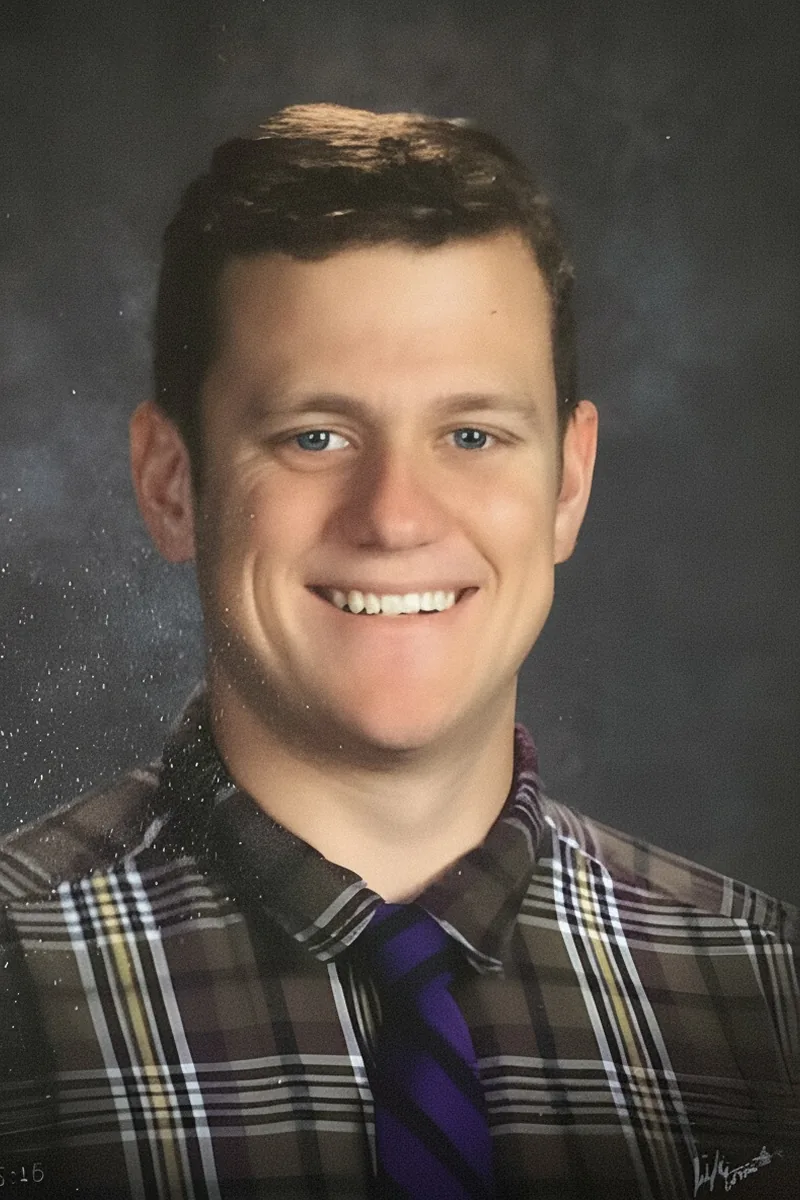
I am excited to be working with Varsity Tutors. I currently teach middle and high school social studies at Bishop Dunne Catholic School in Dallas. I teach 8th Grade US History, Spanish 3, AP Microeconomics, and Economics. I also have experience tutoring middle school Math while in college.

As an economics major at the University of Oklahoma, Joseph is immersed in supply-and-demand models, market structures, and macroeconomic policy every day — not just tutoring them from memory. He unpacks concepts like elasticity and comparative advantage using real-world examples that make the graphs and equations click, rather than leaving students to wrestle with abstract curves on their own.
Monetary policy, banking systems, and market behavior aren't abstractions to Cole — they were the focus of his cum laude master's thesis at the University of Amsterdam. He teaches economics by grounding theory in current events, so students see how supply-and-demand diagrams or GDP calculations connect to headlines they've actually read. Rated 5.0 by students.
Studying both engineering and economics at Duke gave Natalie a quantitative lens on economic reasoning — she's comfortable moving between supply-and-demand intuition and the math behind elasticity, optimization, and equilibrium. She digs into the "why" behind each model so students can apply concepts to unfamiliar problems, not just textbook examples.
Physics training builds a specific habit that transfers directly to economics: modeling complex systems with graphs, equations, and simplifying assumptions. Avram's three physics degrees mean he's deeply practiced at translating real-world behavior into formal models — exactly the skill students need when working through supply-and-demand curves, elasticity calculations, or equilibrium analysis.
A PhD candidate in economics at Yale with undergraduate degrees in physics and math from the same institution, Anthony brings serious quantitative firepower to the subject — the kind that matters when courses pivot from intuitive ideas about markets into optimization problems, game theory, or econometric proofs. He also teaches AP Micro, AP Macro, and econometrics, so he can connect introductory concepts to the formal models students will encounter as the material deepens. Rated 5.0 by his students.
Natalie's Health Care Management minor at Penn exposed her to microeconomic principles like supply and demand, cost-benefit analysis, and market structures — all through the lens of real industries. She breaks down economic models by connecting them to concrete examples students can actually picture, whether it's pricing decisions or how incentives shape behavior.
Joshua earned his bachelor's in Economics and International Studies, which means he learned economic concepts — trade theory, exchange rates, development policy — through the lens of how they actually shape relationships between countries. That global perspective is especially useful for students who need to connect microeconomic and macroeconomic models to the messy reality of international markets and policy decisions.
Majoring in both economics and mathematics at Boston College means Patrick tackles the subject from both sides — the intuitive reasoning behind concepts like elasticity and market failures, and the quantitative models that formalize them. That dual training is especially useful when students hit the parts of economics where graphs and equations start doing the heavy lifting, like consumer and producer surplus calculations or equilibrium analysis.
Studying finance at UGA means Vignesh works with economic concepts as living inputs — interest rates, market structures, consumer behavior — not just textbook diagrams, since his coursework requires applying micro and macro reasoning to actual corporate and investment decisions. He also teaches AP Micro and AP Macro, so he knows exactly where introductory students get tripped up on topics like elasticity, market failures, and the mechanics of fiscal versus monetary policy. Rated 5.0 by his students.
I am a graduate of Cornell University's College of Arts and Sciences. I received my Bachelor of Arts in Chemistry with Distinction in 2015. Since graduation, I was a physics/chemistry teacher and soccer coach at a private school in Virginia for a year, where I led the soccer team to an undefeated season. Before teaching and coaching professionally, I was a Teaching Assistant for the Cornell Math and Physics Departments, where I taught many subjects including calculus, mechanics, electromagnetism. Throughout my time at Cornell and as a teacher, I tutored subjects ranging from the SAT to AP Physics and Algebra II, which is where my true talents lie: in small group or one-on-one settings where I can give students the full attention they deserve and tailor my approach specifically to their learning styles. This is why I am now pursuing tutoring as a part-time occupation at Varsity Tutors. I embrace teaching all math and science subjects, especially physics and calculus, at both the college and high school level and will go above and beyond to make sure all of my students succeed, according to their definition of success. In my spare time, I enjoy playing league soccer, basketball, tennis and guitar, and also like to travel and see as much of the world as I can.
Matt's finance degree means he learned economics not as an isolated academic subject but as the engine behind investment decisions, corporate strategy, and market behavior — so when he teaches concepts like elasticity or market structures, he can show students where the theory actually lands. His SAT score of 1530 also signals the kind of sharp analytical reading that economics coursework demands, especially when students need to interpret dense graphs or parse tricky problem setups.
As an economics major at Northwestern, Sarah digs into the same core principles — scarcity, opportunity cost, market equilibrium, elasticity — that introductory students encounter for the first time. She translates abstract models into concrete examples, making supply-and-demand curves and production possibilities frontiers feel intuitive rather than mechanical.
Few economics tutors can explain supply-and-demand curves AND describe how those models play out inside a trading floor at Goldman Sachs or a policy meeting at the World Bank. Denise earned her B.S. in Economics from Wharton and her master's in International Finance and Economic Policy from Columbia, giving her the depth to teach everything from microeconomic theory and market structures to macroeconomic policy and international trade with real-world fluency.
Testimonials
Because the right Economics tutor makes all the difference.
Average Session Rating – Based on 3.4M Learner Ratings
Nearby Economics Tutors
Other Tulsa Tutors
Related Business Tutors in Tulsa
Frequently Asked Questions
Economics requires students to think abstractly about systems, incentives, and trade-offs—concepts that don't always feel intuitive at first. Many students struggle with understanding supply and demand curves, opportunity cost, and how individual decisions create broader market effects. Personalized tutoring helps break down these complex relationships into digestible pieces, allowing students to build confidence before moving to more advanced topics like elasticity, macroeconomic policy, or international trade.
In a classroom setting with a 20.8:1 student-teacher ratio, it's difficult for instructors to address each student's specific learning gaps or pace. Personalized tutoring allows a tutor to identify whether a student struggles with graphing, conceptual understanding, or problem-solving—and adjust accordingly. This targeted approach means students spend less time on material they've mastered and more time on areas that need reinforcement, leading to faster progress and deeper comprehension.
Tulsa's 14 school districts follow Oklahoma's academic standards for Economics, which typically include courses in microeconomics, macroeconomics, personal finance, and sometimes AP Economics. Whether your student is in high school Economics, AP Micro/Macro, or college-level coursework, tutors can align instruction with your school's specific curriculum and pacing. This ensures practice problems, examples, and exam prep directly support what's being taught in class.
The first session is focused on assessment and goal-setting. A tutor will discuss your student's current understanding of Economics concepts, identify specific challenges (like reading graphs or understanding elasticity), and learn about upcoming tests or assignments. From there, the tutor creates a personalized plan that targets weak areas while building on strengths, ensuring every session moves your student closer to their goals.
AP Economics exams (both Micro and Macro) require students to not only understand concepts but apply them to real-world scenarios and interpret data. Tutors help students practice free-response questions, multiple-choice strategies, and graph analysis—the skills that actually appear on test day. With focused preparation, students develop the confidence and speed needed to perform well, whether they're aiming for a 3 or a 5.
Beyond test scores, Economics tutoring builds critical thinking skills that apply far beyond the classroom. Students learn to analyze incentives, evaluate trade-offs, and understand how decisions affect markets and society. These analytical skills help with everything from personal financial decisions to understanding current events—making Economics one of the most practically useful subjects students can study.
Varsity Tutors connects students with expert tutors who have strong backgrounds in Economics—whether through advanced degrees, teaching experience, or demonstrated expertise in the subject. Tutors are vetted for subject knowledge and teaching ability, ensuring they can explain complex concepts clearly and adapt their approach to each student's learning style. You can discuss a tutor's specific background and experience before your first session.
Many students see meaningful improvement within 4-6 weeks of consistent tutoring, especially when addressing specific gaps like understanding graphs or mastering particular concepts. However, the timeline depends on where a student is starting and their goals—test prep might require more intensive sessions closer to exam day, while building foundational understanding takes a bit longer. Regular tutoring combined with practice between sessions accelerates progress significantly.
Let’s find your perfect tutor
Answer a few quick questions. We’ll recommend the right plan and match you with a top 5% tutor.