Award-Winning ACT Science Tutors
serving North Las Vegas, NV
ACT Science
Tutors in North Las Vegas
Private 1-on-1 tutoring, weekly live classes for academic support, test prep & enrichment, practice tests and diagnostics, and more to elevate grades and test scores.
Based on 3.4M Learner Ratings
UniversitiesSchools & Universities
DeliveredHours Delivered
ProficiencyGrowth in Proficiency
Who needs tutoring?
No obligation. Takes ~1 minute.

I'm trying to work on personal projects. I really enjoy snowboarding, and have been doing that since the third grade. I also enjoy playing sports and video games.
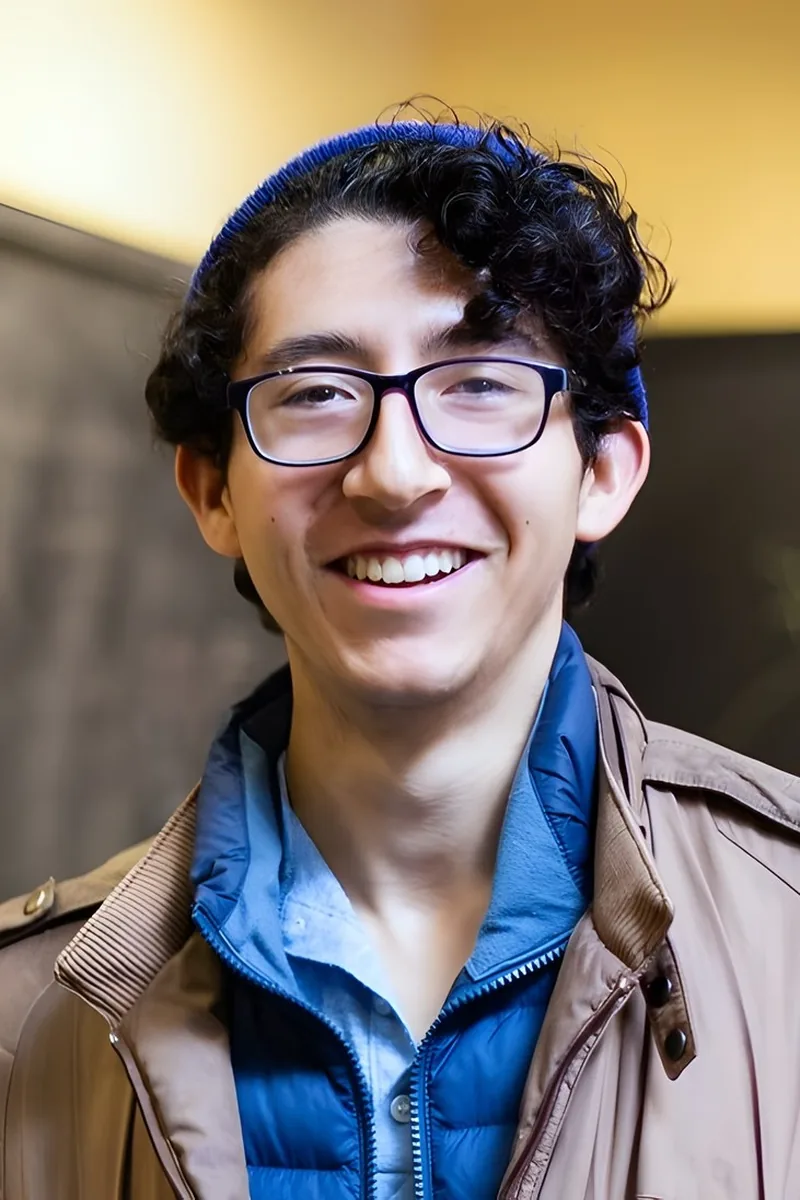
The ACT Science section is really a data interpretation exam disguised as science — and Tim, as a computational science major at MIT, spends his academic life extracting meaning from complex datasets. He teaches students to ignore jargon, read graphs and tables first, and identify the one variable that each question actually tests. His 34 ACT composite reflects how well this systematic approach translates to a high score.
I'm a sophomore at USC studying Biomedical Engineering. In high school, I maintained a 4.0 GPA while participating in organizations like Mu Alpha Theta so that I could tutor struggling math students in subjects ranging from Algebra to Calculus III. Seeing how comfortable I was in the environment really made an impact on me, and I want to continue that experience tutoring through Varsity Tutors both online and in person. Students I have tutored before in math and standardized testing subjects tell me that my strategies and quick methods for arriving at solutions saves them a great deal of time and energy as they take their exams, which reaffirms my passion and love of tutoring. In my classroom experiences, I found that sometimes the methods that were taught were just too confusing, so then I either created or looked up better ways that secured a better grade for me in the class; the idea that the same problem can be solved in many ways is an idea I try to impart in all of my students so that they can feel comfortable using a process they picked out instead. In my free time, Iove to watch movies, play Super Smash Bros, listen to new music, and read articles on Flipboard.
I'm 18 years old and I am a sophomore at Fordham University. I promise I won't disappoint!
Despite its name, the ACT Science section is really a data-literacy exam — students who try to rely on biology or chemistry knowledge alone run out of time. Cassandra's 33 ACT and her biology degree make her uniquely equipped here: she teaches students to read graphs, compare experimental setups, and identify control variables quickly, then applies actual science knowledge only on the handful of questions that require it. That two-pronged strategy consistently turns a stressful section into a high-scoring one.
I am currently an undergraduate at Ohio State University. I am studying economics with a math minor in the Honors College of Arts and Sciences.
I'm currently applying to be a Ph.D. candidate in the hopes of becoming a professor in the social sciences, as my greatest passion is helping students harness their potential and realize their success!
Most students panic when they see the ACT Science section, but Lauryn reframes it as a data-interpretation exercise — the actual science knowledge required is minimal. She drills students on reading graphs, comparing experimental setups, and identifying conflicting viewpoints in research summaries, which are the skills that actually move scores. Holds a 5.0 rating.
I love teaching patiently and accurately to achieve concrete goals. A National Merit scholar, a college student, and an aspiring writer, I encourage high achievement and creativity in all my students. With 2+ years of tutoring experience and 1+ years of teaching experience, both in-person and online, I will gladly adapt to your educational and personal needs! Primarily, I tutor the SAT and ACT. I have the most experience in tutoring English (up to 12th grade) and math (up to Algebra II/pre-calc). I can also tutor competitive Lincoln-Douglas and policy debate as well as Impromptu speech at a middle/high school level or general public speaking and argumentation. My favorite subjects are English, which I am pursuing at UNLV, and Speech & Debate, which I teach at a private school. I have an AP Honors Diploma and AP Scholar with Distinction Award from high school.
The ACT Science section barely tests science knowledge — it tests whether you can read a dense graph, compare two data sets, and draw a conclusion under time pressure. Dylan scored a 36 composite and approaches this section as a data-interpretation exercise, drilling students on how to extract trends from figures without getting lost in unfamiliar terminology. Speed and accuracy on conflicting-viewpoints passages are where he tends to unlock the biggest score jumps.
I am passionate about helping students with math, science, test prep, and more! As sophomore undergraduate at Brown University studying Mathematics and Biophysics, I am well experienced with many topics. I received a perfect 36 on my ACT, so I am very confident with test taking.
The ACT Science section barely tests science knowledge — it's really about reading graphs, interpreting conflicting viewpoints, and extracting trends from dense data tables under time pressure. Logan scored a 36 composite and trains students to ignore the intimidating terminology and zero in on what each figure actually shows. Once students see it as a data-literacy exercise, scores jump quickly.
Most students panic when they see ACT Science passages full of unfamiliar terminology, but the section is really a data-interpretation exercise. Richard teaches students to ignore jargon, read graphs first, and identify conflicting variables before touching the questions — a systematic method that turns a confusing section into one of the most improvable. He earned a 36 ACT composite and brings physics coursework that makes the experiment-based passages feel intuitive.
The ACT Science section is less about knowing biology or chemistry and more about reading graphs, interpreting conflicting viewpoints, and extracting data under a tight clock. Bidyut — who scored a 36 composite and studies biomedical engineering — teaches students a systematic method for parsing dense passages and tables so they spend their time answering, not re-reading.
I am a junior at Purdue University studying Aerospace Engineering and am part of the Air Force ROTC program. I have 6 years of tutoring experience at places including Kumon, Mathnasium, and Purdue University. I have worked with kids of all ages from kindergarten to sophomores in college, each with their own set of unique strengths, and tutored a variety of subjects, including calculus, trigonometry, geometry, thermodynamics, chemistry, and physics. Like many of my previous students, I struggled to understand concepts that I was being taught and was a terrible test taker. However, I found ways to overcome my obstacles and develop an better intuition for what I was learning. I believe that it is only this intuition and understanding that helps overcome these obstacles. My least favorite thing to see people be discouraged, so with a little bit of guidance and reassurance, I want to show people that they are capable of anything they put their mind to.
I am a patient, intellectual, and calm college student at the University of Michigan passionate about tutoring others to improve their proficiency in a wide variety of subjects. I teach students by creating individualized plans that cater to the strengths and weaknesses of the student. I work hard and as long as it takes to ensure that the student derives maximum benefit. I love teaching a wide variety of subjects, and have a speciality in standardized tests.
I am 22 years old and just graduated from the University of Kentucky with a double degree in French and Biochemistry. I have been a tutor for over a year now at UK's tutoring center. I believe that anyone can learn anything with enough practice and encouragement, and I love helping students overcome challenges and gain more self-confidence!
I am a sophomore at the Georgia Institute of Technology and am working towards a major in Computer Engineering. I have been tutoring students of all ages and backgrounds in various math topics ranging from elementary school math to AP Calculus throughout high school. I love teaching math and always find it amazing to watch my students grow and improve in their mathematical abilities. While helping students with standardized testing, we go through several tricks and tactics that have helped my students succeed and have fun in the process. I am also well versed in Physics and have spent 3 years taking the highest levels of physics courses. I love playing all sports (especially soccer) and enjoy playing the guitar in my free time as well.
The ACT Science section is really a data interpretation exam disguised with lab coats and beakers. Alex approaches it that way — teaching students to read graphs, compare experimental setups, and spot conflicting hypotheses without getting lost in unfamiliar terminology. As a medical student with a chemical engineering background and a 36 ACT composite, he knows exactly when the section requires outside science knowledge and when it doesn't.
I am an aspiring applied mathematician, with particular interest in image processing and climate science. I graduated in May 2017 from Washington University in St. Louis with a bachelor's in physics and mathematics, and am beginning a PhD program in September 2017 at the University of Chicago in Computational and Applied Mathematics. I've tutored introductory physics students for three years and enjoyed it thoroughly, as a chance to help other students while revisiting fundamental concepts to enhance my own knowledge. I'm eager to continue reaching out and helping students of math and physics to succeed and, furthermore, to appreciate the beauty and power of these subjects.
Most students overthink the ACT Science section because they treat it like a science test — but it's really about extracting trends from graphs, tables, and conflicting viewpoints under time pressure. As a biology researcher who interprets experimental data daily, Max reads these passages the way a scientist would: figure labels first, then axes, then relationships. That systematic approach, paired with his 36 ACT composite, makes the section far less intimidating.
Testimonials
Because the right ACT Science tutor makes all the difference.
Average Session Rating – Based on 3.4M Learner Ratings
Practice ACT Science
Free practice tests, flashcards, and AI tutoring for ACT Science
Other North Las Vegas Tutors
Related Test Prep Tutors in North Las Vegas
Frequently Asked Questions
Varsity Tutors matches North Las Vegas students with expert ACT Science tutors for 1-on-1 instruction. We pair each student with a tutor based on their specific needs, learning style, and goals.
Whether you need homework help, exam prep, or want to get ahead, our ACT Science tutors are ready to help.
Common challenges include gaps from earlier material, difficulty with specific concepts, and trouble applying learning to new problems. These issues can snowball quickly in ACT Science.
A tutor identifies where you're stuck, fills in gaps, and provides targeted practice. The 1-on-1 format means you get help exactly where you need it.
Tutors work with your student's actual coursework—homework assignments, class notes, and upcoming tests. This keeps tutoring directly relevant to what's happening in the classroom.
When you share information about your student's school and curriculum, we can match you with a tutor who has relevant experience.
All tutors complete background checks, credential verification, and teaching evaluation. Many of our ACT Science tutors hold advanced degrees or have years of teaching experience.
You can review tutor profiles to find someone with the right background for your student's level and needs.
Many students see improved grades within a few weeks, along with better understanding of ACT Science concepts and more confidence tackling challenging material.
Tutors track progress and adjust their approach to ensure continued improvement.
Most students benefit from 1-2 sessions per week. More frequent sessions help if your student is significantly behind or has an important exam coming up.
Your tutor can recommend a schedule based on your student's specific situation and goals.
Tutoring is purchased in packages of hours, with rates varying by tutor experience. Varsity Tutors offers several options to fit different budgets and needs.
You can discuss pricing during your consultation to find what works best.
Your tutor will assess where your student is, discuss goals, and start working on priority areas. Most students bring current homework or upcoming test material to focus on.
By the end, you'll have a clear sense of how the tutor can help and a plan for moving forward.
Let’s find your perfect tutor
Answer a few quick questions. We’ll recommend the right plan and match you with a top 5% tutor.