Award-Winning Science Tutors
serving St. Paul, MN
Science
Tutors in St. Paul
Private 1-on-1 tutoring, weekly live classes for academic support, test prep & enrichment, practice tests and diagnostics, and more to elevate grades and test scores.
Based on 3.4M Learner Ratings
UniversitiesSchools & Universities
DeliveredHours Delivered
ProficiencyGrowth in Proficiency
Who needs tutoring?
No obligation. Takes ~1 minute.
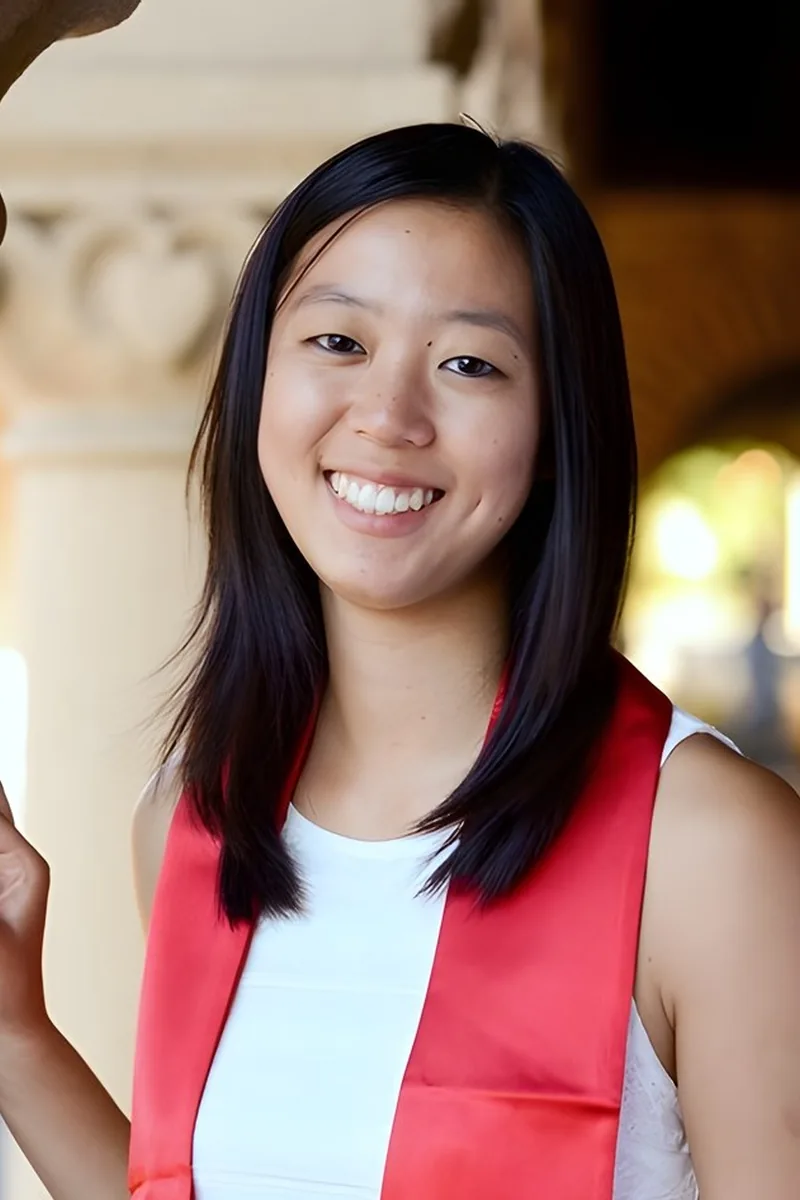
Caroline's mechanical engineering degree covered physics, thermodynamics, materials science, and fluid mechanics — so she brings real depth to science tutoring across multiple disciplines. She's especially skilled at connecting abstract scientific principles to tangible examples, like explaining Newton's third law through the forces in a bridge truss or teaching energy conservation through everyday machines.

A math and computer science degree means Nicholas spent years doing what science classes ultimately ask of students — building models, testing them against data, and revising when the numbers don't add up. He's especially sharp on the quantitative backbone of science: interpreting graphs, working through dimensional analysis, and translating raw data into conclusions that actually hold up. His 4.9 rating suggests the approach lands.
Science isn't Kari's flagship subject, but her broad tutoring experience across math and reading comprehension means she tackles the two biggest stumbling blocks students face: interpreting data from charts and experiments, and understanding the vocabulary-heavy language of science textbooks. She brings a structured, question-driven approach that keeps students engaged rather than overwhelmed.
Pre-med coursework at Columbia means Eva is actively immersed in the sciences, from biology and chemistry to the quantitative reasoning that ties them together. She approaches science tutoring by connecting abstract concepts — like the relationship between molecular structure and function — to concrete examples students can visualize.
I'm a fourth year veterinary student at the University of Minnesota College of Veterinary Medicine. I graduated from SUNY Binghamton University in May 2019, with a BA in Biology, and a minor in Biological Anthropology.
David's cognitive science training at Stanford sat squarely at the intersection of biology, psychology, and computational modeling, giving him a cross-disciplinary lens on science that most tutors don't have. He's particularly strong at explaining how to design experiments, interpret data, and connect scientific concepts back to underlying mechanisms.
Ryne approaches science tutoring the same way he cracked the ACT Science section on his way to a perfect 36: by teaching students to think in terms of variables, controls, and data patterns rather than rote memorization. Whether the topic is cell biology, chemical reactions, or kinematics, he connects each concept back to the experimental reasoning that makes it make sense.
A Classics major might not scream 'science tutor,' but Emma's daily work with Latin and Ancient Greek means she can crack open scientific terminology — most of which derives from those exact languages — and make it stick in ways rote memorization never does. Her 34 ACT confirms she handles the data interpretation and quantitative reasoning side of science just fine, and her weekly tutoring hours at a local high school keep her sharp on where students actually get tripped up.
Allison's computer science training at Dartmouth — heavy on data analysis, algorithmic thinking, and formal logic — gives her a surprisingly sharp toolkit for science tutoring, especially when students need to interpret experimental data or trace cause-and-effect through multi-step processes. She tackles the quantitative side of science (unit conversions, graphing relationships, calculating rates) with the same precision she brings to debugging code. Rated 4.9 by students.
Mechanical engineering sits at the intersection of physics, chemistry, and applied math — so Vania has spent years translating abstract scientific principles into real-world problem solving. She breaks down topics like energy conservation, wave behavior, and kinematics by connecting equations to physical intuition, which makes the formulas easier to remember and apply on exams.
Running international trade analysis in Shanghai required Angela to work constantly with market data, supply chain logistics, and quantitative forecasting — skills that share DNA with the hypothesis-testing and data interpretation at the core of science coursework. She's particularly good at walking students through how to read charts, identify patterns, and explain what the evidence actually supports, since that's exactly what her business career demanded daily.
Studying neuroscience at the University of Minnesota means Nisarg lives inside science daily — biology, chemistry, and data interpretation are part of his regular coursework. He unpacks scientific concepts by tying them to concrete examples, making topics like cellular processes or experimental design feel less abstract and more like puzzles worth solving.
A computer science major at Washington University in St. Louis, Eric approaches science through the lens of logic and data interpretation — skills that translate directly to understanding experimental design, analyzing results, and connecting evidence to conclusions. He's particularly strong at teaching students how to read graphs and tables critically, a skill that carries across biology, chemistry, and physics.
Teaching K-12 core subjects across both Minneapolis and Paris classrooms gave Anniessa a knack for making scientific concepts click through creative, multilingual approaches — she'll pull in visual models, hands-on analogies, or even word-origin breakdowns to help a tricky term like "photosynthesis" suddenly make sense. Her Master's in Education sharpened her ability to diagnose exactly where a student's understanding breaks down, whether it's reading a data table, setting up a fair experiment, or explaining results in their own words.
A history degree might not scream 'science tutor,' but Seth's Carleton College education emphasized the same core skill science courses test: reading dense material, extracting key claims, and evaluating whether the evidence actually supports them. His 32 ACT confirms he can handle data interpretation and quantitative reasoning under pressure, and his experience tutoring students with learning differences means he knows how to reteach a concept three different ways until one clicks.
George's Child Studies degree trained him to think about how kids actually learn — which matters in science, where a student who can parrot vocabulary often can't explain what's happening in an experiment. He zeroes in on building the reasoning behind concepts like energy transfer or ecosystems, making sure students can predict outcomes and explain why, not just label diagrams. Rated 5.0 by students.
A political science major at Boston College still has to grapple with research design, statistical evidence, and constructing arguments from data — skills Adam now applies when walking students through scientific reasoning like interpreting graphs, identifying variables, and explaining experimental outcomes. His 31 ACT composite confirms he can handle the analytical demands of science material, and his experience tutoring Boston-area high schoolers means he knows where students typically get tripped up and how to get them unstuck.
Harry's math double major at Carleton College means he's comfortable with the quantitative side of science that trips many students up — unit conversions, interpreting graphs, and applying formulas to real experimental data. His 35 ACT composite also signals fluency with the ACT Science section's particular blend of data interpretation and scientific reasoning, which he brings into general science tutoring. Rated 4.8 by students.
A Master's in Biomedical Sciences means Kushal lives in the world of biology, chemistry, and lab-based problem solving every day. He unpacks scientific concepts — cell structure, chemical reactions, the scientific method — by connecting them to real examples from his own research experience, which makes abstract ideas tangible for students at any level.
The IB diploma program required Sarah to complete rigorous science coursework alongside her humanities focus, so she understands what it takes to push through a subject that doesn't come naturally. She walks students through core concepts in areas like biology and physical science, emphasizing how to read diagrams, interpret data, and connect vocabulary to real phenomena.
Ten years of global project management gave Travis constant practice with the core of scientific thinking — scoping a problem, gathering evidence, testing solutions, and adjusting when results don't match expectations. He leans on that real-world troubleshooting experience to make topics like experimental design and data interpretation feel practical rather than textbook-abstract. Holds a 5.0 rating.
Special education training gives Emily a toolkit most science tutors lack — she knows how to adapt an experiment walkthrough or a vocabulary-heavy chapter so it actually lands for students who process information differently. Her social work background also means she reads frustration early and adjusts before a student shuts down, which matters in a subject where one confusing diagram can derail an entire lesson. Rated 5.0 by students.
Studying biomedical engineering at Georgia Tech while on a pre-med track means Amrit lives in the sciences daily — from cell biology and chemistry to physics and physiology. He tackles science topics by connecting abstract concepts to concrete examples, like explaining energy transfer through real metabolic pathways rather than abstract diagrams.
Social work graduate training is more scientifically rigorous than most people realize — Katie's MSW program required coursework in research methods, evidence-based practice, and interpreting statistical outcomes in clinical studies. That background means she can walk students through hypothesis formation, data analysis, and experimental design with real-world examples that make the scientific method feel purposeful rather than formulaic.
Epidemiology is applied science — designing studies, interpreting data, and understanding how biological systems interact with populations. Audrey's MPH training plus extensive undergraduate coursework in biology, chemistry, and physics gives her a broad scientific vocabulary that makes her effective whether a student is struggling with cell structure, the periodic table, or experimental design.
A veterinary student conducting comparative oncology research, Marika lives science daily — from cellular biology to experimental design. She unpacks scientific concepts by tying them to tangible examples, whether explaining the water cycle through weather patterns a student can observe or walking through how cells divide using diagrams she draws in real time. Rated 5.0 by students.
Understanding science often comes down to connecting an abstract formula to something physical — why does a ball follow a parabolic arc, or how does energy actually transfer during a chemical reaction? Ethan's aerospace engineering coursework at Minnesota took him deep into both physics and chemistry, and he brings that cross-disciplinary perspective to breaking down scientific reasoning. His 34 ACT composite, including the Science section, reflects how well he reads data-heavy passages under pressure.
Product design requires a working knowledge of physics, materials science, and data analysis, so Lillian approaches science as a toolkit rather than a set of facts to memorize. She walks students through how to read graphs, set up experiments logically, and connect cause-and-effect reasoning across topics — skills that transfer whether the unit covers biology, chemistry, or earth science.
A PhD in Applied Economics means Celestine spent years running regressions, designing studies, and interpreting data — the same core skills science coursework tests when students face questions about experimental design, variable control, and reading graphs. She's particularly strong at teaching the quantitative backbone of science: setting up equations from word problems, converting units, and explaining what a data trend actually tells you.
Danny's teaching background spans math and music theory — two fields that sharpen the same logical thinking science demands, from interpreting data tables to understanding cause-and-effect relationships in experiments. He breaks down scientific reasoning into manageable steps, whether a student is tackling the scientific method, basic chemistry concepts, or earth science vocabulary.
Richard's strength in science comes from the same careful reading and logical reasoning that earned him a 1490 SAT — picking apart what a question is really asking, pulling relevant details from dense passages, and connecting evidence to conclusions. He's especially handy for students who can handle the concepts but struggle to show their thinking on paper, since his extensive writing and essay background means he can teach someone to explain an experimental result as clearly as they understand it. Rated 5.0 by students.
A computer science degree trains you to think in systems — tracing how inputs become outputs, isolating variables when debugging, and testing hypotheses about why something behaves the way it does — which is essentially the scientific method applied to code. David brings that same systematic troubleshooting to science, especially the quantitative pieces like interpreting graphs, working through unit conversions, and figuring out what an experiment's data actually tells you. His 36 ACT confirms he can handle science material at the highest level.
Studying genetics at the University of Minnesota while working in two cancer research labs means Brian doesn't just know textbook science — he's applied concepts like cell signaling, experimental controls, and data analysis in real research settings. He brings that context into tutoring sessions, connecting topics in biology, chemistry, and physics to tangible examples that make abstract ideas click.
Debate coaching sharpens a very specific skill that most science students underestimate: the ability to evaluate competing claims by weighing evidence and spotting gaps in reasoning. Rohit brings that same rigor to science tutoring, teaching students to treat every hypothesis like an argument that needs supporting data — not just a definition to memorize. His 35 ACT confirms he can handle the quantitative and analytical demands of the subject.
Michelle's 34 ACT composite includes the Science section, which she approaches as a data-interpretation challenge more than a content exam. She teaches students to read graphs quickly, identify variables, and evaluate experimental design — skills that carry over from her math-heavy coursework.
Anna's double-accelerated math track — algebra through multivariable calculus — means the quantitative backbone of science (unit conversions, rate calculations, interpreting graphs) is second nature to her, which frees her up to focus on the conceptual side students actually struggle with. Her data processing degree adds a practical layer: she teaches students to look at experimental results the way an analyst would, asking whether the numbers actually support the conclusion or just look like they do. Rated 5.0 by students.
A political economy degree builds a surprisingly transferable skill for science: reading dense material, extracting key claims, and evaluating whether the evidence actually supports them. Cleo applies that same critical lens to teaching students how to interpret experiments, connect observations to explanations, and write up results that go beyond restating what happened. Her 5.0 rating suggests the approach lands.
A genetics major on the pre-med track, Jaya has spent four years immersed in biology, biochemistry, physiology, and ecology coursework. She unpacks scientific concepts by tying them to concrete examples — like using real genetic crosses to teach Mendelian inheritance or walking through actual metabolic pathways to explain cellular respiration.
For students navigating general or introductory science courses, Brita brings structured reading and study strategies that make textbook-heavy material less overwhelming. She's particularly useful when science assignments require written lab reports or research summaries, where her writing expertise overlaps with scientific content. Her approach is honest and practical — she's strongest with the analytical and communication side of science coursework.
Laura approaches science as a subject that rewards careful reading and systematic thinking — skills her linguistics training sharpened considerably. She's especially useful for students who understand concepts in class but freeze when faced with dense lab reports or data-interpretation questions, since she can teach them to decode scientific language and extract what matters.
Testimonials
Because the right Science tutor makes all the difference.
Average Session Rating – Based on 3.4M Learner Ratings
Practice Science
Free practice tests, flashcards, and AI tutoring for Science
Nearby Science Tutors
Other St. Paul Tutors
Related Science Tutors in St. Paul
Frequently Asked Questions
Varsity Tutors matches St. Paul students with expert Science tutors for 1-on-1 instruction. We pair each student with a tutor based on their specific needs, learning style, and goals.
Whether you need homework help, exam prep, or want to get ahead, our Science tutors are ready to help.
Common challenges include gaps from earlier material, difficulty with specific concepts, and trouble applying learning to new problems. These issues can snowball quickly in Science.
A tutor identifies where you're stuck, fills in gaps, and provides targeted practice. The 1-on-1 format means you get help exactly where you need it.
Tutors work with your student's actual coursework—homework assignments, class notes, and upcoming tests. This keeps tutoring directly relevant to what's happening in the classroom.
When you share information about your student's school and curriculum, we can match you with a tutor who has relevant experience.
All tutors complete background checks, credential verification, and teaching evaluation. Many of our Science tutors hold advanced degrees or have years of teaching experience.
You can review tutor profiles to find someone with the right background for your student's level and needs.
Many students see improved grades within a few weeks, along with better understanding of Science concepts and more confidence tackling challenging material.
Tutors track progress and adjust their approach to ensure continued improvement.
Most students benefit from 1-2 sessions per week. More frequent sessions help if your student is significantly behind or has an important exam coming up.
Your tutor can recommend a schedule based on your student's specific situation and goals.
Tutoring is purchased in packages of hours, with rates varying by tutor experience. Varsity Tutors offers several options to fit different budgets and needs.
You can discuss pricing during your consultation to find what works best.
Your tutor will assess where your student is, discuss goals, and start working on priority areas. Most students bring current homework or upcoming test material to focus on.
By the end, you'll have a clear sense of how the tutor can help and a plan for moving forward.
Let’s find your perfect tutor
Answer a few quick questions. We’ll recommend the right plan and match you with a top 5% tutor.