Award-Winning Middle School Math Tutors
serving St. Paul, MN
Middle School Math
Tutors in St. Paul
Private 1-on-1 tutoring, weekly live classes for academic support, test prep & enrichment, practice tests and diagnostics, and more to elevate grades and test scores.
Based on 3.4M Learner Ratings
UniversitiesSchools & Universities
DeliveredHours Delivered
ProficiencyGrowth in Proficiency
Who needs tutoring?
No obligation. Takes ~1 minute.
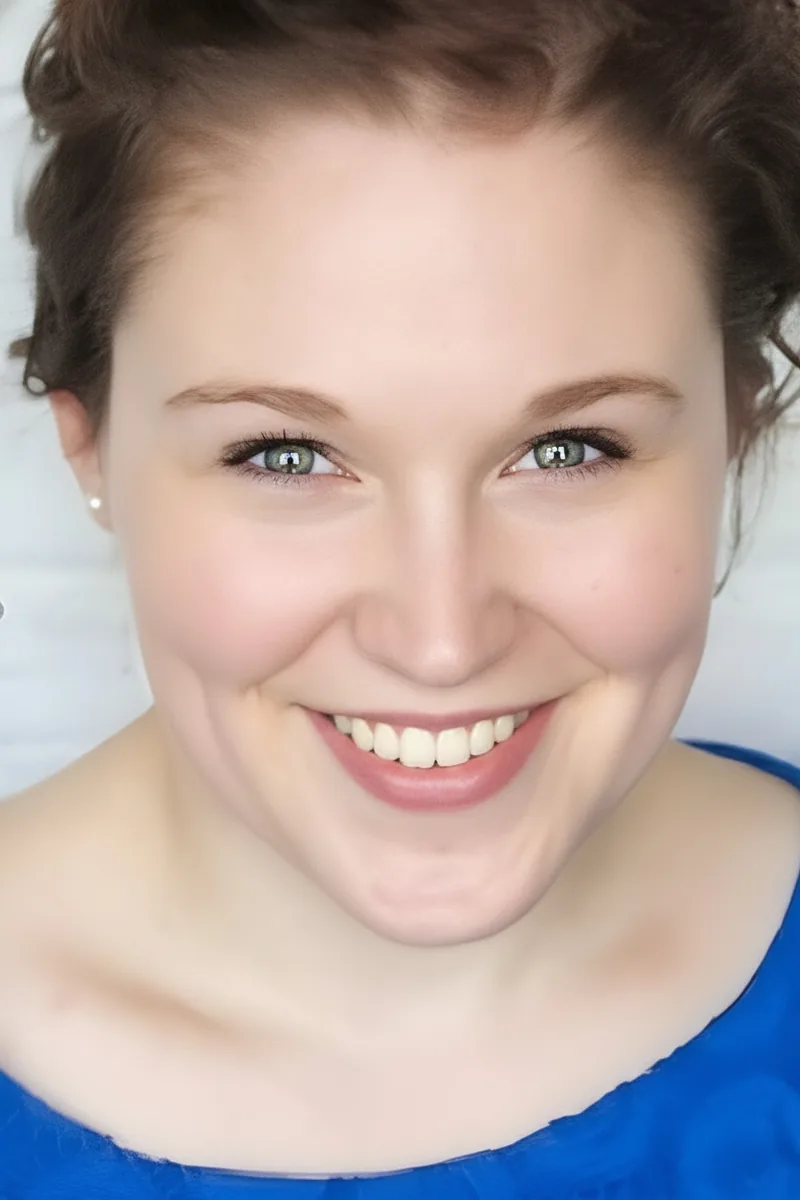
Fractions, ratios, and proportions start making sense when a student can see how they connect to each other — and that's exactly how Kari approaches middle school math. She breaks problems into visual, step-by-step reasoning so students build real number sense instead of just memorizing procedures. Rated 5.0 by students.

I'm a fourth year veterinary student at the University of Minnesota College of Veterinary Medicine. I graduated from SUNY Binghamton University in May 2019, with a BA in Biology, and a minor in Biological Anthropology.
Fractions, decimals, ratios, and basic geometry can feel like a grab bag of unrelated rules at the middle school level. Eric has coached and tutored kids starting in fifth grade, and he's learned that turning problems into quick logic puzzles keeps younger students engaged and builds real number sense. He makes math feel more like a game than a chore.
Fractions, ratios, and proportional reasoning click faster when students see how they connect to real situations — something Anniessa leans into from years of K-12 tutoring experience. Her education background trained her to find creative entry points for abstract concepts, so a student struggling with integer operations or basic geometry gets explanations tailored to how they actually think.
From ratios and proportions to early linear equations, middle school math is where abstract reasoning starts to matter. Kushal's biomedical sciences background means he regularly uses these tools — unit conversions, percentages, data interpretation — and he teaches them as practical skills rather than isolated exercises. His 4.9 rating speaks to how well that approach clicks with students.
Ratios, proportional reasoning, and early equation-solving are the building blocks that middle schoolers will rely on for years. Amrit is upfront that math never came effortlessly to him, which means he knows how to explain a concept five different ways until one clicks. That persistence makes him especially effective with younger students who are still figuring out how they learn.
A 35 on the ACT means Katie has the quantitative chops to teach middle school math credibly, but it's her social work training that gives her an edge with this age group — she reads a student's frustration before it spirals and adjusts the explanation on the spot. She's particularly effective at breaking down the geometry and measurement topics that often get rushed in class, using concrete, visual setups that make area, volume, and angle relationships intuitive rather than formulaic.
Fractions, ratios, and proportions come up constantly in veterinary medicine — calculating drug dosages, mixing solutions, interpreting lab results. Marika draws on those real-world applications to make middle school math concepts click, giving students a reason to care about the numbers. Rated 5.0 by students.
Audrey spent time at Grinnell tutoring a professor's 8th grader through recreational math and competition problems, so she's seen firsthand how middle schoolers think through ratios, geometric reasoning, and early algebraic concepts. Her math degree gives her the depth to explain not just the how but the why behind each topic — which pays off when the material gets harder in high school.
Somewhere between fractions and linear equations, middle school math asks students to start thinking abstractly for the first time. Richard tackles that shift head-on, walking through ratio reasoning, proportional relationships, and early algebraic thinking with concrete examples before introducing variables. His 5.0 client rating speaks to how well he matches a student's pace during that critical transition.
Danny's music education background — both a bachelor's and master's — means he's spent years teaching students to count subdivisions, recognize patterns, and think in ratios, all of which map directly onto middle school topics like fractions, proportional reasoning, and order of operations. His 1450 SAT score confirms the quantitative chops behind that musical training. He tends to approach a tricky concept from multiple angles until one clicks, rather than repeating the same explanation louder.
The jump from basic arithmetic to proportional reasoning, negative numbers, and introductory geometry catches a lot of middle schoolers off guard. Oscar spent months working one-on-one with a middle school student through the Kilimanjaro Study Program, building familiarity with exactly these concepts. He creates a relaxed environment where struggling with a problem isn't something to be embarrassed about — it's just part of figuring things out.
Jaya started tutoring back in high school as a National Honor Society member, working with younger students on exactly the kind of material that defines middle school math — fractions, ratios, proportions, and early equation-solving. She's continued that work as a volunteer at the University of Minnesota Masonic Children's Hospital, where she regularly walks kids through homework. That combination of patience and practice means she knows how to explain concepts like decimal operations or area formulas in ways that actually land.
After five semesters as a teaching assistant, Michelle knows that middle school math is where students either develop real number sense or start relying on shortcuts that break down later. She tackles the specific skills that matter most at this level — fraction operations, integer arithmetic, ratios, and early equation-solving — by tying each one to concrete examples students can visualize.
As a debate coach and economics major, Rohit uses real-world scenarios — budgets, statistics, probability — to make middle school math concepts feel relevant rather than abstract. He's especially effective at untangling proportional reasoning and multi-step word problems, two areas where students often stall out heading into eighth grade.
A physics major who scored a 33 on the ACT, Jane tackles middle school math with the same precision she brings to her upper-level coursework — breaking down concepts like ratios, negative numbers, and basic equation-solving into clear, logical steps. Her 4.9 rating from students speaks to an ability to make the jump from arithmetic to algebraic thinking feel like a natural next step rather than a scary leap.
Ratios, proportions, and integer operations can feel like a sudden leap from elementary arithmetic — Kelly breaks these concepts down using real-world scenarios that make abstract ideas click. His finance background means he's especially good at showing students why fractions and percentages actually matter outside the classroom. Rated 4.9 by students.
The jump from elementary arithmetic to middle school math catches a lot of students off guard, especially when proportional reasoning, basic geometry, and integer operations all land at once. Abirami's computer science background means she thinks in logical sequences, and she applies that same structured approach to untangling the topics that trip students up most.
Fractions, ratios, and proportional reasoning tend to be the concepts where middle schoolers either build momentum or start falling behind. Daniel breaks these ideas into concrete, visual steps and connects them to everyday scenarios — budgeting, map scales, even sports statistics — so the math feels less like a set of rules and more like a skill worth having. Rated 4.9 by students.
The jump from arithmetic to proportional reasoning, negative numbers, and basic geometry can feel enormous for a middle schooler. Emily tackles each of these transitions by connecting new ideas to ones students already trust — showing, for instance, how fractions they already know lead naturally into ratios and percentages.
Having tutored students from elementary through high school, Ethan has a clear picture of where middle schoolers typically get stuck — whether it's proportional reasoning, negative numbers, or the jump from arithmetic to algebraic thinking. He connects these topics to real-world problems so that concepts like unit rates and coordinate graphing feel purposeful rather than arbitrary.
The jump from arithmetic to middle school math — ratios, proportional reasoning, negative numbers, basic geometry proofs — trips up a lot of students who were previously confident. Colleen tackles each new concept by tying it back to something concrete, like using proportions to scale a recipe or applying coordinate graphing to map out a room. Her engineering mindset turns abstract rules into problems worth solving.
Fractions, ratios, and proportional reasoning are the concepts that trip up most middle schoolers — and they're exactly the building blocks Shannon's engineering coursework depends on daily. She breaks these topics into concrete, visual steps so students actually understand the logic behind each operation instead of just following memorized procedures.
From fractions and ratios to early equation-solving, middle school math piles on new concepts fast. Alex breaks each topic into clear, logical steps — a habit built through his actuarial science coursework, where precision with numbers isn't optional. He's especially strong at showing students how to organize multi-step problems so they stop losing points to small mistakes.
I am a huge supporter of the notion that doing helps you learn. Being a distance runner and expanding into the triathlon world, I know the power of practice and putting in the time to make sure that you put effort into practice. I live by the phrase "You play how you practice.... So practice hard."
Getting comfortable with fractions, ratios, and basic equation-solving in middle school sets the trajectory for everything that comes after in math. Erik breaks these concepts down using concrete examples and checks understanding at each step before moving on, making sure the reasoning clicks and not just the answer.
Five years of tutoring and volunteering in schools means Abbey has seen firsthand where middle schoolers get tripped up — fractions turning into decimals, ratios scaling into proportions, or the leap from arithmetic to early algebraic reasoning. She breaks each concept into clear, logical steps, drawing on the same communication instincts that drive her English and Journalism studies.
Fractions, ratios, and proportions trip up a lot of middle schoolers not because the math is hard, but because the reasoning behind it never clicks. Patrick's philosophy background means he's trained to break down abstract ideas into logical steps — exactly the skill that makes concepts like integer operations and basic geometry intuitive rather than confusing.
At the middle school level, math shifts from computation to reasoning: fractions become ratios, number lines become coordinate planes, and word problems start requiring multi-step thinking. Ingy has tutored students across every grade level and understands that building confidence at this stage matters as much as building skill. She keeps sessions structured but low-pressure, connecting each new topic to something a student already feels solid on.
Fractions, ratios, and pre-algebra concepts click faster when a student sees how each one builds on the last — and Sarah is especially good at mapping out those connections. Her science-heavy coursework at the University of Minnesota keeps her using these fundamentals daily, so she explains them with real context rather than abstract rules. Rated 5.0 by students.
Fractions, ratios, and pre-algebra concepts click faster when a student understands *why* a method works, not just how to repeat it. Naomi's three years of tutoring experience — much of it with middle schoolers — means she knows exactly where kids tend to get stuck on topics like integer operations and proportional reasoning, and she adjusts her explanations to match how each student thinks.
From fractions and ratios to early equation-solving, middle school math covers a huge range of skills that all need to click before high school. Parsan's computer science background means he thinks in logical steps, and he brings that same structured problem-solving approach to topics like proportional reasoning and coordinate graphing. Rated 4.7 by students.
Hi! My name is Lauren and I am passionate about helping students build academic skills and intellectual confidence. I graduated from Carleton College with a degree in Geology. I have spent the last six years since then teaching science (along with a smattering of other subjects) to middle and high school students. I am currently taking a break from classroom teaching to pursue a master's degree in science communication and public engagement. I love learning and my goal is to help students feel similarly.
Every concept in middle school math — from fractions and proportions to basic equation solving — becomes a building block for high school and beyond. Bridget earned both a civil engineering degree and a Master of Architecture, so she knows firsthand how these foundational skills connect to bigger mathematical ideas. She breaks down each topic with clear, step-by-step reasoning that actually sticks.
Ratios, proportional reasoning, and early equation solving are the concepts that either build a student's confidence in math or quietly erode it. Alexander takes middle school math seriously as its own stage of development, not just a stepping stone, and connects topics like fractions and percentages to real scenarios that make the logic click. He holds a 5.0 rating across his students.
Fractions, ratios, and proportional reasoning are the concepts that quietly determine whether a student thrives or struggles in high school math. Tully zeroes in on these middle school fundamentals by tying them to everyday scenarios — splitting a bill, scaling a recipe, reading a map — so the math feels purposeful rather than arbitrary.
Ratios, proportions, and early geometry proofs all demand a different kind of thinking than elementary math, and Brenna knows how to bridge that gap. Her training in secondary education at Hamline gave her specific strategies for adapting explanations to how each student actually processes new information — whether that's visual models for fraction operations or hands-on approaches to coordinate graphing.
At the middle school level, math shifts from arithmetic to reasoning — proportional thinking, negative numbers, basic equation solving — and that transition can shake a student's confidence fast. Ella is patient with the conceptual leaps involved and uses concrete examples to make ideas like ratios and variable expressions feel logical instead of mysterious. She holds a 5.0 rating from her students.
Fractions, ratios, and pre-algebra concepts click faster when a student sees how they connect to real-world problem solving — something Oreoluwa picked up from years of mentoring middle schoolers through Iowa State's Science Bound program. Her chemical engineering background means she can show exactly where these foundational skills lead, making integer operations and proportional reasoning feel purposeful rather than abstract. Rated 5.0 by students.
At the middle school level, math shifts from computation to reasoning — fractions become ratios, arithmetic becomes proportional thinking, and word problems start requiring multi-step strategies. Cory spent time at Mathnasium working directly with students navigating exactly this transition, building their number sense so that pre-algebra concepts feel like a natural next step rather than a sudden leap.
Testimonials
Because the right Middle School Math tutor makes all the difference.
Average Session Rating – Based on 3.4M Learner Ratings
Nearby Middle School Math Tutors
Other St. Paul Tutors
Related Math Tutors in St. Paul
Frequently Asked Questions
Varsity Tutors matches St. Paul students with expert Middle School Math tutors for 1-on-1 instruction. We pair each student with a tutor based on their specific needs, learning style, and goals.
Whether you need homework help, exam prep, or want to get ahead, our Middle School Math tutors are ready to help.
Common challenges include gaps from earlier material, difficulty with specific concepts, and trouble applying learning to new problems. These issues can snowball quickly in Middle School Math.
A tutor identifies where you're stuck, fills in gaps, and provides targeted practice. The 1-on-1 format means you get help exactly where you need it.
Tutors work with your student's actual coursework—homework assignments, class notes, and upcoming tests. This keeps tutoring directly relevant to what's happening in the classroom.
When you share information about your student's school and curriculum, we can match you with a tutor who has relevant experience.
All tutors complete background checks, credential verification, and teaching evaluation. Many of our Middle School Math tutors hold advanced degrees or have years of teaching experience.
You can review tutor profiles to find someone with the right background for your student's level and needs.
Many students see improved grades within a few weeks, along with better understanding of Middle School Math concepts and more confidence tackling challenging material.
Tutors track progress and adjust their approach to ensure continued improvement.
Most students benefit from 1-2 sessions per week. More frequent sessions help if your student is significantly behind or has an important exam coming up.
Your tutor can recommend a schedule based on your student's specific situation and goals.
Tutoring is purchased in packages of hours, with rates varying by tutor experience. Varsity Tutors offers several options to fit different budgets and needs.
You can discuss pricing during your consultation to find what works best.
Your tutor will assess where your student is, discuss goals, and start working on priority areas. Most students bring current homework or upcoming test material to focus on.
By the end, you'll have a clear sense of how the tutor can help and a plan for moving forward.
Let’s find your perfect tutor
Answer a few quick questions. We’ll recommend the right plan and match you with a top 5% tutor.