Award-Winning SAT Math Tutors
serving St. Paul, MN
SAT Math
Tutors in St. Paul
Private 1-on-1 tutoring, weekly live classes for academic support, test prep & enrichment, practice tests and diagnostics, and more to elevate grades and test scores.
Based on 3.4M Learner Ratings
UniversitiesSchools & Universities
DeliveredHours Delivered
ProficiencyGrowth in Proficiency
Who will be getting tutoring?
No obligation. Takes ~1 minute.
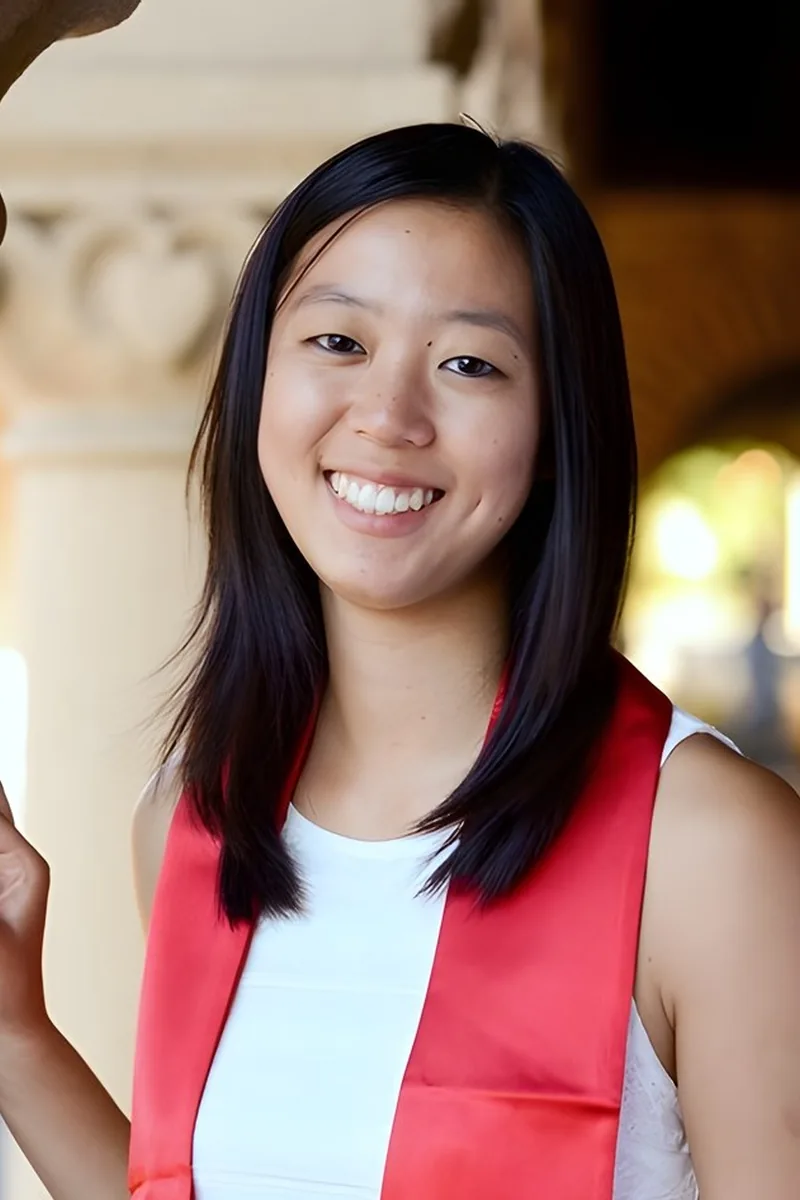
Caroline earned a 1480 SAT composite, and her mechanical engineering degree means the math section's trickiest territory — quadratic modeling, systems of inequalities, and data analysis — is ground she's covered extensively in real coursework. She breaks down each problem type by what the College Board is actually testing, so students stop second-guessing themselves on questions they already know how to solve.

David scored a 1570 SAT and brings a computer scientist's precision to the Math section, particularly the no-calculator portion where algebraic fluency and number sense matter most. He emphasizes understanding why a technique works — whether it's completing the square or setting up a system of equations — so students can recognize which tool fits each problem without second-guessing.
Scoring a 1570 on the SAT means David knows exactly where the Math section tries to trip students up — the word problems that bury the real question, the data interpretation that looks harder than it is, the quadratic or systems problem disguised in an unfamiliar context. He teaches students to decode what each question is actually asking before reaching for a formula. That pattern-recognition skill is what turns a good math student into a confident test-taker.
Mechanical engineering students live inside algebra, geometry, and applied problem-solving — and Vania's 1590 SAT confirms she can execute that same math quickly under standardized-test conditions. She's especially sharp on the no-calculator section's polynomial and quadratic questions, where knowing how to manipulate expressions by hand (instead of reaching for a calculator) is the difference between finishing comfortably and running out of time.
The SAT Math section's no-calculator questions reward exactly the kind of fluency Ella built earning her physics degree — quick algebraic manipulation, comfort with trigonometric relationships, and the ability to estimate without reaching for a device. Her 1540 SAT means she's proven she can execute under the test's time pressure, and she zeroes in on the quadratic and systems problems where physics-trained intuition about how variables relate gives students a real edge.
Jaya scored a 1530 on the SAT and breaks the math section down by question type — from passport-to-advanced-math problems involving quadratics and polynomials to data analysis questions that reward careful graph reading. Her science-heavy coursework in genetics keeps her sharp on the quantitative reasoning skills the SAT tests most.
I am a rising senior at Pomona College, a small liberal arts college in California, majoring in Public Policy Analysis with a concentration in Economics and a minor in Mathematics. Born and raised just outside of Minneapolis, I am excited to be tutoring in the area. I've studied a variety of topics over the course of my academic career, but I feel especially confident in my knowledge base and tutoring ability in math, history, and standardized testing (especially the ACT).
I am a current veterinary student and lifelong lover of science, literature and learning. My background is primarily in biology and the life sciences, and in addition to my veterinary program, I also work as part of a research team in comparative oncology that develops treatments for cancer that benefit both humans and animals. I am passionate about increasing public understanding of science, and am happy to work with students of any level of science education.
I'm more likely to give an answer quickly when a teacher asks a question if I have a habit of properly attuned instincts. So, if I want your confidence to grow, I need to redirect the water your instincts flow through to the proper conduits of careful thinking.
I am an honors student at the University of Minnesota studying English and Journalism. I've been tutoring, teaching, and volunteering in schools for five years and specialize in language arts and standardized test preparation.
Oscar's math degree from St. Olaf means the algebra and functions that dominate SAT Math aren't formulas he memorized for a test — they're concepts he studied at the proof level, which lets him explain the *why* behind each solution step when a student gets stuck. Since all of his current students are working through Algebra or Algebra 2, he's constantly reinforcing the exact skills the SAT leans on hardest: manipulating expressions, solving systems, and translating word problems into equations. He also keeps sessions low-pressure, which tends to help test-anxious students actually think clearly under timed conditions.
I'm Emma! I'm a rising senior Classics major at Carleton College in Northfield, MN. I study Latin, Ancient Greek, and the histories associated with the two languages. Outside of class, I'm an RA, and I spend 6-8 hours a week tutoring and teaching college access courses in a nearby high school. In the future, I hope to teach high school Latin!
Broden scored a 1560 on the SAT and knows exactly where the Math section tries to trip students up — especially on passport-to-advanced-math questions involving quadratic manipulation and systems of nonlinear equations. He breaks down each problem type by identifying what the question is actually asking before touching any algebra, a habit that cuts careless errors significantly. Rated 5.0 by students.
Edward's chemistry background means he's comfortable with the kind of applied math the SAT loves — unit conversions, interpreting scatterplots, and setting up systems of equations from word problems. He zeroes in on the "Heart of Algebra" and "Passport to Advanced Math" categories, since those two account for the majority of the test. His 1580 SAT composite reflects genuine fluency with the quantitative reasoning the exam demands.
An engineering student who scored 1530 on the SAT, Shrey treats SAT Math prep as a strategy game — identifying which algebra, data analysis, and passport-to-advanced-math questions deserve full work and which can be solved in under thirty seconds with the right shortcut. His approach is practice-heavy, building speed and pattern recognition through real College Board problems rather than abstract review.
I'm dedicated to critical thought and careful, clear writing. In my independent written work, I focus on issues of political economy, critical theory, and the social and political impacts of technology. I recently also have begun to work on a science fiction novel. In tutoring, I hope to encourage students to approach writing and language with ease and technical competence. I have extensive experience in many academic areas, and can help develop skills for large research projects, short essays, standardized test taking, and everything in between. Nothing is too complex to be broken down clearly and mastered!
Scoring well on SAT Math often hinges on recognizing which tool a problem is really testing — is it a systems question disguised as a word problem, or a quadratic identity hiding behind unfamiliar notation? Richard, who earned a 1490 SAT composite, unpacks those disguised problem types so students stop second-guessing themselves on test day. He's rated 5.0 and covers both the calculator and no-calculator sections with equal depth.
Audrey's 1550 SAT means she's already proven she can handle the math section's trickiest content — but what sets her apart is a classics background that trained her to read with surgical precision, which is exactly the skill that unlocks the SAT's deliberately misleading word problems and graph-interpretation setups. She teaches students to slow down on the reading step so they can speed up on the solving step, especially on geometry and advanced algebra questions where misreading a single constraint costs the whole problem.
The SAT Math section rewards students who can set up problems efficiently more than those who grind through brute-force calculations. Danny, who earned a 1450 SAT composite, walks students through the specific algebra, function, and data-interpretation patterns the College Board recycles across exams. He builds both the content knowledge and the strategic instincts needed to finish each section with time to spare.
I am now pursuing a Master's Degree in education from the University of Minnesota and am working toward obtaining my K-6 elementary teaching license. During the day, I work full time as a reading tutor at a school in South Minneapolis. I enjoy basketball, video games, hiking, and reading. In addition to my undergraduate degree in finance, I also received my CFA Charter in 2019.
I am a current student at the University of St. Thomas, working towards my major of Computer Science and while I am proficient in a broad range of subjects I love math and science the most. Before university, I was able to travel with my family to a lot of places and meet a huge variety of people because of this I love meeting new people. I love hearing about their family dynamic or their group of friends at school and exchanging funny stories along the way.
Scoring a 1450 SAT while majoring in aerospace engineering, Alexander knows the math section inside and out — from passport-to-advanced-math questions involving quadratics and exponentials to the data-analysis problems that trip up strong math students who rush through tables. He teaches a deliberate approach to each question type that turns careless mistakes into consistent points.
I am a sophomore at the University of Minnesota majoring in Economics. I enjoy helping people learn because I believe true mastery of a subject is being able to teach it. My promise to the students I work with is to put in as much work as they do. I firmly believe that what you get out of something depends on what you put in, so whatever a student will put in I will give back.
I am right now if not for the patient, determined, and creative teachers I had who not only helped me academically but also made me feel safe and connected. This is the kind of teacher I want to be, and I hope that I can make the kind of difference in my students’ lives that my teachers have made for me.
I am in the process of selecting a masters program in education that will begin this summer. I have 2 years experience doing 1 on 1 tutoring and it is very effective compared to classroom teaching because there is only one student to focus on. I look forward to working with you and helping you or your child get better. Always remember, even the best of us need help and support from others to be successful.
Scoring 1570 on the SAT means Eric knows exactly where the test tries to trip students up — especially on the math side, where questions about quadratics, systems of equations, and data interpretation are designed to punish rushing. He breaks each problem type into a decision tree so students recognize what's being asked before they start calculating. That pattern-recognition skill is what separates a good math score from a great one.
I am no longer needed.
I am in my second year at MIT studying mathematics, and I am currently doing a research project in Spectral Graph Theory. I have been a tutor since my junior year in high school, and I enjoy teaching all levels of math; everything from pre-algebra through calculus and linear algebra! I focus primarily on making sure that the definitions and processes given in class make intuitive sense, so that math can begin to feel like second nature.
A math degree from Georgetown plus a 1580 SAT means Peter doesn't just know the content — he knows which algebraic shortcuts and graph-reading strategies actually save time under pressure. He breaks the SAT Math section into pattern categories so students recognize problem types within seconds and spend their energy solving, not deciphering. Rated 5.0 by students.
Creative writing might seem unrelated to SAT Math, but Sydney's 1600 SAT score speaks for itself — and her approach to the math section mirrors how she tackles a draft: strip every problem down to what it's actually asking, then build the solution step by step. She's especially sharp on the algebra-heavy word problems where students who can do the math still lose points because they misread the setup, a reading-comprehension trap her writing background makes her uniquely good at catching. Rated 4.9 by students.
I am an interdisciplinary educator with an Ed.M. from the Harvard Graduate School of Education and a B.A. from Dartmouth College. My background is primarily in integrated arts learning and museum education and I specialize in visual arts, history and art history, and object-based learning. In all subjects, I take a creative, inquiry-based and learner-centered approach, designing opportunities for each unique individual to meet their learning goals.
Most SAT Math mistakes aren't about not knowing the math — they're about misreading what the problem is setting up. Sreya, who scored 1580 on the SAT and studies chemistry and computer science at Michigan, zeroes in on the algebra and data analysis questions that account for the bulk of the test. She walks through how to spot which tool a problem actually requires, from systems of equations to quadratic modeling.
Medical school at Baylor means Michelle solves quantitative problems under brutal time constraints every day — and her 1570 SAT proves she's already mastered doing exactly that on the test her students are preparing for. She zeroes in on the algebraic modeling and geometry questions where a biochemistry background actually helps, teaching students to treat each problem like a lab setup: identify the variables, find the relationship, then solve cleanly without second-guessing.
I'm eager to teach students how to make connections and understand any part of the world they need!
Psychology and linguistics both demand rigorous data interpretation — Sherry's UChicago coursework in experimental design and statistical analysis maps directly onto the SAT Math section's tables, scatterplots, and percentage questions. Her perfect 1600 SAT means she's mastered every corner of the test, but she zeroes in on the geometry and advanced math problems where students most often misread what's being asked, using her linguist's instinct to untangle the SAT's deliberately tricky phrasing. Rated 5.0 by students.
Violet's 1550 SAT and her math degree from Brown mean she can diagnose exactly where a student's algebra or data analysis gaps are costing them points on SAT Math. She teaches the handful of non-obvious techniques — backsolving, strategic plugging-in, unit analysis on word problems — that turn 650-range scores into 750+ scores. Her style leans heavily on shortcuts that make the no-calculator section feel less like a time crunch.
Testimonials
Because the right SAT Math tutor makes all the difference.
Average Session Rating – Based on 3.4M Learner Ratings
Practice SAT Math
Free practice tests, flashcards, and AI tutoring for SAT Math
Nearby SAT Math Tutors
Other St. Paul Tutors
Related Test Prep Tutors in St. Paul
Frequently Asked Questions
Varsity Tutors matches St. Paul students with expert SAT Math tutors for 1-on-1 instruction. We pair each student with a tutor based on their specific needs, learning style, and goals.
Whether you need homework help, exam prep, or want to get ahead, our SAT Math tutors are ready to help.
Common challenges include gaps from earlier material, difficulty with specific concepts, and trouble applying learning to new problems. These issues can snowball quickly in SAT Math.
A tutor identifies where you're stuck, fills in gaps, and provides targeted practice. The 1-on-1 format means you get help exactly where you need it.
Tutors work with your student's actual coursework—homework assignments, class notes, and upcoming tests. This keeps tutoring directly relevant to what's happening in the classroom.
When you share information about your student's school and curriculum, we can match you with a tutor who has relevant experience.
All tutors complete background checks, credential verification, and teaching evaluation. Many of our SAT Math tutors hold advanced degrees or have years of teaching experience.
You can review tutor profiles to find someone with the right background for your student's level and needs.
Many students see improved grades within a few weeks, along with better understanding of SAT Math concepts and more confidence tackling challenging material.
Tutors track progress and adjust their approach to ensure continued improvement.
Most students benefit from 1-2 sessions per week. More frequent sessions help if your student is significantly behind or has an important exam coming up.
Your tutor can recommend a schedule based on your student's specific situation and goals.
Tutoring is purchased in packages of hours, with rates varying by tutor experience. Varsity Tutors offers several options to fit different budgets and needs.
You can discuss pricing during your consultation to find what works best.
Your tutor will assess where your student is, discuss goals, and start working on priority areas. Most students bring current homework or upcoming test material to focus on.
By the end, you'll have a clear sense of how the tutor can help and a plan for moving forward.
Let’s find your perfect tutor
Answer a few quick questions. We’ll recommend the right plan and match you with a top 5% tutor.