Award-Winning Geometry Tutors
serving St. Paul, MN
Geometry
Tutors in St. Paul
Private 1-on-1 tutoring, weekly live classes for academic support, test prep & enrichment, practice tests and diagnostics, and more to elevate grades and test scores.
Based on 3.4M Learner Ratings
UniversitiesSchools & Universities
DeliveredHours Delivered
ProficiencyGrowth in Proficiency
Who needs tutoring?
No obligation. Takes ~1 minute.
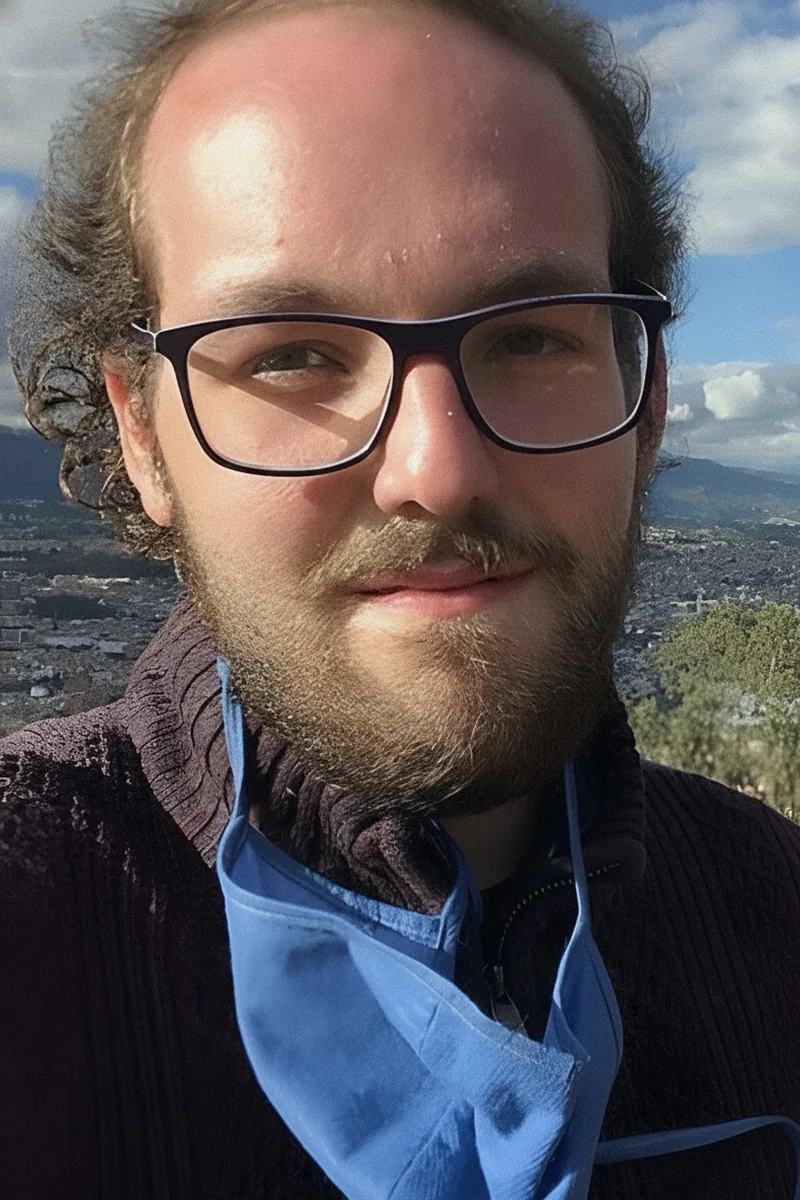
Proofs are usually the sticking point in geometry: students can memorize angle relationships and triangle congruence criteria but freeze when asked to construct a logical argument. Nicholas's dual background in mathematics and computer science means he thinks in structured logic daily, and he teaches students to build geometric proofs the same way — one airtight step at a time.
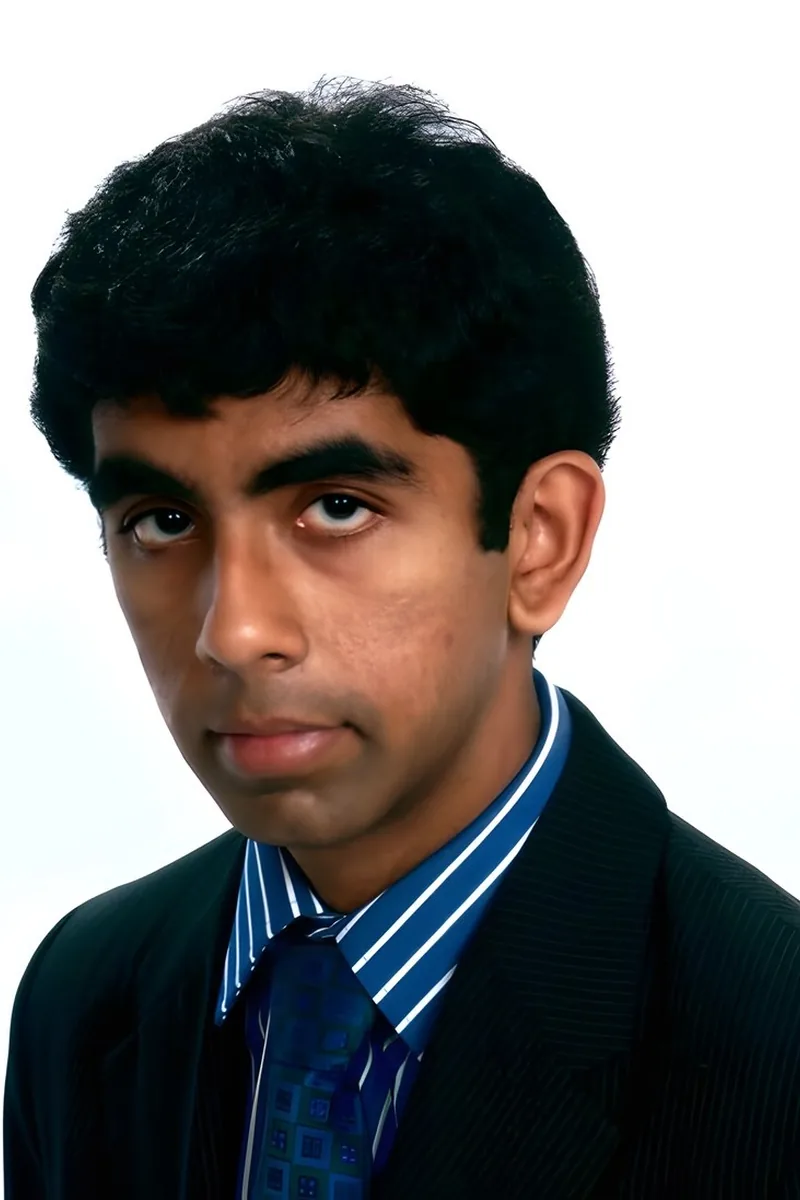
Proofs are usually the first place geometry students get stuck, because suddenly math requires written logical arguments instead of just calculations. Kushal tackles this by teaching students to map out each proof's reasoning before writing a single statement, turning what feels like guesswork into a repeatable process. He applies the same structured thinking to triangle congruence, circle theorems, and coordinate geometry problems.
Completing an IB diploma in Switzerland — where the math curriculum leans heavily on formal reasoning and international problem-solving styles — gave Sarah early fluency with the kind of structured geometric thinking that American geometry courses build toward. She's especially good at breaking down proof logic for students who understand shapes visually but freeze when asked to write a formal argument about congruence or angle relationships. Rated 5.0 by students.
Proofs are usually the first time a math student has to build a logical argument instead of just computing an answer, and that's where most geometry frustration lives. Reed spent his time at Carleton College constructing economic arguments from axioms and data — a surprisingly similar skill set. He teaches students to treat each proof like a chain of reasoning, identifying what they know, what they need, and how postulates and theorems bridge the gap.
Computer science taught David to think in logical sequences — if this condition holds, then this follows — which is exactly the muscle geometry proofs demand. He unpacks two-column and paragraph proofs by treating each step like a line of code that has to logically depend on the one before it, making the structure feel less arbitrary and more like debugging a program. Holds a 5.0 rating from students.
Teaching music theory for years gave Danny an unexpected edge in geometry — both subjects demand reading a formal notation system, following strict rules of structure, and building one logical step on top of another. He applies that same sequential thinking to two-column proofs and triangle congruence arguments, breaking each problem into a clear chain of statements and reasons. His 1450 SAT speaks to broader math fluency that keeps the computational side sharp too.
Proofs are usually where geometry goes from manageable to intimidating — suddenly students need to justify every claim in a logical chain. Richard approaches proof-writing as a skill that can be practiced systematically, teaching students to identify given information, spot congruence shortcuts like SAS and ASA, and build arguments step by step. He covers everything from angle relationships through circle theorems with the same structured clarity.
Proofs are usually the first thing that scares geometry students, but they're also the first time math asks students to build a logical argument rather than just compute an answer. Michelle treats proof-writing as a learnable skill: she walks through how to identify given information, choose the right theorems about parallel lines or congruent triangles, and assemble each step with clear reasoning.
Proofs are usually the first place geometry students feel lost, because suddenly math requires written logical arguments instead of just calculations. Anna breaks down two-column and paragraph proofs into a repeatable structure, connecting each theorem about parallel lines, congruent triangles, or circle arcs back to the reasoning that makes it click.
Proofs are where most Geometry students lose confidence — the leap from calculating angles to constructing logical arguments feels unfamiliar. Steve's English background actually sharpens his proof instruction, since he treats each one like building a persuasive paragraph: claim, evidence, reasoning, conclusion.
Proofs are usually the sticking point in Geometry: students can calculate an angle but freeze when asked to justify why it's congruent. Matt tackles this by teaching proof-writing as a form of logical storytelling, connecting each theorem back to a visual intuition that makes the reasoning feel natural. His 5.0 rating speaks to how well that approach lands.
Civil engineering runs on geometry — from calculating load-bearing angles to designing site layouts — so Ethan brings real applications into lessons on proofs, triangle congruence, and area-volume relationships. He teaches students to sketch problems out and identify given information before jumping to theorems, which builds the spatial reasoning that makes geometry click.
Daniel's graduate work in GIS technology is essentially applied geometry — calculating areas from irregular polygons, working with coordinate systems, and reasoning about spatial relationships on maps. That real-world fluency carries directly into tutoring topics like triangle congruence proofs, circle theorems, and coordinate geometry, where he can show students why these ideas matter outside the textbook.
Proofs are usually the first place geometry students get stuck — the shift from computing answers to constructing logical arguments feels completely foreign. Josephine approaches proofs as a skill in structured reasoning, walking through each theorem and postulate so students learn to build arguments step by step. Her 5.0 rating speaks to how well that methodical style lands.
Actuarial science is built on quantifying risk in precise mathematical terms, and Ingy's specialization in it means she approaches geometry with the same rigor — particularly when problems demand careful reasoning through circle theorems, arc lengths, and sector areas where one misstep cascades through the whole solution. She's especially effective at showing students how to read a dense diagram and extract exactly which relationships matter before writing anything down. Rated 4.9 by students.
Proofs are usually the first place geometry students get stuck, because suddenly math requires written arguments instead of just calculations. Tony approaches proofs as logical storytelling — each statement follows from the last — and applies that same structured thinking to angle relationships, triangle congruence, and coordinate geometry problems.
An architecture degree is essentially a geometry degree in disguise — Bridget spent years in studio calculating sight lines, modeling three-dimensional forms, and reasoning through how flat drawings become built structures. That training makes her especially effective at teaching constructions, spatial visualization, and the relationship between two-dimensional nets and three-dimensional solids. Rated 5.0 by students.
Cross-curricular studies means Tully is constantly switching between disciplines — and that flexibility is exactly what geometry rewards, since a single problem can demand algebraic setup, spatial visualization, and logical argument all at once. He unpacks the proof-writing process by treating each step like building a persuasive essay: claim, evidence, reasoning, which clicks especially well for students who are stronger with words than diagrams. Rated 4.8 by students.
Proofs are usually the first place geometry students feel lost, because the subject suddenly demands logical reasoning instead of just computation. Alexander teaches proof structure as a skill — identifying givens, choosing postulates, building an argument step by step — drawing on the same rigorous thinking his aerospace coursework required. He also covers coordinate geometry, triangle congruence, and circle theorems with an emphasis on understanding over memorization.
Proofs are usually the first place geometry students feel stuck — the logic feels completely different from anything they've done in math before. Sarah approaches proofs as structured arguments, teaching students to identify given information, map out a logical chain, and justify each step rather than guessing at the next statement.
Physics is geometry in motion — every free-body diagram, projectile path, and wave interference pattern Ella worked through in her physics degree required fluent spatial reasoning about angles, vectors, and shapes. She brings that same intuition to teaching geometry, unpacking how circle theorems and triangle properties connect to real physical situations rather than existing as isolated rules. Rated 5.0 by students.
Proofs are usually the first place geometry students panic — the logic feels completely different from arithmetic or algebra. Amy approaches them as structured arguments, teaching students to identify given information, choose the right theorem, and build each step deliberately. Her experience as a math TA gives her a knack for making spatial reasoning click on paper.
Cory's dual background in mathematics and computer science means he thinks about geometry the way a programmer thinks about logic — every theorem is an if-then statement, every proof is a sequence of operations that has to compile cleanly. He's especially sharp on transformations and coordinate geometry, where algebraic fluency and spatial reasoning overlap. Rated 5.0 by students.
Cognitive science — Sugi's major at Rice — is fundamentally about how people build mental models, and geometry is one of the few math subjects where that matters enormously: students who can't visualize a rotation or mentally decompose a figure into simpler shapes will struggle no matter how many theorems they memorize. Sugi teaches the visualization first, then layers in the formal reasoning for congruence, similarity, and circle properties so that proofs feel like describing something you can already see. Rated 5.0 by students.
Proofs are usually where geometry students panic, but they're really just logical arguments written in a specific format. Mackenzie teaches students to read a diagram like a puzzle — identifying congruent triangles, parallel-line angle relationships, or circle theorems before ever picking up a pencil. That visual-first strategy makes even two-column proofs and coordinate geometry problems feel approachable.
Proofs are usually where geometry students panic, so Samantha teaches them as structured arguments rather than mysterious rituals — each statement earns its place with a reason. She also digs into the spatial reasoning behind congruence, similarity, and circle theorems, connecting diagrams to the algebra students already know. Her Duke science background means she's comfortable making abstract relationships concrete.
Proofs are usually where geometry students hit a wall — the shift from calculating answers to constructing logical arguments feels like a completely different subject. Tom's background in American Studies, which is essentially built on evidence-based argumentation, gives him a unique angle on teaching students to chain geometric theorems into airtight reasoning. He also covers the computational side, from triangle congruence to circle theorems, with the same step-by-step precision.
Proofs and spatial reasoning make geometry feel like a different species of math compared to algebra, and that shift frustrates a lot of students. Steve tackles it by grounding geometric logic in tangible examples — angle relationships in trusses, symmetry in mechanical parts — drawing on his engineering background to make abstract theorems feel concrete.
Proofs trip up a lot of Geometry students because they require a completely different kind of thinking — constructing logical arguments instead of just computing answers. Michelle approaches proofs and spatial reasoning the way she approaches scientific problems: systematically, breaking each claim into smaller pieces until the conclusion becomes obvious.
Proofs are usually where geometry students panic — the logic feels nothing like the computation they're used to. Rachel spent her Dartmouth engineering program constructing logical arguments from axioms and constraints, so she's comfortable walking students through how to set up two-column and paragraph proofs while also tackling area, volume, and triangle congruence.
Materials science is a field where you're constantly thinking about how structures behave — crystal lattices, grain boundaries, stress distributions across shapes — so Jennifer's engineering background gives her a natural fluency with the spatial reasoning geometry demands. She unpacks problems involving angle relationships and properties of polygons by connecting them to the physical intuition she built studying how real materials are structured. Rated 5.0 by students.
Proofs are usually the first place Geometry students feel lost, because the subject suddenly asks them to justify every step rather than just compute an answer. Christopher teaches students to treat each proof like an engineering problem: identify what's given, figure out what's needed, and build a logical bridge between the two using congruence, similarity, and angle relationships. His structured approach has earned him a 4.8 rating from students.
Proofs are usually the first place geometry students get stuck, because suddenly math asks them to argue logically instead of just compute. Ian approaches proof-writing the way he approaches physics derivations at Yale — step by step, with each claim grounded in a specific theorem or postulate. He also covers triangle congruence, circle theorems, and coordinate geometry with the same structured clarity.
Proofs are usually where geometry goes from manageable to frustrating — suddenly students need to justify every step with logic instead of just calculating angles. Maggie approaches proof-writing as a skill closer to constructing an argument than solving an equation, a perspective sharpened by her dual background in science and the liberal arts. She also covers coordinate geometry, triangle congruence, and circle theorems with the same emphasis on reasoning over rote steps.
Theater training builds a surprising skill for geometry: Amber's background in staging and set design means she's used to thinking about space, angles, and spatial relationships in practical, visual terms — which translates directly to topics like transformations, reflections, and symmetry. She teaches students to sketch and annotate diagrams before jumping into calculations, turning abstract problems into something they can actually see and reason through. Rated 5.0 by students.
Testimonials
Because the right Geometry tutor makes all the difference.
Average Session Rating – Based on 3.4M Learner Ratings
Practice Geometry
Free practice tests, flashcards, and AI tutoring for Geometry
Nearby Geometry Tutors
Other St. Paul Tutors
Related Math Tutors in St. Paul
Frequently Asked Questions
Varsity Tutors matches St. Paul students with expert Geometry tutors for 1-on-1 instruction. We pair each student with a tutor based on their specific needs, learning style, and goals.
Whether you need homework help, exam prep, or want to get ahead, our Geometry tutors are ready to help.
Common challenges include gaps from earlier material, difficulty with specific concepts, and trouble applying learning to new problems. These issues can snowball quickly in Geometry.
A tutor identifies where you're stuck, fills in gaps, and provides targeted practice. The 1-on-1 format means you get help exactly where you need it.
Tutors work with your student's actual coursework—homework assignments, class notes, and upcoming tests. This keeps tutoring directly relevant to what's happening in the classroom.
When you share information about your student's school and curriculum, we can match you with a tutor who has relevant experience.
All tutors complete background checks, credential verification, and teaching evaluation. Many of our Geometry tutors hold advanced degrees or have years of teaching experience.
You can review tutor profiles to find someone with the right background for your student's level and needs.
Many students see improved grades within a few weeks, along with better understanding of Geometry concepts and more confidence tackling challenging material.
Tutors track progress and adjust their approach to ensure continued improvement.
Most students benefit from 1-2 sessions per week. More frequent sessions help if your student is significantly behind or has an important exam coming up.
Your tutor can recommend a schedule based on your student's specific situation and goals.
Tutoring is purchased in packages of hours, with rates varying by tutor experience. Varsity Tutors offers several options to fit different budgets and needs.
You can discuss pricing during your consultation to find what works best.
Your tutor will assess where your student is, discuss goals, and start working on priority areas. Most students bring current homework or upcoming test material to focus on.
By the end, you'll have a clear sense of how the tutor can help and a plan for moving forward.
Let’s find your perfect tutor
Answer a few quick questions. We’ll recommend the right plan and match you with a top 5% tutor.