Award-Winning Calculus Tutors
serving St. Paul, MN
Calculus
Tutors in St. Paul
Private 1-on-1 tutoring, weekly live classes for academic support, test prep & enrichment, practice tests and diagnostics, and more to elevate grades and test scores.
Based on 3.4M Learner Ratings
UniversitiesSchools & Universities
DeliveredHours Delivered
ProficiencyGrowth in Proficiency
Who needs tutoring?
No obligation. Takes ~1 minute.
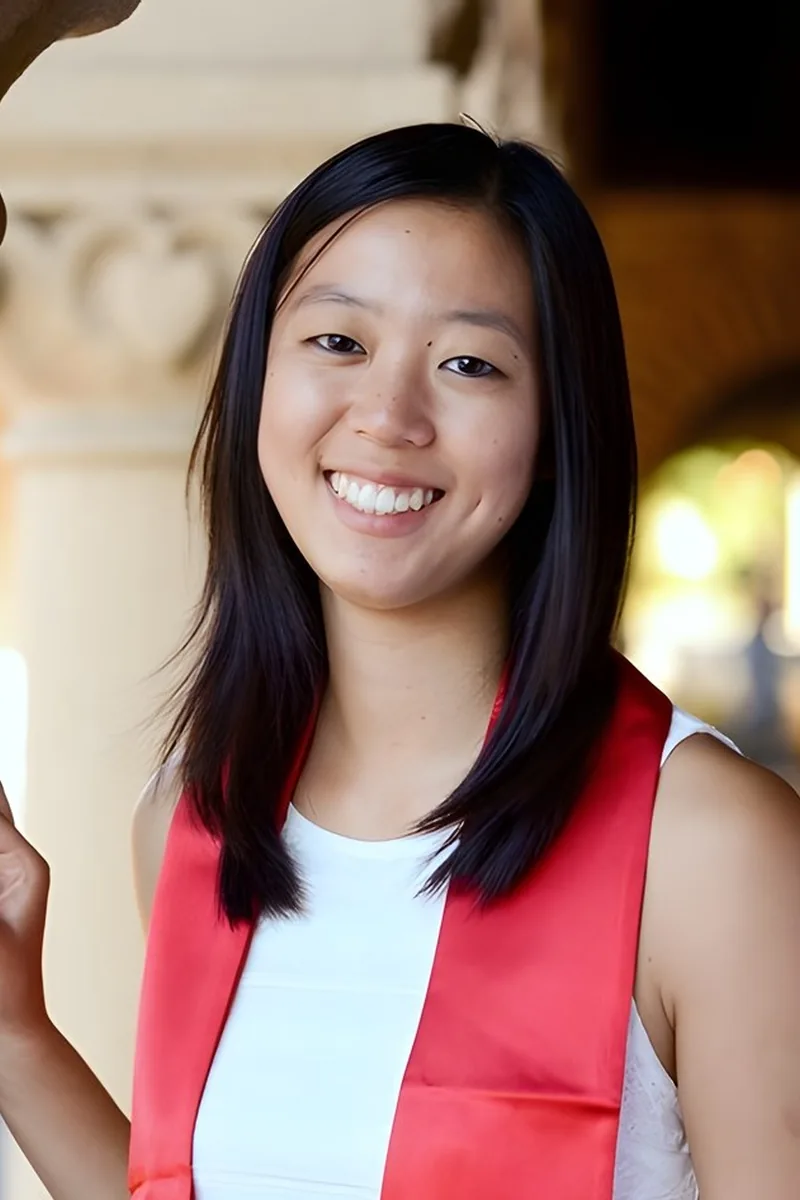
Mechanical engineering at the undergraduate level means Caroline didn't just take calculus — she relied on it daily, using integrals to analyze stress distributions, derivatives to model fluid flow, and differential equations to predict how systems behave under load. That engineering fluency lets her teach concepts like the chain rule or integration by parts through physical problems where the math has a job to do, not just a textbook exercise to solve.

Having tutored Calculus 1 and 2 extensively and now studying mathematics at the graduate level at the University of Illinois, Nicholas digs into the reasoning behind differentiation rules, integration techniques, and convergence tests rather than just drilling formulas. He walks through problems like related rates and series by connecting each step back to the core definitions, so students can handle unfamiliar variations on exams.
Calculus isn't Kari's core specialty, but she brings a creative, multi-angle problem-solving style that can be surprisingly effective for students struggling with derivatives and integrals. She's especially good at walking through the conceptual "why" behind limit definitions and the chain rule so the mechanics feel less arbitrary.
As a pre-med student at Columbia, Eva tackles calculus problems rooted in real applications — rates of change in biological systems, optimization, and integral techniques that show up in both STEM coursework and standardized exams. She breaks down concepts like the chain rule and related rates into clear, repeatable steps so students build genuine understanding.
I'm a fourth year veterinary student at the University of Minnesota College of Veterinary Medicine. I graduated from SUNY Binghamton University in May 2019, with a BA in Biology, and a minor in Biological Anthropology.
Computer science at Stanford means David didn't just take calculus — he relied on it, using derivatives for gradient descent in machine learning and integrals for probability distributions in algorithms courses. That ongoing dependence on calculus as a working tool gives him a practical fluency with the material, and his 1570 SAT confirms the quantitative chops to back it up.
Having completed coursework through multivariable calculus in the University of Minnesota Talented Youth Math Program by 10th grade, Ryne brings genuine depth to limits, derivatives, and integration techniques. He unpacks each concept by connecting it to the algebra and geometry underneath, making the leap from computation to conceptual understanding feel natural.
Emma's Classics degree at Carleton doesn't scream calculus, but her 1500 SAT and 34 ACT confirm she handles quantitative reasoning well, and her weekly tutoring hours at a local high school include walking math students through the kind of conceptual hurdles that pile up in early calculus. She's especially good at translating dense notation into plain language — a skill she's sharpened by years of parsing Latin syntax, where precision and structure matter just as much as they do when unpacking a limit definition or a derivative rule.
Mechanical engineering runs on calculus — from modeling fluid dynamics to analyzing stress in materials, Vania used derivatives and integrals daily throughout her degree. She breaks down topics like related rates, integration techniques, and series convergence by tying them to physical problems that make the math feel purposeful.
A computer science major at Dartmouth, Allison uses calculus daily in her coursework — optimization algorithms, summation-heavy analysis, and the linear algebra-calculus intersections that power everything from graphics to machine learning. That constant exposure means she can unpack chain rule applications or integration techniques with the fluency of someone who actually depends on them, not just someone who passed the class. Rated 4.9 by students.
Angela's business administration degree involved the quantitative side of economics — optimization, marginal analysis, cost modeling — all of which depend on derivatives and basic integration. That grounding means she can walk students through differentiation rules and their applications with concrete examples from business contexts, like finding where profit peaks or how costs change at different production levels.
Computer science at Washington University in St. Louis means Eric writes code that depends on calculus daily — game physics engines use derivatives for motion, cybersecurity algorithms lean on integration for signal analysis, and optimization problems are everywhere in both fields. That practical fluency lets him teach concepts like the chain rule or Riemann sums by connecting them to the computational logic students already encounter in STEM coursework. His 31 ACT composite confirms the quantitative chops to back it up.
Neuroscience coursework at the University of Minnesota means Nisarg uses calculus daily — from modeling neural firing rates with derivatives to applying integrals in pharmacokinetic equations. He breaks down limits, chain rule applications, and related rates by tying each concept to something tangible, so the logic behind the math clicks before the formulas do.
Philosophy trains you to follow an argument step by step and know exactly where the logic breaks — which is precisely what Anniessa brings to early calculus concepts like limits and continuity, where intuition often misleads and precise reasoning matters. Her Master's in Education and K-12 math tutoring experience mean she can unpack the conceptual shift from algebra to calculus thinking, walking through why a derivative captures instantaneous change rather than just drilling the power rule. Rated 5.0 by students.
History is Seth's home turf, not mathematics, so he's straightforward that calculus sits well outside his primary expertise. That said, his ACT score of 32 reflects solid quantitative ability, and his Carleton College liberal arts training emphasized the kind of rigorous analytical reasoning — building arguments step by step, interrogating assumptions — that maps naturally onto unpacking what a limit or derivative is actually doing.
George's Child Studies degree doesn't scream calculus, but his 1570 SAT proves he can handle rigorous quantitative work, and his broad math tutoring — from pre-algebra through calculus — means he's watched students navigate every stumbling block that leads up to the subject. He's especially effective at connecting the algebraic intuitions students already have to new ideas like limits and instantaneous rate of change, making the transition feel like a natural next step rather than a cliff. Rated 5.0 by students.
Political science at Boston College didn't require heavy calculus, so this sits at the edge of Adam's teaching range rather than its center. His 31 ACT shows solid quantitative chops, though, and his broad math tutoring experience means he can walk students through the conceptual shift from algebra into early calculus — particularly what a limit is actually doing and how slope becomes something you can calculate at a single point.
Limits and derivatives finally make sense when a student sees them as measuring real rates of change — drug absorption curves, population growth, velocity — rather than abstract symbol manipulation. Kushal's Master's work in Biomedical Sciences gave him daily practice applying calculus to biological systems, so he connects each concept to something tangible. He walks through the chain rule, integration techniques, and related rates with that same grounded approach.
As a math double major at Carleton College, Harry tackles calculus with an emphasis on building intuition around limits, derivatives, and integrals before jumping into computation. He walks through problems by connecting each rule — chain rule, u-substitution, integration by parts — to the underlying logic so the techniques actually stick.
Film studies at Carleton College isn't a math degree, so Sarah is straightforward that calculus isn't her primary area — but her IB diploma included the kind of rigorous quantitative coursework that builds real comfort with limits and early derivative concepts. She brings a visual, pattern-oriented mindset from her arts background to sketching curves and interpreting what a function is doing, which can unlock intuition for students who struggle when calculus stays purely symbolic. Rated 5.0 by students.
Ten years of project management means Travis has lived in the world of rate-of-change thinking — tracking how budgets shift over time, how resource curves behave, and how small adjustments compound into large outcomes. That analytical habit maps directly onto early calculus concepts like limits and derivatives, where the real skill is reading what a changing quantity is doing and why. Rated 5.0 by students.
Social work and special education aren't typical paths into calculus, but Emily's daily work involves interpreting data trends, tracking student progress quantitatively, and breaking complex processes into manageable steps — skills that map directly onto early calculus thinking. She tackles limits and introductory derivatives by slowing down the reasoning at each stage, making sure the logic behind the notation is clear before moving forward. Rated 5.0 by students.
Integration techniques — substitution, parts, partial fractions — can feel like a grab bag of tricks unless someone shows you the underlying strategy for choosing the right one. Amrit's engineering coursework at Georgia Tech demands fluency in both differential and integral calculus, so he teaches these methods as connected tools rather than isolated formulas. He's particularly strong at walking through the chain of reasoning behind multi-step problems.
Product Design at the University of Minnesota pairs math with making — Lillian's coursework means she's applied derivatives to optimization problems like minimizing material waste and maximizing structural efficiency, giving her a designer's intuition for what calculus actually does. She teaches concepts like related rates and the chain rule by connecting them to the physical, spatial reasoning that design students use every day.
Veterinary medicine is surprisingly calculus-heavy — Marika's DVM coursework involves pharmacokinetic modeling, fluid dynamics in cardiovascular systems, and the rate-of-change math behind anesthetic dosing protocols. That daily exposure to applied calculus means she can anchor derivatives and integrals in tangible problems where the math genuinely matters. Rated 5.0 by students.
Theater and social work don't scream calculus, but Katie's 35 ACT composite shows she can handle high-level quantitative reasoning, and her experience tutoring math from elementary through pre-calculus means she understands the conceptual scaffolding students need before derivatives make sense. She's especially effective at translating dense notation into plain, approachable language — the same skill that makes her strong across reading and writing subjects.
Aerospace engineering at Minnesota means Ethan doesn't just use calculus — he lives in it daily, from computing lift and drag integrals to modeling flight trajectories with differential equations. That hands-on fluency lets him teach topics like integration techniques, related rates, and multivariable concepts by connecting them to the physical problems they were invented to solve. Rated 5.0 by students.
Having worked in Grinnell College's math lab specifically as a calculus tutor, Audrey has walked dozens of students through limits, derivative rules, integration techniques, and the conceptual leaps that make calc feel overwhelming. Her mathematics background means she can connect ideas like the chain rule or the Fundamental Theorem back to the intuition behind them, not just the formulas.
Richard's broad math teaching range — from pre-algebra through college-level courses — means he knows exactly which algebra and trig gaps trip students up when they hit calculus for the first time. He tackles problems like related rates and definite integrals by rebuilding the underlying arithmetic and function skills in real time, so students stop getting lost in the calculus and start seeing the logic. Rated 5.0 by students.
Teaching music theory means Danny already thinks in terms of patterns, intervals, and rates of change — concepts that map surprisingly well onto calculus. His Master's in Music Education and 1450 SAT score show both the quantitative chops and the teaching instinct to walk someone through derivatives and integration by breaking each problem into smaller, logical steps rather than drowning in notation.
Between a 36 ACT, a 1570 SAT, and a computer science degree, David has the kind of quantitative depth where calculus isn't just a course he passed — it's the mathematical backbone of everything he builds and codes. He teaches concepts like integration techniques and series convergence by emphasizing the reasoning behind each step, so students can explain *why* an approach works rather than just replicate it. Rated 5.0 by students.
Celestine's PhD in Applied Economics required heavy use of calculus — optimization problems, partial derivatives, and integral techniques that underpin economic modeling. That daily application means she teaches concepts like the chain rule and Riemann sums with a clear sense of why they matter, not just how to execute them.
Economics coursework leans heavily on calculus — marginal analysis, optimization problems, and interpreting how cost and revenue functions behave all require fluency with derivatives. Rohit's econ degree means he's applied these tools to real models, and his debate-coaching instinct to break arguments into logical steps carries over to walking through chain rule and integration problems piece by piece. Rated 5.0 by students.
Political economy coursework gave Cleo regular exposure to quantitative reasoning — marginal analysis, optimization problems, and the derivative logic that underpins economic modeling. A 1530 SAT confirms she can handle that level of math, and her teaching instinct is to strip away intimidating notation until the underlying concept is plain and workable. Rated 5.0 by students.
Genetics coursework at the University of Minnesota meant Brian lived in calculus — modeling gene expression rates, analyzing growth curves, and working through the differential equations that describe how cell populations change over time in his cancer research lab work. That hands-on experience with derivatives and integrals in biological systems gives him a concrete toolkit for teaching the material, connecting each rule to problems where rates of change actually matter. Rated 4.9 by students.
Psychology research leans heavily on statistical modeling, and Brita's coursework in that field gave her experience with the rate-of-change concepts that underpin early calculus — particularly how variables shift in relation to one another. She brings a counselor's patience to walking through limits and derivative rules, breaking intimidating notation into manageable, logical steps. Rated 4.8 by students.
Pre-med genetics coursework at the University of Minnesota meant Jaya worked through calculus in the context of modeling gene expression rates, growth curves, and the quantitative backbone of cell biology — so the material isn't abstract to her. Her 35 ACT composite backs up that quantitative fluency, and she teaches derivatives and integration by connecting each concept to the biological systems where they actually matter.
Training to teach math to grades 5-12 means Michelle doesn't just know calculus — she's learning how to explain it, sequence it, and diagnose exactly where a student's understanding breaks down. Her mathematics education coursework at Bethel University covers the pedagogy behind concepts like the chain rule, related rates, and integration techniques, so she can teach the reasoning behind each step rather than just demonstrate the procedure. A 34 ACT composite backs up the quantitative chops.
Having covered math through multivariable calculus on a double-accelerated track, Anna treats limits, derivatives, and integrals as a connected story rather than isolated procedures. She's especially sharp at unpacking the chain rule and related rates problems — the spots where students most often lose the thread between setup and solution.
Linguistics trains you to see structure in complexity — parsing syntax trees and mapping phonological rules requires the same kind of systematic, rule-based thinking that powers calculus. Laura applies that analytical wiring to breaking down derivative and limit problems into logical sequences, treating each step like a grammatical transformation that follows from the one before it. Her 33 ACT composite confirms she can handle the quantitative side as well.
Testimonials
Because the right Calculus tutor makes all the difference.
Average Session Rating – Based on 3.4M Learner Ratings
Nearby Calculus Tutors
Other St. Paul Tutors
Related Math Tutors in St. Paul
Frequently Asked Questions
Varsity Tutors matches St. Paul students with expert Calculus tutors for 1-on-1 instruction. We pair each student with a tutor based on their specific needs, learning style, and goals.
Whether you need homework help, exam prep, or want to get ahead, our Calculus tutors are ready to help.
Common challenges include gaps from earlier material, difficulty with specific concepts, and trouble applying learning to new problems. These issues can snowball quickly in Calculus.
A tutor identifies where you're stuck, fills in gaps, and provides targeted practice. The 1-on-1 format means you get help exactly where you need it.
Tutors work with your student's actual coursework—homework assignments, class notes, and upcoming tests. This keeps tutoring directly relevant to what's happening in the classroom.
When you share information about your student's school and curriculum, we can match you with a tutor who has relevant experience.
All tutors complete background checks, credential verification, and teaching evaluation. Many of our Calculus tutors hold advanced degrees or have years of teaching experience.
You can review tutor profiles to find someone with the right background for your student's level and needs.
Many students see improved grades within a few weeks, along with better understanding of Calculus concepts and more confidence tackling challenging material.
Tutors track progress and adjust their approach to ensure continued improvement.
Most students benefit from 1-2 sessions per week. More frequent sessions help if your student is significantly behind or has an important exam coming up.
Your tutor can recommend a schedule based on your student's specific situation and goals.
Tutoring is purchased in packages of hours, with rates varying by tutor experience. Varsity Tutors offers several options to fit different budgets and needs.
You can discuss pricing during your consultation to find what works best.
Your tutor will assess where your student is, discuss goals, and start working on priority areas. Most students bring current homework or upcoming test material to focus on.
By the end, you'll have a clear sense of how the tutor can help and a plan for moving forward.
Let’s find your perfect tutor
Answer a few quick questions. We’ll recommend the right plan and match you with a top 5% tutor.