Award-Winning High School Chemistry Tutors
serving St. Paul, MN
High School Chemistry
Tutors in St. Paul
Private 1-on-1 tutoring, weekly live classes for academic support, test prep & enrichment, practice tests and diagnostics, and more to elevate grades and test scores.
Based on 3.4M Learner Ratings
UniversitiesSchools & Universities
DeliveredHours Delivered
ProficiencyGrowth in Proficiency
Who needs tutoring?
No obligation. Takes ~1 minute.
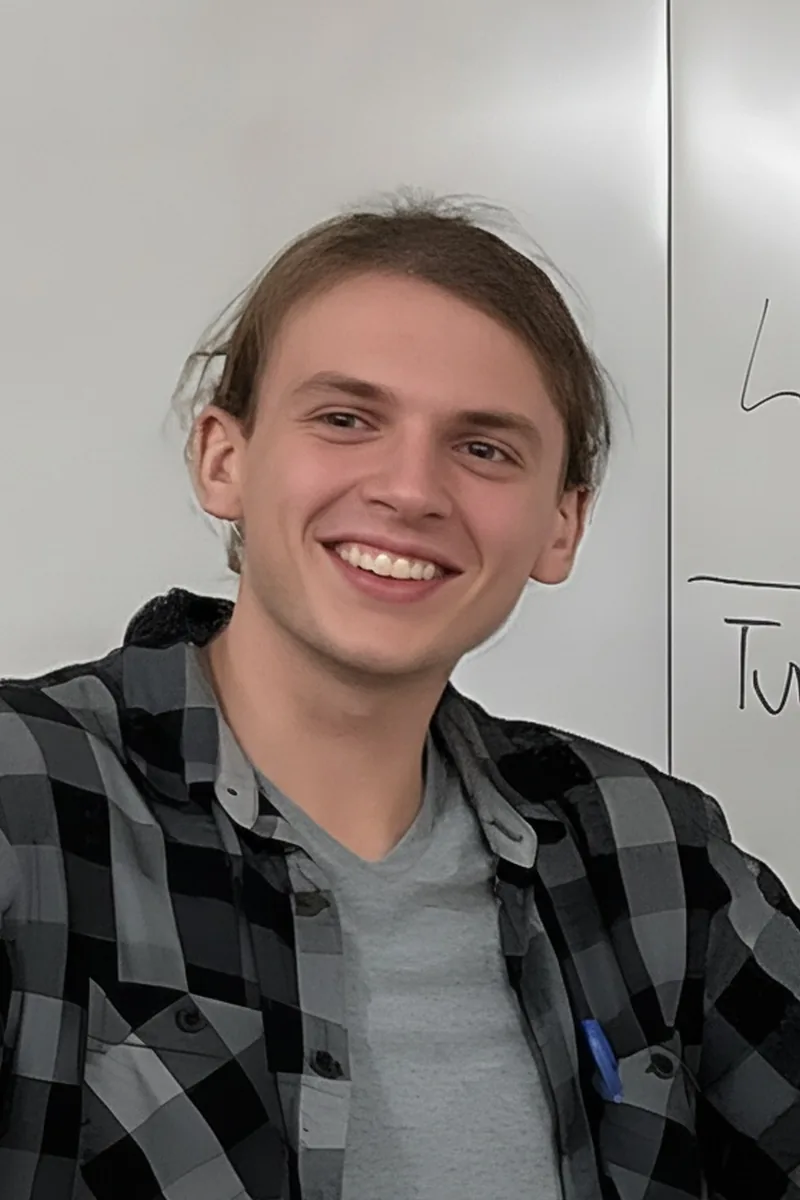
When mole conversions and electron configurations start piling up, high school chemistry can feel like a different language. Ethan approaches it systematically — teaching students to map out reaction types, balance equations methodically, and connect periodic trends to actual chemical behavior rather than treating each chapter as a disconnected set of rules.

Balancing redox reactions, predicting molecular geometry, and navigating stoichiometry all require a kind of structured thinking that Brian teaches explicitly. Chemistry is one of his favorite subjects, and his experience in two cancer research labs means he can explain why a reaction behaves the way it does at the molecular level — not just walk through the formula. Rated 4.9 by students.
Balancing equations, understanding molarity, and predicting reaction products all require a kind of systematic thinking that Colleen developed through her biomedical engineering degree at Arizona State. She approaches high school chemistry by teaching students to recognize patterns in the periodic table and reaction types so that problem-solving feels logical instead of random.
Edward's B.S. in Chemistry means the full sweep of high school topics — from electron configurations and periodic trends to equilibrium and gas laws — sits squarely in his core training, not something he's recalling secondhand. He zeroes in on the quantitative reasoning behind stoichiometry and dimensional analysis, teaching students to track units and mole relationships as a way of thinking rather than a set of steps to memorize. Holds a 5.0 rating.
Stoichiometry, balancing redox reactions, and understanding periodic trends all click faster when a student sees how they connect to real applications. Joe's engineering training required deep fluency in chemistry fundamentals, and he uses that practical lens to make topics like mole conversions and gas laws feel less like abstract formulas.
Stoichiometry, equilibrium, and acid-base reactions make more sense when a student can see where they lead. Bidyut ties high school chemistry concepts to biomedical applications he's encountered at Johns Hopkins, turning mole calculations and reaction balancing into something more tangible than textbook exercises.
Balancing redox equations, predicting products, and navigating stoichiometry all become more manageable when a student understands the 'why' behind each reaction type. Maggie's molecular and cellular biology degree gave her deep fluency in chemical principles, and she applies that knowledge to demystify everything from periodic trends to equilibrium calculations. She holds a 5.0 rating from students.
Three science bachelor's degrees plus a medical doctorate means Sydny has taken chemistry at every level — from introductory courses through the biochemistry and pharmacology that med school demands daily. She unpacks topics like stoichiometry and gas laws by connecting them to the biological and medical contexts where those calculations actually do something, which tends to make the abstract feel worth learning.
Neuroscience at Yale meant David didn't just take chemistry — he needed it to work, especially when tracing how ion channels, neurotransmitters, and cellular signaling depend on concepts like electronegativity, polarity, and equilibrium. That gives him a concrete answer when students ask why any of this matters, and it shapes how he teaches topics like chemical bonding and reaction energetics: rooted in what molecules actually do, not just what shows up on a worksheet.
Balancing equations, mole conversions, and electron configurations all follow patterns that become obvious once someone lays them out clearly. Tim's experience teaching chemistry at a STEM camp means he's practiced at breaking these topics down for students encountering them for the first time. His quantitative training at MIT keeps him sharp on the math-heavy units — gas laws, enthalpy, and solution chemistry — where many high schoolers hit a wall.
When mole conversions and electron configurations feel like two completely unrelated subjects crammed into one class, that's usually a sign the underlying logic hasn't clicked yet. Aidan ties high school chemistry concepts together by starting from atomic structure and building outward — showing why periodic trends predict reactivity, how bonding explains molecular shape, and where the math fits in. His premed coursework at Notre Dame covered this material in depth.
Czarina is a biophysics and premed student at Johns Hopkins who scored 770 on the SAT Chemistry subject test — meaning she's recently navigated the exact material high school chemistry students are working through, from periodic trends and bonding to thermodynamics and reaction kinetics. She zeroes in on the conceptual logic behind gas law calculations and equilibrium expressions so that problem-solving feels intuitive rather than formulaic. Rated 5.0 by her students.
Having spent years studying bio-organic chemistry at the college level, Alex knows exactly how high school topics like Lewis structures, nomenclature, and reaction types feed into the harder material that comes later — and he teaches them with that bigger picture in mind. He breaks down problems step by step, especially in areas like dimensional analysis and mole conversions, so the math side of chemistry stops feeling like a separate skill from the conceptual side.
This isn't Hasan's core area — his degrees are in Literary Arts and Visual Arts from Brown — but his role as a lead teacher at a classical academy means he regularly supports students across subjects, including chemistry fundamentals like nomenclature, dimensional analysis, and basic stoichiometry. He's strongest at teaching students how to read and dissect word-heavy chemistry problems, applying the same close-reading instincts from his literary training to pull apart what a question is actually asking.
Working at UPenn's Tutoring Center, Brittany spent semesters teaching General Chemistry I and II to both undergraduate and graduate students — so she's diagnosed the exact points where topics like stoichiometry, gas laws, and chemical equilibrium tend to fall apart for learners at different levels. That hands-on repetition with real students means she can spot whether a high schooler's confusion stems from the math, the conceptual model, or just shaky notation, and adjust accordingly.
Balancing equations and stoichiometry problems click faster when you understand what's actually happening at the molecular level — and Laura's biology coursework at WashU in St. Louis means she's constantly applying chemistry concepts like bonding, reaction energetics, and solution behavior in biological contexts. That dual perspective lets her explain why a concept like electronegativity or gas behavior matters beyond the chemistry classroom, which tends to make the logic memorable rather than disposable. Rated 5.0 by students.
Most high school Chemistry struggles come down to one thing: the periodic table is supposed to be a cheat sheet, but nobody taught students how to read it. Sharan connects trends like electronegativity and atomic radius to actual behavior in reactions, so predicting whether a bond is ionic or covalent stops being a guessing game. She's earned a 5.0 rating tutoring science subjects alongside her premed studies at Cornell.
Testimonials
Because the right High School Chemistry tutor makes all the difference.
Average Session Rating – Based on 3.4M Learner Ratings
Nearby High School Chemistry Tutors
Other St. Paul Tutors
Related Science Tutors in St. Paul
Frequently Asked Questions
Varsity Tutors matches St. Paul students with expert High School Chemistry tutors for 1-on-1 instruction. We pair each student with a tutor based on their specific needs, learning style, and goals.
Whether you need homework help, exam prep, or want to get ahead, our High School Chemistry tutors are ready to help.
Common challenges include gaps from earlier material, difficulty with specific concepts, and trouble applying learning to new problems. These issues can snowball quickly in High School Chemistry.
A tutor identifies where you're stuck, fills in gaps, and provides targeted practice. The 1-on-1 format means you get help exactly where you need it.
Tutors work with your student's actual coursework—homework assignments, class notes, and upcoming tests. This keeps tutoring directly relevant to what's happening in the classroom.
When you share information about your student's school and curriculum, we can match you with a tutor who has relevant experience.
All tutors complete background checks, credential verification, and teaching evaluation. Many of our High School Chemistry tutors hold advanced degrees or have years of teaching experience.
You can review tutor profiles to find someone with the right background for your student's level and needs.
Many students see improved grades within a few weeks, along with better understanding of High School Chemistry concepts and more confidence tackling challenging material.
Tutors track progress and adjust their approach to ensure continued improvement.
Most students benefit from 1-2 sessions per week. More frequent sessions help if your student is significantly behind or has an important exam coming up.
Your tutor can recommend a schedule based on your student's specific situation and goals.
Tutoring is purchased in packages of hours, with rates varying by tutor experience. Varsity Tutors offers several options to fit different budgets and needs.
You can discuss pricing during your consultation to find what works best.
Your tutor will assess where your student is, discuss goals, and start working on priority areas. Most students bring current homework or upcoming test material to focus on.
By the end, you'll have a clear sense of how the tutor can help and a plan for moving forward.
Let’s find your perfect tutor
Answer a few quick questions. We’ll recommend the right plan and match you with a top 5% tutor.