Award-Winning SAT Tutors
serving Des Moines, IA
SAT
Tutors in Des Moines
Private 1-on-1 tutoring, weekly live classes for academic support, test prep & enrichment, practice tests and diagnostics, and more to elevate grades and test scores.
Based on 3.4M Learner Ratings
UniversitiesSchools & Universities
DeliveredHours Delivered
ProficiencyGrowth in Proficiency
Who will be getting tutoring?
No obligation. Takes ~1 minute.

A 1560 SAT composite gives Joshua credibility, but what actually moves scores is his section-by-section breakdown of timing traps — especially the no-calculator math questions where algebraic shortcuts save critical minutes. His computer science training makes him particularly sharp on the logic and data interpretation problems that trip up students in both the math and evidence-based reading sections.
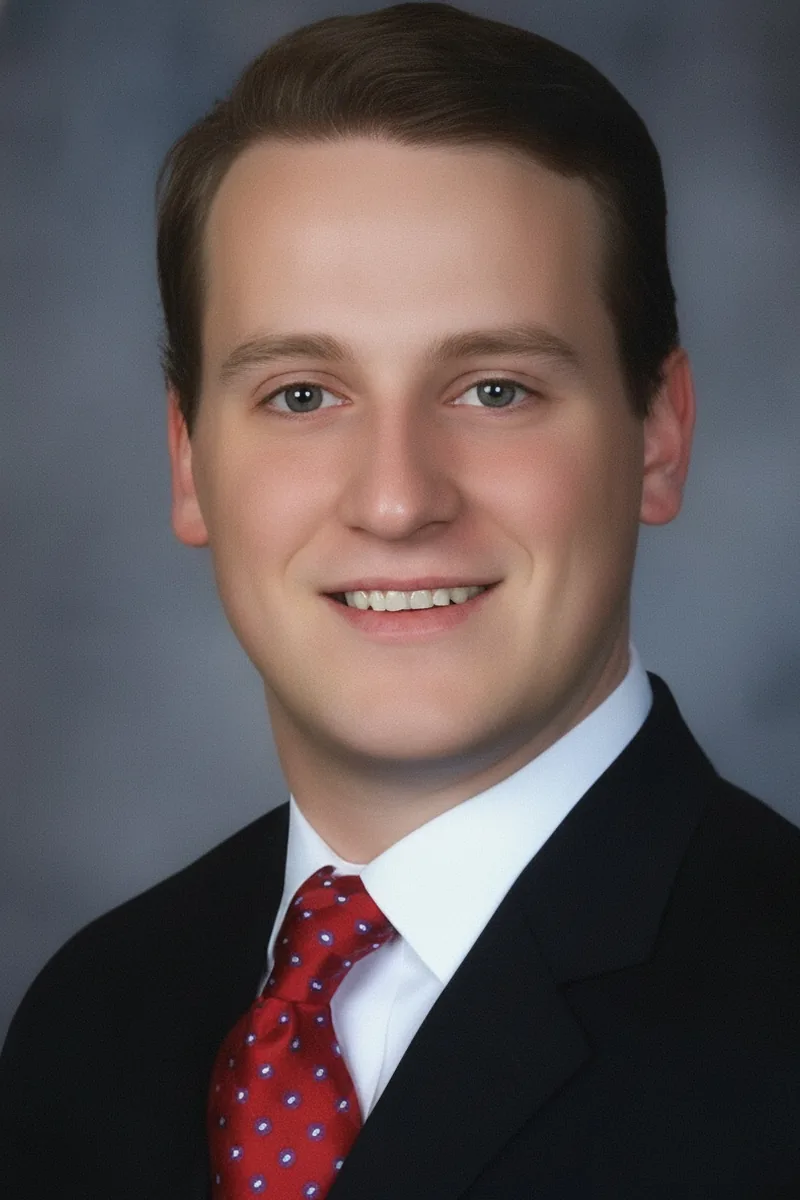
What makes John effective for SAT prep is that he teaches both halves of the exam with equal fluency — his English and drama training sharpens his approach to passage analysis and evidence-based reading, while his math and physics background means he handles the algebra, data interpretation, and problem-solving sections without switching gears. He scored a 1420 on the SAT himself and holds a perfect 36 ACT composite, so he knows how standardized tests are constructed and where they try to trip students up. Rated 4.9 by students, he builds pacing and elimination strategies tailored to each section's specific traps.
Nina's biostatistics training at Columbia and Northwestern means the SAT Math section — especially data analysis, scatterplot interpretation, and multi-step algebra — plays directly to her strengths. She scored a 1550 and knows how to teach the quantitative reasoning patterns that separate a good math score from a great one, while her experience with college essays and literature gives her practical tools for the Reading and Writing sections too.
Medical school demands the same skill the SAT rewards — extracting the right answer from dense, unfamiliar material under serious time pressure. Alex, who scored a 1590, teaches students to treat the Reading section like a data problem: find the claim, locate the evidence, eliminate what doesn't match. His chemical engineering training at Washington and Lee also means the math section's algebra and data analysis questions are territory he can break down cold.
Second-year medical school at Baylor means Michelle lives in the world of high-stakes, timed exams — and she applies that same strategic discipline to SAT prep, where she scored a 1570. Her biochemistry training at Rice sharpens the data-interpretation and graph-reading questions on the Math section, while her science-heavy reading background translates into efficient passage analysis on the Evidence-Based Reading side.
Scoring a 1550 on the SAT while juggling a dual PhD/MD track at Northwestern says something about efficiency under pressure — Chelain knows how to maximize points per minute on both the math and evidence-based reading sections. She breaks down SAT questions by what they're actually testing (inference vs. command of evidence, heart-of-algebra vs. passport-to-advanced-math) so students stop second-guessing and start recognizing patterns. Rated 5.0 by students.
Law school at the University of Chicago sharpened exactly the skills the SAT rewards — picking apart dense passages under time pressure, spotting logical gaps, and choosing precise language over vague alternatives. Elena pairs that training with a perfect 1600 SAT score and a tutoring approach built around listening to students reason through problems so she can pinpoint the specific assumptions or misreadings costing them points. Her government, Spanish, and legal background gives her unusually natural command of both the verbal and quantitative sides of the exam.
Elliot's neuroscience PhD trained him to parse dense research passages and interpret statistical figures quickly — exactly the skills that drive scores up on the SAT's evidence-based reading and data-heavy math questions. He scored a 1540 on the SAT himself and builds test strategy around recognizing how the exam reuses the same question logic across sections. Rated 5.0 by students.
Northwestern's Honors Program in Medical Education accepted Anna straight out of high school, which meant she had to master the kind of disciplined, high-stakes test-taking that the SAT demands — and her 1590 score reflects that. She teaches students to treat the math section's word problems as logic puzzles and coaches a systematic elimination approach on the Reading and Writing passages that cuts through ambiguity under time pressure.
A 1560 SAT scorer with a Master's in Education from Harvard, Mimi brings a structured yet creative approach to test prep — particularly the evidence-based reading passages, where her art history and literary analysis background makes dissecting complex texts second nature. She teaches students to identify argument structure and eliminate trap answers systematically across both the reading and writing sections.
What separates a 1500+ SAT score from a 1300 often isn't knowledge — it's knowing how the test tries to trick you. Joey scored a 1570 and built his prep approach around identifying those traps, particularly the algebra and data-analysis questions on the Math section where careful reading matters as much as calculation. His theater training at Columbia also sharpened the close-reading and rhetorical analysis skills that pay off on the Evidence-Based Reading and Writing sections.
Most SAT prep treats the Reading and Math sections as completely separate skill sets, but Emily's science training at Yale — where she spent years parsing dense research literature and working with data — means she teaches both sides of the exam as exercises in precise interpretation. She scored a 1550 on the SAT and builds her coaching around the specific reasoning habits that earned it: identifying exactly what a question asks before touching the answer choices, and translating word problems into structures rather than guessing at operations. Rated 5.0 by students.
Georgetown's math program trained Peter to think in precise, logical steps — exactly the skill that turns the SAT Math section's multi-step word problems and data analysis questions into straightforward solves. His 1580 SAT score and years of tutoring both math and writing mean he covers the full exam without switching gears, connecting algebraic reasoning on one section to evidence-based reading strategy on the next. Rated 5.0 by students.
Years of writing and peer-editing philosophy and religion papers at Pomona gave Miranda a precise feel for argument structure and rhetorical traps — exactly what the SAT's Reading and Writing sections test under time pressure. She pairs that verbal strength with a 1560 SAT score and hands-on experience mentoring high schoolers through standardized test strategy. Rated 5.0 by students.
Classics and philosophy trained Austin to read dense, argument-heavy texts with precision — exactly the skill that separates good SAT Reading scores from great ones. He scored a 1570 and teaches students to trace an author's reasoning through evidence-based questions rather than relying on surface-level comprehension. His grammar and writing chops carry over to the Writing and Language section, where he unpacks the punctuation and syntax rules the test recycles in every form.
Dennis's finance and statistics coursework at NYU means the SAT Math section plays to his strengths — he teaches students to spot the underlying algebra and data-analysis patterns that repeat across every practice test, turning unfamiliar-looking problems into familiar setups. His 1550 SAT score backs up a prep approach built on efficiency: knowing which questions to attack first, where to double-check, and how to manage the clock so careless errors don't eat into a strong performance.
Phillip's biomedical engineering coursework at Brown means the SAT Math section — algebra, data analysis, advanced problem-solving — plays to his strongest skills, and his 1560 composite score confirms he knows how to execute under test-day pressure. He also coaches students through the Reading and Writing sections by teaching them to identify passage structure and eliminate wrong answers systematically rather than relying on feel. Rated 5.0 by students.
Chemical engineering coursework at Michigan means Edward lives in the kind of multi-step quantitative reasoning that dominates the SAT Math section — translating word problems, manipulating algebraic expressions, and interpreting data under time pressure. He pairs that with a structured approach to the Reading and Writing sections, teaching students to identify evidence patterns and grammar rules rather than relying on instinct. His 1520 SAT and 4.8 rating speak to how well that approach transfers to test day.
Studying both psychology and linguistics at the University of Chicago gave Sherry an unusual double lens for the SAT — the linguistics side sharpens her teaching of grammar rules, sentence structure, and rhetoric on the Writing & Language section, while the psychology side informs how she coaches students through test-day pacing and anxiety management. She scored a perfect 1600 and uses that familiarity with every section to pinpoint exactly where a student's points are slipping, whether it's evidence-based reading pairs or no-calculator algebra. Rated 5.0 by students.
Phillips Exeter's Harkness method trained Violet to pull apart complex problems collaboratively — a habit she now applies to SAT prep, where she teaches students specific tricks for pacing the math sections and spotting grammar patterns in Writing and Language. Her math degree from Brown and 1550 SAT score mean she's equally comfortable drilling no-calculator algebra strategies and coaching students through evidence-based reading questions. Rated 4.5 by students.
Scoring a 1550 on the SAT herself, Kiersten spent two semesters as a CollegeSpring Mentor preparing charter school juniors for test day — breaking down everything from evidence-based reading passages to no-calculator math strategies. Her screenwriting background at USC gives her a unique edge on the Reading and Writing sections, where she teaches students to dissect argument structure and pinpoint rhetorical choices under time pressure.
Most SAT points aren't lost on the hardest questions — they're lost on medium-difficulty ones where rushing or misreading costs easy points. Eric, who scored a 1570, teaches a pacing and elimination strategy built around that insight, drilling students on when to slow down in the Reading section and when to move quickly through familiar algebra patterns in Math. His business background also sharpens his approach to the data interpretation and graph-reading questions that increasingly dominate the exam.
Perry's dual science degrees from Rice University built the exact quantitative reasoning and data interpretation skills that dominate the SAT Math section, while his medical humanities minor sharpened the close-reading habits needed for Evidence-Based Reading and Writing. He scored a 1570 on the SAT and knows which algebra shortcuts and passage-analysis techniques make the biggest difference under time pressure. Rated 5.0 by students.
A 1400 SAT and a communication background give Logan a dual advantage: he knows the test's structure cold and can clearly articulate the reasoning behind every answer choice. His approach to the Reading and Writing sections leans heavily on argument analysis — identifying claims, evaluating evidence, and spotting the rhetorical moves that the College Board loves to test. Rated 5.0 by students, he also brings strong math fundamentals from his 36 ACT composite to shore up the quantitative side.
Medical school admissions forced Nishad to master every section of the SAT on his way to a 1580 composite — and that full-test perspective means he coaches the Reading, Writing, and Math sections as one integrated strategy rather than three separate prep tracks. His premed science training sharpens his approach to data interpretation and graph-based questions, while his literature and essay background keeps the evidence-based reading instruction equally rigorous.
Medical school trains you to process dense, unfamiliar material under pressure — which is essentially what the SAT Reading section demands. Conor pairs that skill with a 1560 SAT score and an engineer's approach to the Math section, where he teaches students to spot the underlying structure of multi-step problems instead of relying on brute-force calculation. Rated 5.0 by students.
Neuroscience coursework at Vanderbilt trained Eileen to process dense, data-heavy passages quickly — exactly the skill that separates good SAT scores from great ones on the Evidence-Based Reading section. She scored a 1550 and built her own prep strategy around identifying question patterns across both the verbal and math sides, so students walk into test day with a repeatable system rather than vague instincts. Rated 4.7 by students.
Zhenrui's Columbia engineering and premed coursework means he's constantly switching between quantitative problem-solving and dense analytical reading — exactly the cognitive gear-shifting the SAT demands. He scored a 1570 on the exam and uses that experience to teach students how to spot the algebraic shortcuts buried in the Math section's trickiest word problems and how to navigate the evidence-based reading pairs efficiently under time pressure.
Eric's approach to SAT prep centers on working through real problems in real time — diagnosing exactly where a student's reasoning breaks down on a given question type and fixing it on the spot, whether that's a tricky algebra setup or an evidence-based reading pair. His 1560 SAT score and dual background in biological sciences and Russian mean he's equally comfortable on both sides of the exam. Rated 5.0 by students.
Rachel earned a perfect 1600 on the SAT, which means she didn't just master each section — she learned exactly where the test tries to create doubt and how to shut it down. Her unusually broad teaching range across math, science, English, and writing lets her coach the full exam without switching gears, connecting algebra strategies and evidence-based reading techniques into a single coherent approach.
Most SAT prep treats math and verbal as separate worlds, but Justin's PhD work in computational mathematics at the University of Chicago trained him to read precisely and reason quantitatively in the same breath — exactly what the SAT demands. He scored a 1560 and teaches students to attack the math sections through algebraic fluency rather than calculator dependence, while applying the same structured logic to evidence-based reading questions. Rated 5.0 by students.
Philosophy majors learn to tear arguments apart sentence by sentence — a skill Ezra applies directly to the SAT's evidence-based reading questions, where identifying an author's reasoning is worth more than speed-reading. His perfect 1600 SAT score backs up an approach that treats the entire exam as a logic exercise, from grammar rules on the Writing section to algebraic word problems that reward careful translation over rote calculation. Rated 4.8 by students.
I am passionate about helping students with math, science, test prep, and more! As sophomore undergraduate at Brown University studying Mathematics and Biophysics, I am well experienced with many topics. I received a perfect 36 on my ACT, so I am very confident with test taking.
Most SAT prep treats the verbal and math sections as separate worlds, but Julia's English and Linguistics degree — paired with her genuine strength in math — lets her teach the whole exam as one coherent skill set: precise reading, logical elimination, and structured problem-solving. She scored a perfect 1600 and knows exactly where that score came from — not innate test-taking talent, but deliberate habits around pacing, process of elimination, and recognizing how the SAT reuses the same question structures across both sections. Rated 5.0 by students.
Carnegie Mellon's Creative Writing program trained Sydney to read like an editor — a skill that translates directly to the SAT's evidence-based reading and writing questions, where spotting rhetorical structure and grammatical precision under time pressure is everything. She scored a 1600 on the SAT herself and pairs that full-score fluency with concrete strategies for pacing, eliminating trap answers, and translating word problems into solvable equations on the math side. Rated 4.9 by students.
Cornell's computational biology program demands the same blend of quantitative precision and dense reading comprehension that the SAT rewards — Emily applies both daily. She scored a 1590 on the SAT and uses that experience to teach specific strategies for the math section's data analysis and algebra questions alongside the evidence-based reading techniques that trip up even strong students. Rated 4.9 by students.
Keith's political science and history coursework at Williams built exactly the kind of dense, argument-heavy reading that mirrors SAT Evidence-Based Reading passages — he teaches students to trace an author's claim through supporting evidence and spot the distractor answers designed to punish skimming. His 1560 SAT score backs up a full-test approach that extends to the math and Writing & Language sections, where he emphasizes the repeatable grammar rules and algebraic setups that appear on every administration.
Katherine's music training — parsing complex scores, tracking multiple voices, recognizing structural patterns — turns out to be surprisingly useful preparation for the SAT, where both the Reading passages and the Math section reward methodical pattern recognition under time pressure. She scored a 1500 and uses that cross-disciplinary lens to teach students how to decode evidence-based reading questions and spot the algebraic setups that repeat across practice tests.
A perfect 1600 SAT scorer, Delon breaks the exam into repeatable strategies — from identifying trap answers in Evidence-Based Reading to recognizing the grammar patterns that the Writing section recycles test after test. His background in both math and English means students get a single tutor who can tackle every section without switching gears. Rated 4.8 by past students.
Comparative literature trains you to read closely across genres, registers, and rhetorical styles — exactly the skill set the SAT's Evidence-Based Reading section demands when it throws a paired science passage next to an 18th-century political argument. Cassandra pairs that background with a perfect 1600 SAT score, meaning she knows how to turn deep reading instincts into points under timed conditions. She also covers the Writing and Language section by teaching the specific grammar and usage rules the test cycles through, drawing on her Latin and Spanish fluency to make sentence structure feel intuitive.
Testimonials
Because the right SAT tutor makes all the difference.
Average Session Rating – Based on 3.4M Learner Ratings
Practice SAT
Free practice tests, flashcards, and AI tutoring for SAT
Nearby SAT Tutors
Other Des Moines Tutors
Related Test Prep Tutors in Des Moines
Frequently Asked Questions
The ACT has historically been more popular in Iowa and the Midwest, and many Des Moines high schools offer free ACT testing days. However, the SAT is equally accepted by all colleges, and many students find they perform better on one test format than the other. The best approach is to take a practice test for both—the SAT emphasizes evidence-based reading and reasoning, while the ACT focuses on speed and breadth. Many competitive students take both tests to submit their strongest score, especially when applying to selective universities.
University of Iowa typically looks for SAT scores around 1200-1350 for competitive admission, while Iowa State averages around 1150-1310. Drake University in Des Moines typically sees admitted students with scores around 1120-1310. However, these schools use holistic review with GPA and test scores combined, so a strong GPA can offset a slightly lower SAT score. Varsity Tutors can connect you with tutors who understand the specific requirements of Iowa's major universities and can help you target your goal score.
Most students see improvements of 100-300 points with focused, personalized prep—though the amount depends on your starting score and how much you practice. Students starting around 900-1000 often see larger gains, while those already at 1300+ typically improve 50-150 points. The key is identifying your specific weak areas (whether that's reading comprehension, grammar, or math problem-solving) and targeting them systematically. Varsity Tutors connects you with tutors who can diagnose exactly where you're losing points and create a customized study plan.
Most students benefit from starting SAT prep in spring of junior year or early fall of senior year, giving yourself 4-6 months before your target test date. This timeline allows for diagnostic testing, focused skill-building, and multiple practice tests with time to address weak areas. If you're aiming for a competitive score (1350+) for selective colleges, starting earlier gives you more flexibility to retake if needed. Varsity Tutors can help you create a prep timeline that fits your college application schedule and goals.
The Reading section (65 minutes for 52 questions) is often the most time-pressured part of the SAT. Effective strategies include reading the questions first to know what to look for, skipping overly difficult passages temporarily, and using evidence-based elimination to narrow down answers quickly. The Math sections require different pacing—the no-calculator section (25 minutes, 20 questions) demands careful work, while the calculator section allows you to verify answers. Personalized tutoring helps you practice these strategies under timed conditions and develop the pacing that works best for your reading speed and math confidence.
SAT Math challenges students most on multi-step problems, data analysis with graphs, and algebra applications—not pure calculation. Many students lose points by rushing through the no-calculator section or misinterpreting what a graph is showing. The best approach is identifying which problem types trip you up (algebra, geometry, data interpretation, etc.) and practicing those specifically, then reviewing your mistakes to understand the underlying concept. Tutors can pinpoint whether you're missing concepts or just making careless errors, then target your prep accordingly.
Most students take the SAT 1-3 times, with the second attempt being the most common. Colleges see all your scores but focus on your highest one—retaking doesn't hurt your applications and shows commitment to improvement. However, each attempt should be strategic: take a diagnostic test first, identify weak areas, do targeted prep, then retake. If you're already at 1300+, the effort to gain another 100 points may not be worth it compared to strengthening other parts of your application. Varsity Tutors can help you decide if retaking makes sense for your specific goals and timeline.
Your first session typically starts with a diagnostic assessment—either reviewing a recent practice test or taking one—to identify your specific strengths and weak areas. From there, your tutor will discuss your target score, college goals, and timeline to create a personalized study plan. This might focus on reading comprehension strategies, grammar rules, math problem-solving, or test-taking tactics depending on where you're losing points. Varsity Tutors connects you with tutors who tailor the first session to understand your learning style and what will help you improve most efficiently.
Let’s find your perfect tutor
Answer a few quick questions. We’ll recommend the right plan and match you with a top 5% tutor.