Award-Winning Pre-Calculus Tutors
serving Des Moines, IA
Pre-Calculus
Tutors in Des Moines
Private 1-on-1 tutoring, weekly live classes for academic support, test prep & enrichment, practice tests and diagnostics, and more to elevate grades and test scores.
Based on 3.4M Learner Ratings
UniversitiesSchools & Universities
DeliveredHours Delivered
ProficiencyGrowth in Proficiency
Who needs tutoring?
No obligation. Takes ~1 minute.

I am a current biological sciences major and bioengineering minor at the University of Notre Dame. As a biology major/bioengineering minor, math and science are my passions, and I love to share the joy I derive from those subjects with students. I have been a math tutor to elementary, middle, and high school students. While my favorite subject to tutor is any type of math, I also tutor biology. As a tutor, I believe that learning should be fun, and work to make it that way. Since I am still currently in school, I am constantly being exposed to new methods of teaching and am able to utilize those methods when tutoring. When I am not in the middle of a good book, I enjoy cooking and gardening.
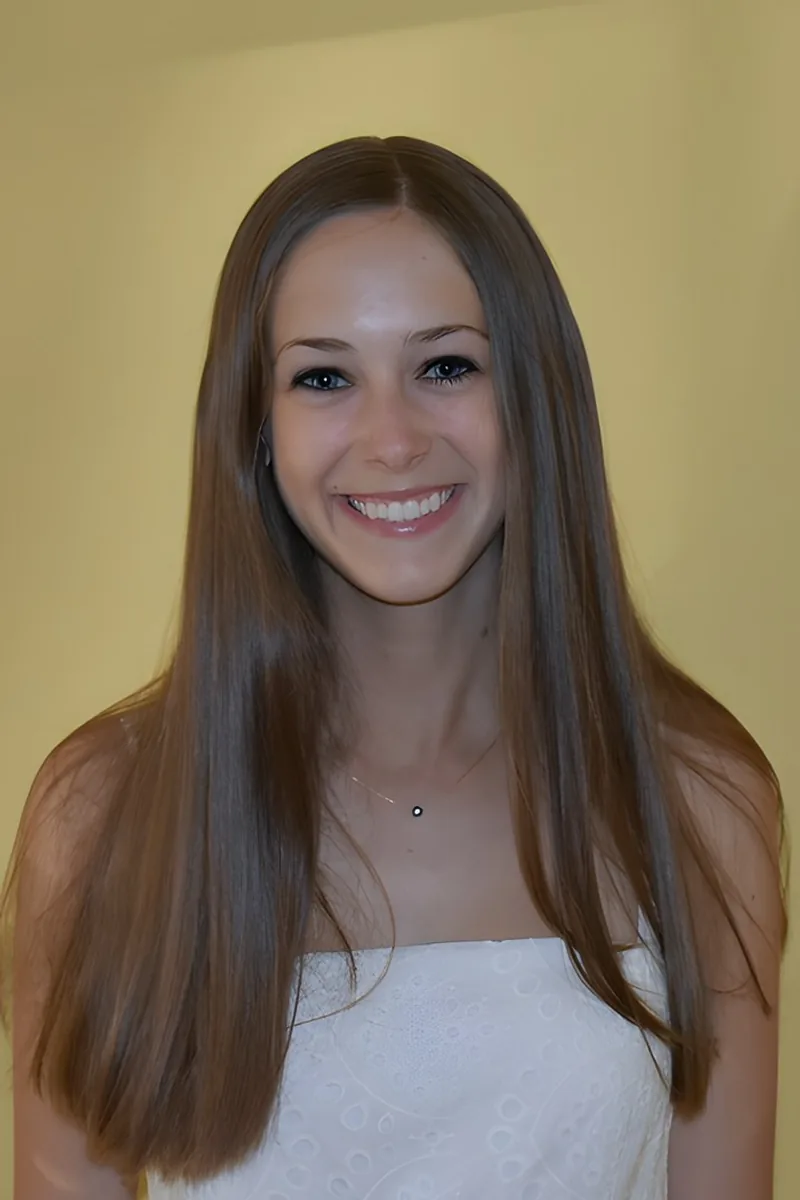
The jump into Pre-Calculus often feels like juggling — trigonometric identities, limits intuition, and function transformations all land at once. Eliza approaches each topic by connecting it back to the algebra and geometry students already know, so new material builds logically instead of feeling random. Rated 5.0 by students, she keeps sessions structured without making them feel rigid.
The jump to pre-calculus is where many students first encounter trigonometric identities, polar coordinates, and limits — concepts that feel disconnected from anything they've done before. Eileen bridges that gap by tying each new idea back to familiar algebra and geometry, giving students a clear roadmap into calculus.
Holding degrees in both mechanical and electrical engineering, Steve has spent years in the territory where pre-calculus stops being coursework and starts being the toolkit — trigonometric analysis for signal processing, polynomial modeling for system dynamics, vectors and complex numbers for circuit design. He teaches the course knowing exactly which skills will matter most when students hit calculus and engineering-track courses, and builds each lesson around that forward view. Rated 4.9 by students.
The leap into pre-calculus often stalls around trigonometric identities, limits intuition, or the shift from polynomial to rational and logarithmic functions. Gianna's perfect SAT Math score and Princeton coursework mean she sees these topics not as isolated chapters but as the toolkit students will rely on in calculus. She connects each concept forward so students understand why they're learning it, not just how to get through the homework.
Todd's biology degree from UIUC built the quantitative reasoning that pre-calculus demands — modeling population dynamics with exponential and logarithmic functions, analyzing periodic phenomena with trig, interpreting rate-of-change problems that preview calculus. He draws on that science background to give function families a concrete meaning, so topics like transformations and composite functions feel like tools with a purpose rather than abstract exercises. His 33 ACT and 5.0 rating back that up.
The jump into pre-calculus is really about learning to think in terms of functions — how they behave, transform, and connect to each other across trigonometric, polynomial, and rational families. Dane's engineering coursework at Duke means he uses these tools daily and can show students how concepts like limits, composite functions, and unit circle values actually build toward calculus rather than existing as isolated topics.
Everything in pre-calculus — logarithmic identities, trigonometric graphs, sequences, limits — exists to set up the ideas students will need in calculus. Because Agustin already teaches both AP Calc AB and BC, he knows exactly which pre-calc skills matter most and where gaps tend to cause trouble later. He spends extra time on function transformations and unit-circle reasoning, since those two areas pay the biggest dividends.
Molecular biophysics at Brown throws Srini into the deep end of mathematical modeling — fitting protein folding kinetics to exponential curves, analyzing oscillatory molecular dynamics with trig functions, mapping multivariable relationships through composition. That daily immersion means he teaches pre-calculus topics like function transformations and logarithmic properties as tools he actively uses, not abstract concepts he's reciting from a textbook. A 1600 SAT and 35 ACT confirm the mathematical fluency behind his approach.
An applied mathematics degree from Stanford means Alex didn't just pass through pre-calculus — he built an entire major on top of it, so he knows exactly which concepts in trigonometric reasoning, function transformations, and limit intuition carry the most weight later. He teaches the course as a bridge rather than a checklist, connecting each new idea back to the algebra underneath it and forward to the calculus ahead. His 35 ACT and 4.8 rating reflect a tutor who's still close enough to the material to remember where it gets confusing.
Trigonometric identities, logarithmic functions, and the behavior of rational expressions all land differently when a student can see what's happening on a graph. Dylan leans heavily on visual and graphical reasoning to make Pre-Calculus concepts intuitive rather than procedural — an approach sharpened by his physics and math coursework at Vanderbilt. He's particularly effective at bridging the gap between algebraic manipulation and the conceptual thinking calculus will demand.
The jump into limits, trigonometric identities, and composite functions can feel overwhelming without someone who knows how to sequence the ideas clearly. Pinelopi has tutored math from pre-algebra through calculus, which means she can pinpoint exactly which earlier concept a student is missing when pre-calc material stops making sense. Rated 5.0 by students.
Having scored 5s on both AP Calculus BC and AP Physics C while at a Harvard-track pace of 16 AP courses, Derek built the kind of deep pre-calculus fluency — limits of rational expressions, trigonometric manipulation, composite function analysis — that only comes from leaning on those tools constantly across multiple disciplines. His computer science major adds a distinctive angle: he teaches sequences, recursive definitions, and function behavior through the algorithmic thinking that makes those concepts precise rather than fuzzy. A 1550 SAT and 4.9 rating round out the picture.
Testimonials
Because the right Pre-Calculus tutor makes all the difference.
Average Session Rating – Based on 3.4M Learner Ratings
Practice Pre-Calculus
Free practice tests, flashcards, and AI tutoring for Pre-Calculus
Nearby Pre-Calculus Tutors
Other Des Moines Tutors
Related Math Tutors in Des Moines
Frequently Asked Questions
Pre-Calculus shifts from just solving equations to understanding the deeper patterns and connections between functions, graphs, and real-world applications. Students move from "how do I solve this?" to "why does this work this way?" This conceptual jump can feel challenging, but personalized 1-on-1 instruction helps students see these connections clearly and build the foundation they need for Calculus.
Many students find trigonometry concepts, function transformations, and complex graphing challenging—especially when they require combining multiple skills. Word problems that involve setting up equations from real scenarios also trip up students who haven't practiced translating language into mathematical models. Tutors can break these topics into manageable pieces, show you the patterns, and build your confidence through targeted practice.
Word problems require you to identify what information matters, choose the right function or equation, and interpret your answer in context. Working with a tutor helps you develop a systematic approach: read carefully, define variables, set up the problem, solve, and check if your answer makes sense. With repeated practice and feedback on your strategy—not just your final answer—these problems become much less intimidating.
Showing your work reveals your thinking process and helps teachers (and tutors) identify exactly where misunderstandings happen. In Pre-Calculus, the method matters as much as the answer because you're building reasoning skills you'll need in Calculus. A tutor can review your work step-by-step, explain why certain approaches work better, and help you develop clearer problem-solving habits.
Your first session is about understanding where you are and where you want to go. Expect a tutor to assess your comfort with foundational concepts, listen to specific topics that frustrate you, and learn your learning style. Together, you'll create a plan focused on your goals—whether that's mastering trigonometry, preparing for an exam, or building overall confidence. This personalized approach means every session after that is tailored to you.
Math anxiety often stems from feeling lost or unsupported, and personalized 1-on-1 instruction directly addresses that by giving you space to ask questions without judgment and work at your own pace. When a tutor breaks complex topics into smaller, manageable steps and celebrates your progress, it rebuilds confidence. Many students discover that with the right support and clear explanations, Pre-Calculus is far less intimidating than they expected.
Varsity Tutors connects you with expert tutors who are familiar with the major Pre-Calculus textbooks and approaches used across Iowa schools. Whether your class uses a specific curriculum or your teacher emphasizes certain topics, tutors can align their instruction to match your class and help you succeed on your school's tests and assignments.
Graphing requires understanding how changes to an equation affect the shape and position of a graph—something that's hard to grasp from a textbook alone. A tutor can show you the visual patterns, walk through transformations step-by-step, and have you practice identifying shifts, reflections, and stretches. With hands-on guidance and repeated examples, you'll start seeing the connections between equations and their graphs.
Let’s find your perfect tutor
Answer a few quick questions. We’ll recommend the right plan and match you with a top 5% tutor.