Award-Winning Geometry Tutors
serving Des Moines, IA
Geometry
Tutors in Des Moines
Private 1-on-1 tutoring, weekly live classes for academic support, test prep & enrichment, practice tests and diagnostics, and more to elevate grades and test scores.
Based on 3.4M Learner Ratings
UniversitiesSchools & Universities
DeliveredHours Delivered
ProficiencyGrowth in Proficiency
Who needs tutoring?
No obligation. Takes ~1 minute.
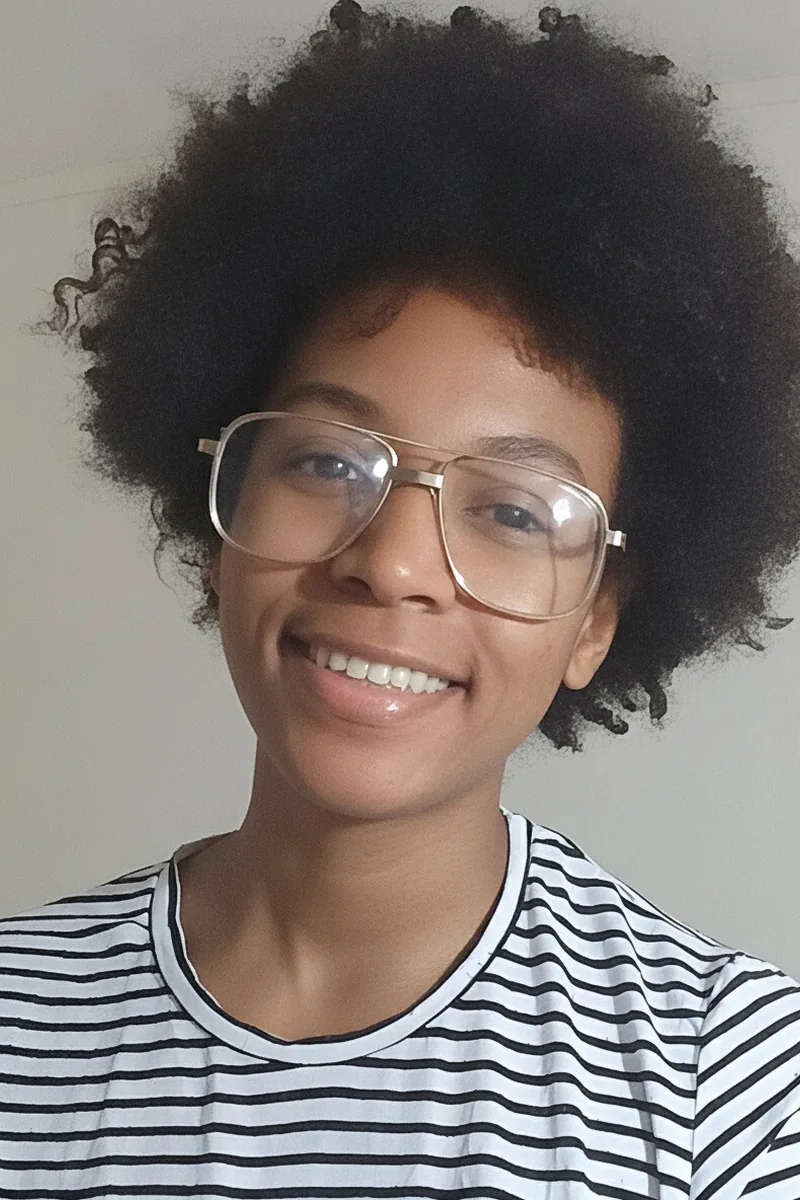
Proofs are where most geometry students stall — the leap from calculating angles to constructing logical arguments feels unfamiliar. Camille's interdisciplinary training at Duke and Columbia sharpened her ability to teach that kind of structured reasoning, and she applies it to everything from triangle congruence to circle theorems. Rated 5.0 by students.
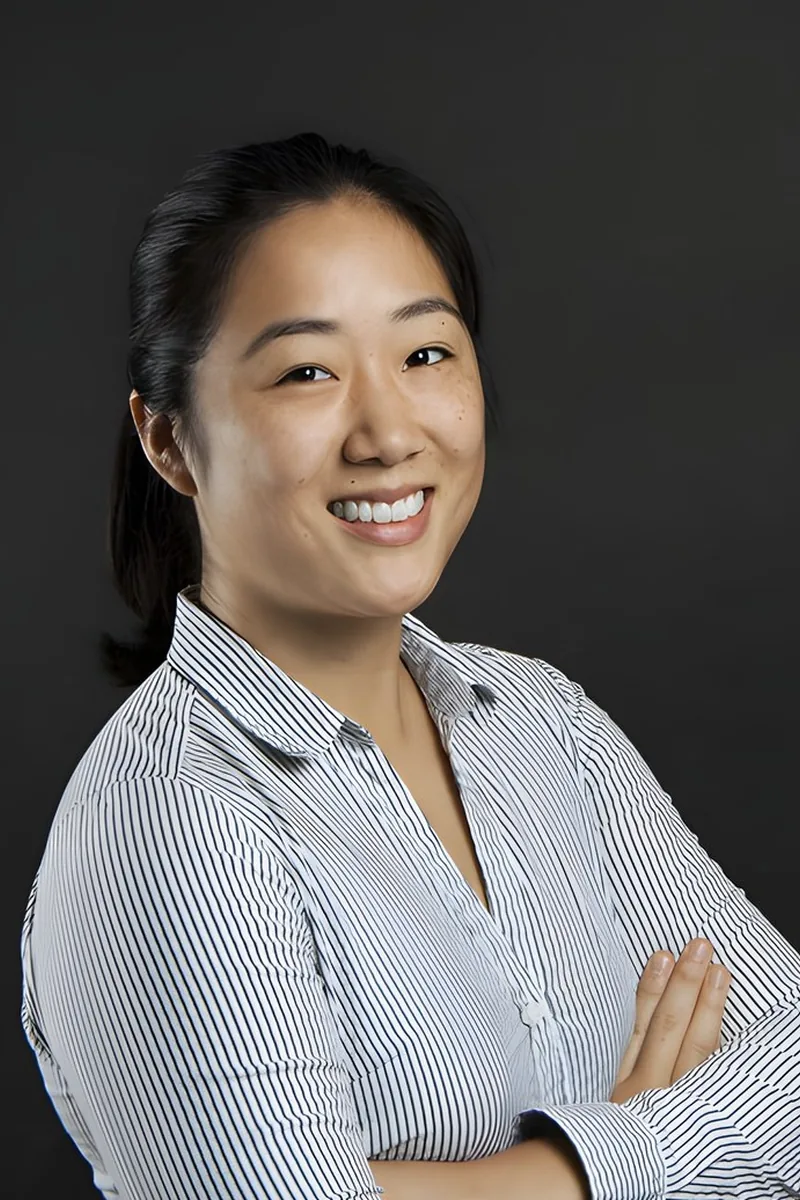
A political science degree from the University of Chicago means Asta spent four years constructing airtight arguments from premises to conclusions — exactly the skill that makes geometric proofs click. She applies that structured reasoning to two-column proofs and logical chains involving congruence, triangle properties, and circle theorems, treating each one like a case to be built rather than a formula to memorize. Rated 5.0 by students.
Cognitive science — Sugi's major at Rice — is fundamentally about how people build mental models, and geometry is one of the few math subjects where that matters enormously: students who can't visualize a rotation or mentally decompose a figure into simpler shapes will struggle no matter how many theorems they memorize. Sugi teaches the visualization first, then layers in the formal reasoning for congruence, similarity, and circle properties so that proofs feel like describing something you can already see. Rated 5.0 by students.
Dennis's research into quasicrystals and aperiodic tilings — like Penrose tilings of rhombuses — is geometry at its most fascinating, exploring how shapes fit together under unusual symmetry rules. That deep spatial intuition carries directly into high school Geometry, where he teaches proofs, congruence, and circle theorems by encouraging students to reason visually before writing anything formal.
Proofs are usually where geometry stops feeling like math and starts feeling like a foreign language. JF breaks down the logic behind two-column and paragraph proofs so students see them as structured arguments, not mysterious rituals. A 5.0 client rating speaks to an approach that makes even angle-chasing problems feel manageable.
An applied math major at Stanford, Alex approaches geometry problems the way a mathematician would — by asking what's actually true about a figure before deciding which tools to use. That habit is especially valuable when students face problems combining circle theorems, inscribed angles, and arc-length relationships, where jumping to formulas too early usually leads nowhere. Rated 4.8 by students.
Proofs are usually the part of geometry that makes students want to quit, but they're also the part that teaches the most transferable thinking skills. Benjamin approaches geometric proofs as structured arguments — each statement needs evidence, each step needs justification — which clicks especially well for students who think verbally. His background spanning both math and writing makes him effective at bridging that gap between visual intuition and formal reasoning.
Proofs are usually the first place Geometry students feel lost, because the subject suddenly asks them to justify every step rather than just compute an answer. Christopher teaches students to treat each proof like an engineering problem: identify what's given, figure out what's needed, and build a logical bridge between the two using congruence, similarity, and angle relationships. His structured approach has earned him a 4.8 rating from students.
Proofs trip up most geometry students because they demand a completely different kind of thinking than computation does. Phillip approaches them as logical arguments: identifying what's given, what's needed, and which theorems bridge the gap. His engineering training at Brown means spatial reasoning and geometric relationships are second nature to him.
Proofs are where most geometry students panic — the logic feels nothing like the arithmetic they're used to. Pinelopi breaks two-column and paragraph proofs into small reasoning steps, treating each one like a mini-argument rather than a memorization exercise. Her Duke psychology training actually lends itself well to teaching logical structure.
Proofs are usually the first place geometry students get stuck, because suddenly math requires structured argumentation instead of computation. Sami approaches geometric reasoning the way he learned to build logical arguments in computer science at Duke — step by step, with each claim justified before moving to the next. He covers everything from triangle congruence to circle theorems with that same emphasis on clear, connected thinking.
Proofs are usually where geometry students panic, but they're really just structured arguments — and Dane approaches them that way. Studying engineering at Duke sharpened his spatial reasoning across topics like congruence, similarity, and coordinate geometry, and he teaches students to visualize relationships before translating them into formal logic.
Testimonials
Because the right Geometry tutor makes all the difference.
Average Session Rating – Based on 3.4M Learner Ratings
Practice Geometry
Free practice tests, flashcards, and AI tutoring for Geometry
Nearby Geometry Tutors
Other Des Moines Tutors
Related Math Tutors in Des Moines
Frequently Asked Questions
Many students find the transition from algebra's procedural focus to geometry's conceptual reasoning challenging. Common pain points include understanding proofs and logical arguments, visualizing spatial relationships, applying theorems to word problems, and connecting abstract concepts to real-world applications. Personalized tutoring helps students build confidence by breaking down these concepts into manageable steps and showing how different ideas connect.
Proofs require both logical thinking and clear communication—skills that benefit greatly from one-on-one instruction. A tutor can help you understand the "why" behind each step, not just memorize theorems. They'll work with you to develop a strategic approach to proof writing, showing you how to identify what you know, what you need to prove, and which theorems or properties will bridge the gap. This builds the reasoning skills you'll use throughout geometry and beyond.
Not everyone naturally visualizes shapes and spatial relationships the same way. Expert tutors can use multiple approaches—drawing diagrams, using manipulatives, or working through problems step-by-step—to help you develop stronger spatial reasoning. They'll also help you connect visual understanding to the algebraic and logical components of geometry, so you can tackle everything from coordinate geometry to three-dimensional figures with confidence.
Geometry word problems require you to translate language into visual representations and then apply theorems—a multi-step process that trips up many students. Tutoring helps by teaching you a systematic approach: identifying what information matters, sketching the problem, labeling known values, and selecting the right theorems. Over time, you'll recognize patterns and build confidence in tackling unfamiliar problems.
Yes. Des Moines schools use various geometry resources and approaches, and tutors who work with Varsity Tutors are experienced in helping students succeed with different textbooks and teaching styles. Whether your school emphasizes coordinate geometry, transformations, or traditional proofs, a tutor can support your specific curriculum while also building deeper conceptual understanding that strengthens your overall math foundation.
Math anxiety is real, especially when geometry feels abstract or proofs seem intimidating. Personalized instruction creates a judgment-free space where you can ask questions, work at your own pace, and build confidence gradually. Tutors help by celebrating progress, showing you that struggling with a concept doesn't mean you're "bad at math," and giving you strategies to approach problems systematically rather than relying on quick intuition.
Your first session is about understanding where you are and where you want to go. A tutor will assess your current understanding of geometry concepts, identify specific challenges (whether it's proofs, word problems, or visualization), and learn about your learning style. They'll then create a personalized plan tailored to your goals—whether that's improving your grade, preparing for a test, or building deeper conceptual understanding.
Varsity Tutors connects you with expert tutors who have experience teaching geometry and understand the concepts students in Des Moines schools encounter. You can share your specific needs—whether you need help with proofs, word problems, or exam prep—and we'll match you with someone who fits your learning style and schedule. Most students start with a single session to see if it's a good fit before committing to ongoing support.
Let’s find your perfect tutor
Answer a few quick questions. We’ll recommend the right plan and match you with a top 5% tutor.